
Match Trolley Coin Keyrings To The Target Cart Lock
Your trolley token can match the artwork and still fail on the intended cart lock. A matching coin description proves little.
Test the complete supplied configuration with the operator’s permission. Record the normal return and token recovery before approving named lock references.

Define The Functional Item You Are Ordering
Write the item as a complete promotional assembly before discussing its artwork. Identify the token, retainer, connector and keyring. State how the token is intended to leave and return to its stored position.
The trolley coin keyring reference treats the token and retaining arrangement together. A loose token is a different supplied scope. An empty retainer also cannot count as a complete promotional unit.
For this hypothetical project, build A contains token T1, holder H1 and the specified connector and keyring. The proposed token detaches for normal use. That is the example configuration, rather than a statement that every trolley keyring uses the same mechanism.
Name the target retail operator and intended distribution locations. Obtain its permission for the proposed evaluation before touching equipment. The operator should identify suitable references and the normal procedure the trial may follow.
Just Keyrings describes custom-branded trolley tokens and artwork-specific production. This confirms a branded product category, not compatibility with your operator’s locks. Keep functional acceptance separate from permission to reproduce the company mark.
Assign a finished assembly reference to the sample actually supplied. Link its token drawing, holder and hardware versions to that reference. Otherwise, a later sample may retain familiar artwork while changing the part that enters the lock.
Register The Actual Target Locks
Ask the operator for the lock references used at the intended locations. Record available manufacturer and model information, together with site identifiers. A photograph helps distinguish references but should not replace the operator’s identification.
Include any different lock models already operating within the same retail group. A store name does not necessarily identify one equipment configuration. Keep unfamiliar or unverified locations outside the initial approval scope.
Have the operator explain the permitted normal coin or token requirement. Retain the source of that instruction. Do not infer universal dimensions from a country, coin name or a supplier’s general promotional description.
The following map uses fictional references and quantities. It demonstrates the purchasing decision the buyer needs to record. It does not identify real cart models or prescribe a token profile.
| Lock Reference | Hypothetical Campaign Scope |
|---|---|
| L10 | Operator-confirmed references at site group A; 1,000 complete promotional units intended. |
| L20 | Different operator-confirmed lock at site group B; 500 units proposed, pending its own trial. |
| L30 | Another location mentioned by distribution; no identified reference or authorised evaluation yet. |
Keep the operator’s current operating guidance with each reference. Confirm whether the proposed evaluation uses a representative lock or an actual cart. Record its condition and any limitation the operator identifies before testing.
If a lock appears damaged or does not operate normally with the operator’s accepted reference, stop that comparison. Let the operator resolve its equipment condition. An abnormal lock should not silently become the basis for rejecting or approving a token.
Specify The Finished Token And Holder
Give the token a drawing showing its relevant finished outline, thickness and edge. Identify features that meet the lock or its access path. Ask the supplier which measurements can be controlled and how they will be checked.
State whether the drawing applies after decoration and finishing. A sample of an unfinished blank may not represent the delivered item. Review the complete finished token that belongs to the proposed promotional assembly.
Do not copy a circulating coin’s nominal description into the order as proof of fit. Get the operator’s applicable requirements and compare the proposed sample. This guide supplies no universal pound, euro or other coin dimensions.
Describe how T1 is retained by H1 when stored. Identify the intended release action and the parts included in the supplied unit. Keep alternative holder proposals under separate references until their operation is reviewed.
Check the branding layout against the functional areas identified by the supplier and operator. Agree where decoration can appear without changing those requirements. Artwork approval alone should not authorise changes to the finished functional profile.
General keychain clearance calculations can support a defined dimensional interface. They cannot establish a lock’s operating sequence or token return. Use measurements and the authorised functional trial for their different purposes.
Use separate sample identities when the same token carries different surface versions. Ask the technical reviewers whether a change affects the functional profile. Keep proposed evidence reuse explicit, rather than assuming a shared outline covers every finished treatment.
Agree A Permitted Trial Before Starting
Ask the operator to name the person supervising the evaluation and the equipment that may be used. Record the sample references beforehand. Do not test against unattended public carts simply because a token appears suitable.
Agree which normal actions the observer should record. Include token access from its holder, permitted insertion, normal cart release and the operator’s return procedure. Finish with token recovery and reconnection to the holder.
Write the conditions that matter to the intended use. These may include how the sample is held and whether attached keys affect access. Keep the condition realistic and approved by the operator rather than inventing an abuse exercise.
Agree the acceptance criteria with the responsible technical parties before interpreting observations. Name the reviewer who can approve the supported configuration. No force, endurance cycle or universal compatibility threshold is established by this guide.
Plan how an unsuccessful trial will end safely under the operator’s normal procedures. Stop if a token resists, cannot be recovered normally or requires an unapproved action. The operator should manage the equipment and any recovery.
Prohibit forcing, modifying or bypassing the lock during this evaluation. A successful workaround would not establish normal compatibility. Keep the task focused on a legitimate promotional token operating as the operator permits.
Record who supplied each fixture and how its identity was confirmed. If the operator provides a detached demonstration lock, state its relationship to installed equipment. Limit conclusions where that relationship has not been established.
Observe The Complete Normal Use Cycle
Begin with build A in its delivered stored condition. Confirm that the observer can identify T1 and H1. Check the intended release from the holder before assessing the lock interface.
Follow the operator’s normal insertion procedure on the identified reference. Record whether the finished token enters as intended and whether normal cart release occurs. Do not describe insertion alone as a completed compatibility result.
Observe the approved normal use and return procedure under supervision. Record whether the token becomes available through that procedure. If the return does not complete normally, stop and record the stage without improvising another method.
Inspect the retrieved token and the holder before reconnecting them. Note any observed change or difficulty using the intended arrangement. Distinguish a visible observation from a diagnosis of its manufacturing cause.
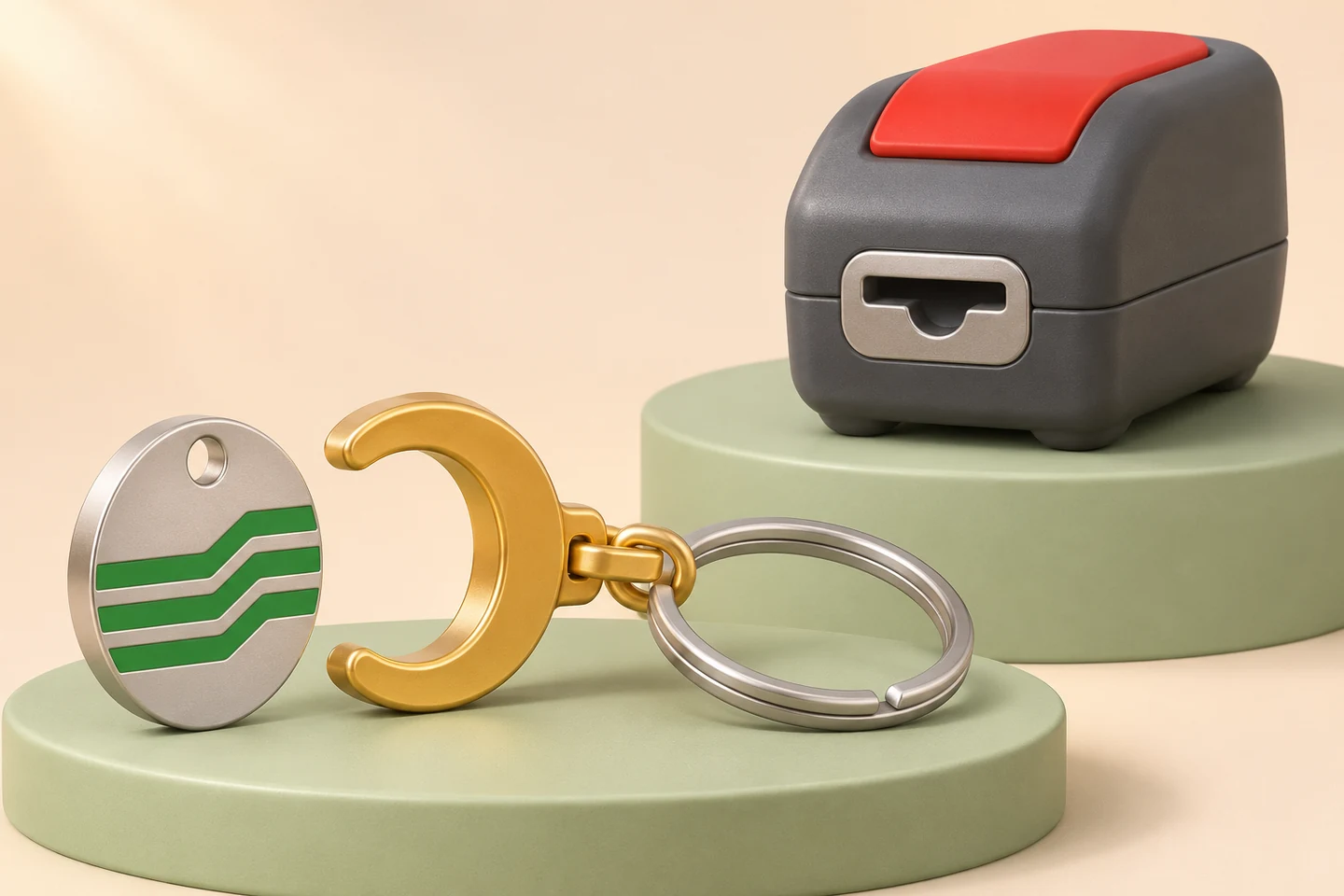
Reconnect T1 to H1 using the agreed normal action. Check that the complete stored assembly is restored. A trial ending with a loose recovered token has not yet reviewed the full supplied item.
Record the actual actions, observer and equipment reference together. Photographs should identify the relevant condition without claiming to prove every movement. Keep any limitation visible when the buyer considers the result.
Make A Restricted Compatibility Decision
In this hypothetical example, build A completes the agreed sequence on L10. The operator and buyer retain the observations and sample identities. Release can be considered for the named L10 configuration under those recorded conditions.
On L20, the token enters and normal cart release occurs, but normal token recovery is not completed. The operator ends the trial. That partial result does not support a full-use compatibility claim for L20.
L30 remains unevaluated because its reference and permitted trial are missing. Record that as unknown rather than passed or failed. It needs an identified scope before the supplier can address a useful compatibility question.
| Decision Field | Illustrative Record |
|---|---|
| Item | Build A; finished token T1 drawing D4; holder H1; connector and ring references retained. |
| L10 Result | Agreed normal sequence completed; actual observation record O10 and sample A01 retained. |
| L20 Result | Normal recovery not completed; operator managed the equipment; record O20 remains open. |
| L30 Result | Unknown reference and no permitted evaluation; explicitly excluded. |
| Purchasing Release | 1,000 complete units for named L10 distribution; proposed 500 for L20 held. |
| Change Required | Supplier and operator to review the L20 finding; any revised build requires its own agreed evaluation. |
Name the buyer who approves the restricted quantity and the operator contact supporting the equipment scope. Record the decision date. Do not let a salesperson’s broad campaign description erase those technical exclusions.
If the supplier proposes a different token or holder for L20, identify that build separately. Retain the existing L10 evidence where it remains applicable. A change intended for one lock should not silently replace the accepted configuration everywhere.
Ask the distributor to confirm it can maintain the approved location split. If the same unqualified pack is distributed across all sites, the restriction may be ineffective. Resolve that distribution issue before converting a limited trial into a broad campaign order.
Check Storage Retention And The Keyring
After functional recovery, inspect how the token returns to its holder in the complete supplied assembly. Record the seated position and intended release action. Do not evaluate an empty holder as though the finished token were present.
Include the specified connector and keyring when checking the stored item. Ask whether their movement obstructs access to the holder. The answer depends on the actual proposed build, not the appearance of a disconnected component.
Where keys are part of the agreed trial condition, identify that representative arrangement. Keep it separate from an unspecified promise about every possible key bundle. The buyer should know exactly which access condition the observations support.
If the product uses a different token-retention approach, obtain its own operating instruction and sample. Do not transfer H1 observations to an unfamiliar mechanism. The product family name can remain the same while the supplied functional arrangement changes.
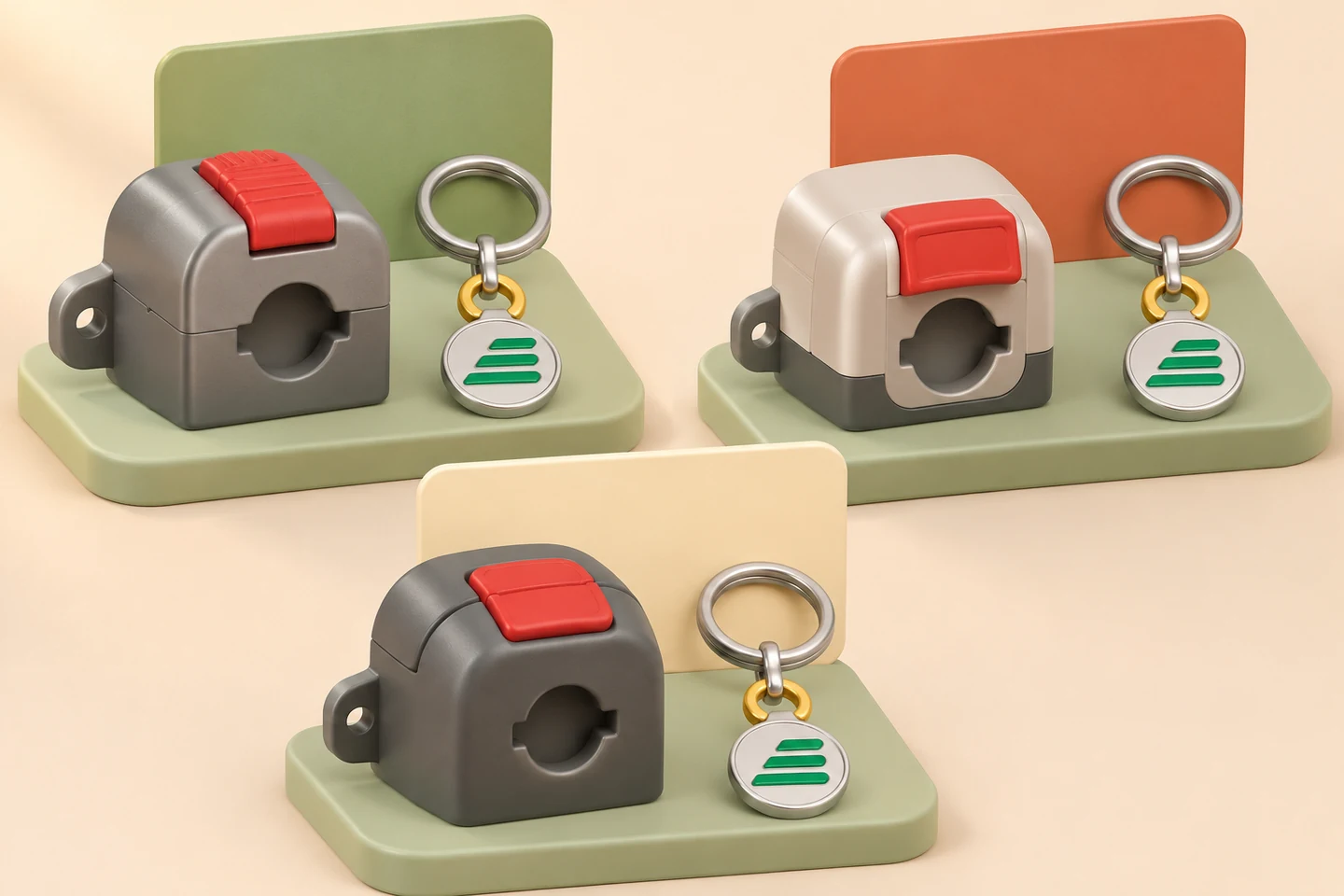
Keep a proposed durability assessment separate from this initial compatibility decision. Agree relevant conditions, observations and acceptance criteria where repeated use matters. A single completed sequence does not establish a service-life claim.
A custom logo keychain can share brand artwork without sharing the token function. Identify those products separately in campaign planning. Approval of a decorative keychain cannot support a cart-lock compatibility statement.
Turn The Decision Into An RFQ And Delivery Scope
Send the supplier the finished drawing, complete assembly list and named operator references with the enquiry. State the supported and pending combinations separately. Ask the quotation to identify any assumptions instead of answering with a universal fit description.
For the example, the approved purchasing scope is 1,000 build A assemblies for L10. The proposed 500-unit L20 requirement remains held. Keep it visible as a pending requirement, rather than releasing 1,500 unrestricted units because the total campaign budget exists.
If 30 loose replacement tokens are also requested, give them their own line and reference. They are not 30 additional complete keyrings. Confirm which drawing and compatible holder version those replacement tokens must match.
Write the received packing state explicitly. Distinguish complete stored assemblies, detached but included components and loose replacement tokens. The receiving team needs to know which arrangement to expect before a carton is opened.
For an illustrative dispatch of 1,000 complete units in ten cartons of 100, the complete-unit total remains 1,000. Thirty replacement tokens remain separate. Do not convert those two units of measure into a misleading total of 1,030 complete keyrings.
Keep the accepted sample and the restriction statement available to receiving and distribution teams. Confirm the actual label wording with the buyer. A generic promotional insert should not claim compatibility beyond the named equipment and evidence.
Maintain The Scope When Equipment Or Parts Change
Ask the operator how it will communicate relevant lock replacement or operating changes. Record the route for reviewing those changes. A previous successful sample cannot establish the behaviour of newly introduced equipment.
Ask the supplier to identify changes affecting the finished token profile, decoration, holder or connector arrangement. Compare them against the approved build reference. Decide which dimensional checks and functional observations need to be repeated.
Preserve the actual accepted sample where practical and identify who holds it. Retain the drawing and observations together. An artwork file alone cannot show the token’s finished edge or its stored relationship with the holder.
If L20 receives an accepted revised build later, update the compatibility map with its own evidence and date. Keep the original L10 approval traceable. Do not retroactively describe the initial L20 trial as successful.
When additional sites cannot identify their lock references, state that their use remains unverified. Ask for the missing operator information before promising suitability. Commercial pressure to broaden distribution does not supply the missing functional evidence.
Your final record should tell purchasing what can be ordered and distribution where it can be issued. Tell the operator what was evaluated. Close findings through named owners, leaving a supported configuration and quantity rather than a familiar coin shape.
Frequently Asked Questions
Can One Token Be Advertised For Every Store In A Retail Group?
Only make the claim supported by the identified equipment and agreed evaluation. A shared retail brand does not identify every installed lock. Resolve the missing references before broadening the approved distribution scope.
Should The Supplier Receive A Real Circulating Coin?
Ask the operator and supplier what reference information is appropriate for the proposed system. A reference coin may inform a discussion without proving the finished token fits. Keep the authorised lock assessment as a separate requirement.
Can We Approve Artwork While Functional Fit Is Pending?
Yes, if the record clearly limits approval to the artwork. Keep the token profile, assembly and functional release open where evidence is missing. Do not let an artwork signature trigger unrestricted production or distribution.
What If The Operator Will Not Permit An On-Site Trial?
Ask whether it can provide an authorised representative evaluation or another acceptable evidence route. Record the limits of any alternative. Do not test public equipment without permission or invent a passed result to close the order.
Final Thoughts
Share the operator-approved lock references and complete sample build when discussing promotional trolley coin keyrings. Release only the supported configuration and quantity, with unresolved locations clearly excluded.