
CUSTOM ENAMEL MANUFACTURING
Enamel Logo Keychains for Company Orders
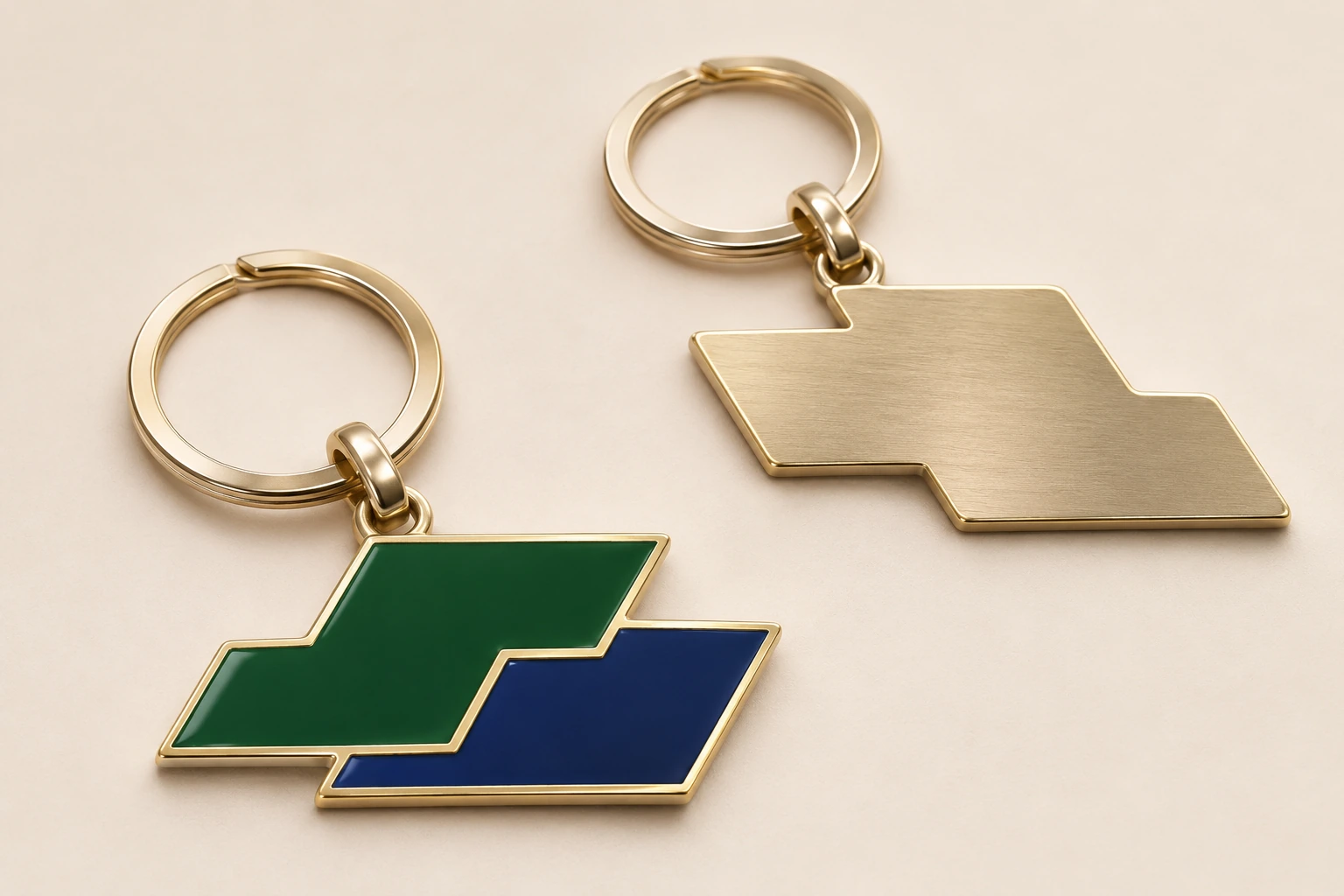
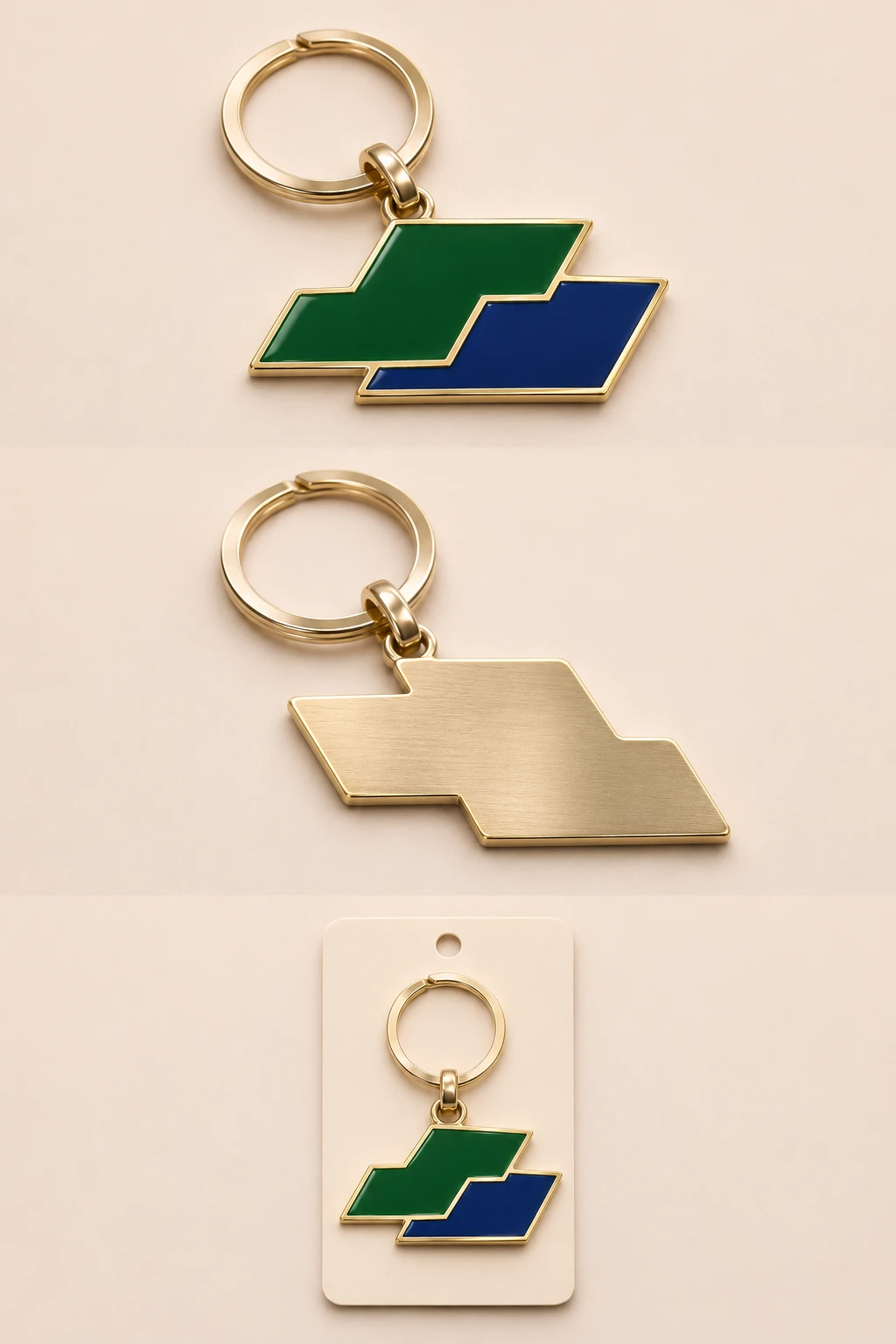
Develop enamel keychains from your authorised company logo. Plan the front, reverse, connector and keyring together, with bulk quantities and the agreed received packing.
Illustrative custom concept, not a stock item or a customer case. Final specifications are agreed for your project.
02 / STRUCTURE
One item, with every component accounted for
Review point · What the project brief should specify
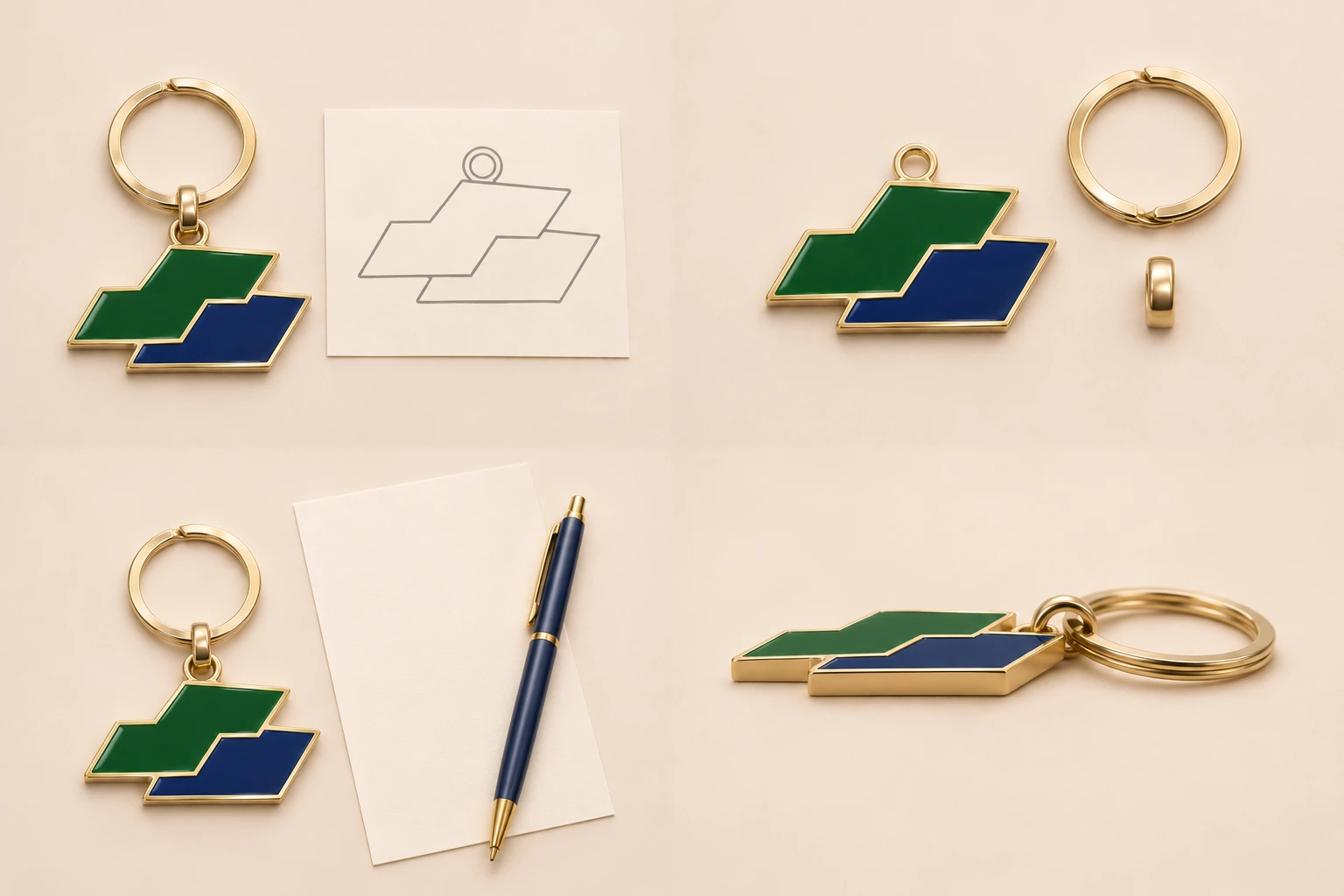
Treat the finished keychain as an assembly rather than approving the enamel face on its own. The body outline establishes the logo space, while the hanging point and connector determine how that face sits relative to the keyring. The reverse also needs an agreed treatment, even when it is plain metal.
For this concept, one finished item consists of one logo body, the specified connection and one keyring. A quantity of finished keychains therefore means complete assemblies. Loose spare bodies, extra rings or a different packing arrangement must be identified separately in the brief.
Front
Colour areas, exposed metal
Structure
Selected components, how they join
Reverse
reverse information or a plain reverse
Custom concept illustrations. Final specifications are agreed for your project.
Enamel metal · Complete keychain assembly · Business orders
Bring an authorised company logo into an enamel metal keychain with a clearly defined body, connection and keyring. We work from your identity artwork and the way the finished pieces will be supplied, so the reverse, attachment and packing are part of the same project brief.
This page focuses on a single-logo, complete keychain assembly for business orders. Share your intended quantity, destination and artwork status to discuss a suitable specification. Size, base metal, finish, component selection, pricing and timing are confirmed for the actual project.
Product — one enamel metal logo body with the agreed connector and keyring.
Artwork — an authorised existing identity, with any simplification approved by your team.
Scope to agree — front and reverse, body and overall dimensions, connection, quantities and received packing.
03 / ARTWORK
Preserve the identity at the scale of the metal body
Start with the authorised logo file and identify the features that carry recognition: its outer silhouette, the relationship between letters or shapes, and the colours that must remain distinct. A logo that reads well on a screen may need a different balance when metal divisions and enamel areas are introduced.
Artwork handover checklist
Artwork handover checklist: authorised source artwork; colour references; proposed body dimensions; front and reverse instructions; hanging direction; version names and quantities; the person responsible for approval.
Your artwork, or a direction to develop
Mark which details are fixed and which can be discussed. Small text, narrow spaces and closely spaced colour areas deserve specific attention in the artwork review. Any proposed simplification should be visible in the approval reference rather than introduced silently during production.
If the order includes colour or reverse versions, give each one a reference name and quantity. Record the common body and connection separately from the details that change. This helps your team review a coordinated order without confusing a colour version with a different assembly.
04 / ENAMEL AND METAL
Give the logo a deliberate enamel surface
Enamel colour and exposed metal work together to define the logo. Review where the metal lines carry recognition, where they separate colour areas and how the edge contributes to the silhouette. The face, edge and reverse should describe the same body rather than three unrelated finish references.
Soft enamel
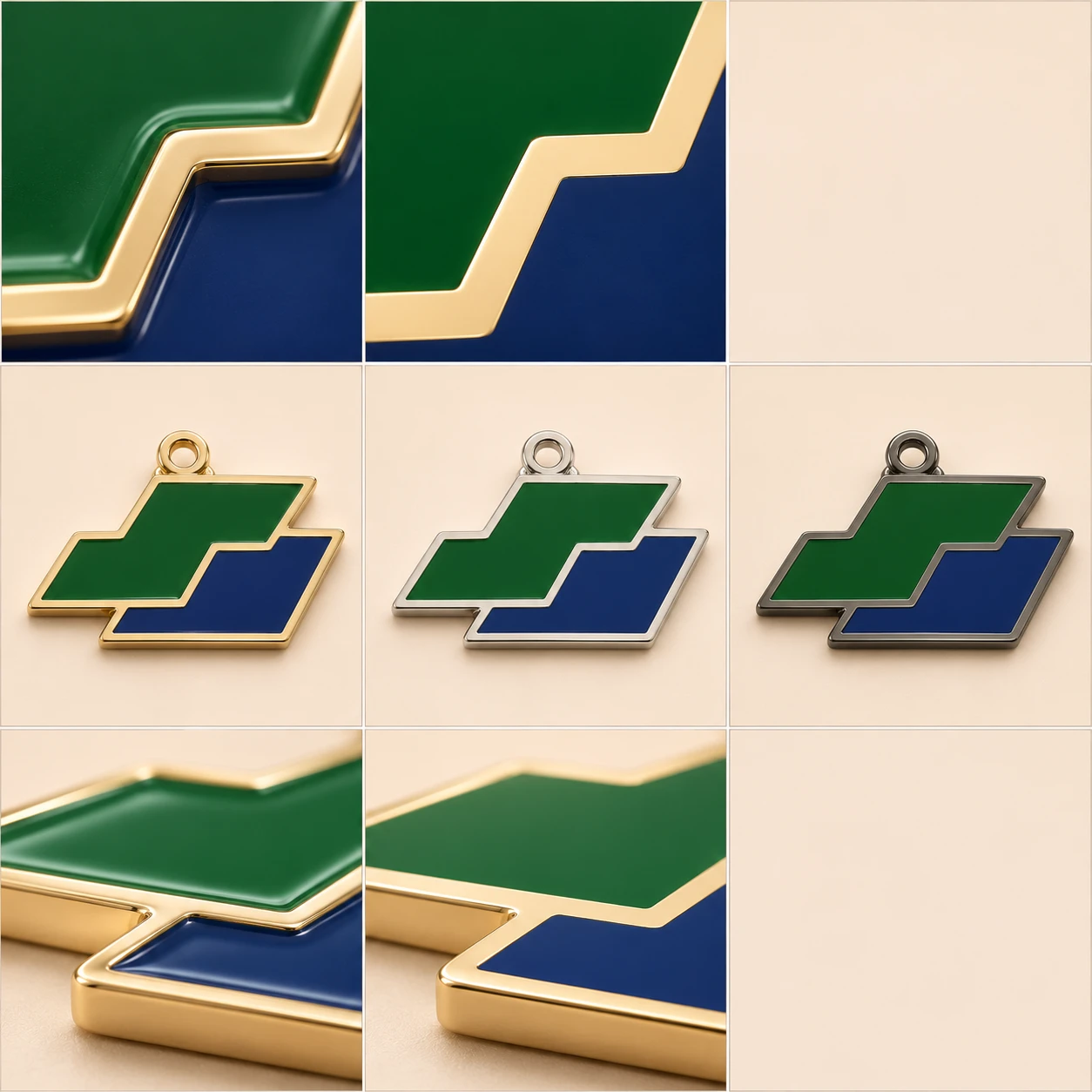
Recessed colour areas and raised metal lines. This product’s process illustration explains the surface; the product specification is reviewed for the individual artwork.
Hard enamel
A polished face brings colour and metal into a flatter appearance. This product’s process illustration is a comparison, not a fixed specification for this product.
Soft enamel generally presents recessed colour areas between the metal divisions. A hard-enamel route is polished to a flatter face with the colour and metal relationship reviewed together. This is a difference in the intended appearance and production route, not a promise that one option has a particular hardness, scratch resistance or service life. Compare both against the same authorised logo and proposed dimensions.
Discuss the plating or other agreed metal treatment alongside the enamel colours. A dark identity may need a different contrast from a light identity, and fine lettering should be reviewed in the actual artwork rather than assumed from a large illustration. The manufacturing sequence follows the selected construction; colouring, polishing and surface treatment should not be inferred from a generic six-step graphic.
Approval record: authorised identity, body outline, colour references, metal divisions, enamel route, metal appearance, reverse treatment and agreed sample scope. Generated close-ups explain the choices and establish no alloy grade, colour tolerance or measured performance.
METAL FINISH OPTIONS
Gold-tone appearance
A warm metal reference. Confirm the actual finish with the artwork and project specification.
Silver-tone appearance
A lighter metal reference for assessing contrast alongside the selected enamel colours.
Dark metal appearance
A darker metal reference. Its suitability and detailed process are reviewed for the project.
Product-specific illustrated surface and metal-appearance references. Availability, construction, process and final appearance are confirmed for the individual project.
05 / PRESENTATION
Approve the form your team will actually receive
An approved face does not define a packed order. Confirm whether each complete keychain is individually protected, attached to a backing card or supplied in another agreed arrangement. If a card is required, its artwork, fixing position and the way the ring and body sit on it need their own review. For a carded order, use the packaging guide to specify the card, hardware protection and carton.
SAMPLE AND RECEIVING REVIEW
For multiple versions, state how they should be separated and identified. Distinguish finished keychain quantities from cards, cartons or any loose additional components.
Review the front, reverse and connection together with the received packing. Confirm what the digital artwork can establish and which questions require a physical sample or other project-specific reference. Sample scope, charges, revisions and approval arrangements are discussed for the order rather than assumed from this illustration.
06 / FACTORY
Follow the logo body through eight work areas
Green Frog Supply’s confirmed in-house manufacturing scope includes tooling, metal forming, colouring, polishing, plating, assembly, inspection and packing. A complete keychain brief connects the logo body with its agreed connector, keyring and received packing; it does not establish that every selected accessory is manufactured in-house.
Discuss an arranged factory visit, a video walkthrough or project-relevant factory and inspection information. Agree what information is relevant to this order and distinguish general capability material from the approval and inspection record for your own batch.
Explore Our Factory and Manufacturing for the broader confirmed scope.
Work area · Role in this logo-keychain project

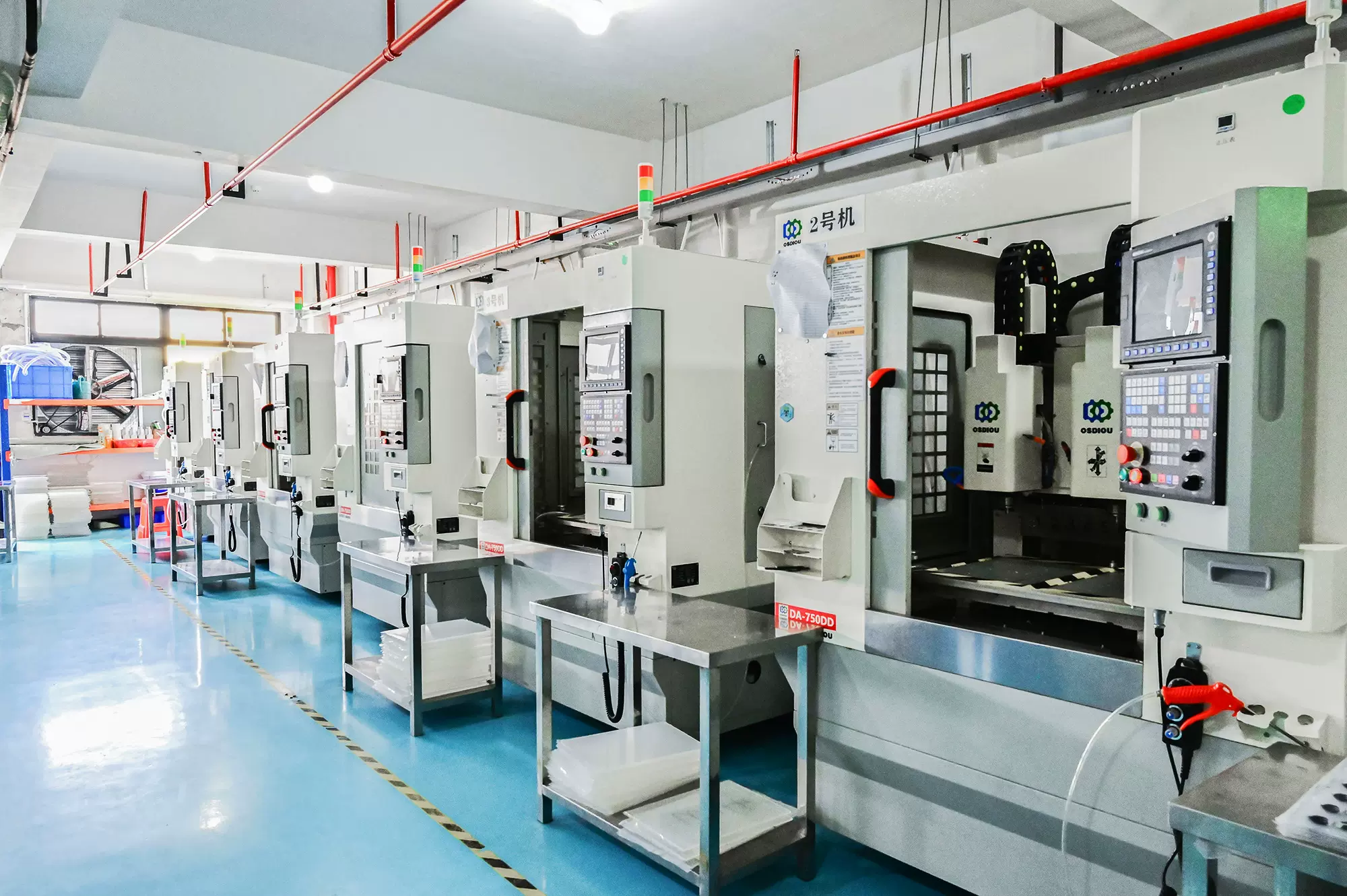
Tooling
Carry the authorised outline, metal divisions, reverse and hanging point into the agreed preparation
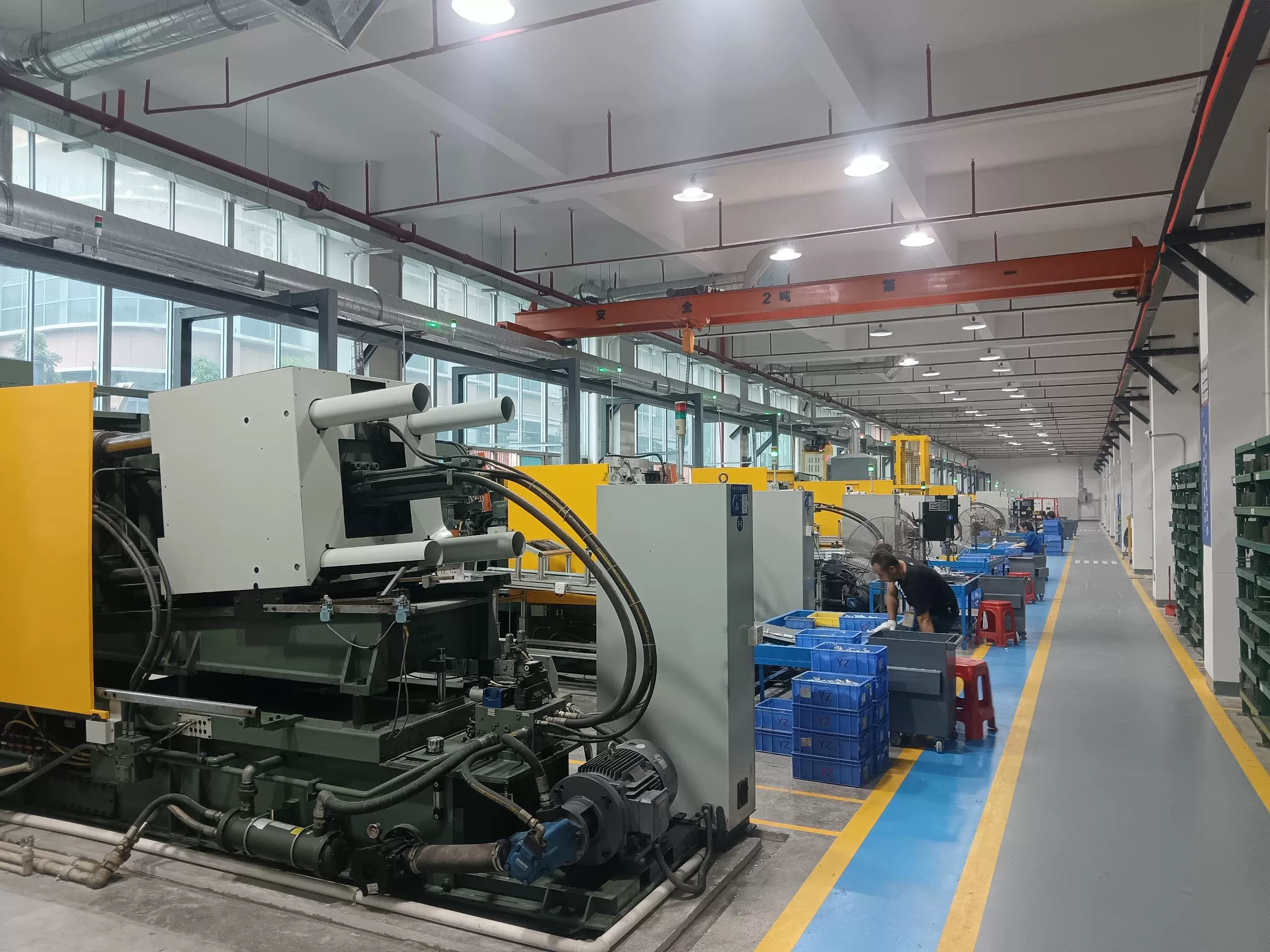
Metal forming
Produce the specified body construction while preserving its logo silhouette
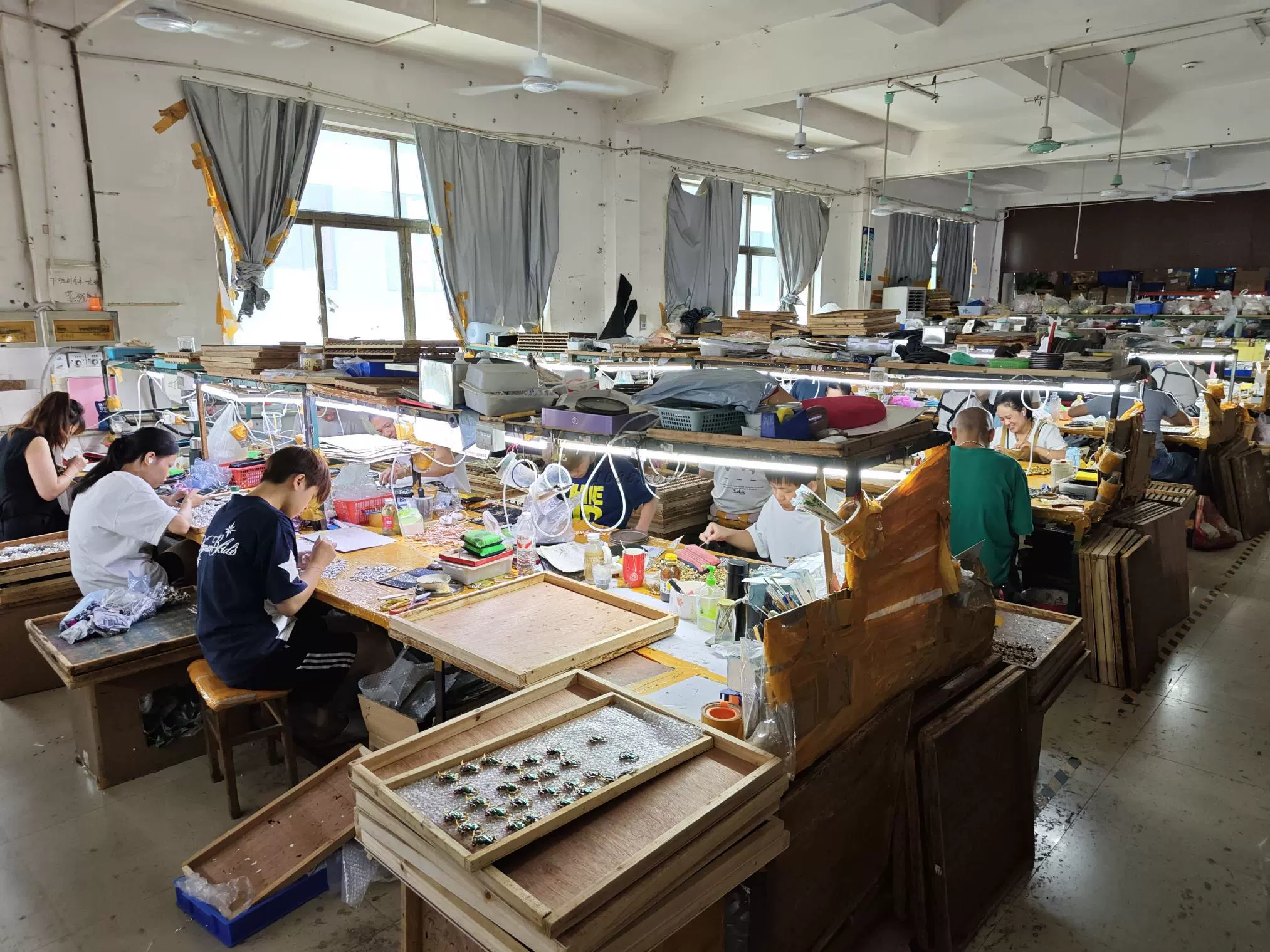
Colouring
Apply the approved enamel version to the intended colour areas
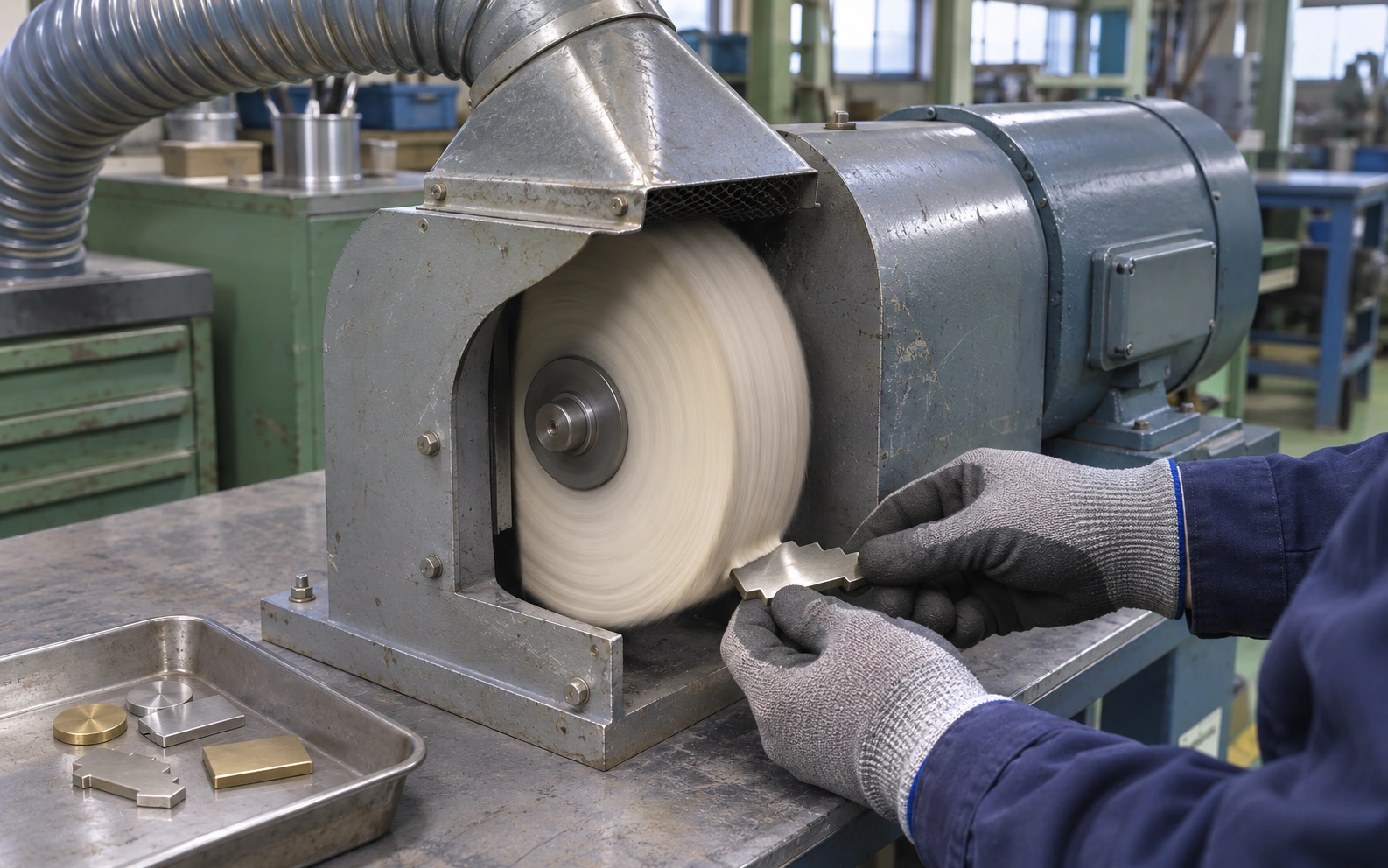
Polishing
Address the face or edges as required by the chosen enamel and metal route

Plating
Provide the agreed metal appearance, following the selected process sequence
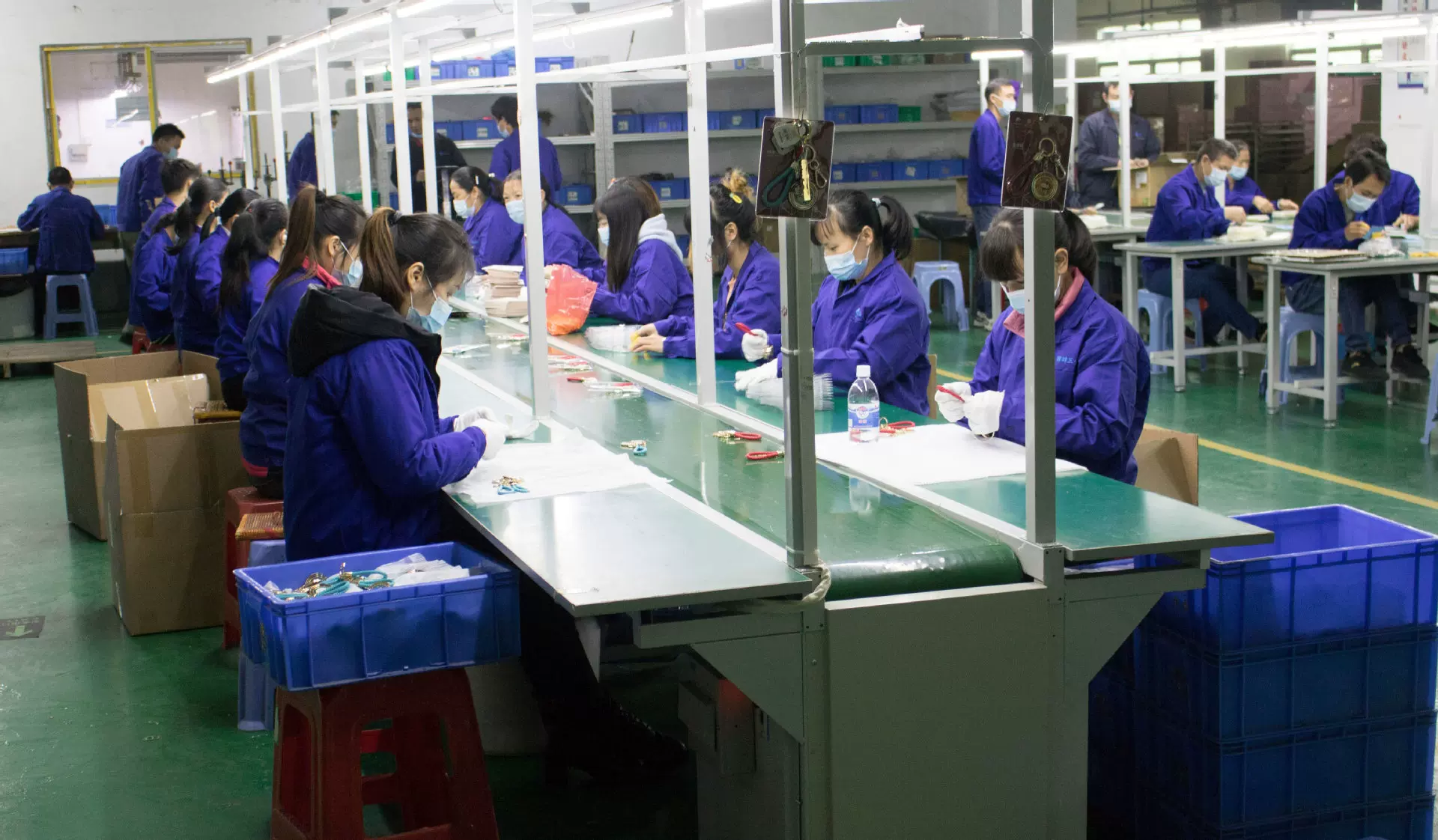
Assembly
Join the correct body, connector and keyring in the approved direction
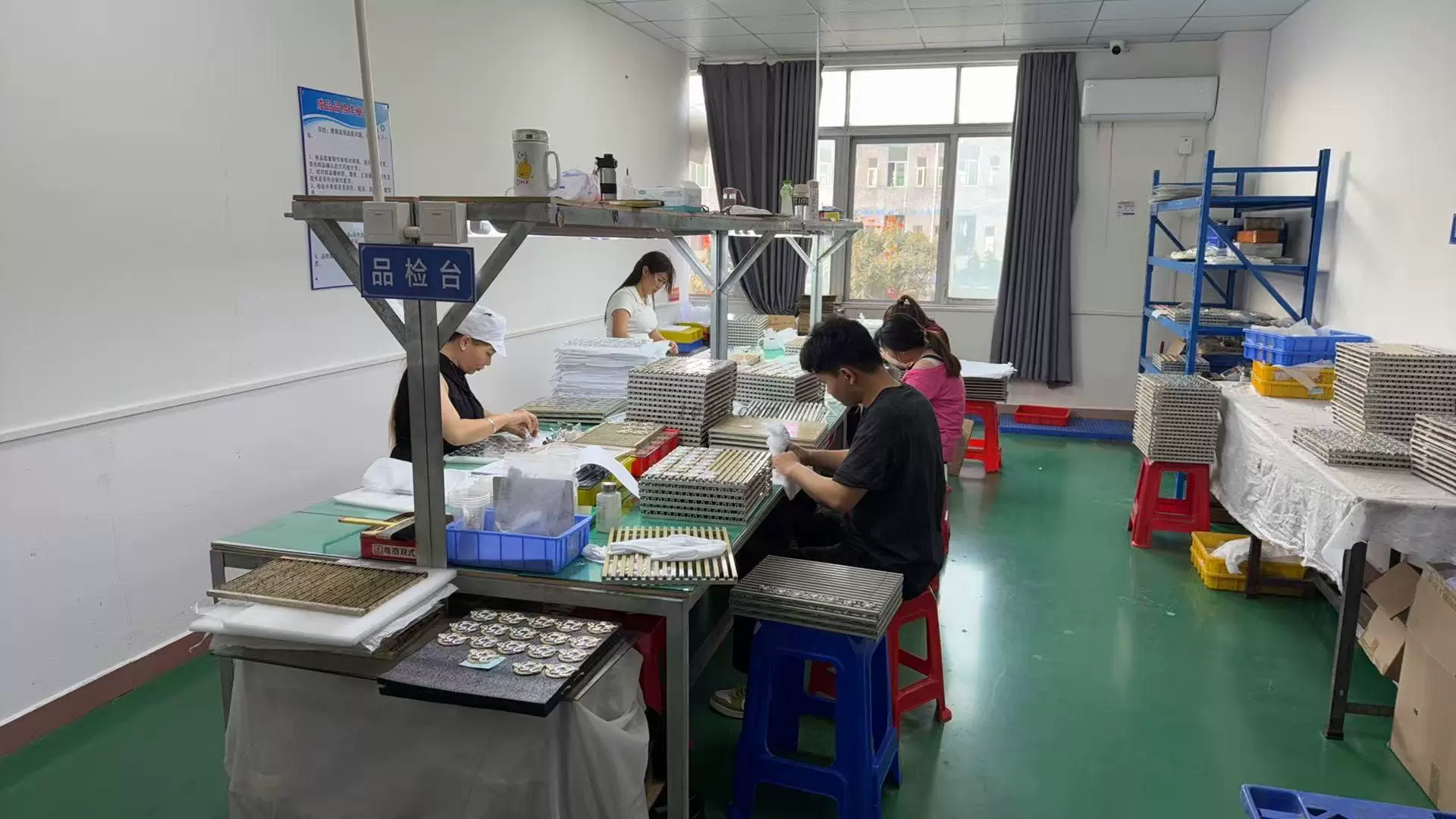
Inspection
Review identity details, assembled scope and version against the project references
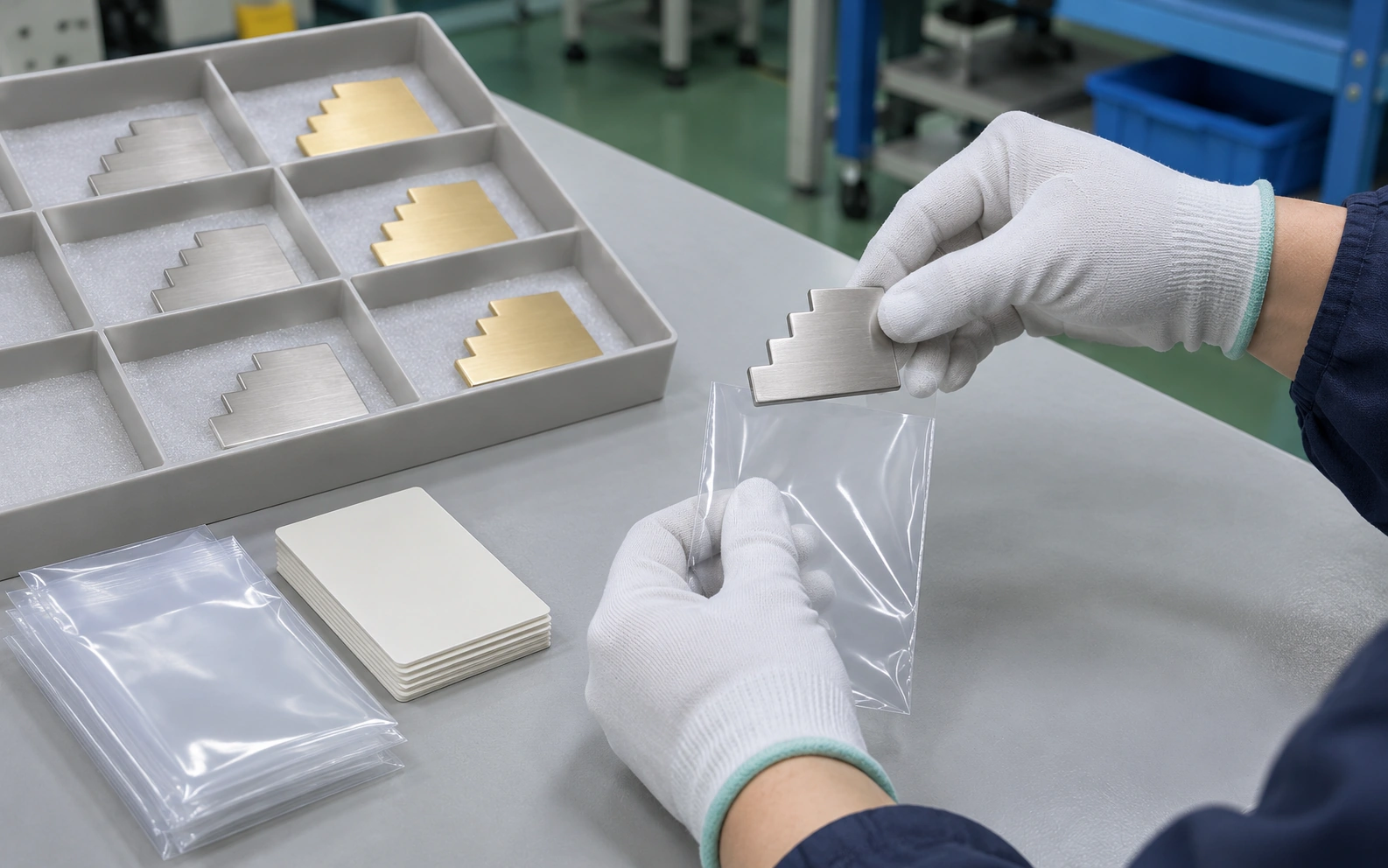
Packing
Protect and identify complete assemblies in the agreed received arrangement
Company archive photographs show general factory work areas; restored versions are labelled. Polishing, plating and packing remain illustrations. These visuals are not documentary photographs of this product or an inspection record.
07 / PRODUCTION
From an approved logo reference to a packed assembly
The stages below explain what needs to be carried forward for a complete logo keychain. The detailed process sequence and review points depend on the selected construction and surface route.
Keep the approved identity and assembly references available throughout production. Any revision affecting the body, connection or received packing should be identified in the project record.
The selected material, construction and finish determine the manufacturing route, with enamel included where specified. These operations explain our scope; they are not one universal production sequence.
01 / Artwork and tooling reference
Establish the logo outline, colour areas, reverse and hanging point. Carry the agreed references into tooling and identify version differences before metal work begins.
02 / Metal body formation
Form the body for the specified construction. Review its silhouette and the areas needed for logo detail and connection against the project reference.
03 / Colour and surface work
Apply the agreed enamel and metal treatment using the selected route. The body face, divisions, edge and reverse belong in the review, rather than judging colour from an unrelated image.
04 / Polishing
Refine the relevant surfaces according to the selected construction and agreed finish. Where enamel is specified, the soft or hard enamel route is reviewed for the design.
05 / Plating
Review the specified metal treatment with the agreed appearance reference. Where enamel is specified, assess it with the selected colours. The construction and finish determine the detailed route.
06 / Connection and assembly
Join the body to the specified connector and keyring. Check the agreed assembled arrangement and hanging direction; a loose body photograph is not the complete item.
07 / Review and inspection
Use the agreed artwork, sample and order specification to review the body, surface, connection, version identification and received form. Any special inspection requirement must be agreed for the project.
08 / Protection and packing
Pack the assemblies in the approved arrangement and separate versions as specified. Confirm the quantities and identification needed for receiving and distribution.
Soft enamel route
Raised metal and recessed colour are part of the intended surface.
Hard enamel route
The filled face is polished for a flatter colour-and-metal surface.
Process order and review points are confirmed for the chosen specification. Company archive photographs show general work areas; polishing, plating and packing use illustrations. These references do not document this particular product being manufactured.
08 / COOPERATION
Keep the buying decisions separate from the factory stages

01 · Share the business brief
Tell us who the keychains are for, the intended quantity, destination and requested timing. Provide the available authorised logo and identify decisions that are still open.

02 · Define the supplied item
Agree whether the enquiry is for complete single-body keychains and record the body, connection, ring and packing scope. Identify any versions and their separate quantities.
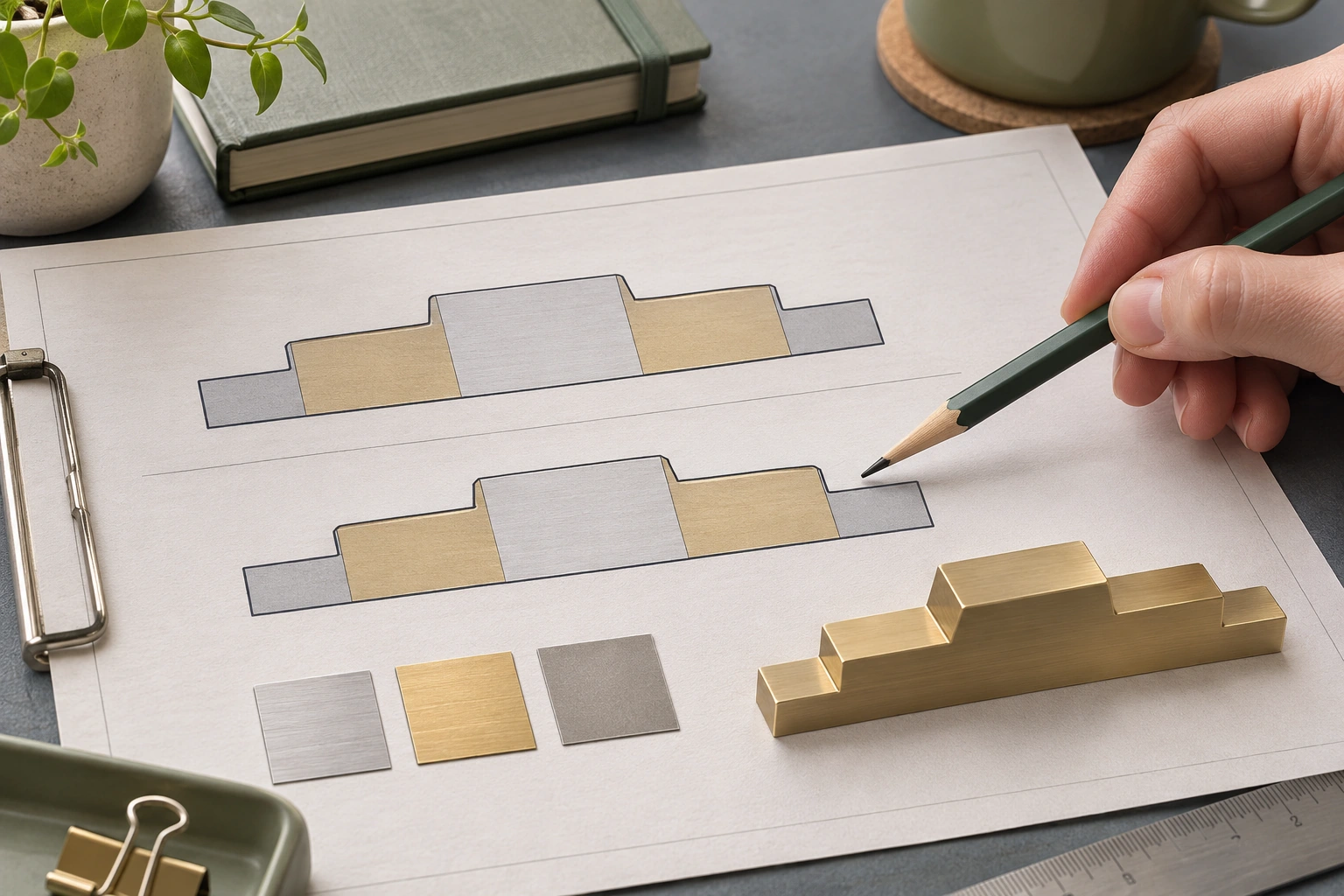
03 · Review artwork and specification
Check front and reverse artwork, dimensions, colour references and assembly direction together. Keep revision names clear so different teams review the same reference.
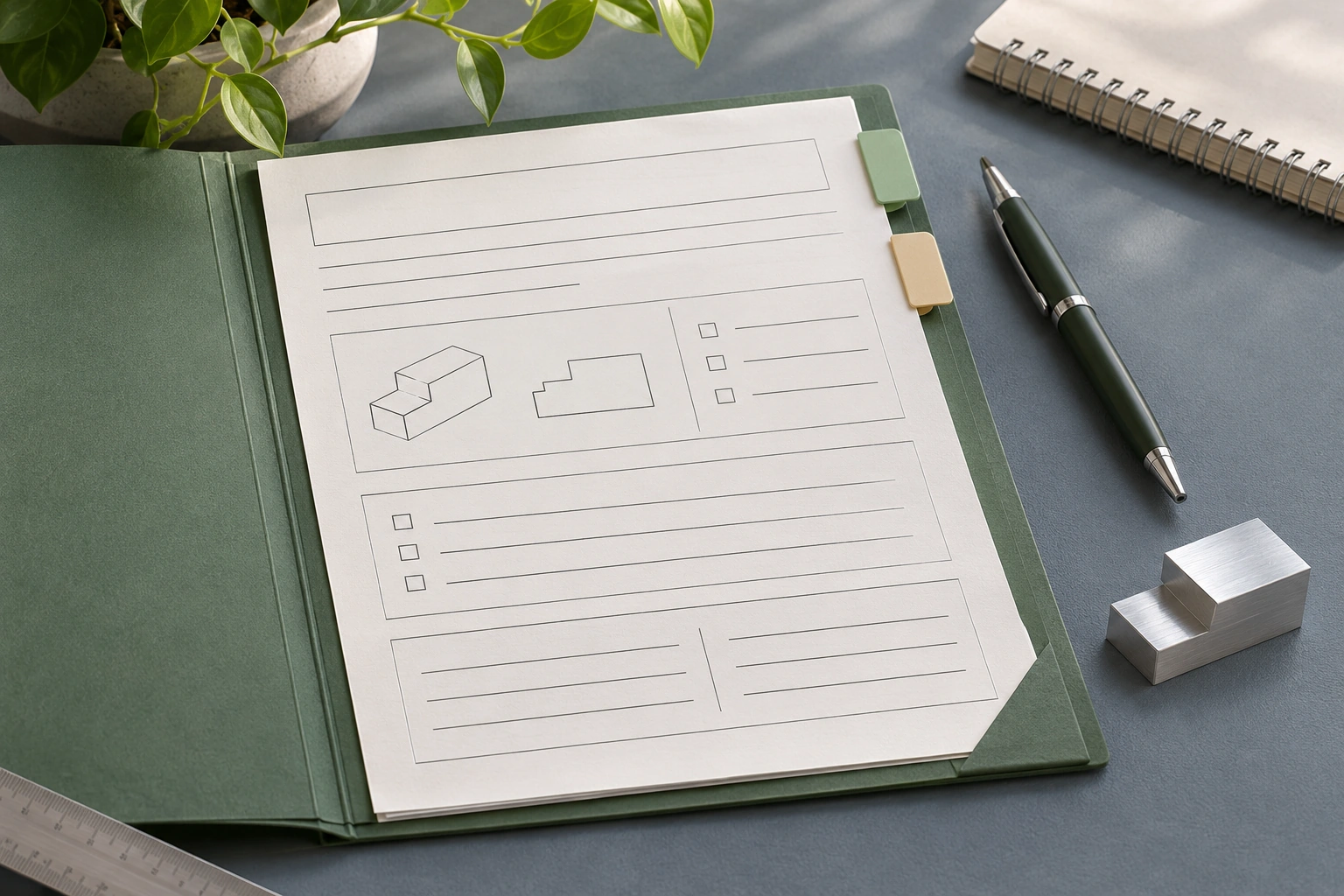
04 · Agree the approval reference
Confirm the required sample or review arrangements, costs and the person who can approve. Record any remaining changes before production authorisation.
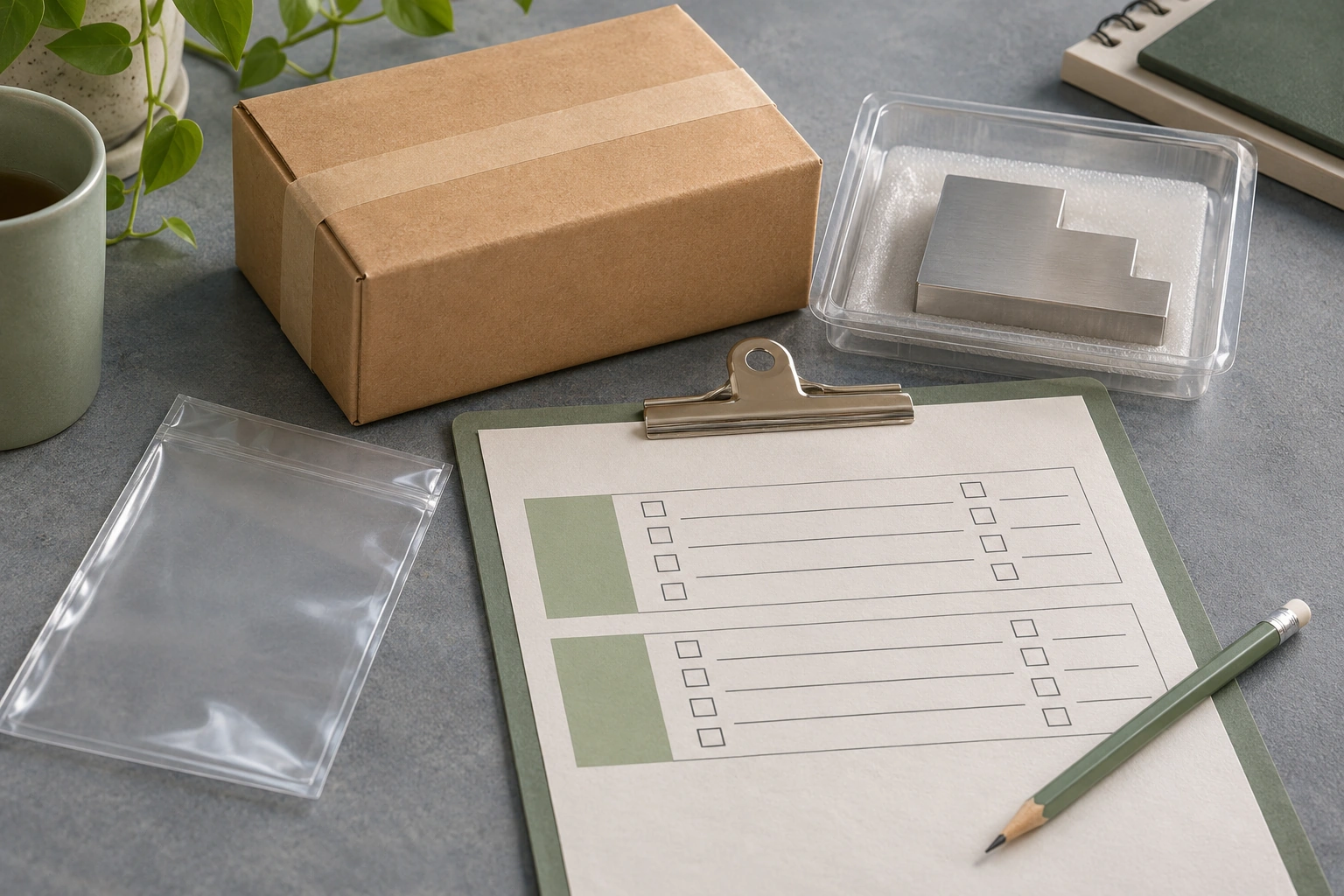
05 · Confirm production and packing arrangements
Review the quotation, order scope and schedule for the actual project. Confirm version separation, protection, cards and receiving information before those choices affect the packed order.
06 · Coordinate dispatch and follow-up
Confirm destination and delivery arrangements and retain the approved references for receiving questions or a later reorder. An intended event or distribution date is an input for discussion, not an automatic delivery guarantee.
09 / FAQ
Logo keychain procurement questions
Does a bulk quantity mean complete keychains or loose logo bodies?
For the product on this page, the intended unit is one complete keychain: one enamel metal logo body, the agreed connection and one keyring. State the requested quantity in complete assemblies and list any extra bodies or components separately. If you need bodies for your own assembly process, that is a different received scope and should be discussed as a charm-component enquiry. The quotation and approval references should name the same unit as your purchasing record.
Can you work from our existing company logo?
Yes. Share the authorised source file and identify the logo features and colours that must remain recognisable. Also provide the intended body size or explain where that choice is still open. Fine text, narrow gaps and closely spaced colour areas need review when the artwork becomes an enamel metal body. Any simplification or adjustment should be presented for your approval.
Should we specify the metal body size or the overall keychain size?
Specify both when they matter to your project. The body size describes the metal logo piece, while the overall dimensions include the connection and keyring. A website image does not establish either measurement. If the product needs to fit a card, presentation pack or other receiving arrangement, share that reference as well. The body proportions, hanging point and selected components can then be reviewed as one assembly rather than approved as unrelated parts.
Can the reverse be plain metal or carry additional information?
The reverse treatment should be part of the specification. A plain metal reverse may be appropriate, or you may want to discuss an authorised mark or other information. Provide the proposed content and indicate its priority before artwork approval. The available space, selected construction and surface route affect what can be reviewed. Do not assume that an unpictured reverse is blank or that small reverse text is already included in a front-view concept.
How do we decide between soft and hard enamel for a logo keychain?
Compare the routes against your logo artwork and intended surface appearance. Review the metal divisions, enamel areas, small details and the way the face meets the edge. A finish name alone does not show whether the identity reads clearly at the proposed scale. Use the same logo and agreed review references when discussing the alternatives. Confirm the final construction, surface specification and sample arrangements for the order.
Can we choose how the body connects to the keyring?
The connection is a project decision and should be reviewed with the body and keyring. Show the preferred hanging direction, any existing component reference and the complete appearance you need. The available space around the hanging point and the selected components affect the assembly. If your project has a specific fit or handling requirement, identify it early and agree how it will be checked. A concept image is not evidence of universal compatibility or a tested load rating.
Can one order include more than one logo colour or reverse version?
Multiple versions can be discussed, but each needs a clear reference and quantity. Identify which features remain common, such as the body outline or connection, and which details change, such as enamel colours or reverse information. Keep the versions separate in the artwork and purchasing brief so an approval for one is not mistaken for approval of all. Pricing, tooling implications, packing separation and the production arrangement are reviewed for the actual combination requested.
Can the keychains be supplied on individual backing cards?
Carded supply can be discussed as a packing option for the complete keychain. Provide the card artwork or reference, desired received appearance and any receiving or distribution requirements. The fixing position, protection and placement of the body, connector and ring need review together. Count complete keychains separately from cards and identify any versions that require different artwork. Carding is a packing scope to agree; it does not by itself create a different enamel product or an approved sample arrangement.
What should we check before approving production?
Review the authorised artwork, body dimensions, front and reverse, colour references, metal appearance, hanging direction, connector, keyring and packed form. Confirm the quantity and identification for every version and make sure the approval record uses the same references as the order. Agree which matters are established by digital artwork and which require a sample or other review. Record outstanding changes before authorisation; the website concept is an enquiry aid and cannot serve as the production approval.
What information is needed for a quotation and delivery discussion?
Send the available logo, quantity by version, intended body or overall dimensions, preferred finish and connection, packing needs and destination. Include your requested timing and identify any fixed distribution date, while keeping open choices marked clearly. We can then discuss what further information is required for the actual scope. MOQ, pricing, sampling costs, production time and delivery arrangements are confirmed for the project; no standard number or guaranteed date is established by this page.
10 / ARTICLES
Logo keychain procurement notes
Compare practical guidance on artwork, complete-unit specifications and receiving arrangements before your team signs off the order. Relevant articles appear here when a published guide matches this product's procurement task.
11 / RELATED PRODUCTS
Compare the finished item you need
A shared logo can lead to different supplied products. Choose the route that matches how your organisation will wear, assemble or distribute the finished item.

Company logo pins
Choose a wearable logo piece when the fastening belongs on clothing rather than on a keyring.

Logo charm components
Discuss a body and agreed connection supplied for your own downstream assembly when a complete keychain is not the required unit.
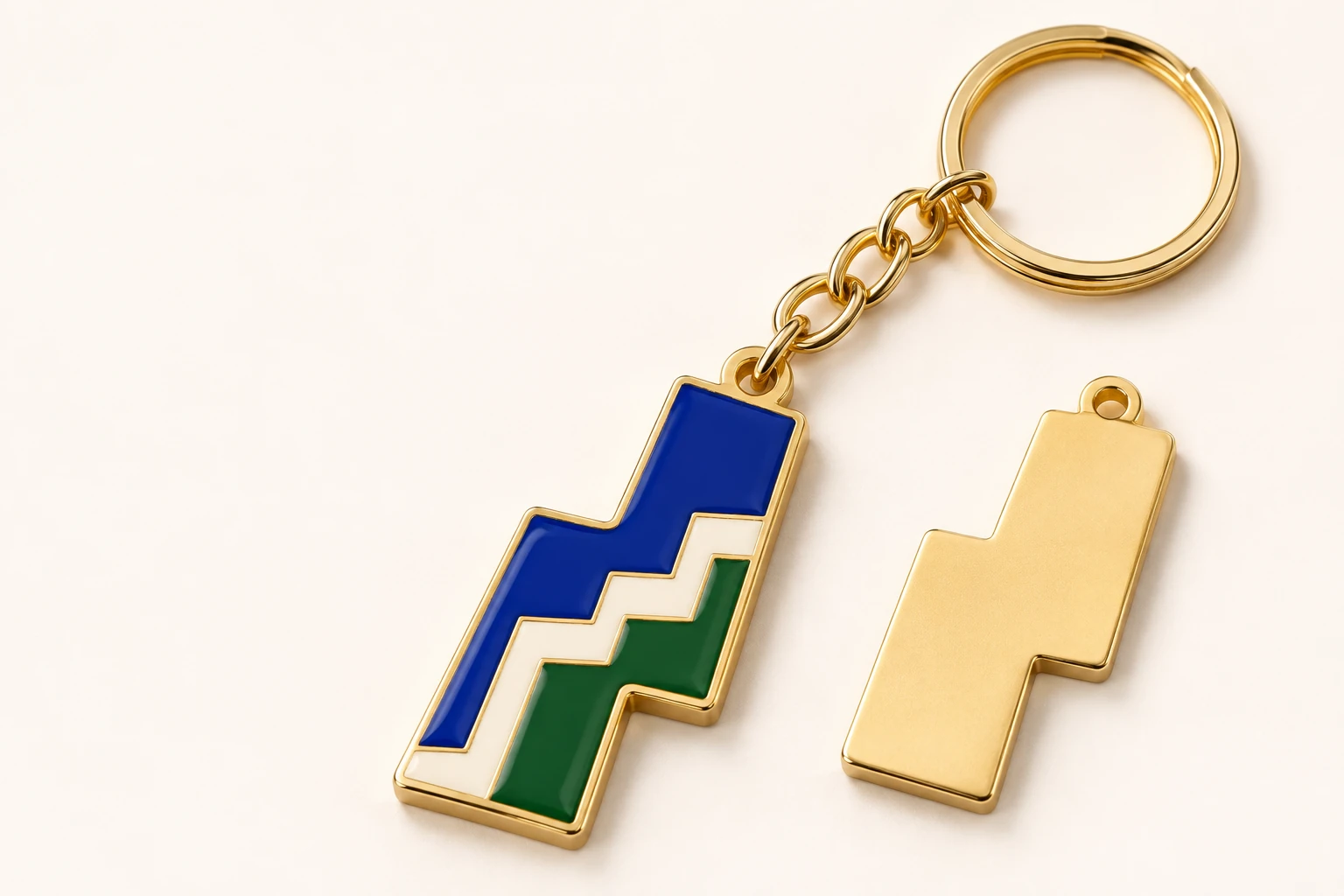
Cut-out stainless steel keychains
Explore a through-cut metal-sheet concept when open negative spaces and supporting bridges are part of the design, instead of an enamel-filled logo face.
12 / ENQUIRY
Define your logo keychain order
Tell us the quantity of complete keychains and share the authorised logo or reference available. Identify who will approve the identity artwork and whether the reverse, connection and packing have already been selected. Open choices can stay open at the first enquiry if they are clearly marked.
Include the destination and requested timing so the conversation addresses the actual supply brief. Body dimensions, component selection, MOQ, pricing, sample arrangements and delivery are confirmed for the project; a concept illustration is not the manufacturing specification.
- Quantity of complete keychains, separated by logo or colour version.
- Authorised logo source file and the identity details that must remain fixed.
- Intended body dimensions and any overall-size constraint.
- Front colours, metal appearance and reverse instructions.
- Hanging direction, connector or keyring reference.
- Individual protection, backing card and receiving-label requirements.
- Destination, requested timing and approval contact.
Email logo artwork and front/reverse references to [email protected]. Identify the latest revision and any details still open for review. Review the enquiry privacy notice before sending your business contact and project information.
PROJECT BRIEF
Enamel Logo Keychains for Company Orders