
Custom charm manufacturing
Enamel charms for brand accessory lines.
Plan the charm body, connector and assembly scope for your brand line. Decide which parts to order and record the artwork, quantities per version and packing for each arrangement.

Bodies, agreed connectors or assembled arrangements.
The supplied scope starts with your business use.
Illustrative concept files / 01—06
Six concepts. Six supplied arrangements.
Use a concept to describe the product you want to receive. The body, connecting parts and assembly are defined for your project.
BRAND COMPONENTS · WHOLESALE MANUFACTURING
Custom Logo Charms for Wholesale Component Orders

Build a metal and enamel logo body around the next stage of your brand's assembly. Green Frog Supply works with authorised brand, organisation and accessory buyers to define the face, reverse and connection opening, then identify exactly what your receiving team should receive.
- Supply reference
- One defined metal body per piece; authorised brand identity; opening and reverse reviewed together; additional fittings itemised; downstream assembly responsibility recorded.
- Quantity and project inputs
- Authorised logo and essential identity details.; Intended body dimensions, front and reverse instructions.; Piece quantities and names for each version.; Opening, connection reference and hanging direction.
- Sample and receiving review
- front and reverse identity; proposed dimensions; enamel and metal appearance; opening and hanging direction; named connection reference; bodies per version; separate fitting quantities; attached/loose state; protection and receiving labels. Agree which points require a physical sample or other reference and confirm sample costs and revision arrangements for the project.
BAG ACCESSORIES · METAL & ENAMEL PROJECTS
A Bag Charms Manufacturer for Metal Brand Accessories

Develop a branded bag charm around the bag it will meet. For bag and accessory brands, the purchasing task includes more than the enamel face: the attachment point, main and secondary pieces, hanging direction and received assembly all shape the product your team approves.
- Supply reference
- Brand-commissioned metal accessory; main and secondary pieces defined; actual bag interface reviewed; included hardware itemised; assembled or loose delivery recorded.
- Quantity and project inputs
- Authorised brand artwork and essential visual details.; Actual bag-side attachment reference and relevant dimensions.; Main and secondary body drawings or arrangement sketch.; Intended facing direction and component order.
- Sample and receiving review
- actual bag interface; main and secondary body identities; part order and hanging direction; front/reverse appearance; connection references; included hardware; assembled or loose state; quantities by configuration; protection and receiving labels. Agree whether the attachment needs a physical bag-side reference, and record sample costs, revisions and the approval contact.
BRAND TRIMS · METAL & ENAMEL
Custom Zipper Pulls for Wholesale Brand Orders
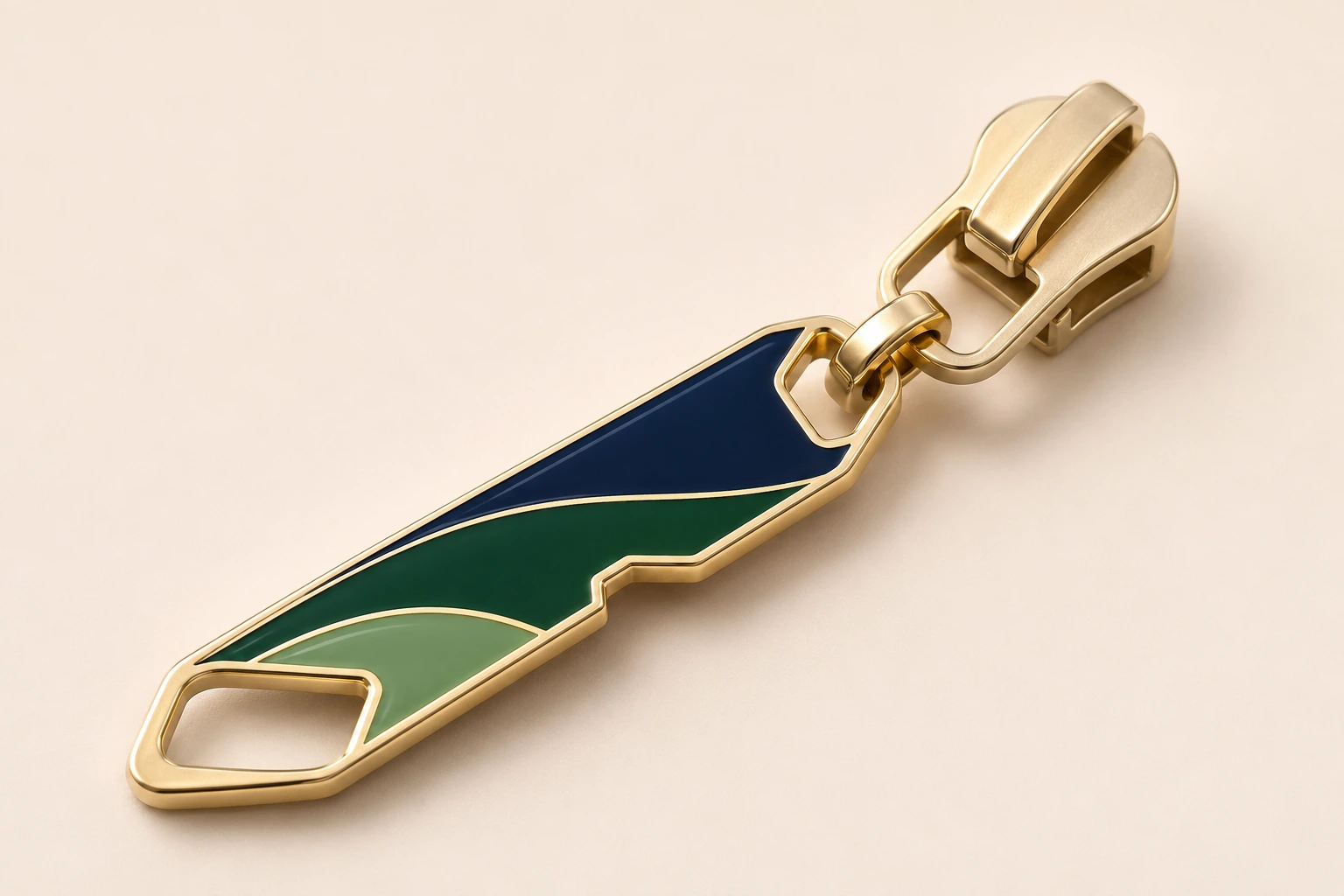
Plan a branded decorative metal pull with the slider interface already in view. Garment and bag brands need to define the enamel body, its opening and connection, the intended hanging or pulling direction, and the work that remains before the trim reaches the finished product.
- Supply reference
- Decorative metal pull body; actual slider opening reviewed; connection and direction defined; body versus assembled-trim quantities distinguished; later attachment responsibility named.
- Quantity and project inputs
- Authorised brand artwork and required orientation.; Intended body outline, dimensions and reverse treatment.; Actual slider reference and relevant interface dimensions.; Proposed connector and attachment route.
- Sample and receiving review
- body face and reverse; intended dimensions; enamel and metal appearance; body opening; actual slider reference; connector route; hanging and handling direction; supplied unit; versions and counts; later attachment; protection and receiving identification. Agree what requires physical interface review, together with sample costs, approval contact and revision arrangements.
PHONE ACCESSORY BRANDS · ENAMEL METAL
A Phone Charm Manufacturer for Enamel Metal Designs
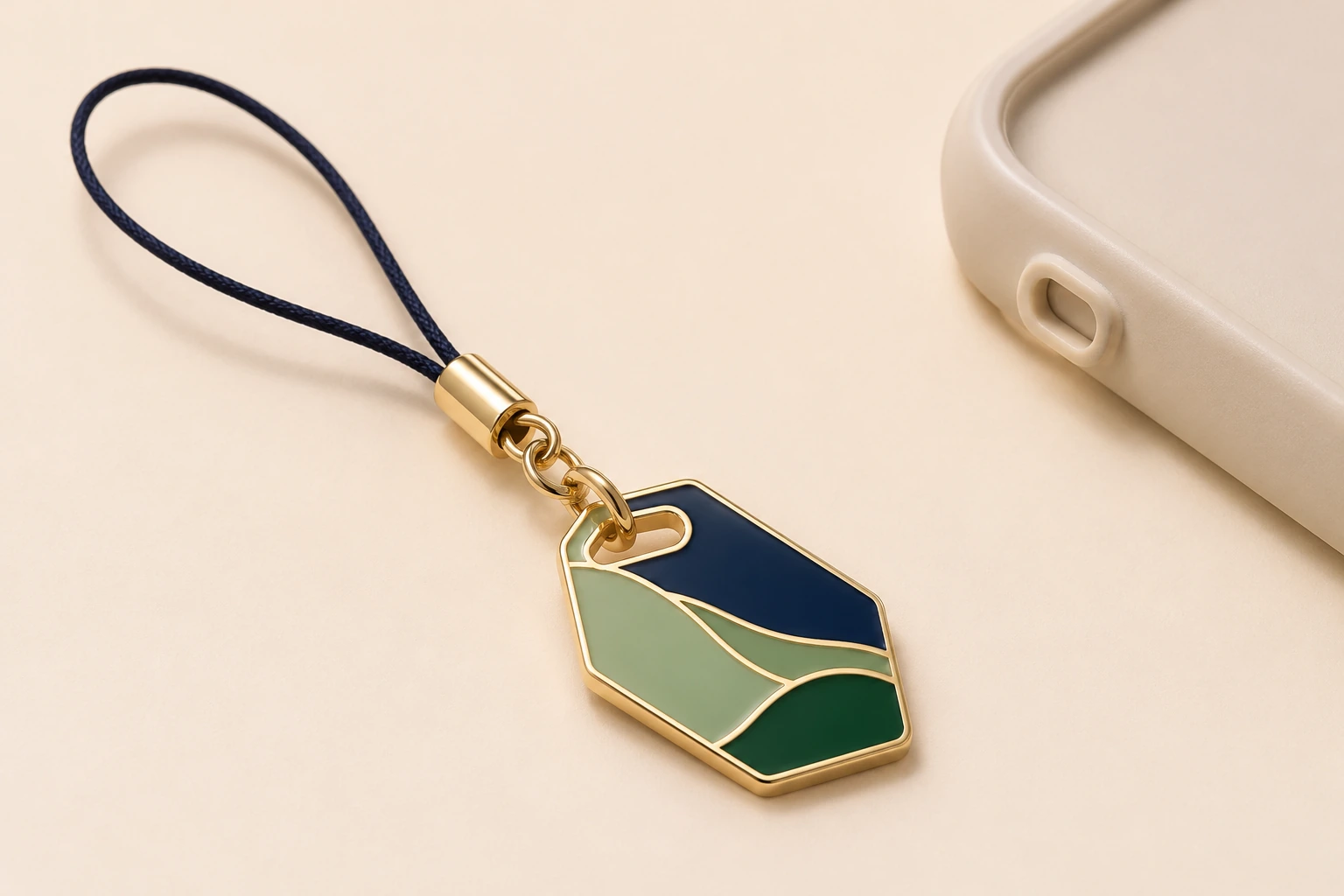
Develop a metal and enamel phone charm with a clear installation reference and a defined delivered combination. For accessory brands, the brief needs to distinguish the decorative body from any cord, loop or connector, then show how those parts are intended to meet the buyer's actual attachment arrangement.
- Supply reference
- Brand-commissioned metal body; actual attachment arrangement described; cord and connectors itemised; facing direction reviewed; loose or attached supply stated.
- Quantity and project inputs
- Authorised artwork and intended metal body dimensions.; Front, reverse and enamel/metal appearance references.; Actual attachment arrangement and installation path.; Opening position and intended hanging direction.
- Sample and receiving review
- body front/reverse; intended dimensions; enamel and metal appearance; opening; actual installation reference; cord and connector descriptions; intended direction; included-parts list; assembly state; configuration quantities; protection and receiving identity. Confirm any physical interface review, sample costs, approving contact and unresolved questions. The review reference does not imply a drop, load or safety test.
FOOTWEAR & BRAND PROGRAMMES · METAL ENAMEL
Metal Shoelace Charms for Wholesale Brand Orders
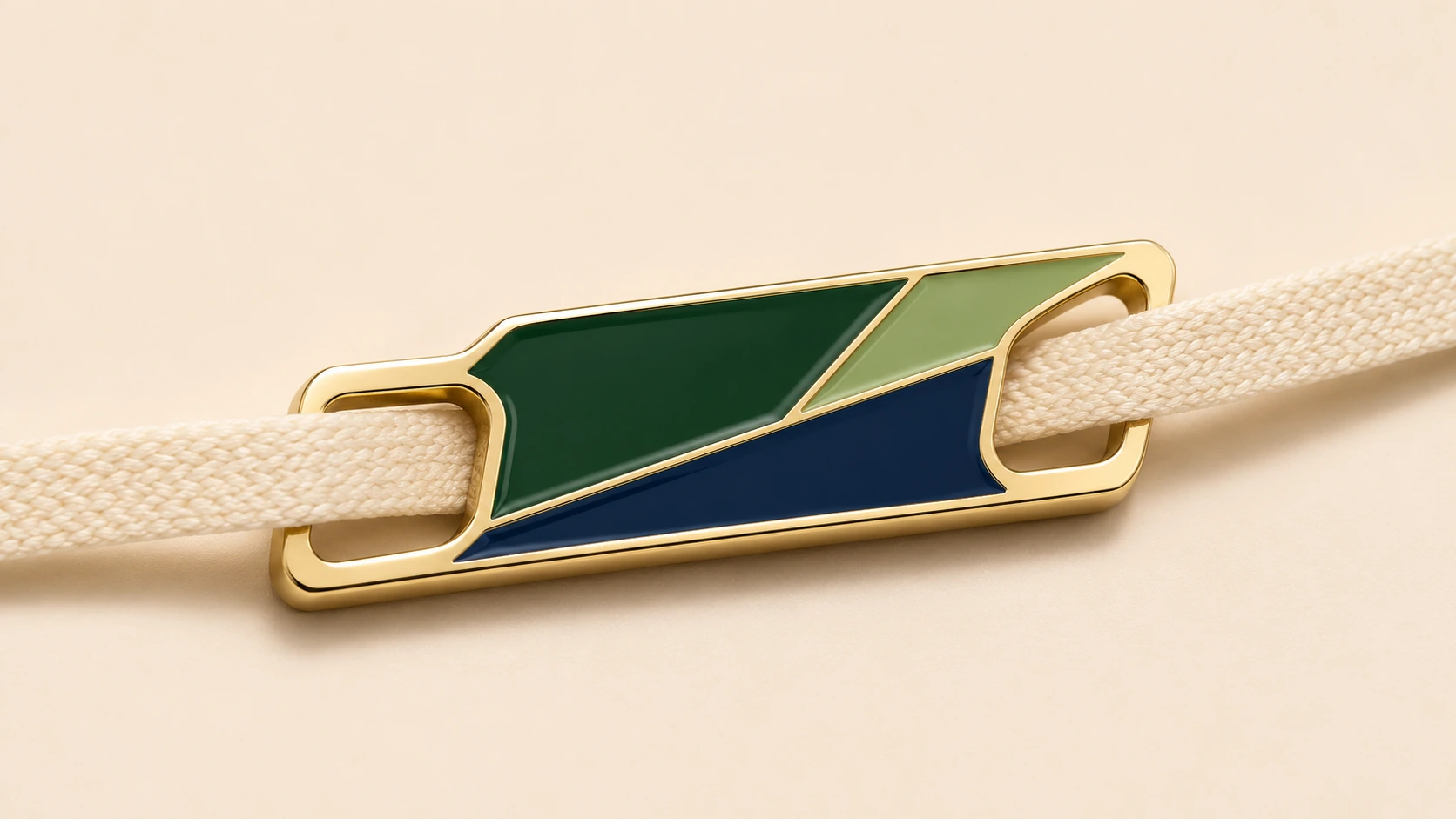
Plan metal and enamel shoelace charms for a footwear range, brand programme or organised activity. The brief starts with how the actual lace passes through or connects to the body, then brings the authorised artwork, orientation and received quantity into that same reference.
- Supply reference
- Brand-commissioned metal lace accessory; threading or attachment route defined; actual lace reference reviewed; one piece versus pair stated; versions and receiving state recorded.
- Quantity and project inputs
- Authorised artwork and essential identity details.; Actual lace reference, profile and relevant dimensions.; Intended threading or attachment path and orientation.; Proposed body dimensions, slots and reverse treatment.
- Sample and receiving review
- body outline and intended dimensions; lace reference; complete threading path; slots and surrounding metal; front/reverse and orientation; enamel/metal appearance; single/pair contents; quantities by version; included parts; installation responsibility; protection and identification. Agree physical review needs, sample costs and the approval contact before treating the arrangement as settled.
WINERIES · VENUES · BRAND EVENTS
Custom Wine Charms for Wholesale Identification Sets
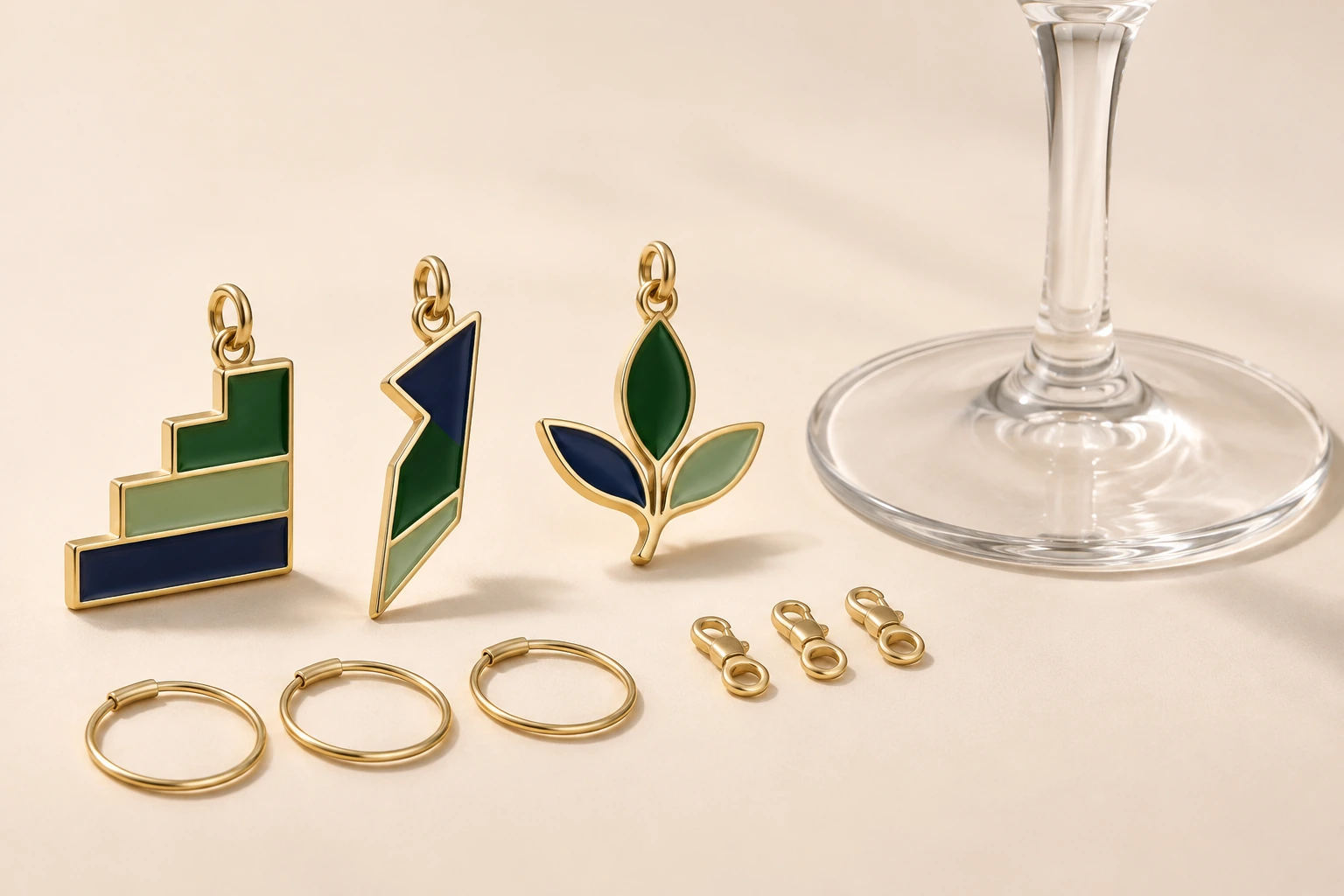
Plan metal and enamel wine charms for a winery, hospitality programme or branded event in which each identifier needs a place in a defined group. The purchasing task includes the different marks within that group, the stem-ring connection, the number of pieces per set and the received assembly and packing.
- Supply reference
- Brand-commissioned identification bodies; distinct marks within each set; actual stem reference reviewed; ring and connector inclusion stated; piece and set counts reconciled.
- Quantity and project inputs
- Authorised brand artwork and each identifier reference.; Intended body dimensions, front and reverse instructions.; Set contents and any event/venue configuration names.; Set quantity and total bodies per identifier.
- Sample and receiving review
- every identifier; complete set contents; face/reverse and distinguishing details; intended dimensions; metal/enamel appearance; body opening; actual stem reference; ring and connector inclusion; assembled or loose state; set and piece counts; packing and labels. Agree physical interface review needs, sample costs, approving contact and outstanding requirements before approval.
Define the received form
Choose the scope
of the charm supply.
Three possible receiving arrangements for an illustrative leaf-body concept. They are alternatives to discuss, rather than stages that every order passes through.
Charm body

The defined enamel body is the starting scope. State the front, reverse and opening reference. Identify who will carry out later assembly.
- Included to define
- Named body and quantities by version.
- Still to decide
- Any fittings, presentation and packing.
With agreed connectors
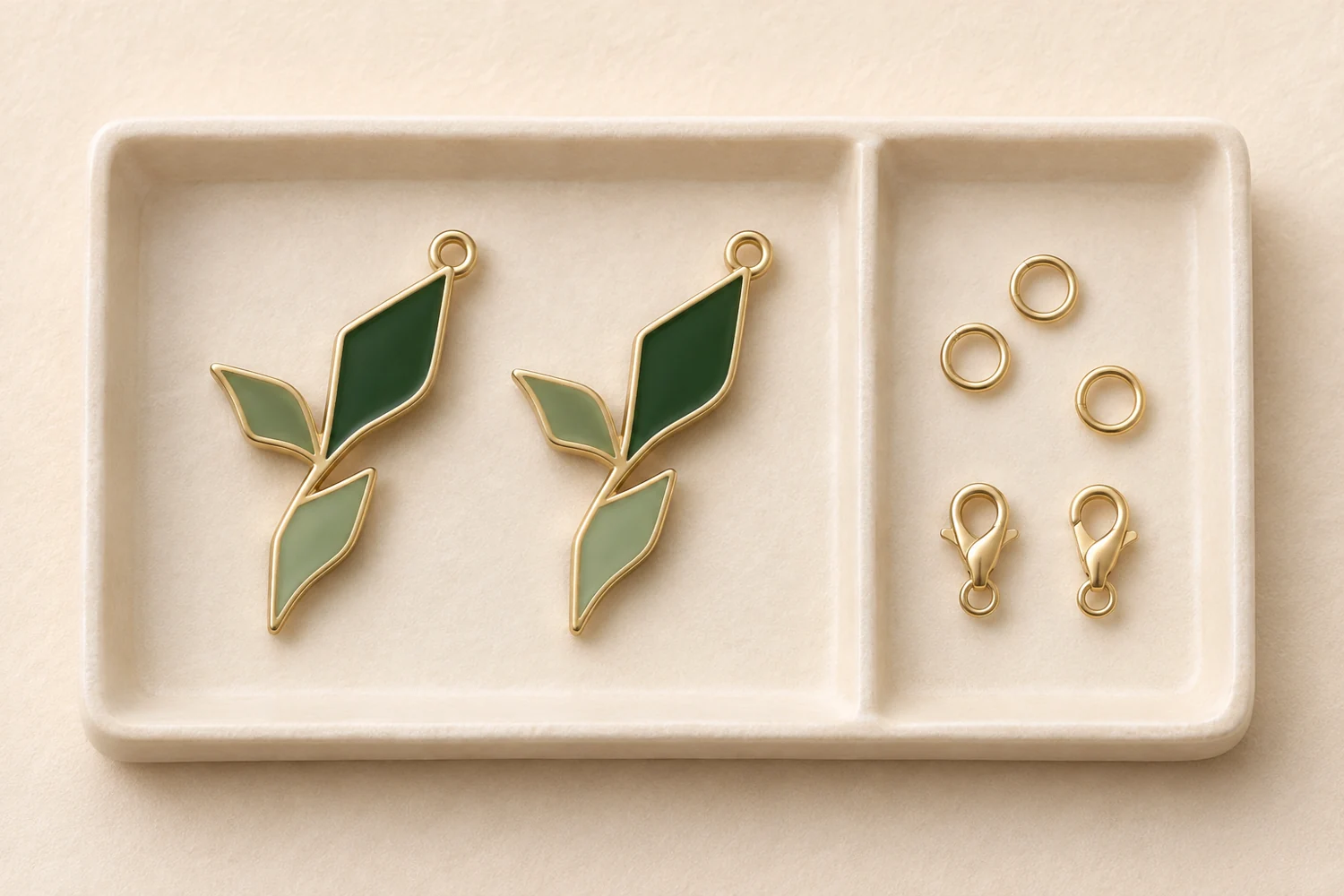
The body and a specified parts list are discussed together. Say which components remain loose and which connections, if any, are already made.
- Included to define
- Body plus each named connecting piece.
- Still to decide
- Assembly responsibility and separated packing.
Assembled accessory

Define the complete arrangement your team expects to receive. Record orientation and review the intended interface with the agreed parts.
- Included to define
- Body, listed parts and specified assembly.
- Still to decide
- Fit reference, review scope and presentation.
Scope illustration. Tray contents explain a discussion; no pictured fitting is automatically included.
The interface is a decision
Start with the connection.
A product name cannot tell us how the charm connects. Bring the body and the intended attachment into the same discussion.
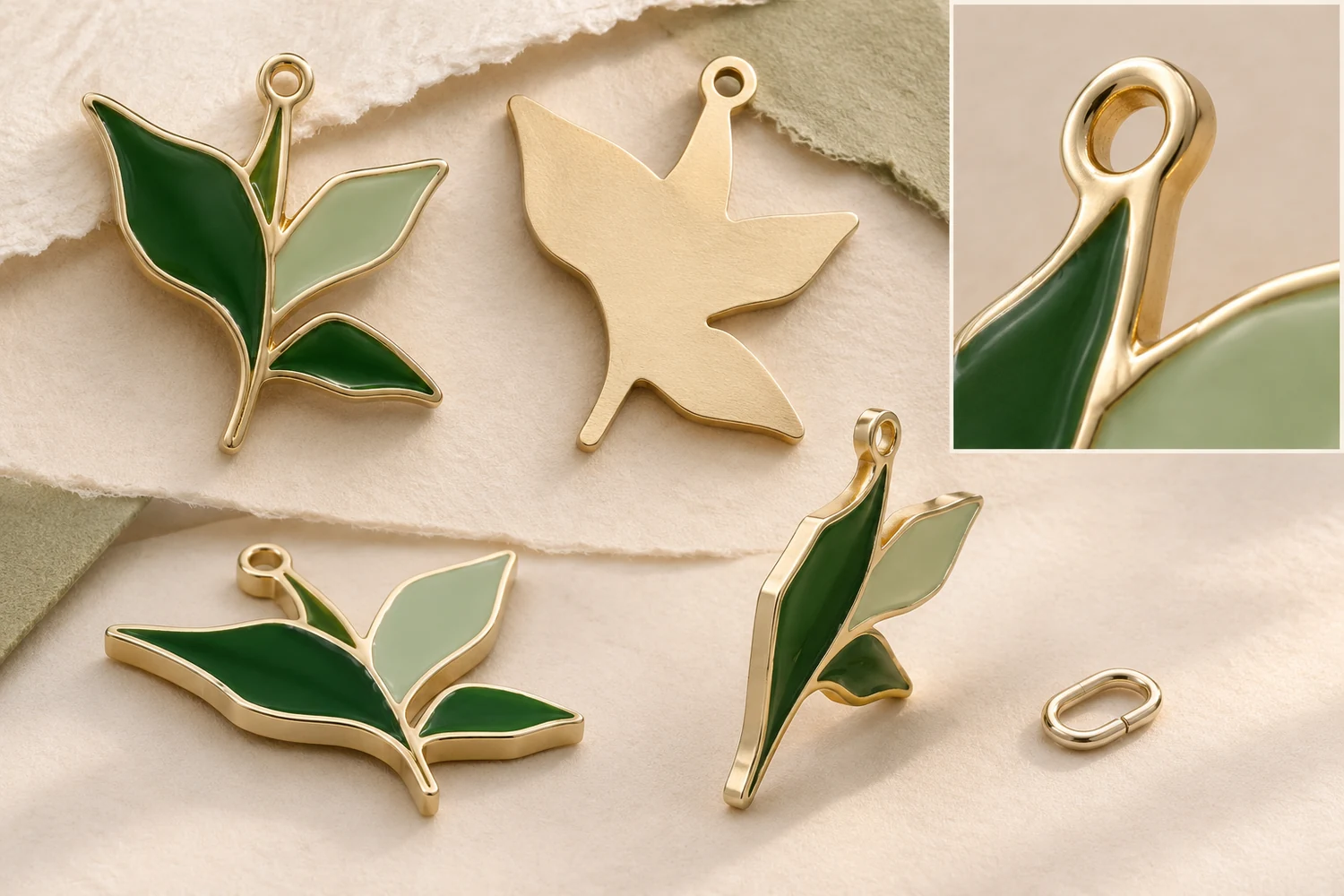
Locate the opening.
Show a proposed hole or loop, its position and the available connection space. Include the reverse when the connection affects how the charm lies.
Show how it hangs.
Identify the face that should be visible, the hanging direction and the proposed connection path. A front photograph alone can leave those decisions open.
Bring the receiving part.
Supply a clear reference for the part the charm will meet. If it is not yet defined, describe the use and mark the interface as a point for discussion. For phone accessories, see how to specify phone charm fittings across case models.
This category concerns charm bodies and agreed accessory arrangements. Complete keyring products, pin-backed badges and ribboned award medals have different product scopes.
One named artwork reference
Keep the artwork recognisable.
The outline, colour areas and brand details should belong to a version your team can identify.
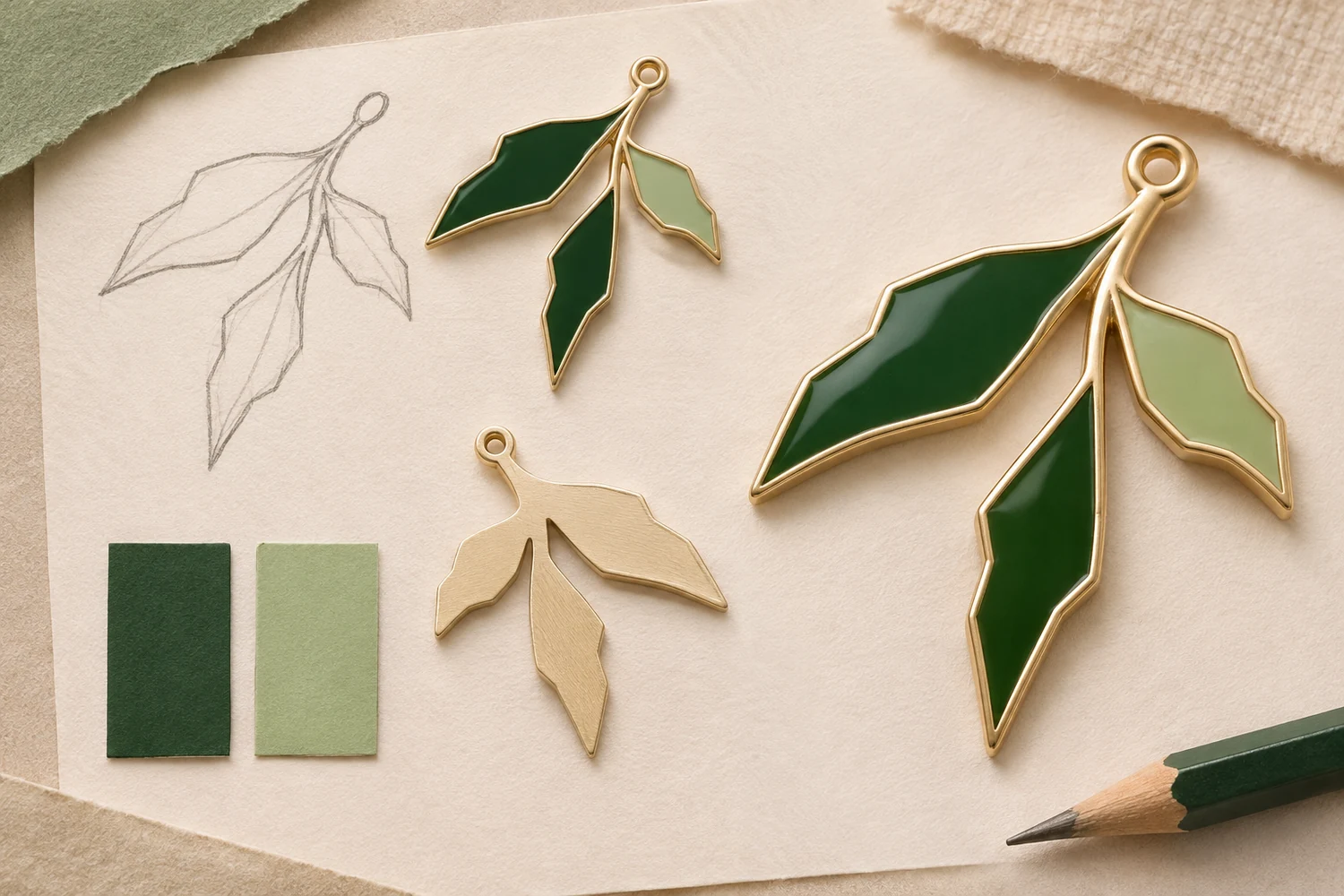
Record what must stay.
Share the artwork you are authorised to use, including wording, symbols and details that need to remain recognisable. Give a proposed size direction and indicate any requirements for the reverse.
Separate fixed from open.
Name the revision and identify what can change. When you have a concept rather than finished artwork, explain the business use and visual direction so the unresolved decisions stay visible.
Artwork review records the proposed reference. Physical appearance, connection and assembly need their own agreed product or sample review.
Front · reverse · edge
Review surface and
structure together.
An enamel route is one choice within the product. The complete body and its connection still need to work as one design reference.
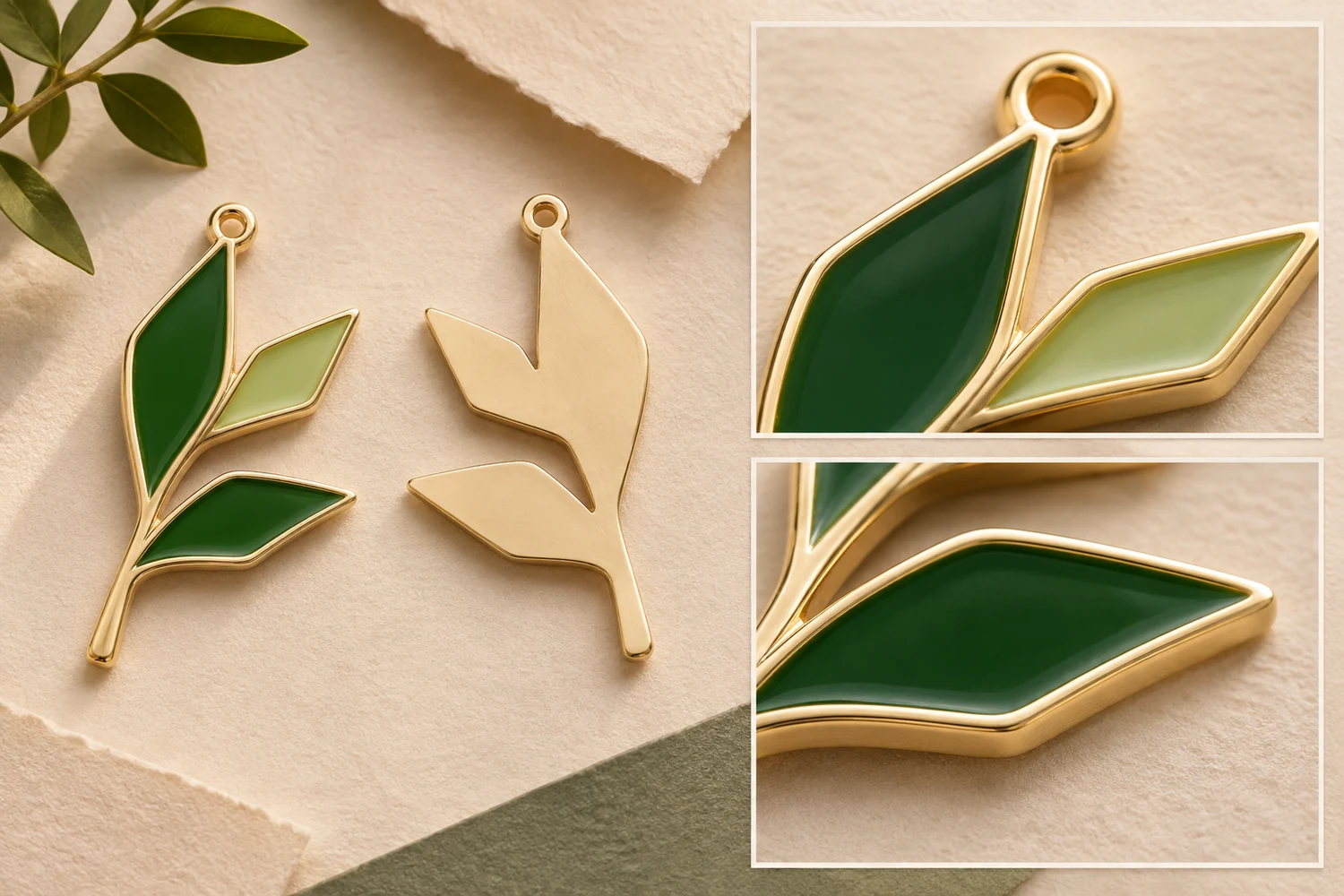
Soft enamel typically retains recessed colour between raised metal divisions. Hard enamel has a smooth, flush polished surface. Consider the intended look alongside lettering, colour areas and visible metal at the proposed size.
Include the outline, edge, reverse and opening in the review. Confirm the applicable finishing route for the actual project and compare the body with any specified connecting parts.
Name before combining
One brand line,
clearly named versions.
A tray can hold one design in several colours, different bodies or a coordinated set. Your quantity reference should say which.
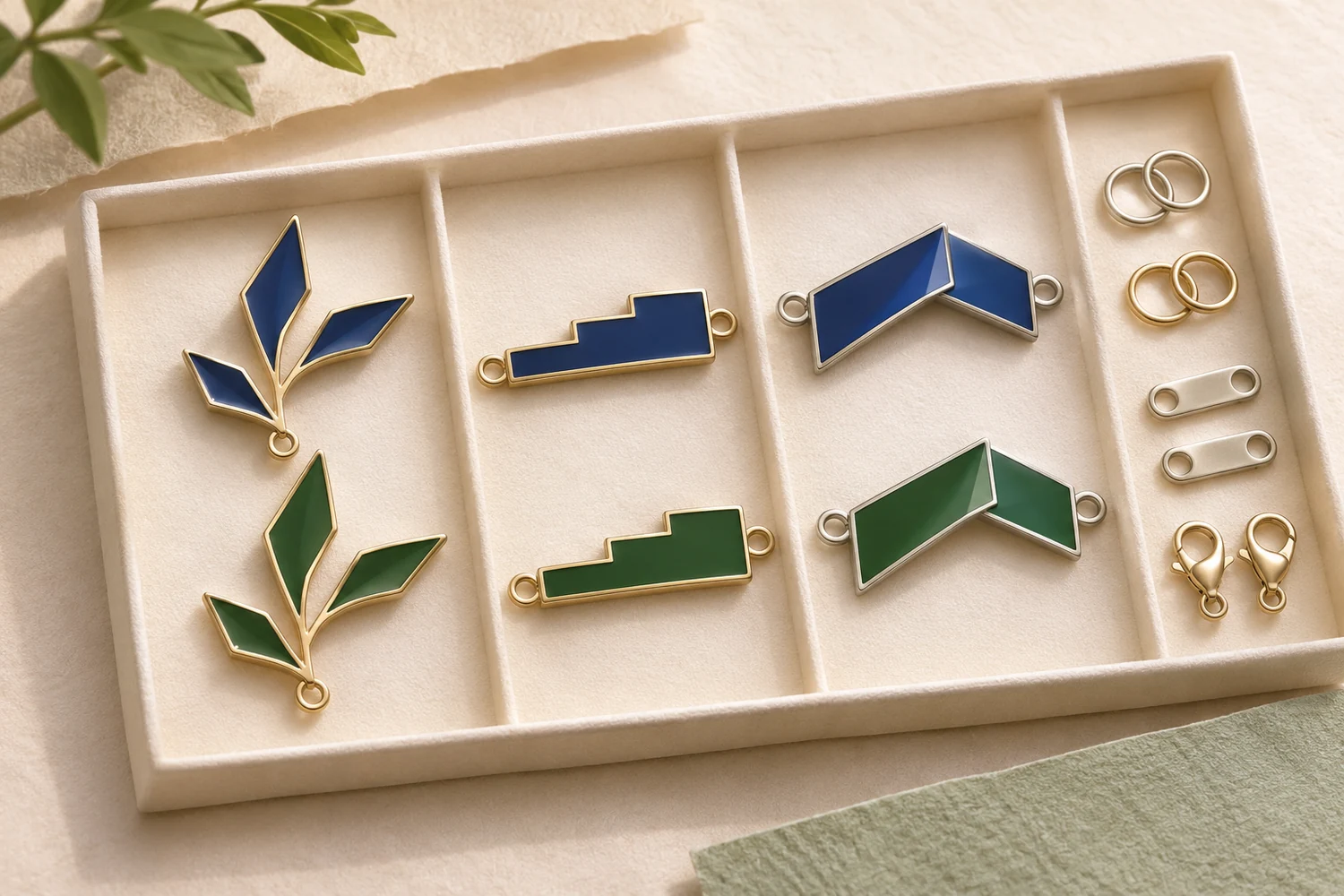
Unit: charm body.
List each colour quantity for this leaf outline separately.
Unit: charm body.
Name the stepped outline and each required colour version.
Unit: body or accessory, to define.
Keep each chevron colour separate from the other designs.
List connectors separately. If ordering sets, name every part and the quantity within one set.
Quantity for each version · counting unit of pieces or sets · connecting and presentation parts included in that unit. A project total is useful alongside this detail.
Eight work areas / one scope index
Our factory,
organised around the work.
Green Frog Supply operates through HANGZHOU FORTHRIGHT TRADE CO., LTD in Hangzhou, China. Our own factory carries out tooling, metal forming, enamel colouring, polishing, electroplating, assembly, inspection and packing.
The index relates work areas to procurement questions. It is not a factory floor map, and it does not mean every project includes every operation or that all connecting parts are made in-house.

Tooling
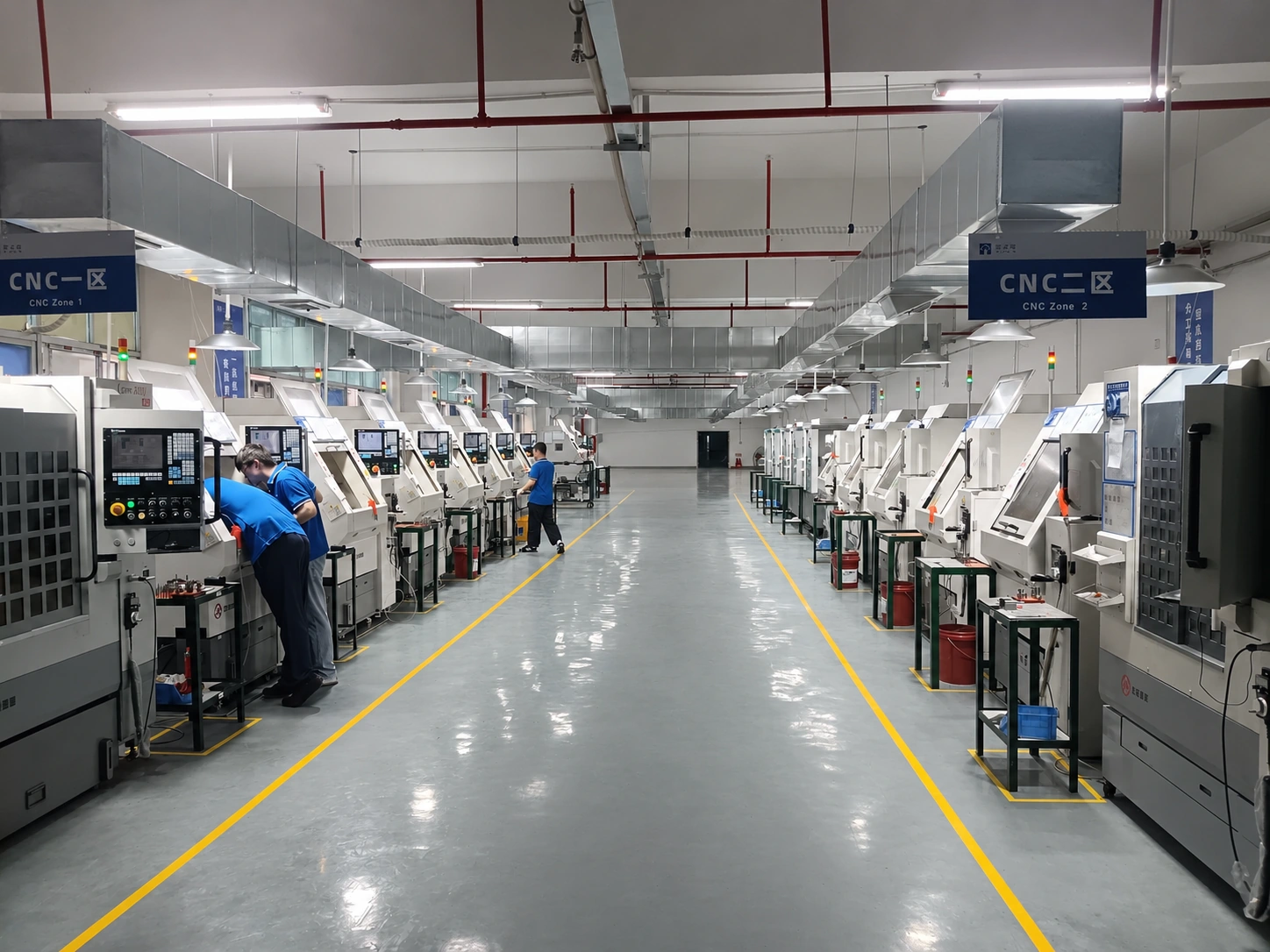
The discussed outline, eyelet or opening, relief and graphic requirements inform tooling preparation. A hanging component needs its connection considered alongside the front design, rather than added as an unnamed detail afterwards.
Which outline and connection reference is the tooling intended to follow?
Metal forming
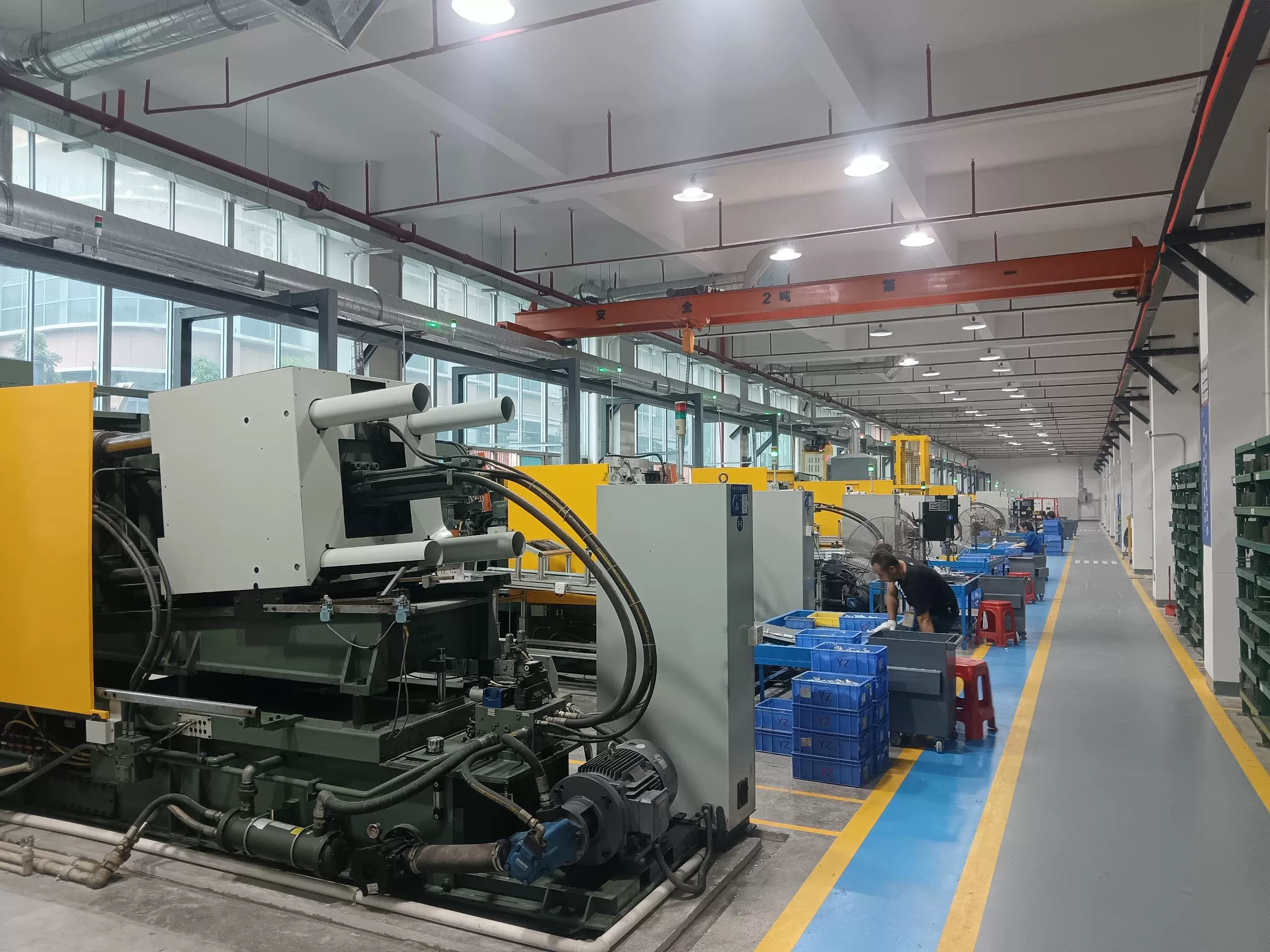
The metal body and its connection shape are established before the agreed surface and assembly work. A formed body is an intermediate object; its outline and opening still need to relate to the intended hanging direction and later parts.
What body and opening are needed for the proposed connection?
Enamel colouring
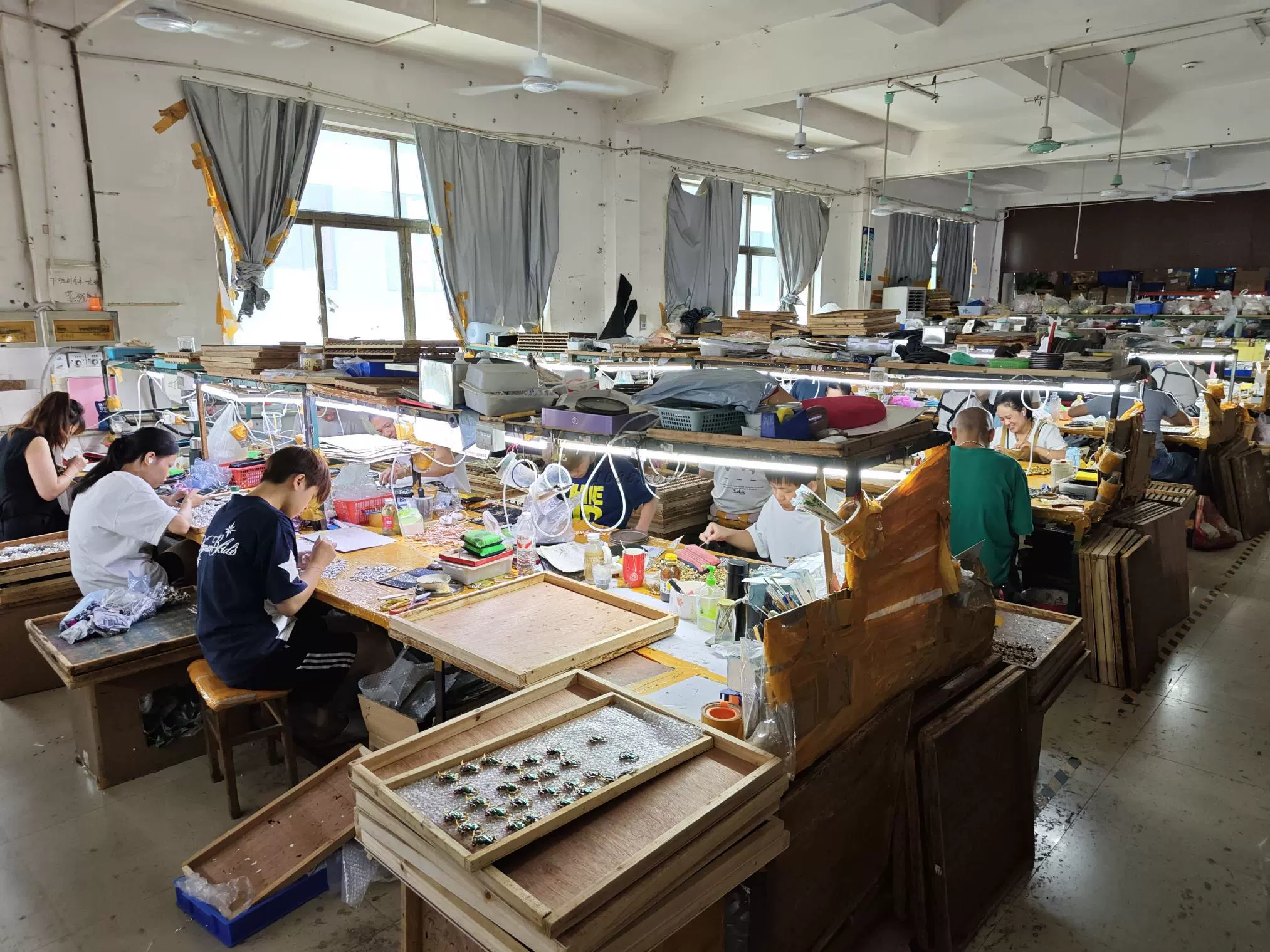
Enamel colour areas are developed against the artwork reference and the metal divisions. Keep the named design version and colour direction visible in the project discussion, including any wording or symbol that must remain recognisable.
Which artwork and colour reference belongs to each version?
Polishing

Surface and edge treatment relate to the selected enamel route and the intended appearance. The finishing sequence is confirmed for the project; this generic work-area illustration does not establish one universal process order.
Which surfaces, edges and reverse details belong in the review?
Electroplating

The visible metal appearance is considered with the enamel and any proposed connecting parts. A gold-colour or silver-colour appearance is a visual direction; it does not by itself identify metal composition or establish a performance grade.
How should the body and agreed fittings look together?
Assembly
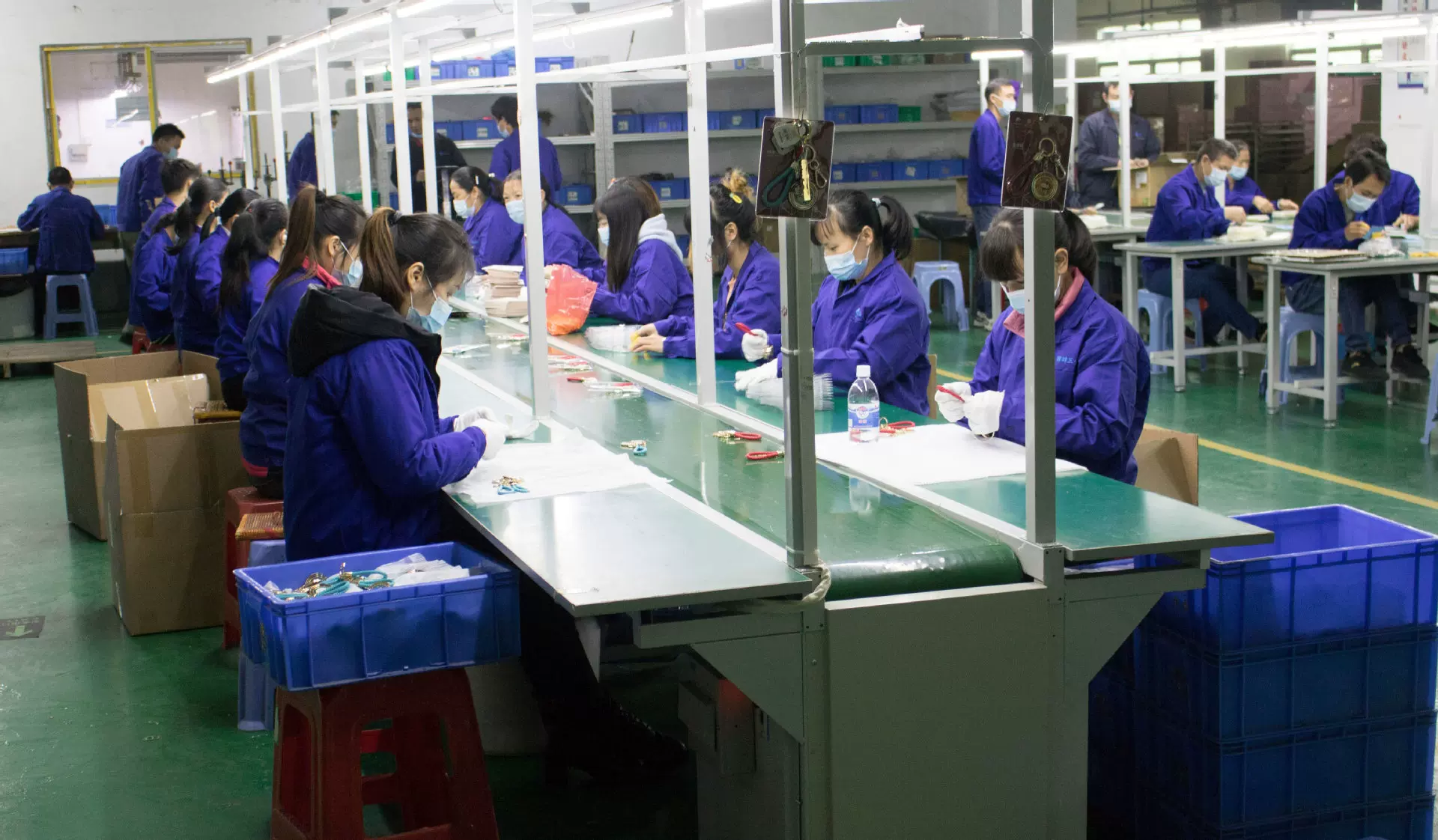
Bodies are joined to the specified rings, clasps, cords or other agreed components when assembly is part of the project. A body-only request remains a body-only request unless that scope is deliberately changed and recorded.
Which connections are included, and who completes the remaining assembly?
Inspection
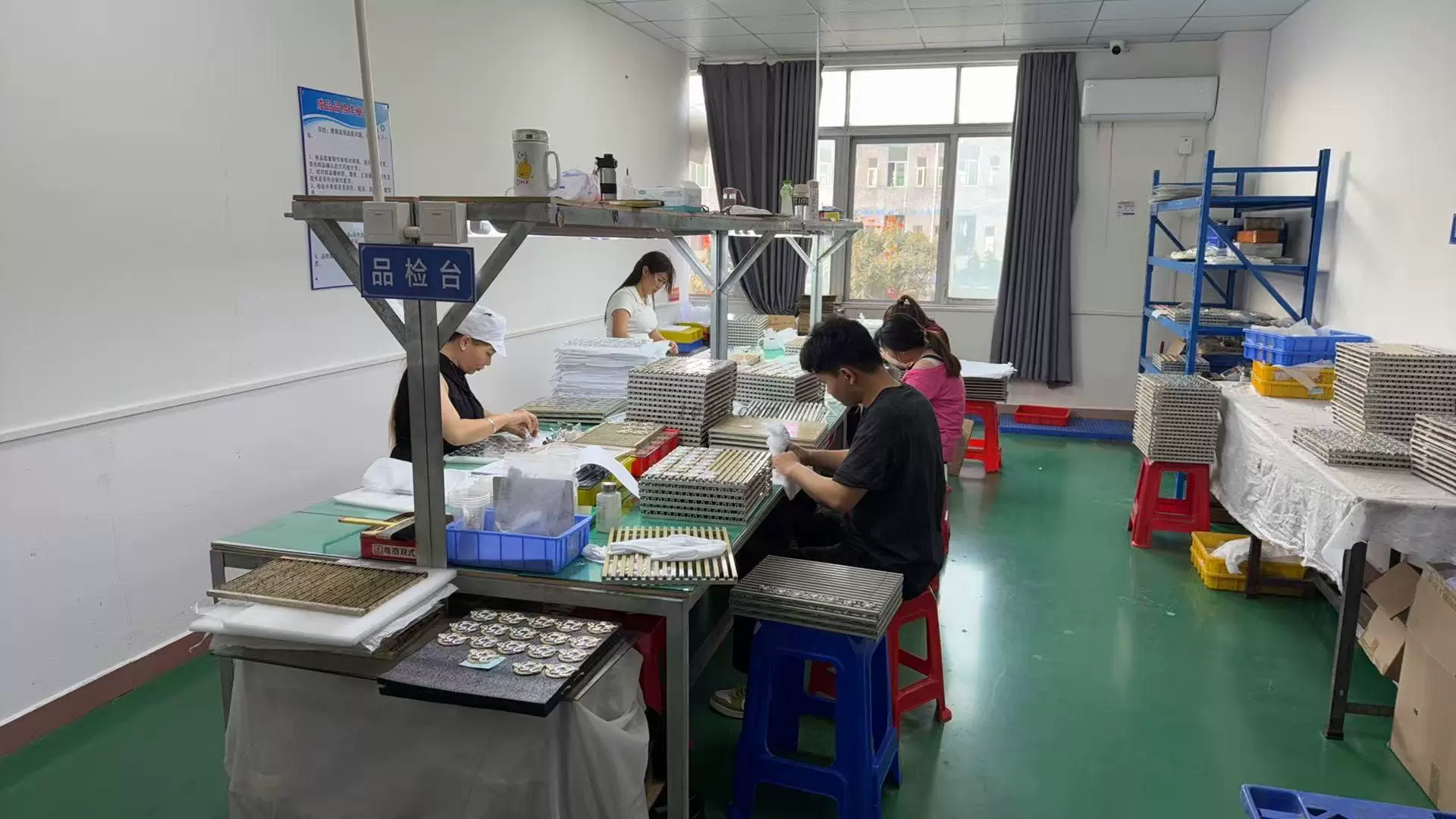
Review relates the front, reverse, opening, orientation and agreed arrangement to the named artwork, specification or sample reference. The discussion should identify the exact version and feature under review, rather than rely on a generic approval.
Which reference and which supplied form are being checked?
Packing
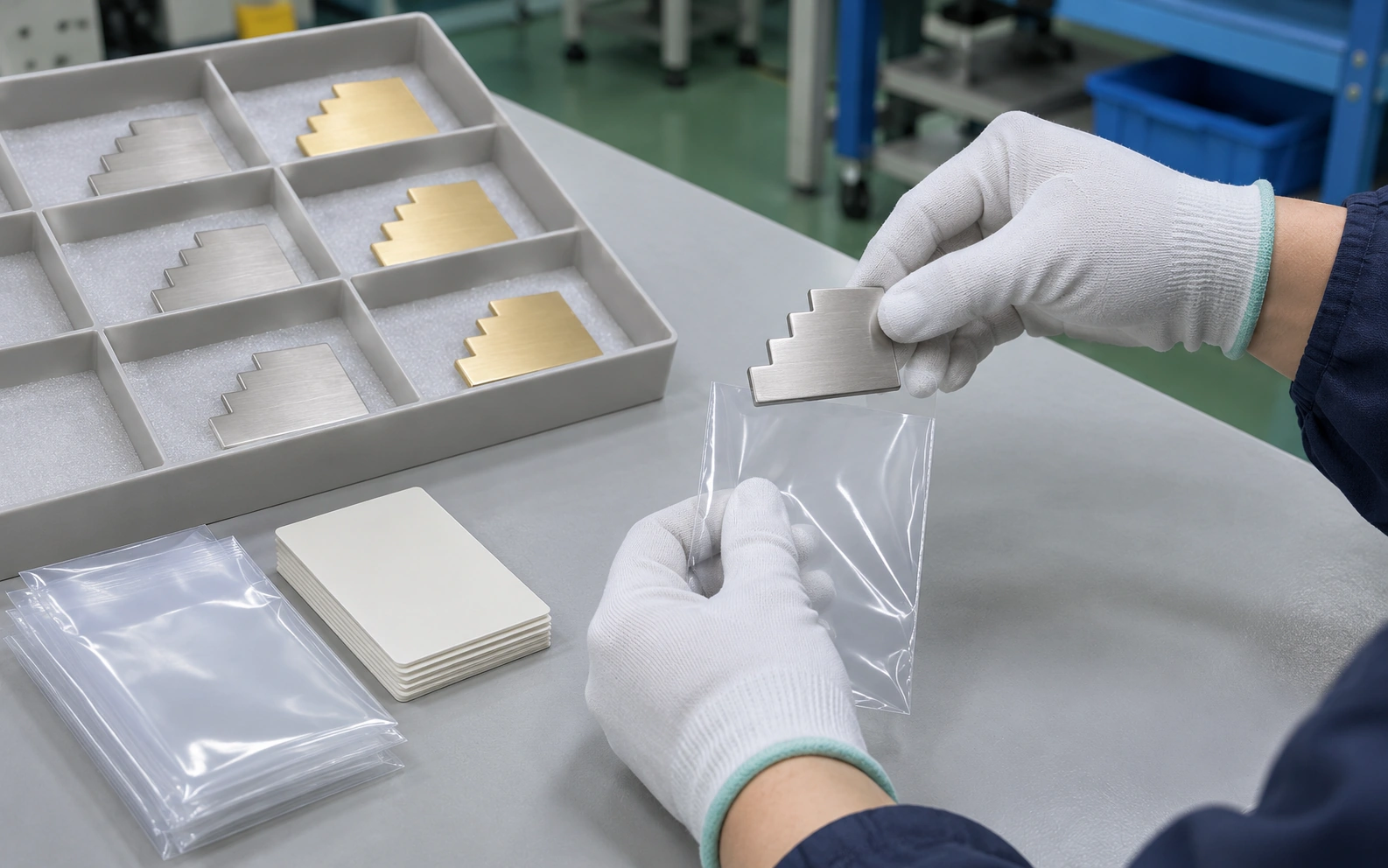
Packing follows the agreed design versions, counting units and separated or assembled state. Bodies, loose fittings and complete accessories need clear grouping so the buyer can identify what has been received.
How will each design, part or set be identified and protected?
Company archive photographs show the matched workshop and work areas; clarity-restored versions are identified in their captions. Remaining product and process studies are illustrations, not records of a particular order.
Review the work with us.
Factory visits and video reviews are available by appointment. Project-specific factory or quality information can be discussed for an actual enquiry.
Read about our factory ↗From reference to received form
How the charm takes shape.
Six states explain the work. The selected surface route, required assembly and agreed packing define the applicable project sequence.

Artwork and tooling reference
Bring the outline, authorised artwork and proposed opening into one named reference. Record fixed details and open questions before treating the technical direction as agreed.
Form the metal body
Establish the body outline and the hole or loop form. Review how that shape supports the intended connection and hanging direction before considering the arrangement complete.
Develop the enamel and metal surface
Work towards the discussed colour areas, visible metal and surface appearance. Colouring, polishing and plating arrangements depend on the selected route; their exact sequence is confirmed for the project.
Assemble the agreed parts
Connect only the components included in the supplied scope. Where bodies or loose fittings are requested, keep them separate as agreed rather than automatically creating a complete accessory.

Review against the project reference
Compare the relevant version, front and reverse, interface, orientation and included parts with the agreed reference. Keep any proposed change attached to the exact feature and version being discussed.
Count, separate and pack
Group the named designs, bodies, accessories or sets in their agreed received form. Discuss protection, version identification and packing materials alongside dispatch arrangements.
One shared scope reference
How we define
the project together.
Each discussion updates a specific part of the reference. Keep the received form visible while artwork, review and packing decisions develop.
Illustrative project reference / not an order
Charm supply scope
- Use
- Brand accessory component
- Versions
- Named designs, colours & quantities
- Interface
- Opening, orientation & actual attachment
- Included parts
- Body + listed fittings; assembly to define
- Review
- Named artwork & agreed sample questions
- Packing
- Received state, grouping & protection
A discussion reference becomes useful when its open decisions are explicit.
Reference field / Use
Share the use and identity

Tell us which business product the charm will become part of, who is commissioning it and which identity you are authorised to use. A short use reference helps distinguish a component order from a complete accessory request.
Reference field / Included parts
Define the supplied arrangement
Choose the intended received form and list the body, connecting pieces and any assembly. Include quantities by version, destination, target timing and unresolved details so the discussion starts from the same scope.
Reference field / Interface · Versions
Review artwork and specifications
Name the artwork revision and review wording, outline, colour direction, reverse and proposed connection. Keep notes against the exact version so a changed opening or companion part does not become an unrecorded variation.
Reference field / Review
Agree the sample review

Discuss what a proposed sample would contain and which questions it should answer. Confirm sampling scope, costs, feedback format and how a requested revision affects the next arrangements before proceeding.
Reference field / Versions
Confirm the production scope
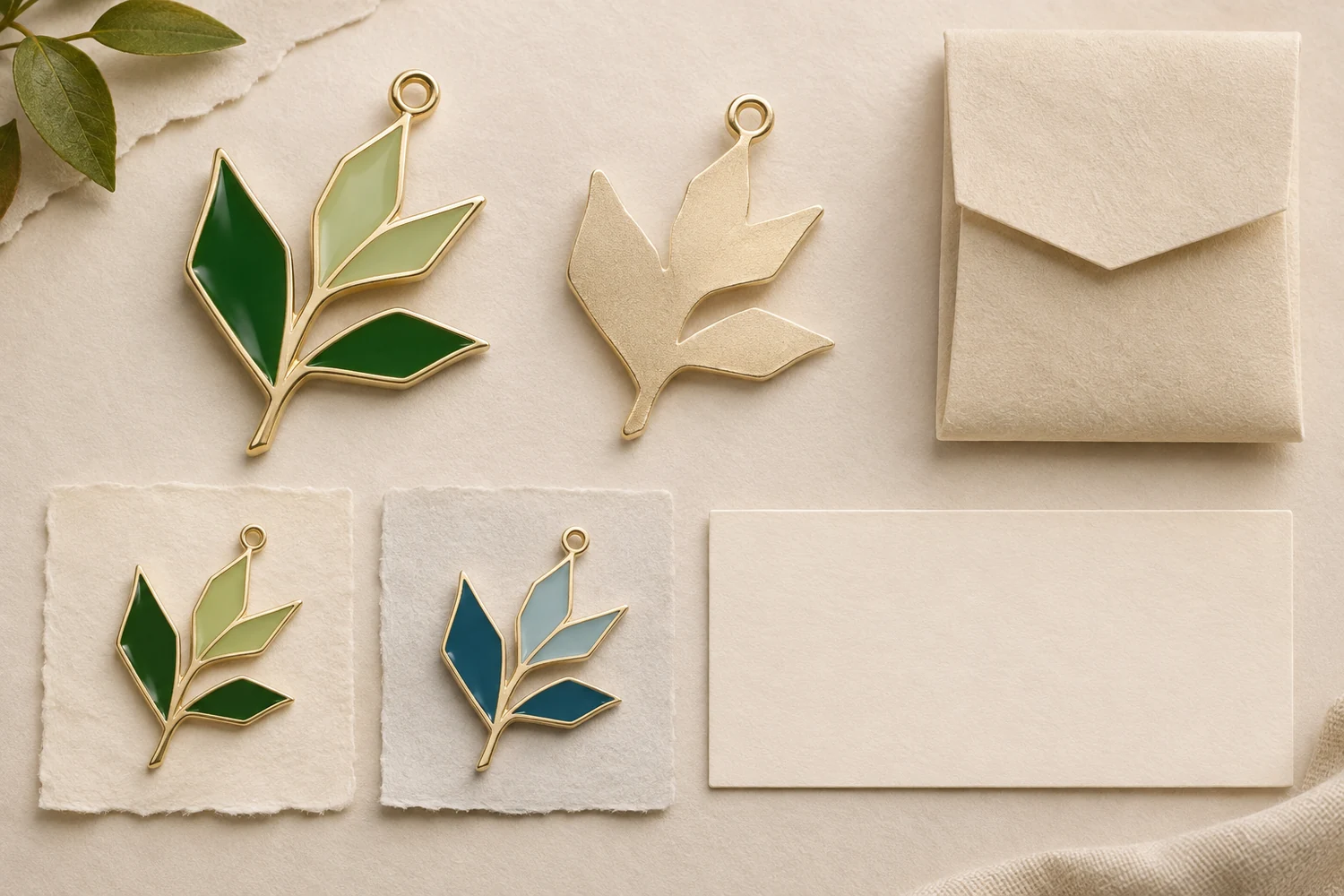
Bring the discussed artwork and review reference together with the named versions, quantities and supplied form. Identify any remaining issue that needs resolution before the project arrangements are treated as confirmed.
Reference field / Packing
Confirm packing and dispatch arrangements
Record protection or presentation materials, separated or assembled state, version grouping and counting units. Confirm destination and dispatch requirements against the actual project rather than treating a target date as a website promise.
The document illustrations do not reproduce customer documents, approvals, order records or actual dispatch materials.
Same reference, two practical questions
Review the supplied form
before packing.
The appearance review and the received-form discussion should point to the same named version and parts list.

What is being reviewed?
- The artwork version, front and reverse, colour areas, outline and visible metal.
- The opening, hanging direction and intended attachment reference.
- Every included connecting piece and its separated or assembled state.
- The exact feature to change or retain, recorded against the relevant reference.
Agree which questions the proposed sample should answer. Sampling scope, costs and any effect of revisions on later arrangements require project confirmation.
What will your team receive?
- Named versions with quantities in bodies, accessories or clearly defined sets.
- Loose bodies and fittings kept separate where required.
- Protection and any display or presentation materials listed individually.
- Grouping, identification and dispatch requirements tied to the agreed scope.
A pictured card, pouch or box explains an option. Its presence in an illustration does not make it an included packing material.

Questions before the brief
Questions for a charm
manufacturing brief.
01What can our business commission through this enamel charms category?+
A project can concern a custom enamel charm body, a body supplied with agreed connecting parts, or an agreed assembled accessory. Start by identifying the product your business needs to receive. Include its intended use, artwork and quantities by design. Bag charms, decorative zipper pull charms and phone accessory concepts involve different connections, so the supplied arrangement is defined for each project. The concepts on this page are illustrative starting points, with their final structure and scope still to be agreed.
02Can a charm be supplied as a component rather than an assembled accessory?+
The supplied scope can be discussed around the charm body and the parts your business requires. State whether the request concerns bodies alone, bodies with connecting parts, or an assembled arrangement. List each part and identify who will carry out any remaining assembly. A connector or presentation item shown in a concept image does not establish that it is included. Confirm the component list, assembly responsibility and packing arrangement in the project reference before treating the scope as agreed.
03What connection information should we provide?+
Share the intended use and a clear reference for the part that the charm will connect to. Useful information includes the proposed hole or loop position, hanging direction, available space and the connection arrangement your team has in mind. If the interface is not yet defined, mark it as open for discussion. A product name or a general lifestyle image cannot establish the connection by itself. Review the charm body, connecting parts and intended assembly together against the actual project reference.
04What artwork is useful for a custom enamel charm enquiry?+
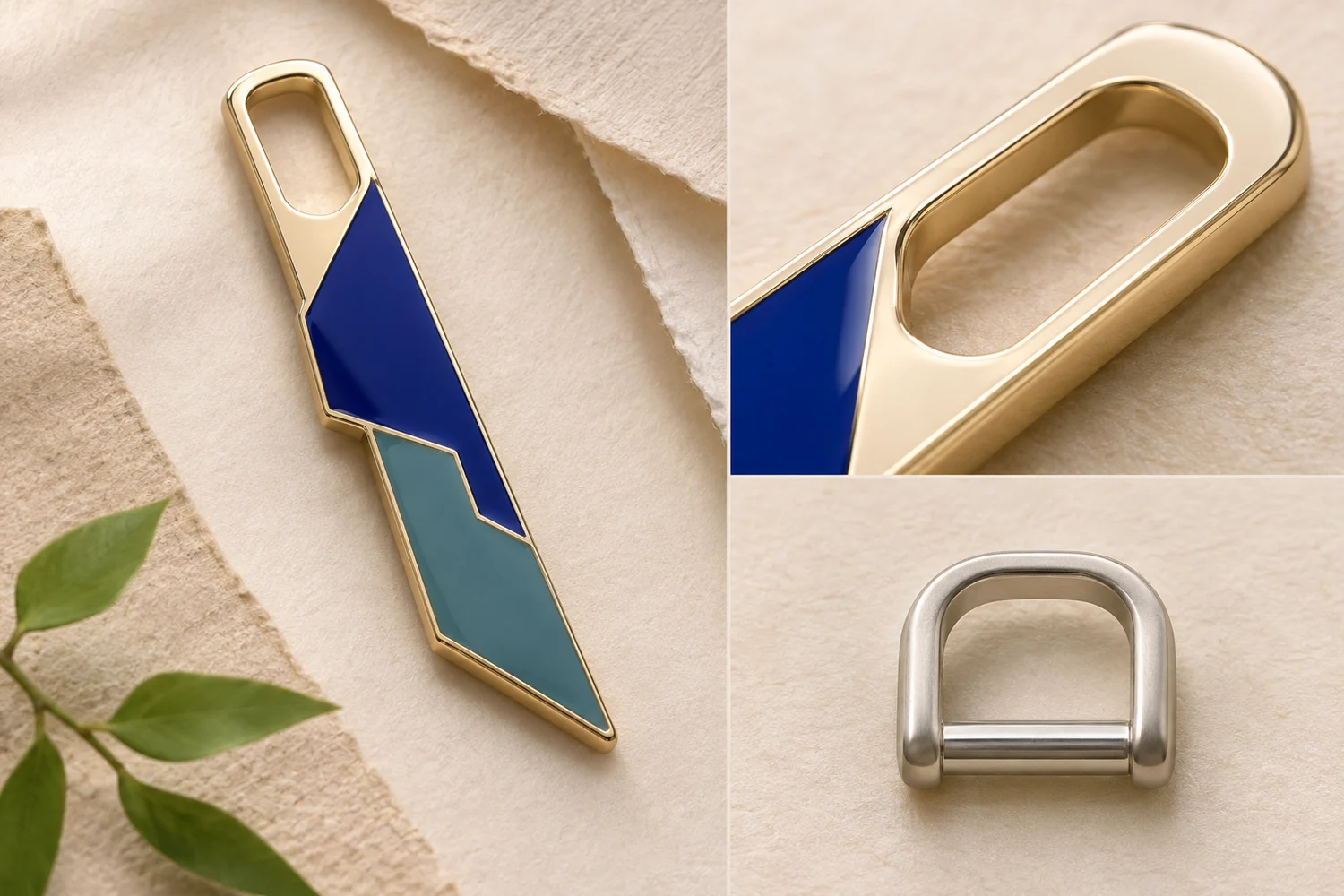
Provide the available artwork and identify the wording, symbol or brand details that must remain recognisable. Include a proposed size direction, colour references and any requirements for the reverse. Name the artwork version and separate fixed decisions from ideas that can change. If the project is still at concept stage, describe its business use and visual direction. Artwork review should record the exact version being discussed; physical appearance and assembly questions should be addressed through the agreed product and sample review scope.
05How do soft and hard enamel relate to a charm design?+
Soft and hard enamel are surface choices within the charm project. Soft enamel typically retains recessed colour between raised metal divisions, while hard enamel has a smooth, flush polished surface. Consider that difference alongside the outline, colour areas, lettering, visible metal and connection structure. The selected process does not define the complete accessory or its included parts. Discuss the artwork and intended appearance at the proposed size, and confirm the applicable finishing route and review reference for the actual project.
06How should we state quantities for several designs or a coordinated set?+
List the quantity for each named design and colour version. State whether the counting unit is a charm body, an assembled accessory or a set, and identify every component in a set. Connecting parts and presentation items should appear in the supplied-scope list. Keep a combined project total separate from the quantity required for each version. This makes quotations and packing discussions easier to compare and helps your team avoid treating different combinations as the same order.
07What should our team review in a sample?+
Agree what the proposed sample includes and which questions it is intended to answer. Review the relevant artwork version, front and reverse, colour areas, visible metal, outline and connection features. For an assembled scope, include the agreed parts, orientation and presentation in the review. Record feedback against the named reference and identify the exact feature to change or retain. Sampling scope, costs and the effect of a revision on the next arrangements need to be confirmed for the project.
08Which manufacturing stages are carried out in your own factory?+
Our own factory carries out tooling, metal forming, enamel colouring, polishing, electroplating, assembly, inspection and packing. The applicable sequence and supplied arrangement depend on the product and selected process. Green Frog Supply operates through HANGZHOU FORTHRIGHT TRADE CO., LTD in Hangzhou, China. Factory visits and video reviews are available by appointment, and project-specific factory or quality information can be discussed for an actual enquiry. Workshop and process illustrations on this page explain the work; they are labelled separately from actual factory photographs or order records.
09How should component packing and assembled-accessory packing be specified?+
Describe how your business needs to receive and identify each version. A component enquiry should make clear whether bodies and connecting parts remain separate. An assembled-accessory enquiry should identify the complete arrangement to be packed. Discuss protection, presentation, grouping and quantity labels together, including whether versions are packed separately or as named sets. The packing reference should match the agreed product scope. A concept image helps explain a possible arrangement, but the final included materials and packing method need their own confirmation.
10What information is needed to discuss a quotation and project timing?+
Send the business use, artwork or concept reference, quantities by version, intended supplied arrangement, destination and target arrival timing. Include a connection reference where one is available and mark the details still awaiting a decision. These inputs help define the product, review and packing discussions. Confirm quotation scope, sample or tooling charges where applicable, production arrangements and dispatch requirements before proceeding. Dates and costs must relate to the agreed project; the website does not establish a universal price, minimum quantity or guaranteed delivery period.

Read before you brief
Useful references for
the next decision.
See how product development, production and quality discussions fit together.
↗ OEM manufacturingFor a project working from an established artwork or product reference.
↗ Production & QualityPrepare the reference and review questions for your supplied arrangement.
↗A shared starting reference
Bring the supplied scope
into your enquiry.
Share the artwork, intended use, quantities by version and the arrangement you need to receive. Include a connection reference where one is available, and mark the details still open for discussion.
For artwork, drawings or other project files, please email [email protected] and include your project reference.