

CUSTOM ENAMEL MANUFACTURING
Trolley Coin Keyrings for Retail Campaigns
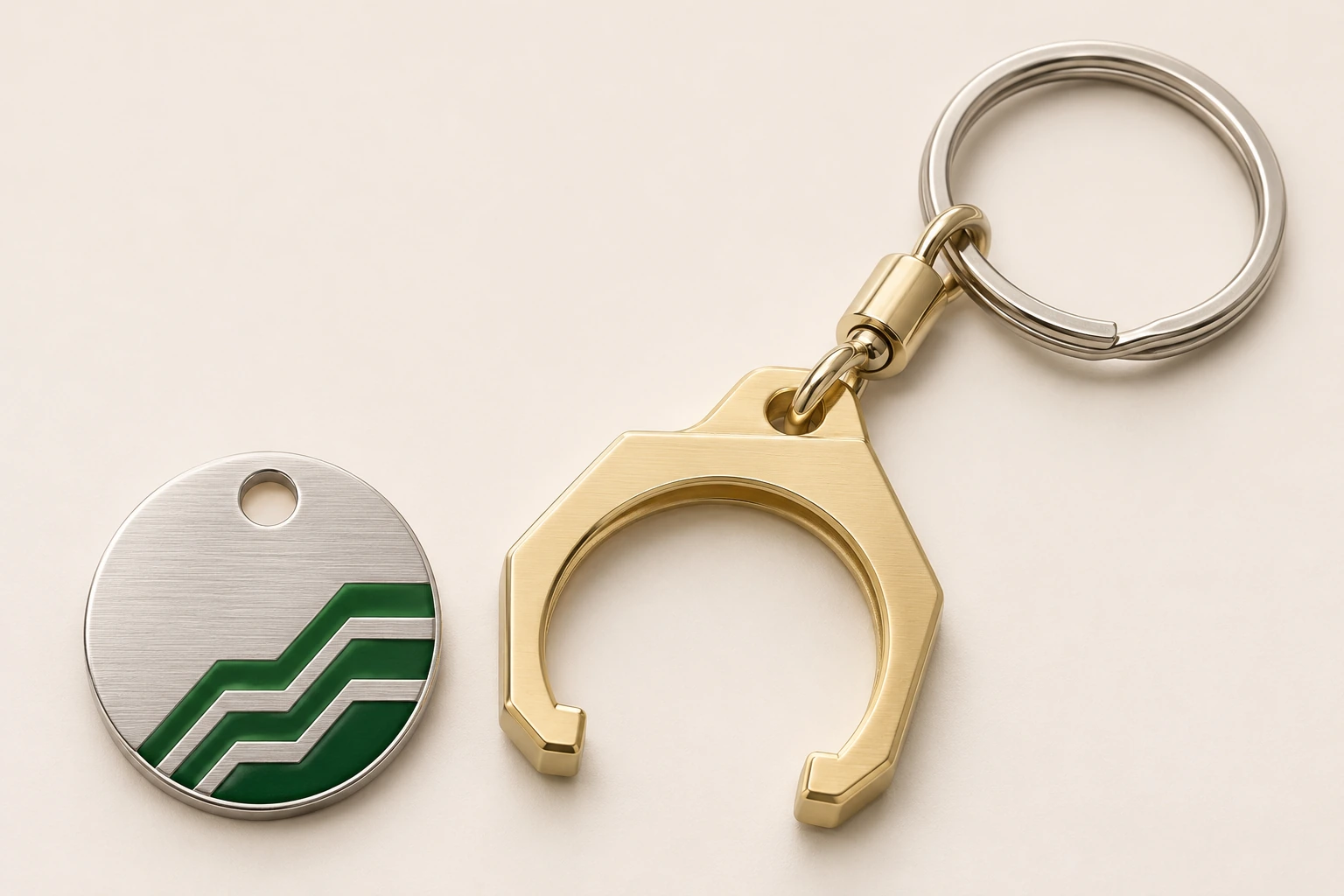
Develop trolley coin keyrings around the token and retainer. Review your trolley reference and release method, then agree branding, complete quantities and received packing.
Illustrative custom concept, not a stock item or a customer case. Final specifications are agreed for your project.
02 / STRUCTURE
Define the token and its release arrangement together
Review point · Information needed for the project
The token is a functional part of the complete promotional item, not simply a coin-shaped logo charm. Review its proposed dimensions and edge with the intended trolley reference. The way it is retained, released and returned also belongs in the same specification.
One unit on this page means the complete token-keyring assembly with the agreed contents. A loose token, empty retainer or replacement hardware is a different received scope. If more than one token is required per unit, state that separately; the illustration does not define a multi-token set.
Supply an actual token reference or the relevant trolley information when available. Different trolley systems may require different specifications, so the functional choice needs review for the intended use rather than assumed compatibility from the phrase “trolley coin.”
Front
Authorised front and reverse artwork

Structure
Selected arrangement that holds the token in the complete item
Reverse
Components included and their complete assembled relationship
Custom concept illustrations. Final specifications are agreed for your project.
Metal token keyrings · Complete promotional assemblies · Business orders
Plan a branded trolley coin keyring around the token, its retaining arrangement and the keyring your recipients will receive. The business brief should define how the token is released and held, which trolley reference it is intended for and how the complete assembly will be distributed.
This custom supply option is for promotional-product distributors, corporate buyers and organisations planning a branded programme. The original concept pairs a metal token carrying an angular green identity with a separate metal retainer and keyring. Dimensions, release arrangement, decoration and suitability for the intended trolley require project review.
Supplied unit — one agreed token with its retaining arrangement, connector and keyring.
Functional reference — the actual token or trolley interface your programme needs to review.
Buying task — coordinate authorised branding, complete quantities, sample scope and packed supply.
03 / ARTWORK
Keep the promotional identity separate from the fit reference
Share the authorised identity and explain the programme it represents. Mark the essential logo details, colours and any reverse message. The token and retainer may have different available brand areas, so identify which part should carry each item of content.
Artwork handover
Artwork handover: authorised source files; colour references; token and trolley reference; proposed front and reverse; retainer branding; version quantities; required distribution presentation; approval contact. Indicate open choices clearly instead of using unverified currency dimensions as a substitute for the functional specification.
Your artwork, or a direction to develop
Keep the functional outline and edge separate from decorative changes. A logo-shaped perimeter, raised detail or altered thickness may affect the interface that needs review. Establish the functional reference first, then compare how the artwork is accommodated within the proposed construction.
For multiple business units or campaigns, identify the common token and retainer specification and the changing brand versions. Give each version a reference and quantity. If a different trolley interface is needed, treat it as a functional version with its own approval scope rather than as another colour.
04 / ENAMEL AND METAL
Review token geometry, retention and surface as one proposal
Choose the metal token construction and retaining arrangement against the intended interface. The face, edge and release relationship all need a place in the approval reference. A decorative surface should be reviewed with those functional areas visible rather than selected from a different promotional product.
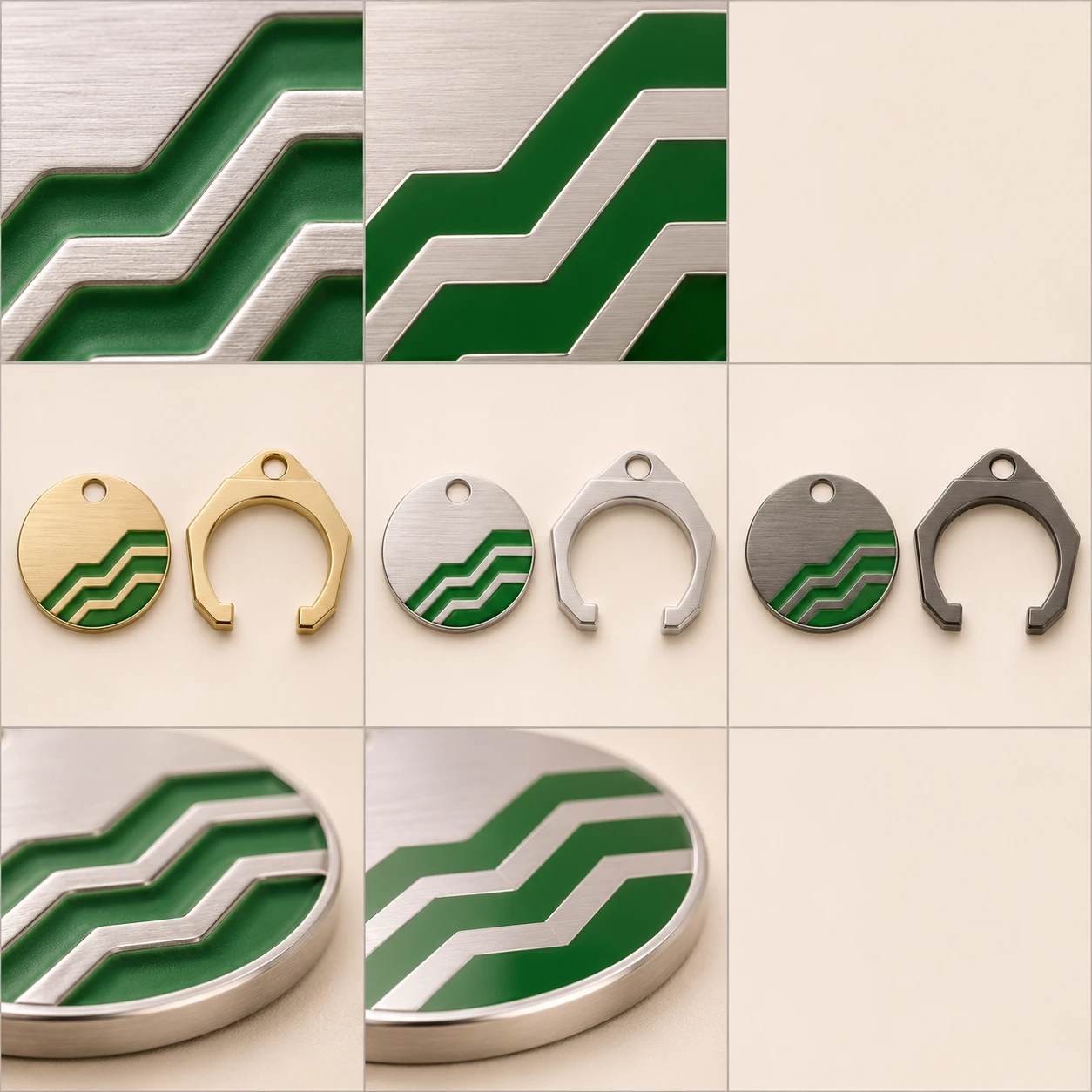
Soft enamel
Recessed colour areas and raised metal lines. This product’s process illustration explains the surface; the product specification is reviewed for the individual artwork.
Hard enamel
A polished face brings colour and metal into a flatter appearance. This product’s process illustration is a comparison, not a fixed specification for this product.
If the proposal includes enamel, soft enamel presents recessed colour between metal divisions, while a hard-enamel route is polished towards a flatter face. Compare the desired appearance within the agreed brand area. Neither description establishes compatibility, release behaviour or a particular service life.
Discuss the metal appearance and any proposed reverse content with the actual token and retainer arrangement. The selected surface route, component arrangement and sequence are confirmed for the project. Do not assume a magnetic holder, spring feature or other mechanism from an illustration when it has not been included in the specification.
Decision record: intended trolley reference; token geometry and edge; retaining and release arrangement; authorised decoration; metal appearance; complete ring configuration; sample and assessment scope. Keep functional changes distinct from artwork-only revisions.
METAL FINISH OPTIONS
Gold-tone appearance
A warm metal reference. Confirm the actual finish with the artwork and project specification.
Silver-tone appearance
A lighter metal reference for assessing contrast alongside the selected enamel colours.
Dark metal appearance
A darker metal reference. Its suitability and detailed process are reviewed for the project.
Product-specific illustrated surface and metal-appearance references. Availability, construction, process and final appearance are confirmed for the individual project.
05 / PRESENTATION
Count complete assemblies and any extras separately
Define what your distribution team will receive and how it will be presented. A complete token-keyring assembly may be individually protected or supplied on an agreed card. The arrangement needs to keep the specified contents together and make the intended token, retainer and ring easy to reconcile.
SAMPLE AND RECEIVING REVIEW
Specify complete quantities by brand and functional version. If the project includes loose replacement tokens or other extras, list those separately rather than folding them into the headline keyring count. Keep any different interface versions clearly identified through packing and receiving.
Agree the physical reference used to review the token fit and retaining action. Record the intended trolley or token reference, the assembled contents and any limits of the sample scope. The artwork proof approves the promotional identity; the selected functional review addresses a different set of questions.
06 / FACTORY
Connect metal production with the selected functional assembly
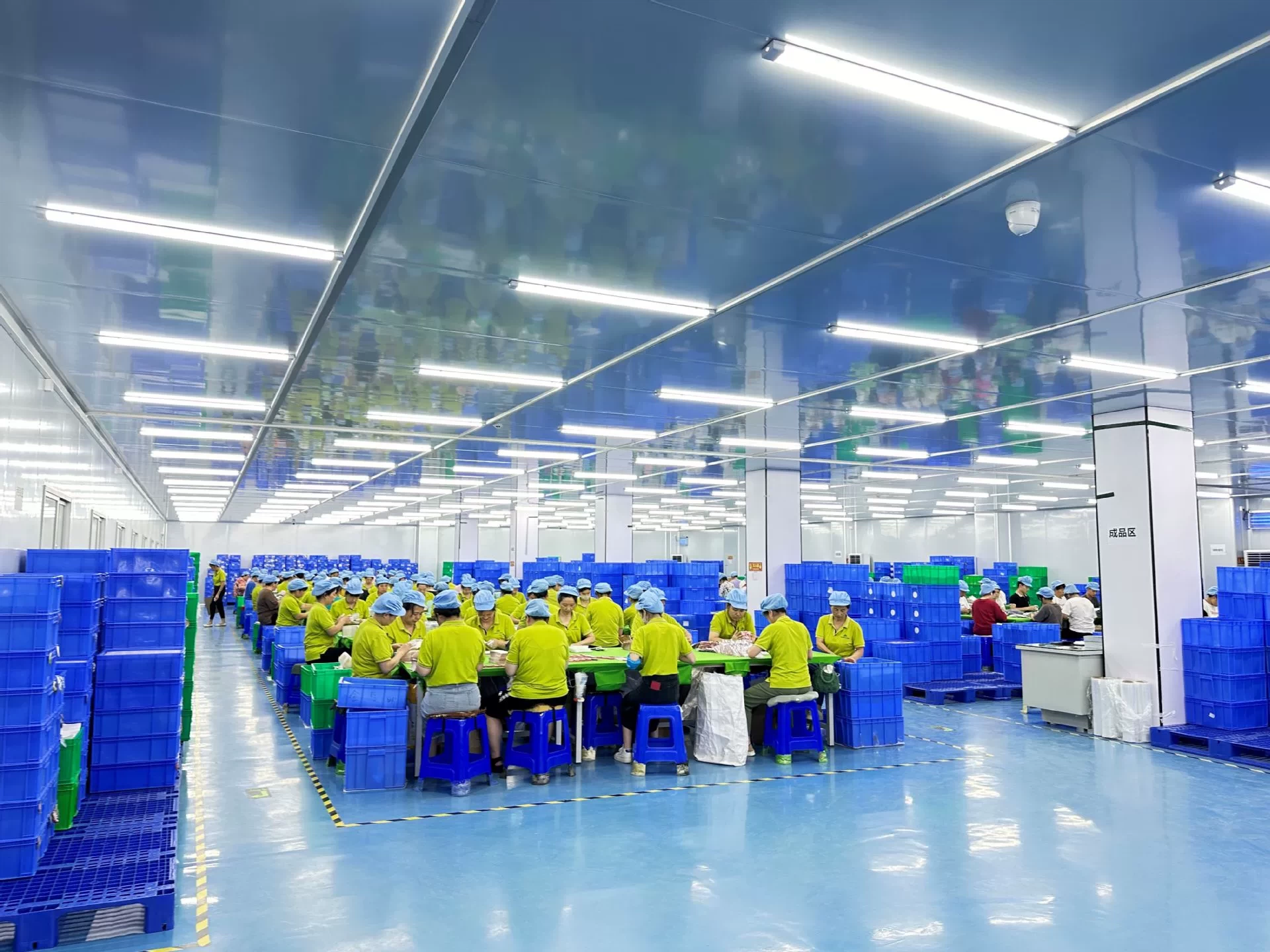
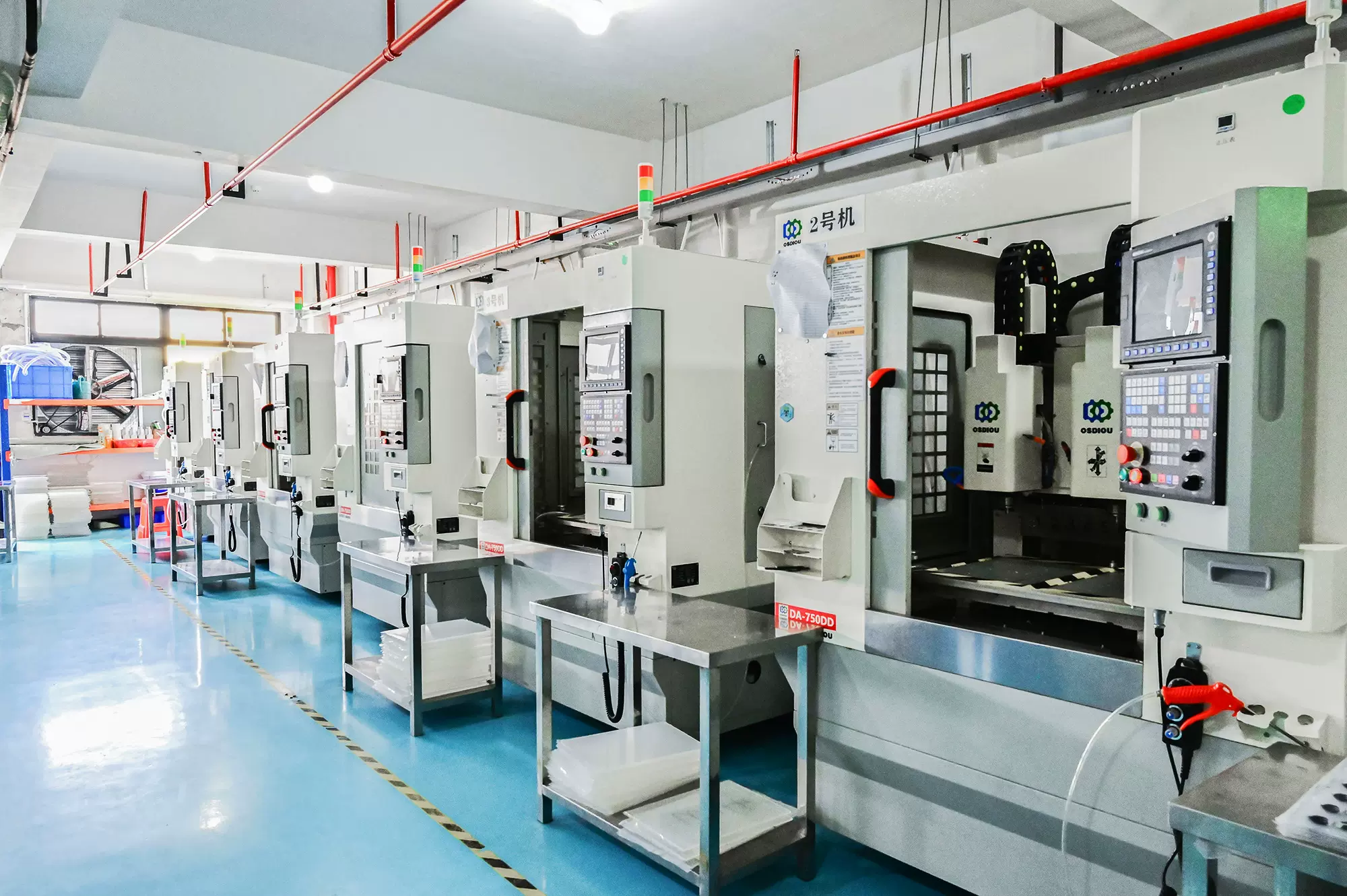
Green Frog Supply’s confirmed in-house manufacturing scope includes tooling, metal forming, colouring, polishing, plating, assembly, inspection and packing. A token-keyring enquiry needs to connect those work areas to the actual token geometry and retaining arrangement. Selected hardware and mechanism components require an agreed source and specification; the general scope does not mean every accessory is manufactured in-house.
Arrange a factory visit, video walkthrough or project-relevant factory and inspection information if needed for supplier review. Agree which information concerns general capability and which should relate to the functional reference and actual order.
Explore Our Factory and Manufacturing.
Work area · Token-keyring project responsibility
Tooling
Prepare the approved token, retainer-body and brand details required by the selected route
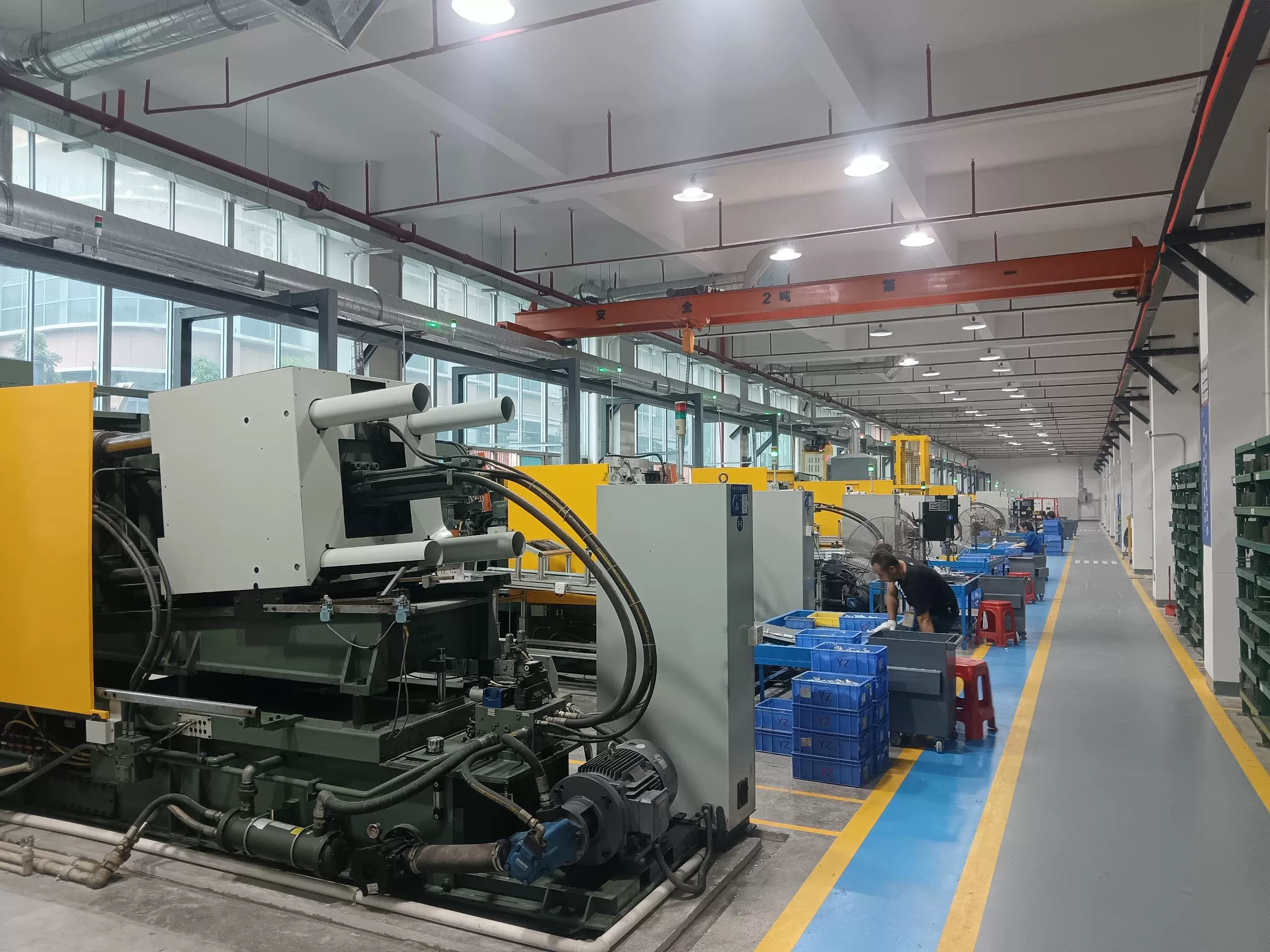
Metal forming
Produce the specified metal bodies with the agreed geometry
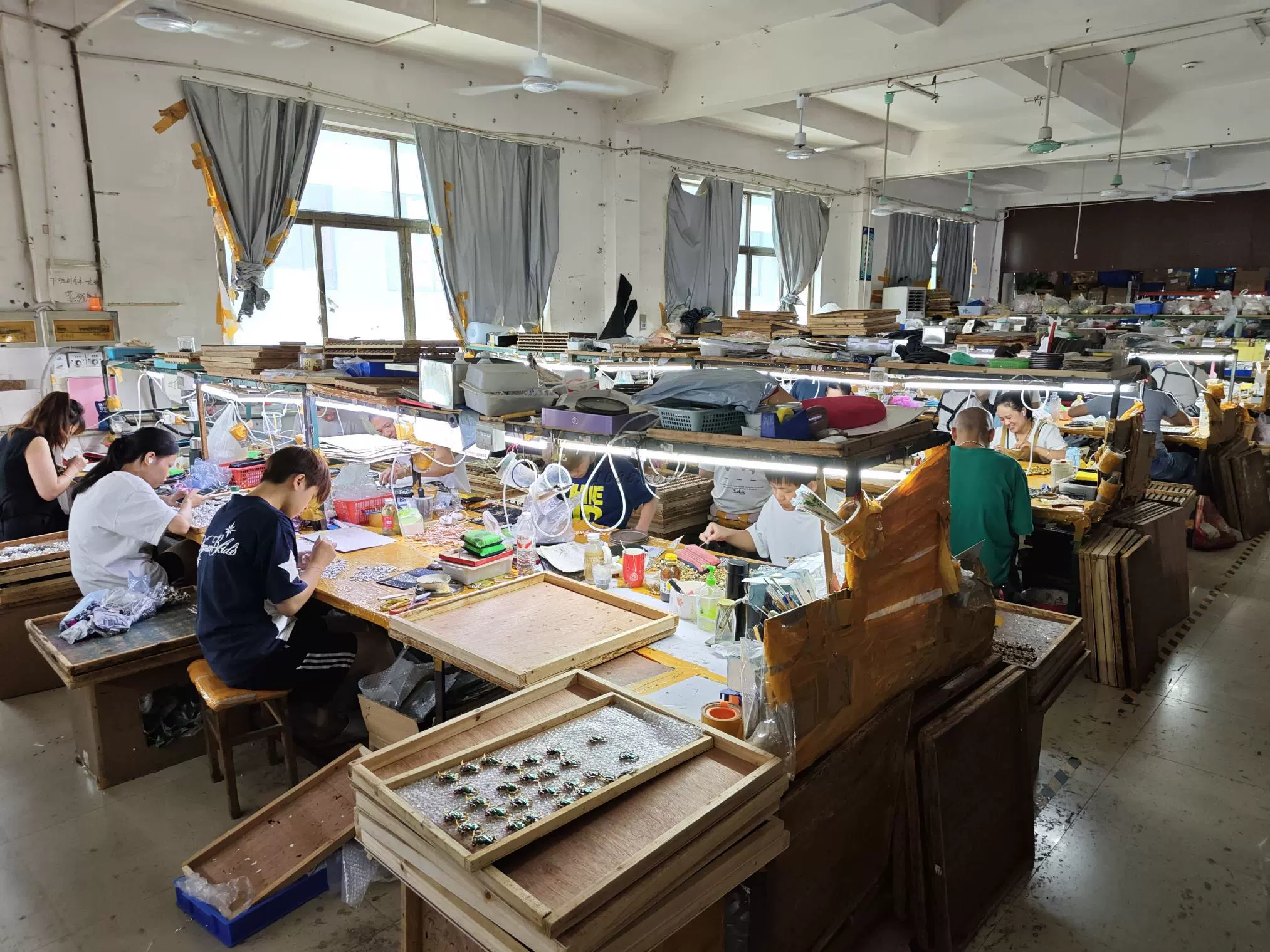
Colouring
Apply authorised brand colours within the reviewed decoration areas
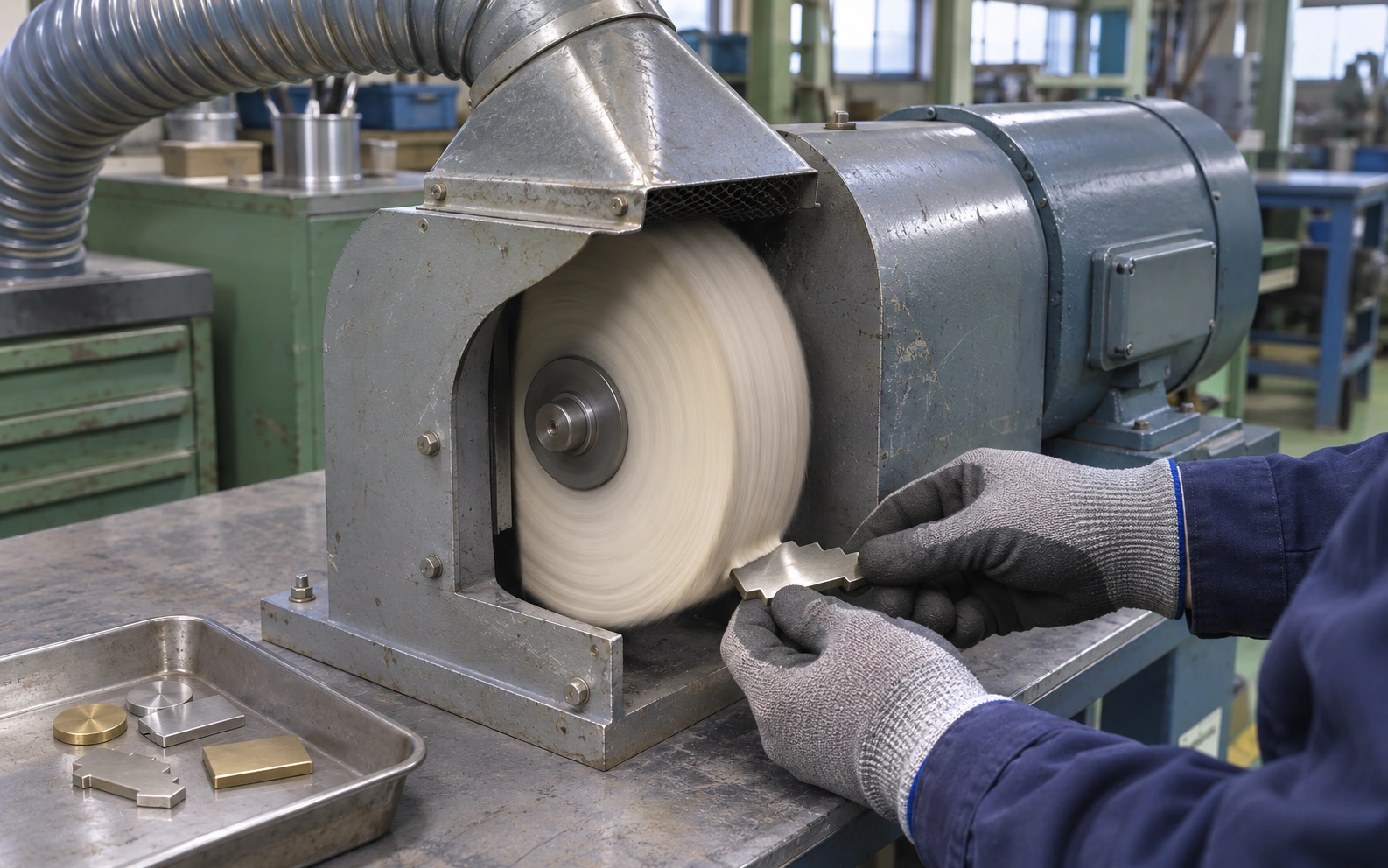
Polishing
Address relevant token, retainer and edge surfaces under the selected route

Plating
Provide the agreed metal appearance with functional areas considered
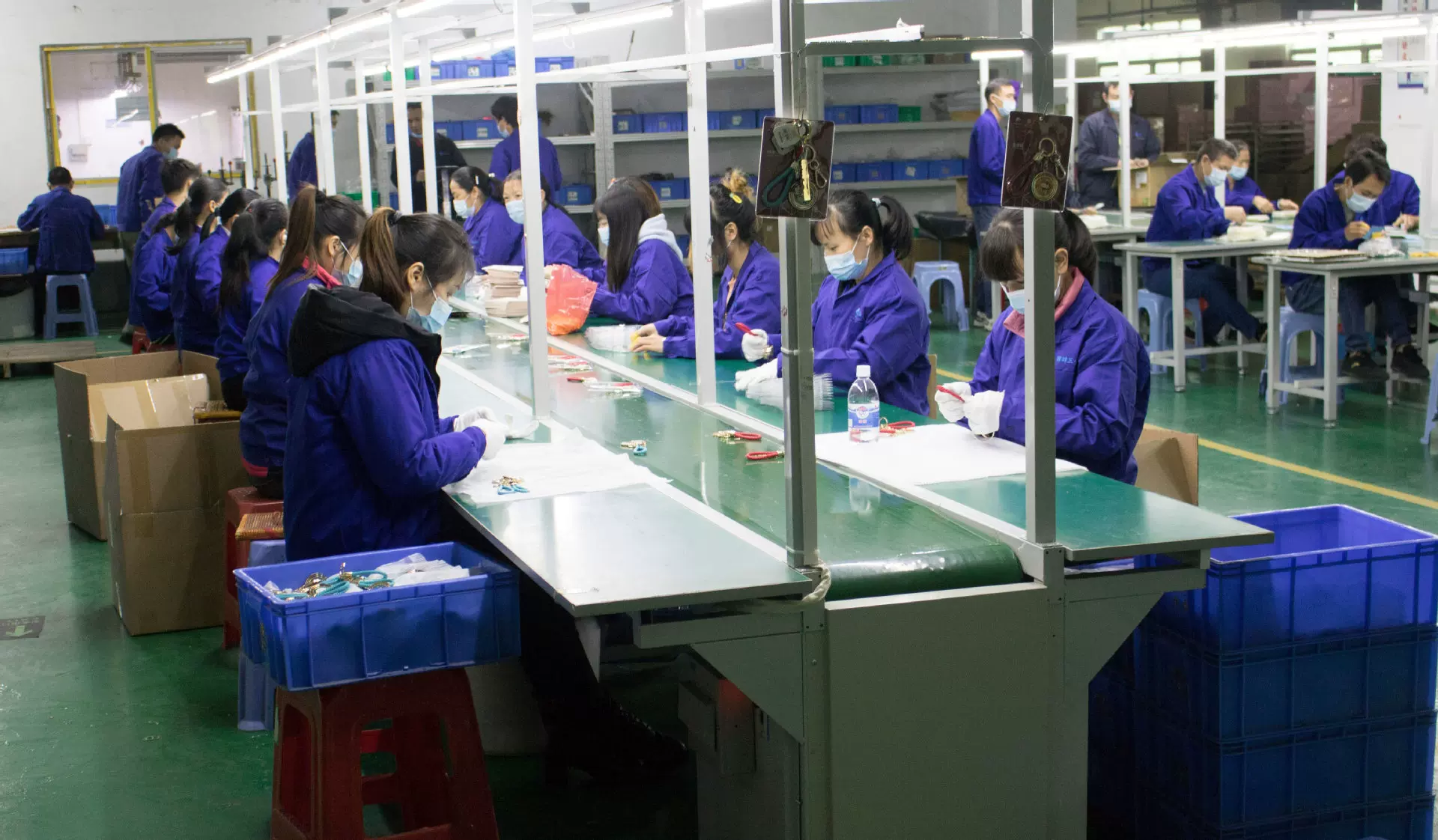
Assembly
Combine the correct token, retaining arrangement, connector and ring
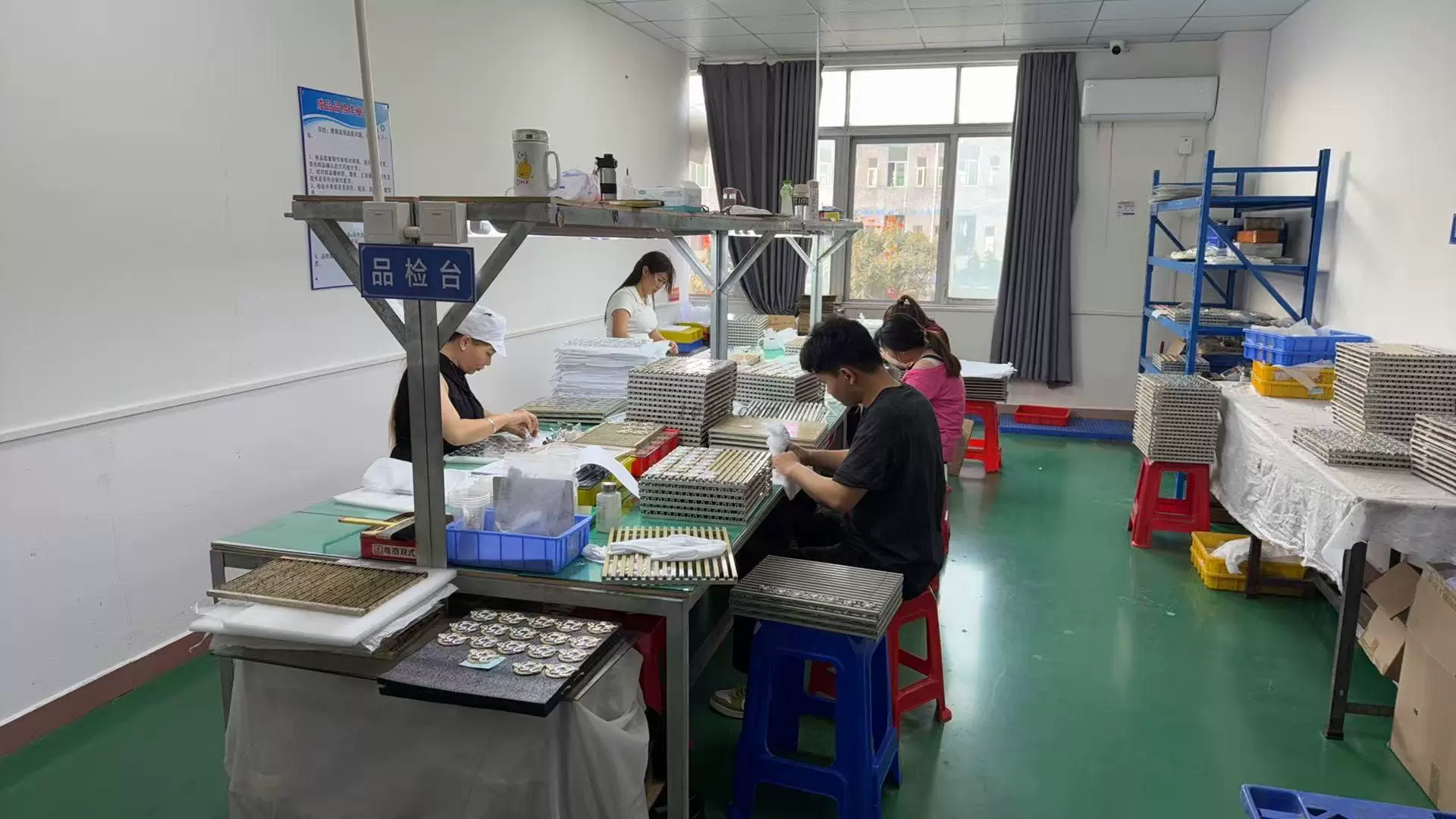
Inspection
Review complete contents and the specifically agreed functional and appearance references
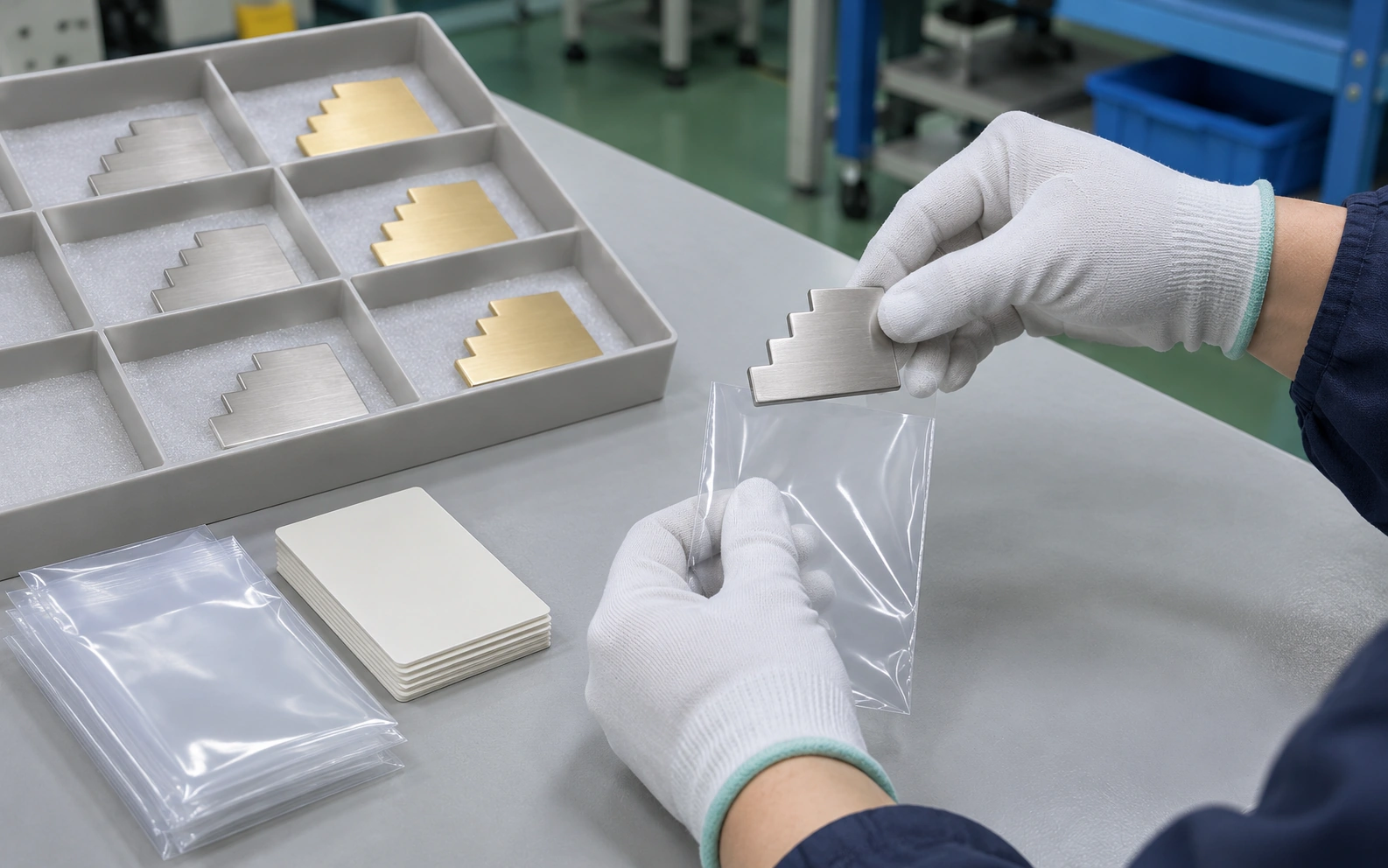
Packing
Protect complete assemblies and separate functional or brand versions
Company archive photographs show general factory work areas; restored versions are labelled. Polishing, plating and packing remain illustrations. They are not photographs of a trolley-fit assessment or records of this promotional order.
07 / PRODUCTION
Keep the functional reference with the branded item
The actual sequence depends on the selected metal and surface construction. The token and retainer need a consistent functional and artwork reference throughout these product states.
The selected material, construction and finish determine the manufacturing route, with enamel included where specified. These operations explain our scope; they are not one universal production sequence.
01 / Token and retainer reference
Establish the intended interface, token geometry, retaining arrangement, brand areas and complete contents. Identify the sample or assessment needed for fit, release and return before production approval.
02 / Metal body formation
Produce the specified token and relevant retainer body under the agreed route. Keep functional geometry and changing brand versions linked to their correct references.
03 / Surface and identity work
Apply the selected metal appearance and authorised decoration in the appropriate sequence. Review faces and edges against the functional reference rather than judging only the logo colour.
04 / Polishing
Refine the relevant surfaces according to the selected construction and agreed finish. Where enamel is specified, the soft or hard enamel route is reviewed for the design.
05 / Plating
Review the specified metal treatment with the agreed appearance reference. Where enamel is specified, assess it with the selected colours. The construction and finish determine the detailed route.
06 / Complete token-keyring assembly
Combine the agreed token, retaining components, connector and ring. Match the supplied contents and release arrangement to the approved complete-item reference.
07 / Project inspection
Review identity, contents, assembly and the specifically agreed functional questions. Use the intended interface reference and agreed method rather than assuming one token suits every trolley.
08 / Protection and presentation
Pack the complete keyrings in the reviewed arrangement. Separate interface and brand versions and identify any additional loose items distinctly for receiving.
Optional soft enamel route
If an enamel identity panel is specified, raised metal and recessed colour are part of the intended surface. Review that panel with the complete item and agreed construction.
Optional hard enamel route
If an enamel identity panel is specified, the filled face is polished for a flatter colour-and-metal surface. Review that panel with the complete item and agreed construction.
Process order and review points are confirmed for the chosen specification. Company archive photographs show general work areas; polishing, plating and packing use illustrations. These references do not document this particular product being manufactured.
08 / COOPERATION
Agree the interface before the programme is fixed

01 · Describe the promotional programme
Share the complete quantity, intended recipients, destination and requested timing. Provide the authorised identity and explain the trolley or token reference available.

02 · Define the functional assembly
Review token dimensions, retaining and release arrangement, connector and ring. Record any open interface question and identify the exact contents of one purchased unit.

03 · Review artwork and versions
Compare the identity placement with the agreed functional areas. Separate brand changes from interface changes and give each version a clear reference and quantity.

04 · Agree sample and assessment arrangements
Confirm what will be reviewed against the intended trolley or token reference. Record charges, revisions, approval responsibility and outstanding functional questions before authorisation.

05 · Confirm order and distribution packing
Review the quotation, quantities and schedule for the actual scope. Approve carding, protection, version identification and any separately ordered loose tokens.
06 · Coordinate delivery and follow-up
Confirm delivery arrangements and retain the approved token, retainer and artwork references. A later interface change or component substitution needs review rather than automatic approval as a reorder.
09 / FAQ
Questions for promotional token-keyring orders
Does one unit include the token and its retainer?
The intended unit is the complete agreed assembly: a metal token, its retaining arrangement, the specified connector and keyring. An empty holder or loose token is not the same received scope. Confirm the contents and token count in the quotation and approval reference. List extra loose tokens or replacement hardware separately so the packed quantity matches your purchasing record.
Will the token work with every shopping trolley?
Suitability must be reviewed against the intended trolley or token reference. Different systems can require different geometry, and the product name does not establish universal fit. Provide an actual reference where available and agree how the question will be assessed. The selected sample and approval record should state the intended interface rather than extending one result to all trolleys.
Should we specify a currency size for the token?
A currency label alone is not a complete functional specification. Provide the actual reference and the dimensions or other requirements your procurement team needs to review. Token outline, thickness, edge and the intended interface belong together. Where those choices remain open, mark them for discussion rather than assigning assumed dimensions from a coin name or an unrelated product page.
How is the token held and released?
The retaining and release arrangement is selected for the actual project. Share an existing reference or explain the intended action, including how the token should return to the complete keyring. Identify the proposed components and their action in the project reference. Agree the component scope, sample and functional review with the token specification before the order is authorised.
Can our logo change the outside shape of the token?
Discuss the proposed shape with the intended interface and retaining arrangement. An outline change is a functional construction revision as well as an identity decision. Provide the authorised artwork and mark essential details, then review how the brand can be accommodated. Approval of the logo alone does not establish token fit, release behaviour or the suitability of a reshaped edge.
Can both the token and retainer carry branding?
Provide the content and priority for each part, with separate front and reverse instructions. Review available areas alongside the functional geometry, movement and selected surface route. An enamel or marked brand area must be explicitly included in the proposal. Compare the proposed decoration on each part and confirm the legibility and treatment of small text through the agreed review.
Can several brands use one token and holder design?
A common functional specification with different authorised identities can be discussed. Give each brand version a reference and complete quantity, and state which elements remain common. If the interface, token geometry or retaining arrangement changes, identify a separate functional version. Pricing, sample scope, production arrangements and packing separation are reviewed for the actual requested combination.
Can the order include spare tokens?
List any extra tokens separately from the complete keyring quantity and identify the functional and artwork version they belong to. Discuss how they should be packed and labelled for receiving. A spare-token request does not automatically establish interchangeability with an earlier holder or another supplier's product. Provide the relevant reference and agree compatibility review where it matters to your project.
What should we approve before production?
Review the functional reference, token geometry and edge, retaining and release arrangement, complete contents, front and reverse identity, surface and keyring configuration. Include the packed form and version quantities. Agree which questions are covered by digital artwork and which need the selected physical sample or assessment. Record the revision and outstanding changes before production authorisation.
What is needed for a business-order discussion?
Send the complete quantity by version, authorised artwork, intended trolley or token reference, proposed retaining arrangement and preferred packing. Add destination, requested timing and sample or assessment requirements. Mark open choices rather than guessing a standard dimension. MOQ, pricing, component arrangements, sample charges, production schedule and delivery are confirmed for the actual project and are not fixed by this page.
10 / ARTICLES
Promotional token-keyring procurement notes
Relevant published guidance can help your team distinguish interface review, artwork approval and complete-unit quantities. Matching articles appear here when a real guide addresses this procurement task.
11 / RELATED PRODUCTS
Compare the functional assembly being distributed
A shared business identity does not make different keychain functions interchangeable. Compare the complete supplied item and its approval questions.
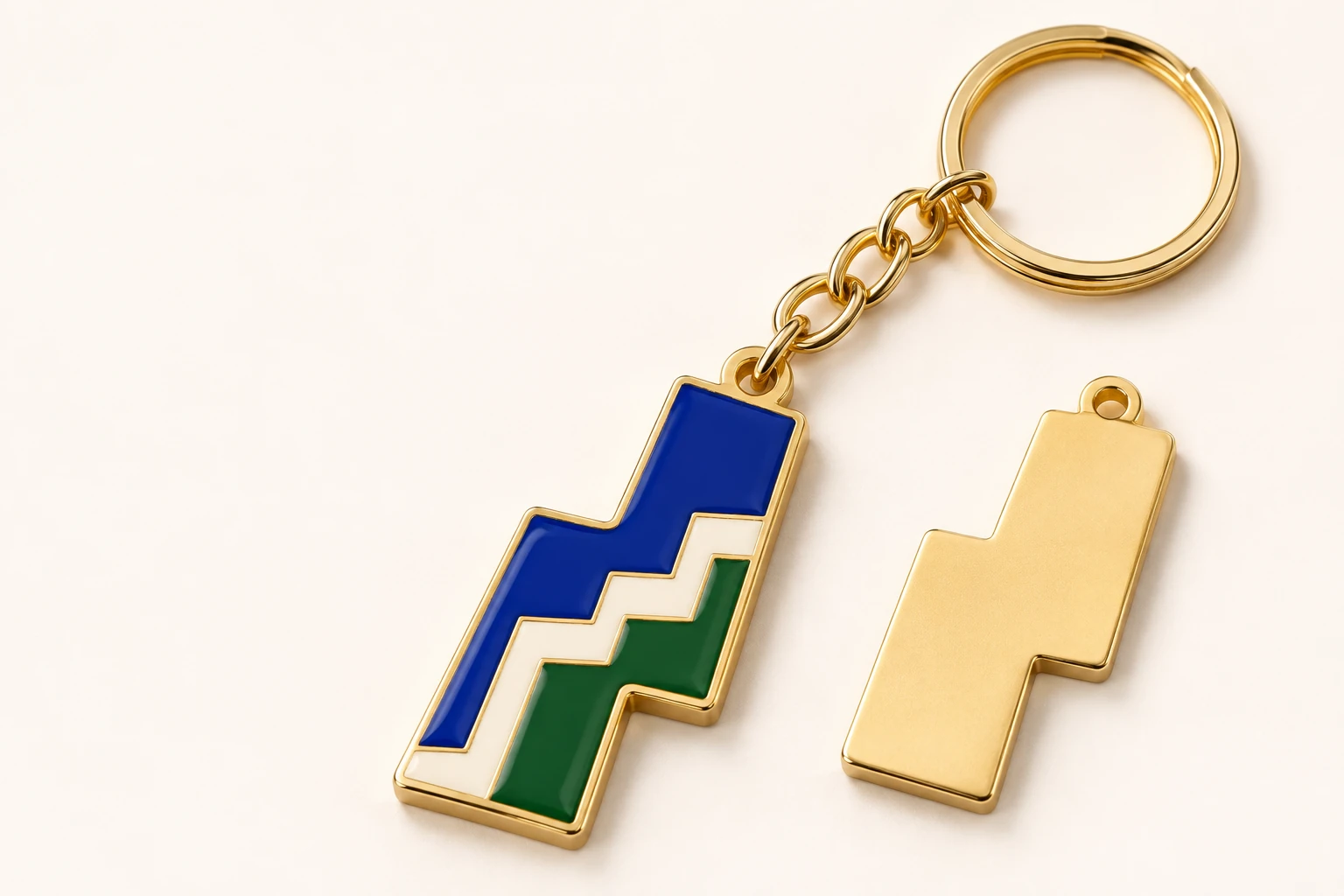
Metal carabiner keychains
Discuss an opening clip-body product when the main function is the metal clip rather than a removable token and retainer.

Logo charm components
Discuss a metal identity body with specifically agreed fittings when your team will complete the downstream accessory assembly instead of receiving a token-keyring unit.

Company logo pins
Consider a wearable brand item when the programme calls for clothing attachment instead of a keyring assembly.
12 / ENQUIRY
Start with the token reference and complete quantity
Tell us the promotional programme, complete quantity and intended trolley or token reference. Share authorised brand artwork and describe how you want the token to be held, released and returned. Explain which choices are fixed and which should be explored.
Include the destination, requested timing and review arrangements your team needs. The functional specification, components, decoration, sample scope, MOQ, price and delivery are confirmed for the actual project. One promotional illustration does not establish the interface requirements of your programme.
- Complete token-keyring quantity by brand and functional version.
- Actual trolley or token reference and any required dimensions.
- Retaining, release and return arrangement.
- Token count and other contents per purchased unit.
- Authorised artwork, colours and front/reverse instructions.
- Any loose spare tokens listed separately.
- Protection, carding and receiving identification.
- Sample needs, destination, timing and approval contact.
Email artwork and the intended token/interface reference to [email protected]. Identify the latest revision and any details still open for review. Review the enquiry privacy notice before sending your business contact and project information.
PROJECT BRIEF
Trolley Coin Keyrings for Retail Campaigns