Custom enamel products
for business projects.
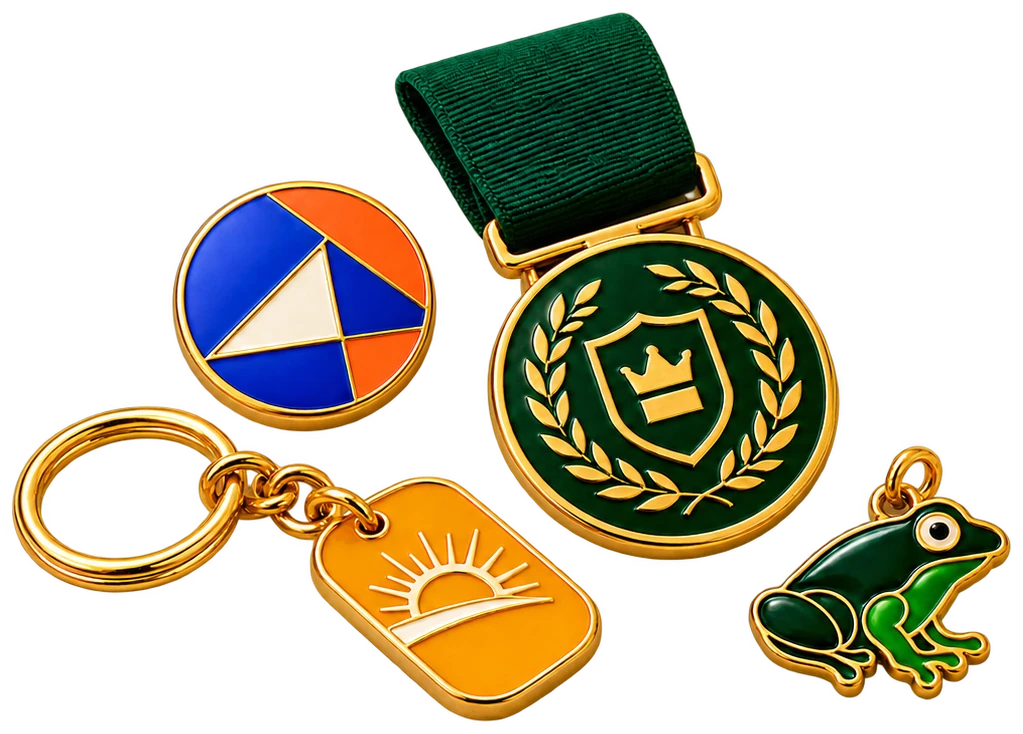
OEM production, original design development and adapted designs for organisations.
Explore the range
Four product families.
Different supplied forms.
Pins & badges
Brand and organisation pins
Define the artwork, back fitting and single-pin or series format.
View pins & badges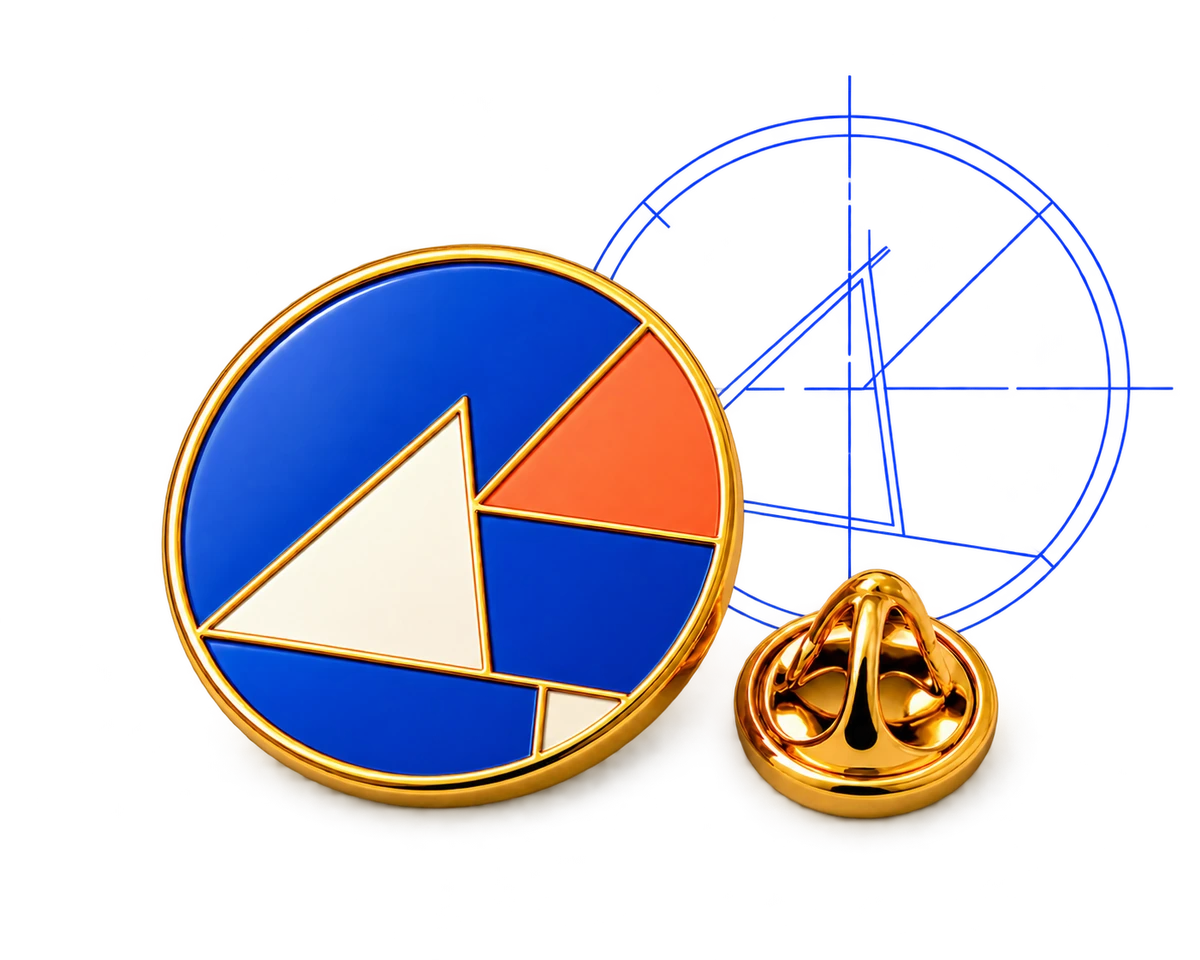
Keychains
Enamel body, connector and keyring
Specify the body, connection and complete assembly.
View keychains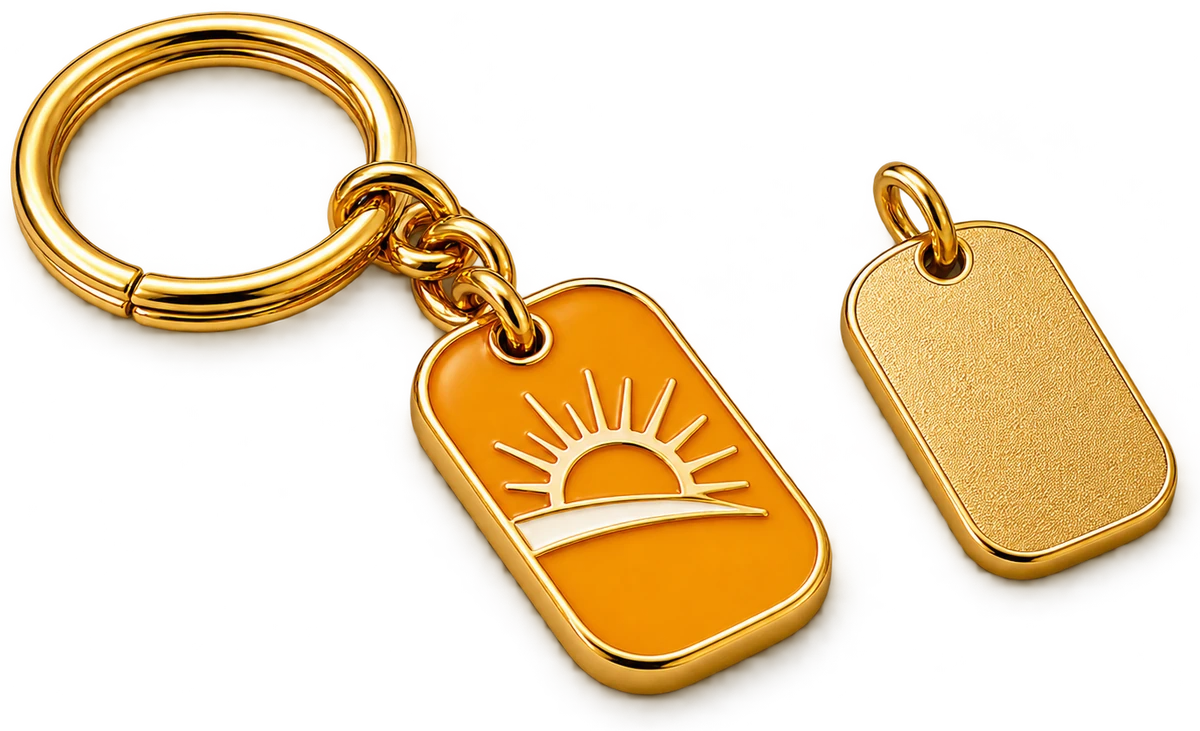
Medals
Medal, suspension and ribbon
Review both faces, the ribbon and presentation together.
View medals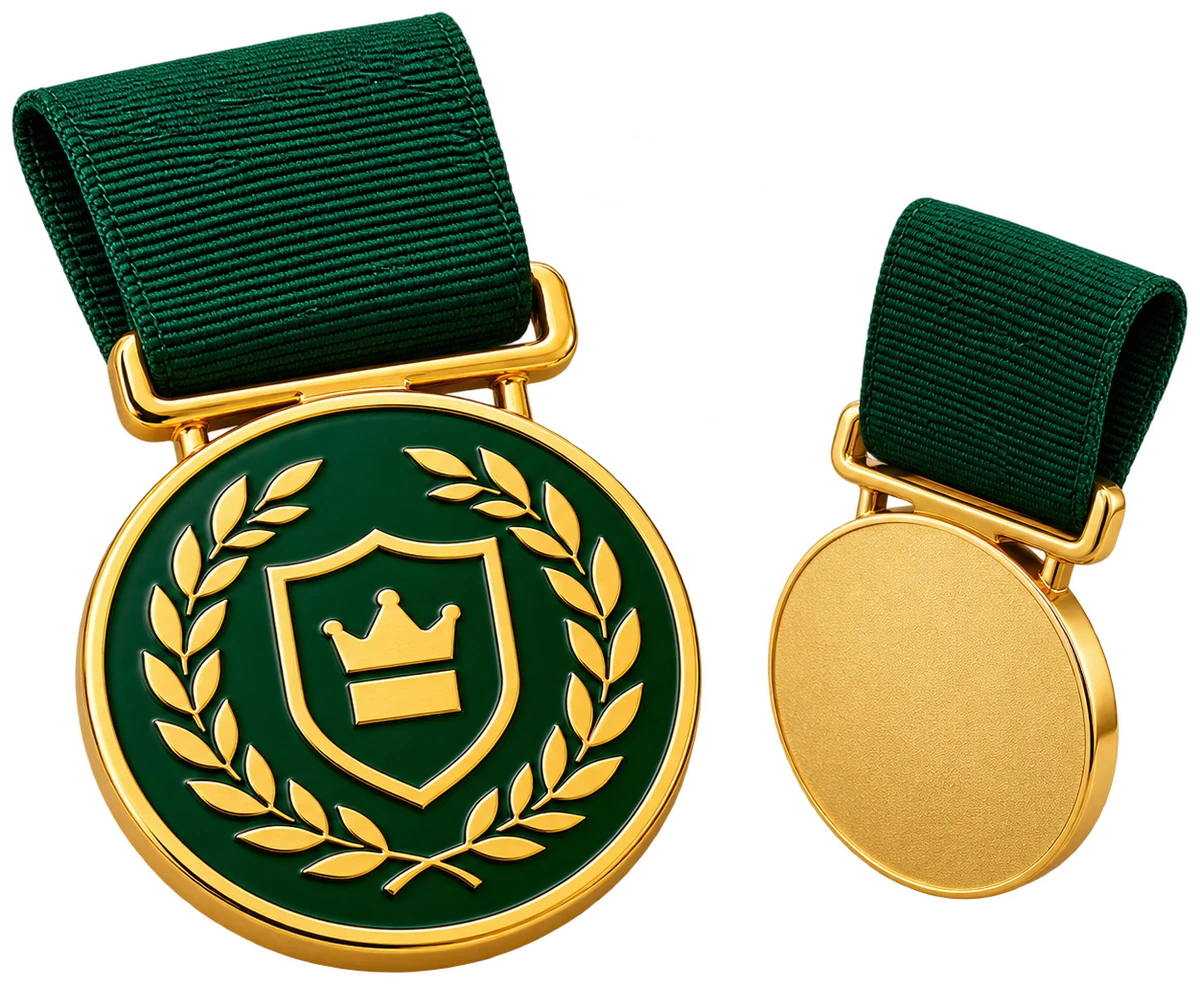
Charms
Components or assembled accessories
Define the hanging interface and which parts are supplied.
View charms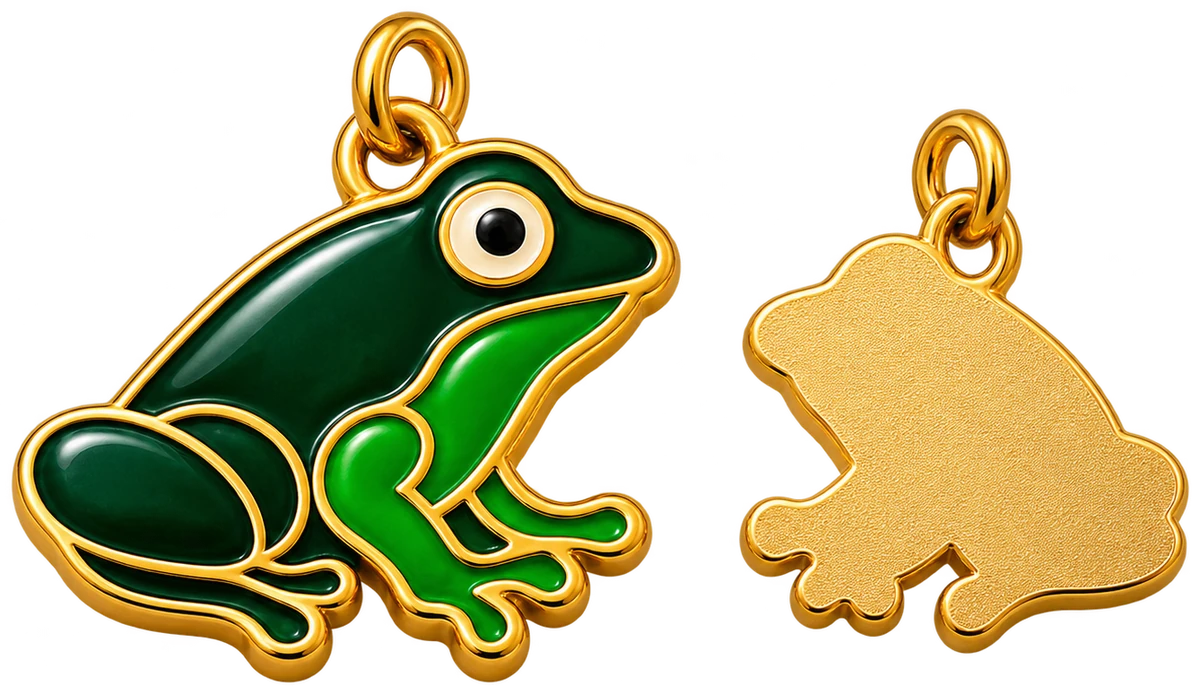
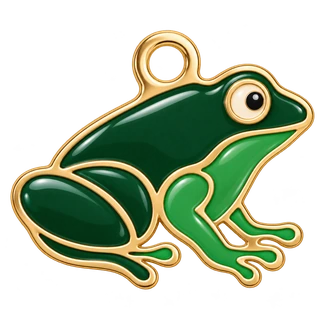
Illustrative custom concepts — not stock products or customer case studies.
Agree the scope
Define what arrives.
From component to complete presentation, clarify what we supply and who assembles each part.
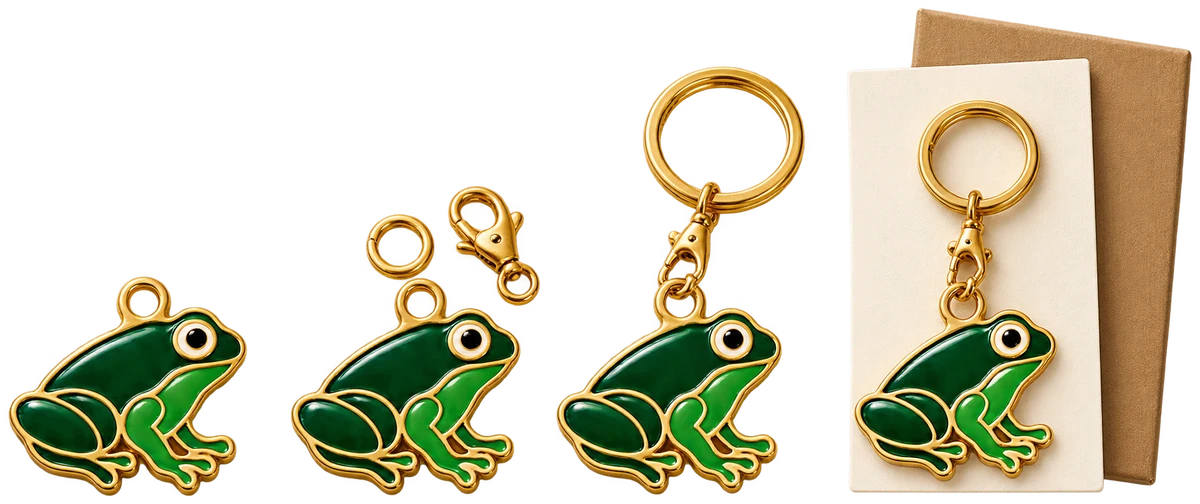
Component
Which parts do you supply?
With fitting
Who assembles?
Assembled
What is included?
Presentation set
How is it presented?
Artwork → Product body → Fittings → Assembly → Packing
Agree the supplied scope for each design; presentation shown is illustrative.
Compare decisions
Match the process to the product.
Soft and hard enamel are process choices within product families. Review the surface, artwork, structure and intended supply together.
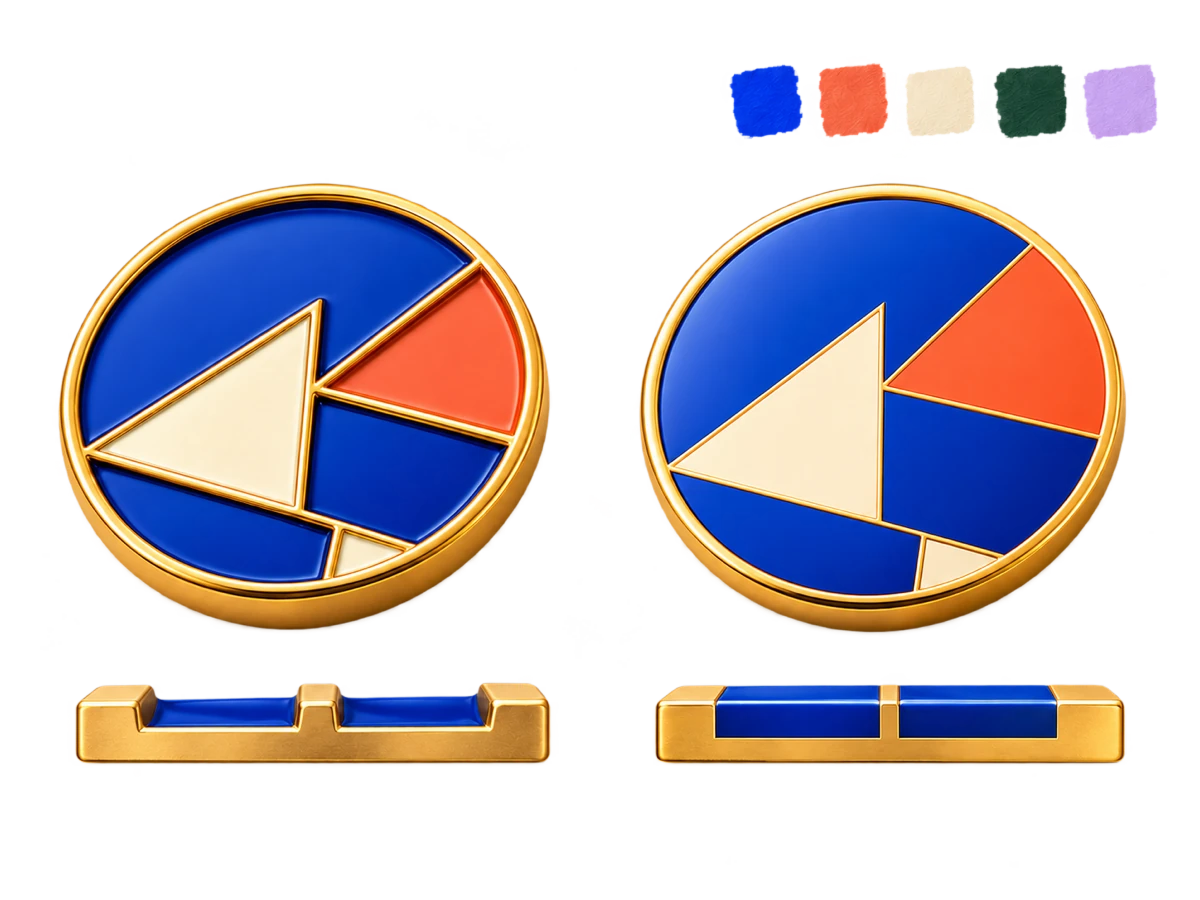
Soft enamel retains recessed colour between raised metal divisions. Hard enamel has a smooth, flush polished surface. Fine lettering, colour boundaries and the proposed finish need review at the intended size.
 Pin or badge
Fine lettering and colour areas
Post position and wearing direction
Single pin or coordinated set
KeychainEnamel face and metal lines
Body, connector and ring
Complete assembly
MedalFront and reverse design
Suspension and ribbon
Medal, ribbon and presentation
CharmSmall colour areas
Hanging hole and connector
Component or accessory
Our factory
Our factory
in Hangzhou.
Our own factory carries out tooling, metal forming, enamel colouring, polishing, plating, assembly, inspection and packing for custom enamel product projects.
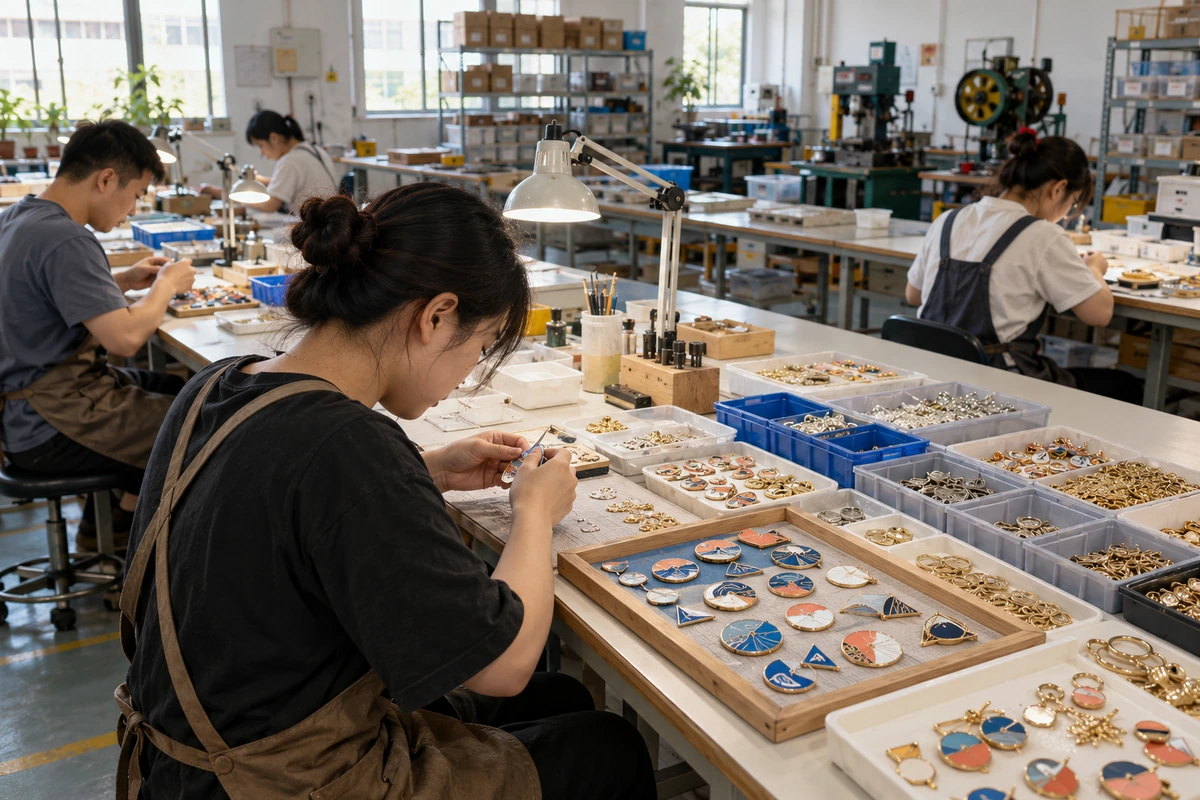
Pins & badges · Keychains · Medals · Charms
Metal preparation
Tooling and forming establish the outline, relief and metal body for the agreed artwork.
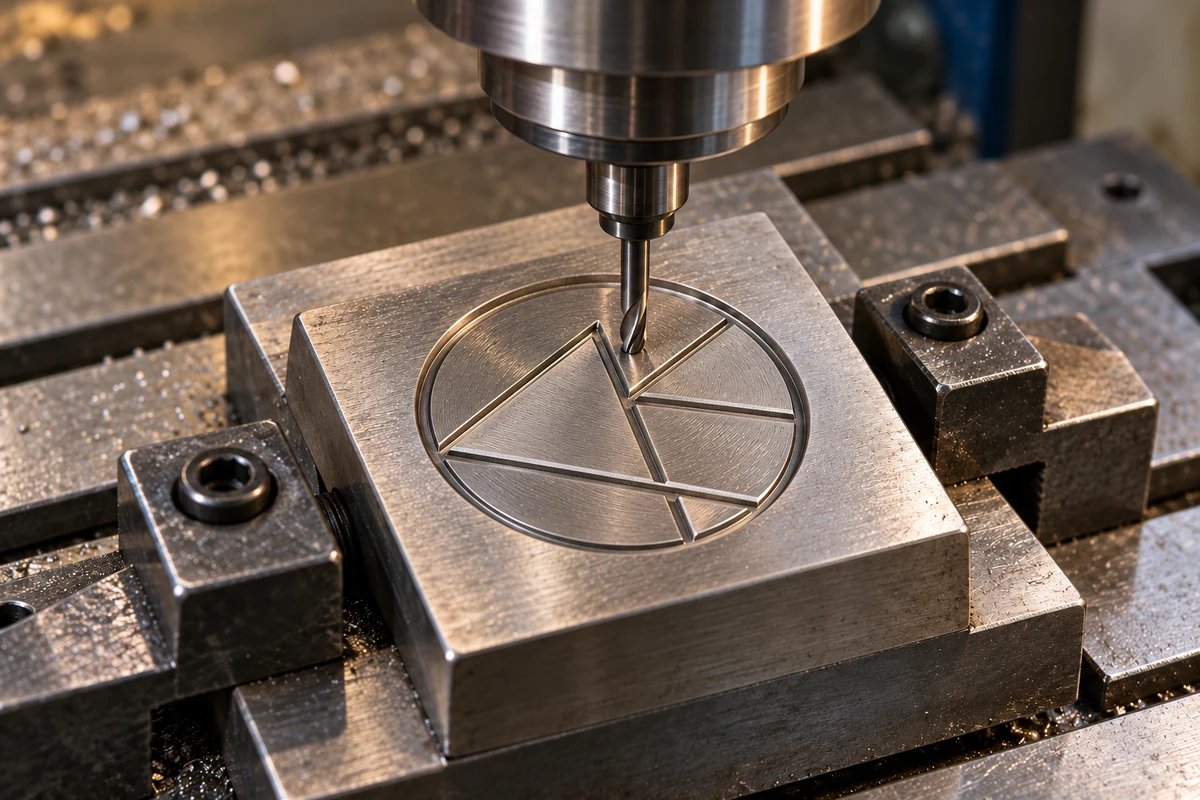
Tooling
The mould carries the reviewed outline and design details.
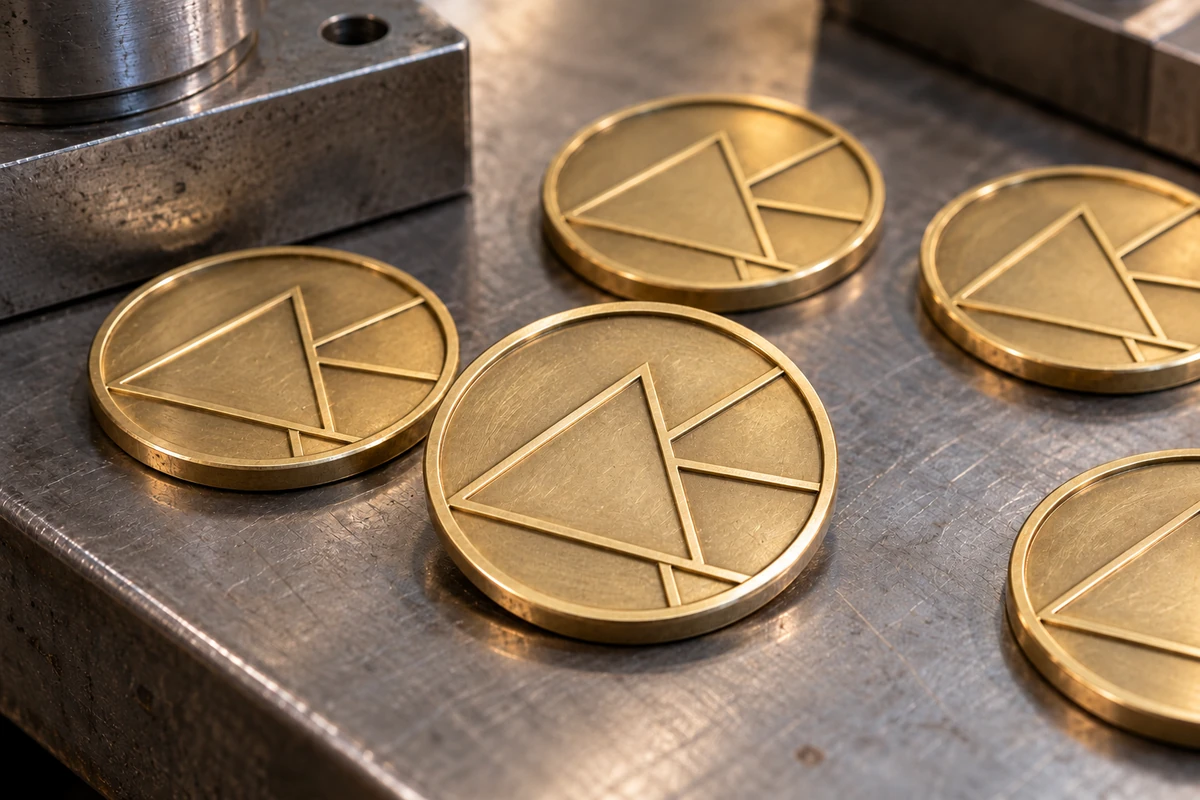
Metal forming
The product body takes shape before its surface and fittings are completed.
Enamel & surface
Colouring, polishing and plating are carried out in-house. Their order depends on the enamel process and metal finish.
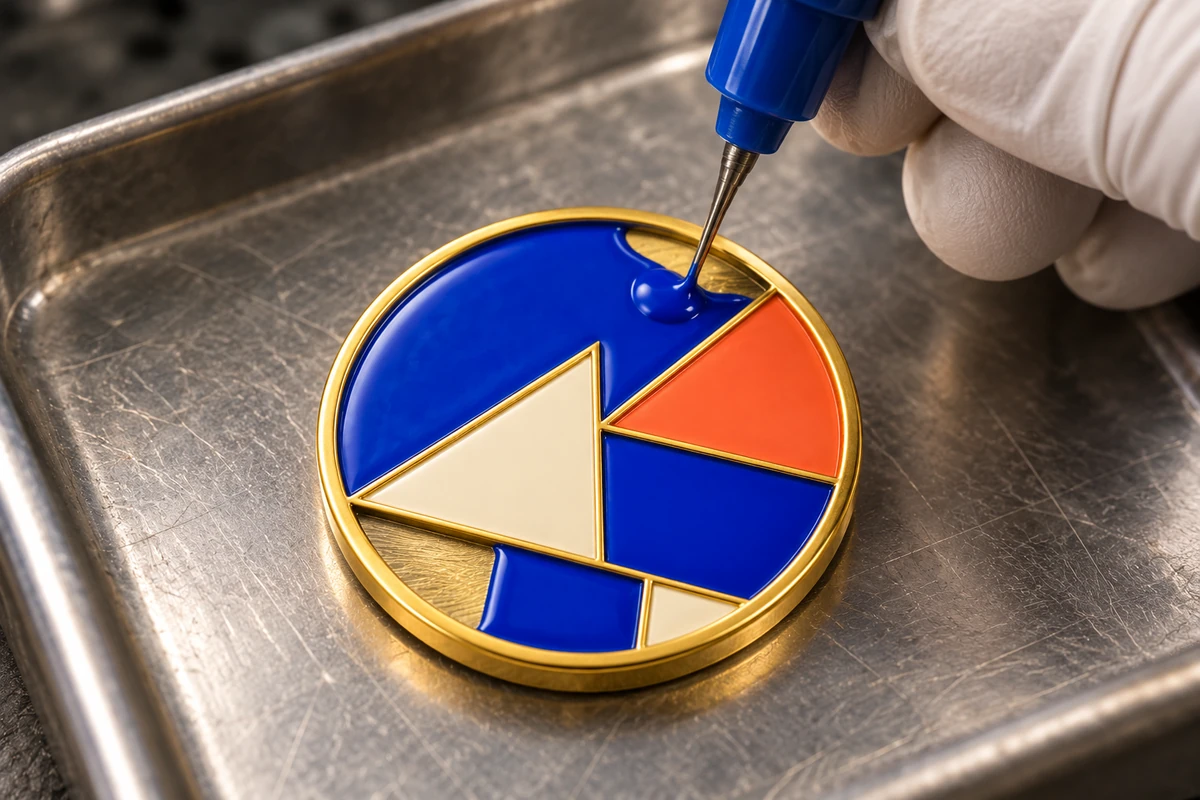
Enamel colouring
Colour areas follow the agreed artwork and colour reference.
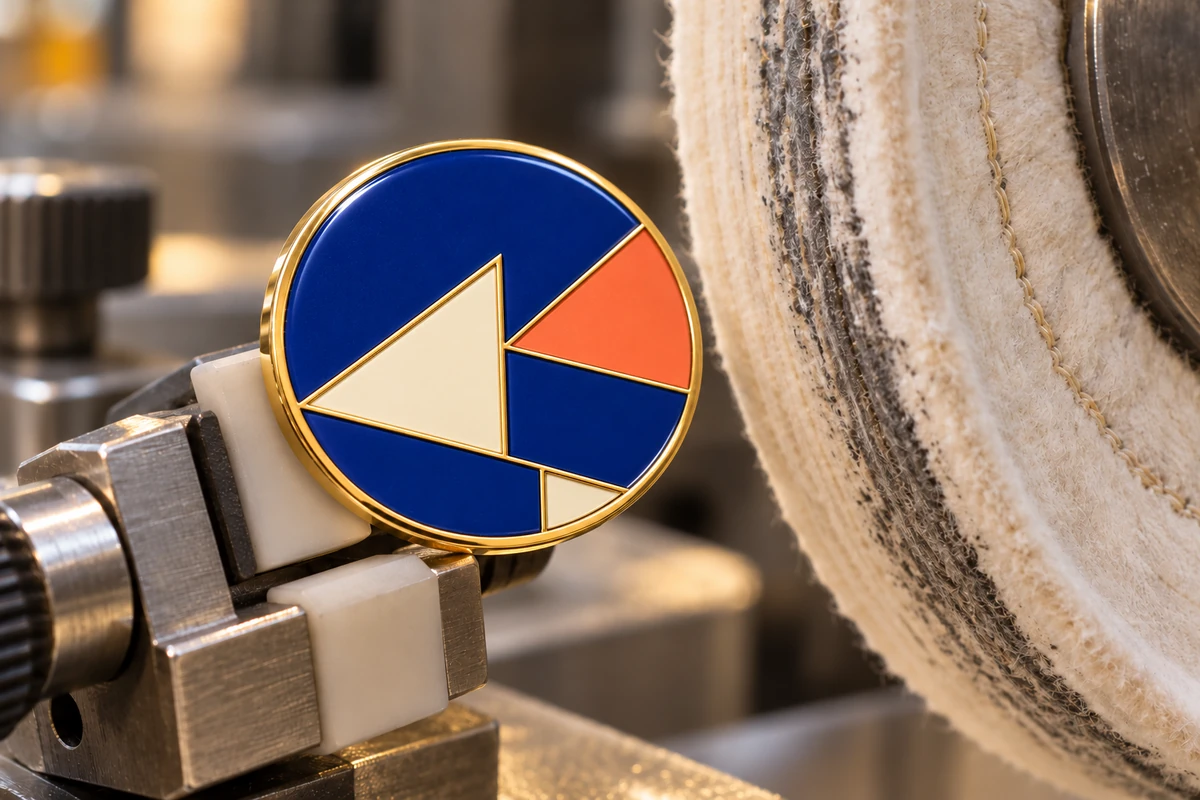
Polishing
Surface and edge treatment follow the selected enamel route.
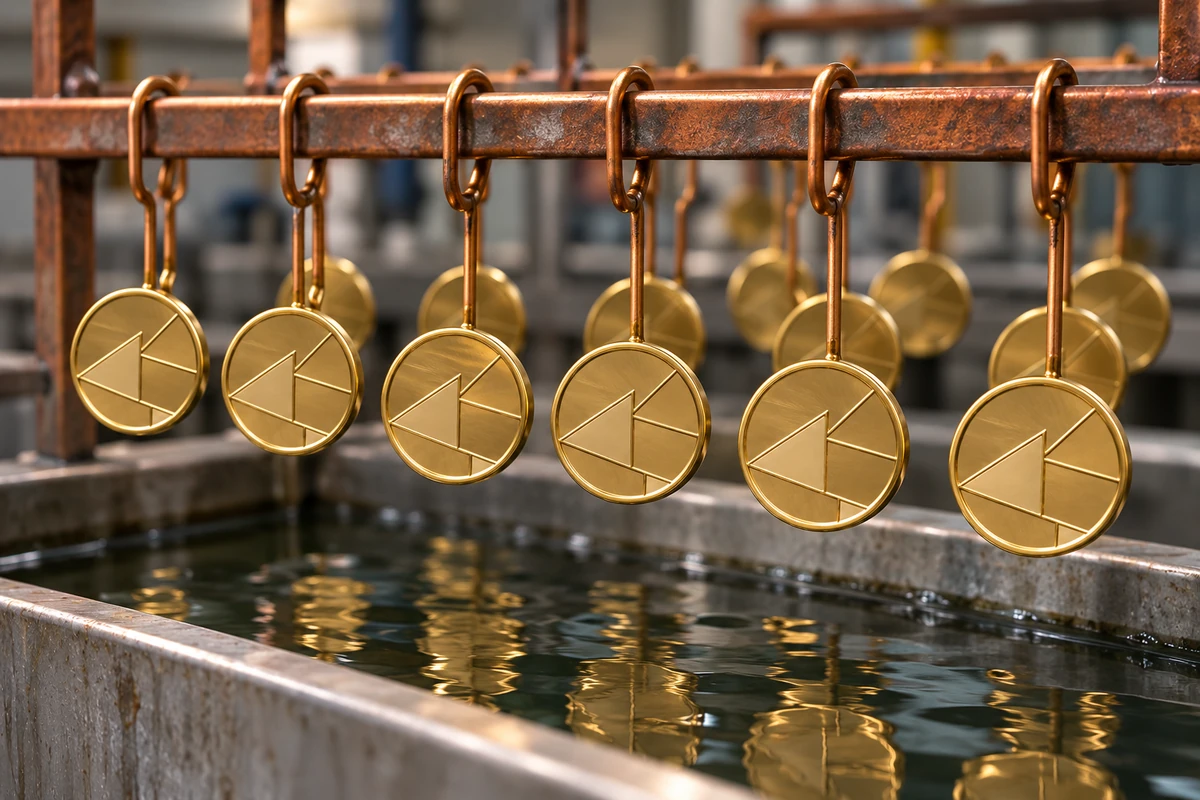
Electroplating
The metal finish is defined together with the product and colour scheme.
Assembly & delivery preparation
Fittings, review and packing stay connected to the correct product version and supplied scope.
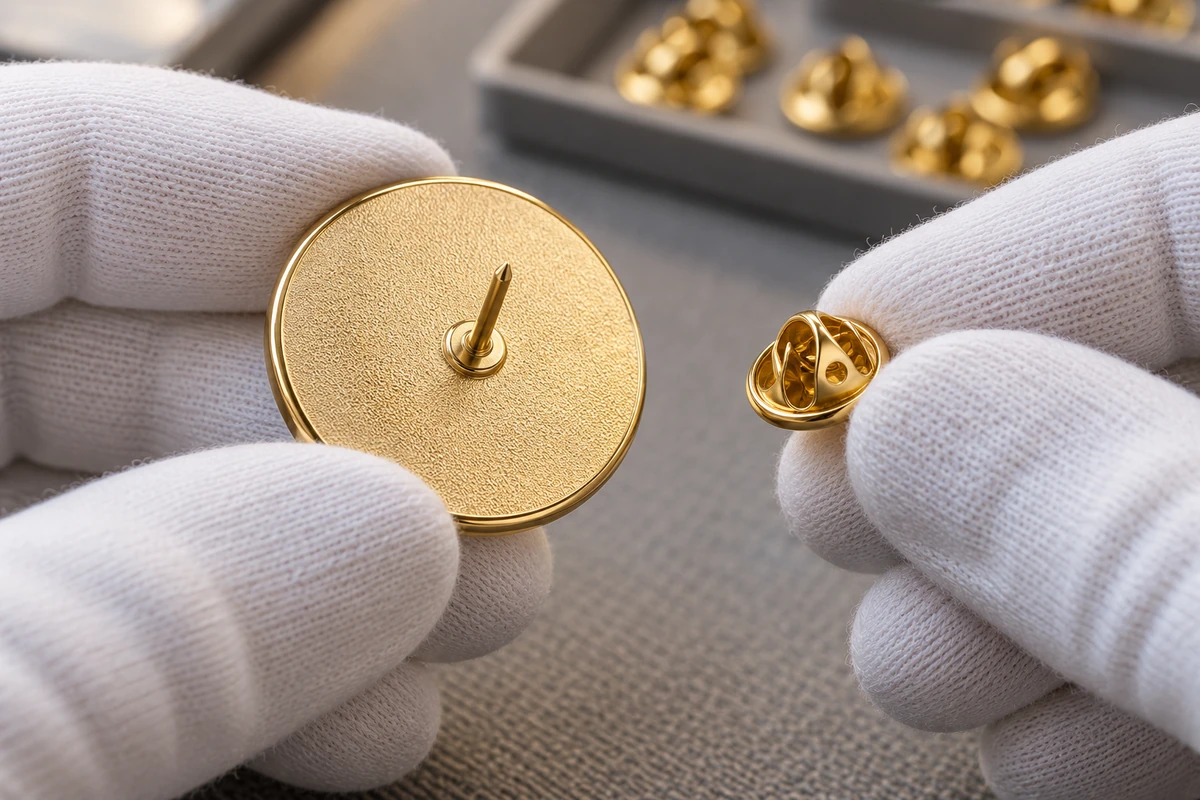
Assembly
Fittings and included parts are checked against the agreed assembly.
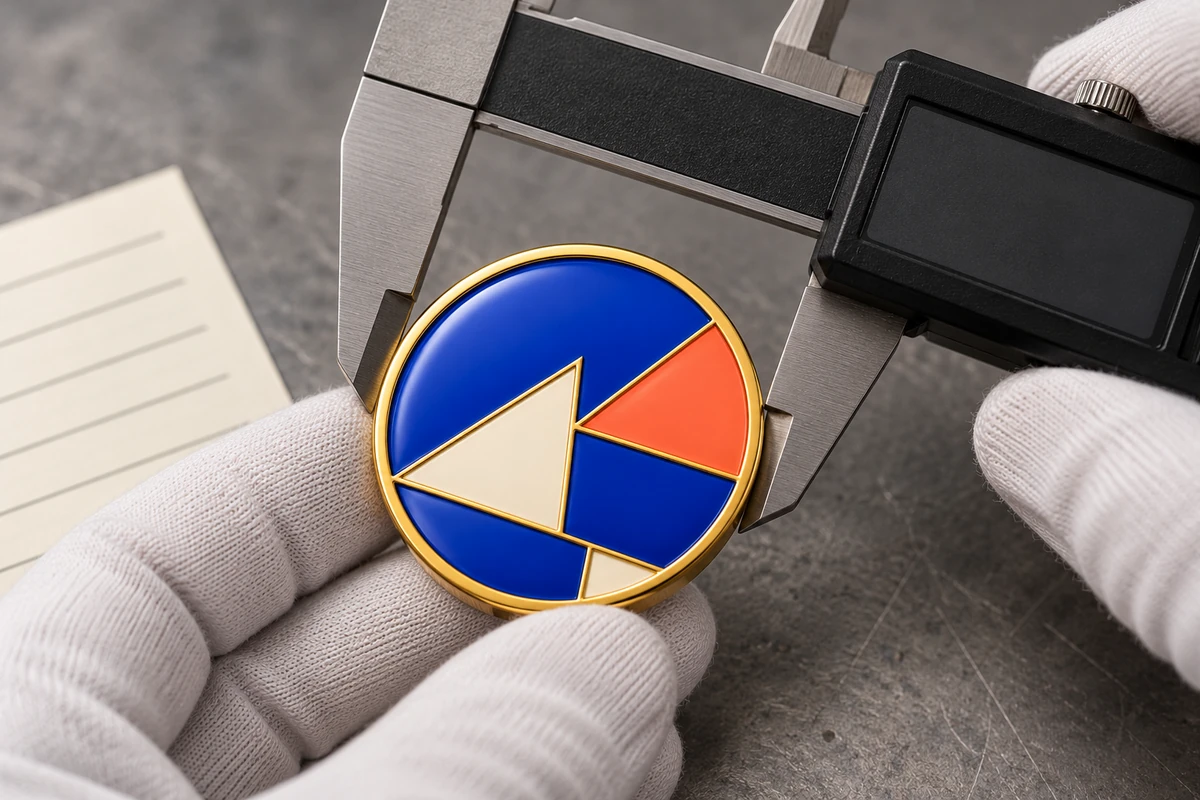
Inspection
Appearance, dimensions and structure are reviewed against the project reference.
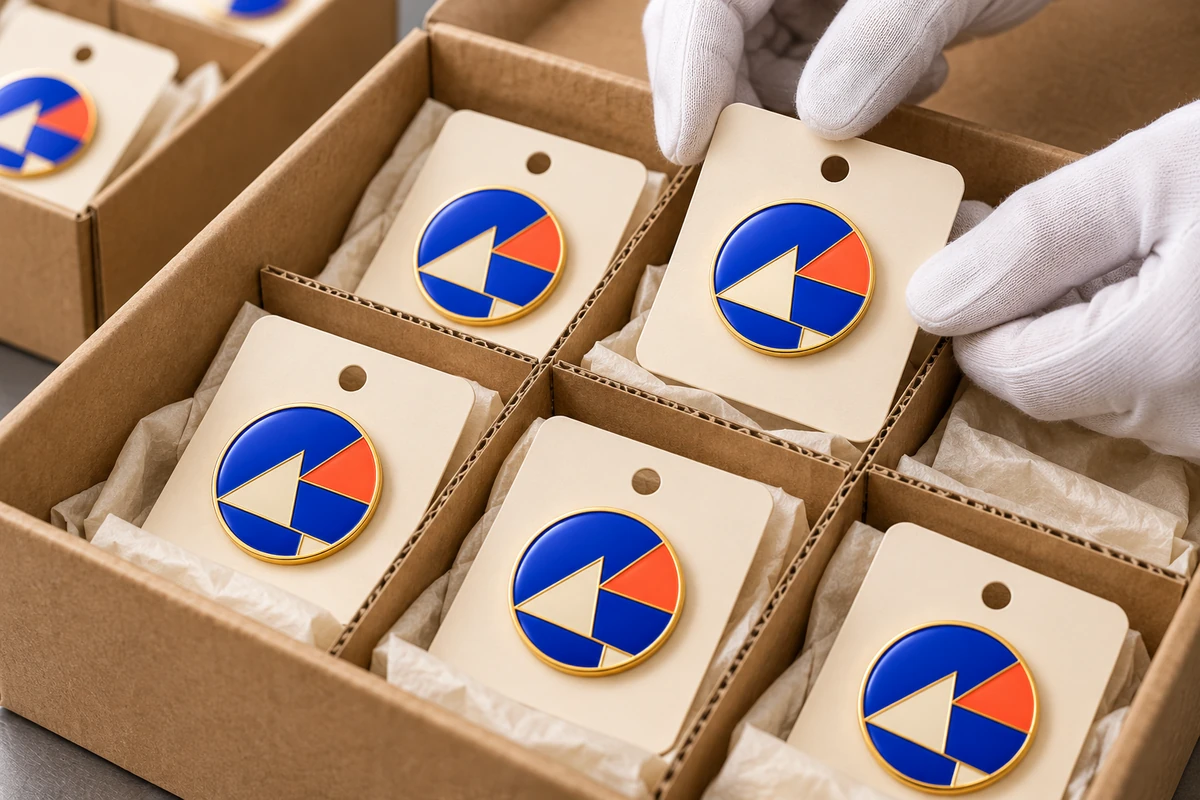
Packing
Product versions, presentation and transit protection are prepared for dispatch.
About these images AI-generated illustration — actual factory photographs to follow. These scenes explain the manufacturing scope; they do not document our premises or equipment.
See how the products take shapeIn production
A shared start.
Four assembly routes.
Product families share manufacturing stages, with individual bodies and assembly requirements. The finishing order depends on the selected process and metal finish.
Artwork & tooling
Review the artwork and prepare tooling for the agreed design.
Metal body
Form each product body to its agreed design.
Enamel & finishing
Follow the surface route agreed for the design.
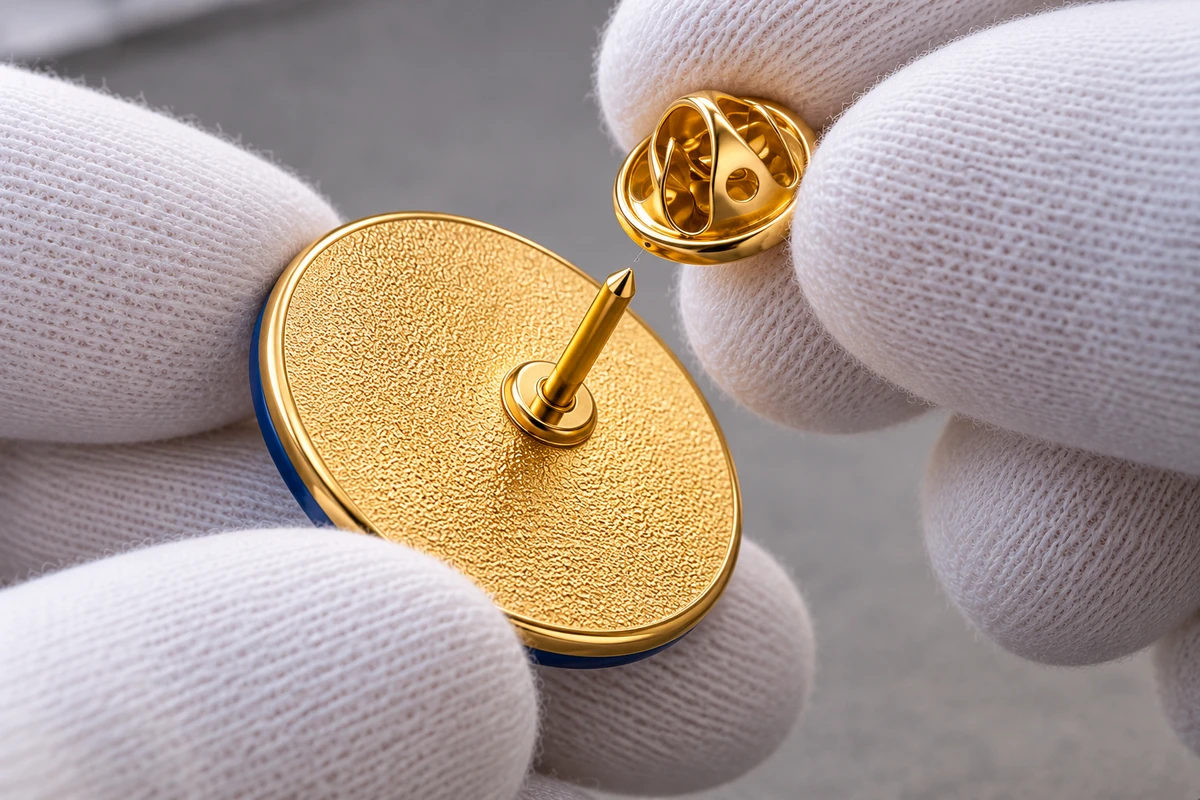
Pin posts & back fittings
Review the reverse and selected fitting.
Keyring & connector
Define the complete connection and assembly.
Medal & ribbon
Review suspension, ribbon and supplied form.
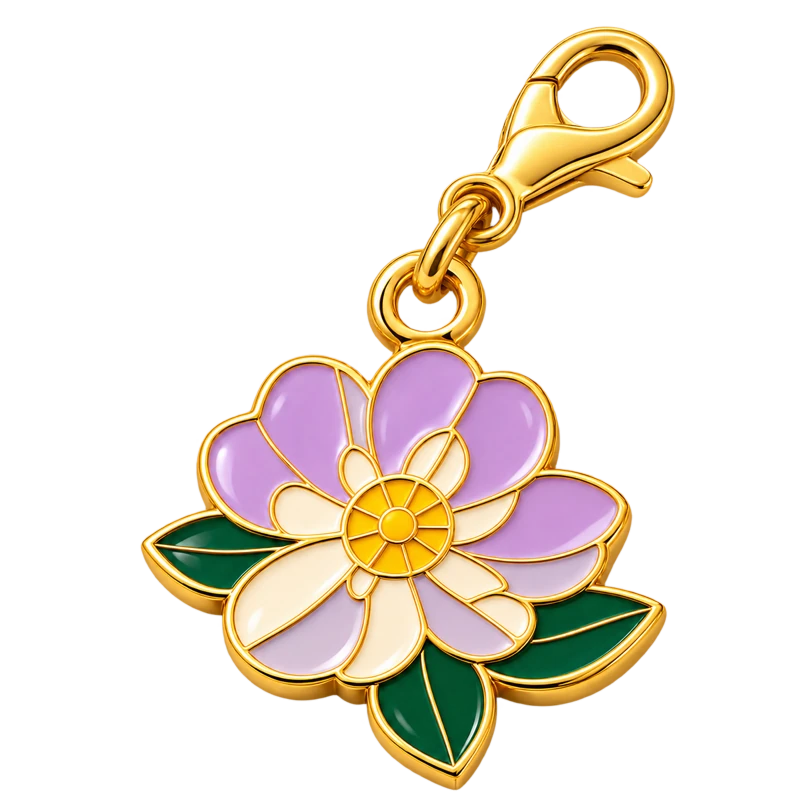
Charm & chosen fitting
Confirm the hanging interface and chosen fitting.
AI-generated illustration — actual factory photographs to follow. Assembly endpoints are illustrative product studies.
OEM & ODM
One brief.
Several product families.
Start with your artwork, develop an original idea, or adapt a design. Each product still needs a clear version, quantity and supplied scope.
| Product | Design version | Quantity unit | Supplied form | To confirm |
|---|---|---|---|---|
| Pin | Logo mark | Pieces per design | Pin + backing card | Fitting |
| Keychain | Matching mark | Pieces per design | Assembled | Connector |
| Medal | Programme emblem | Pieces per version | Ribbon set | Presentation |
| Charm | Brand motif | Pieces per design | Component | Hole position |
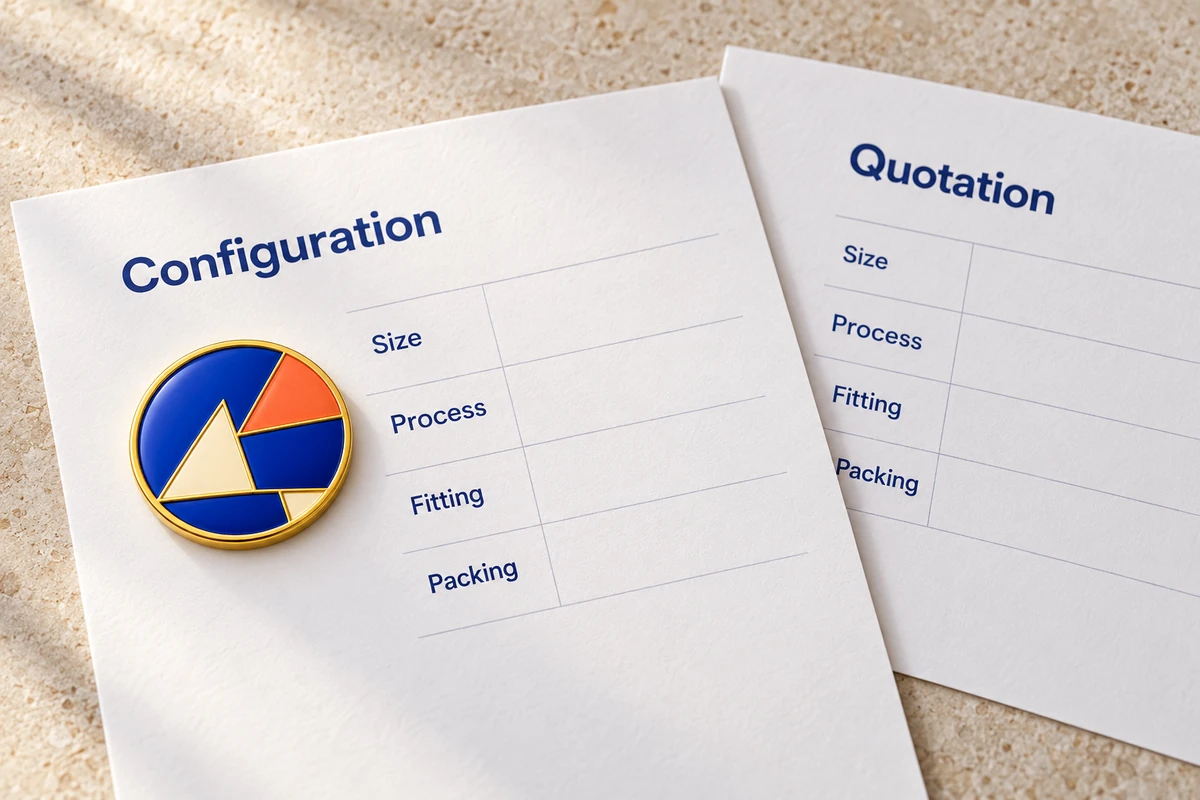
Define each version
Share use, artwork, quantities and supplied form; agree the quotation scope.
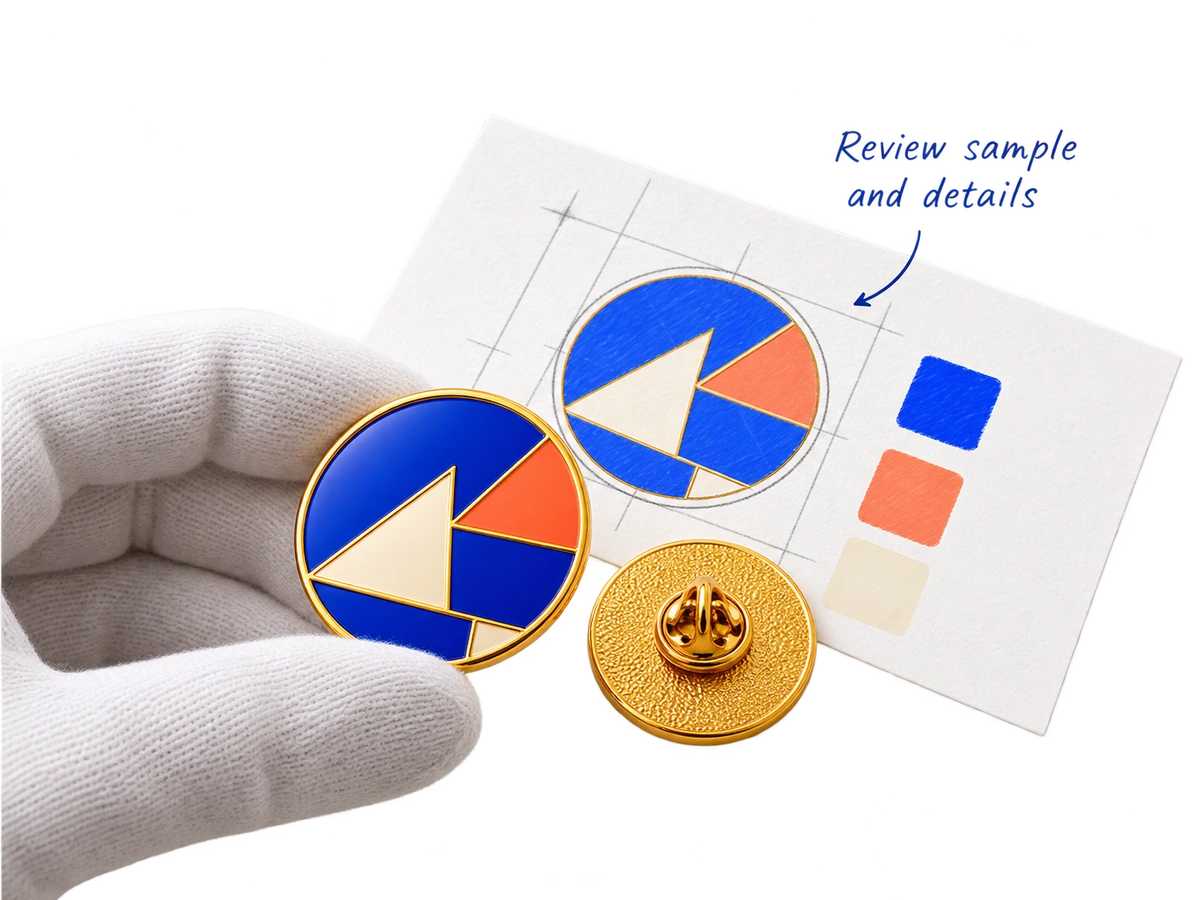
Review the sample
Compare the sample with the agreed reference and record revisions.
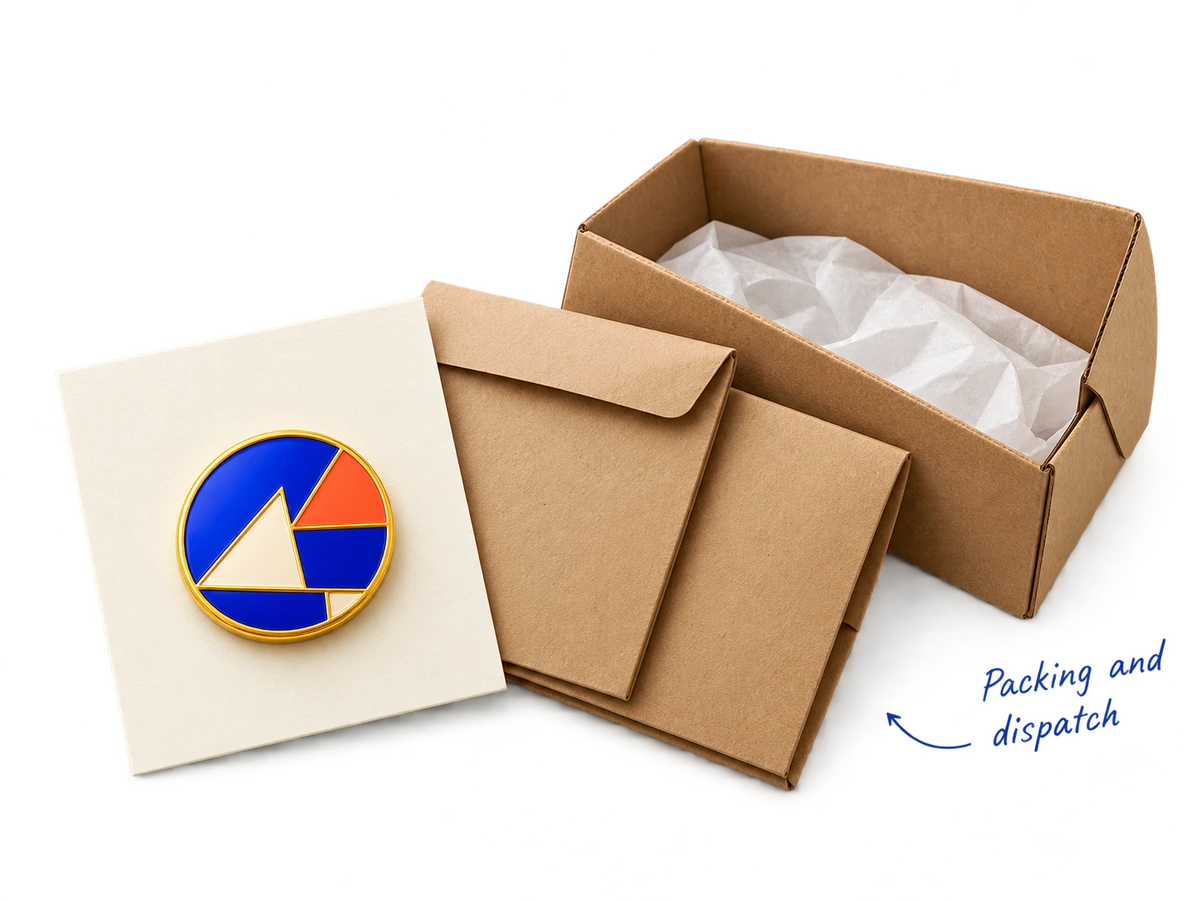
Agree production and dispatch
Confirm specifications, production scope, packing and destination before scheduling.
Sample review
Check the structure,
not only the colour.
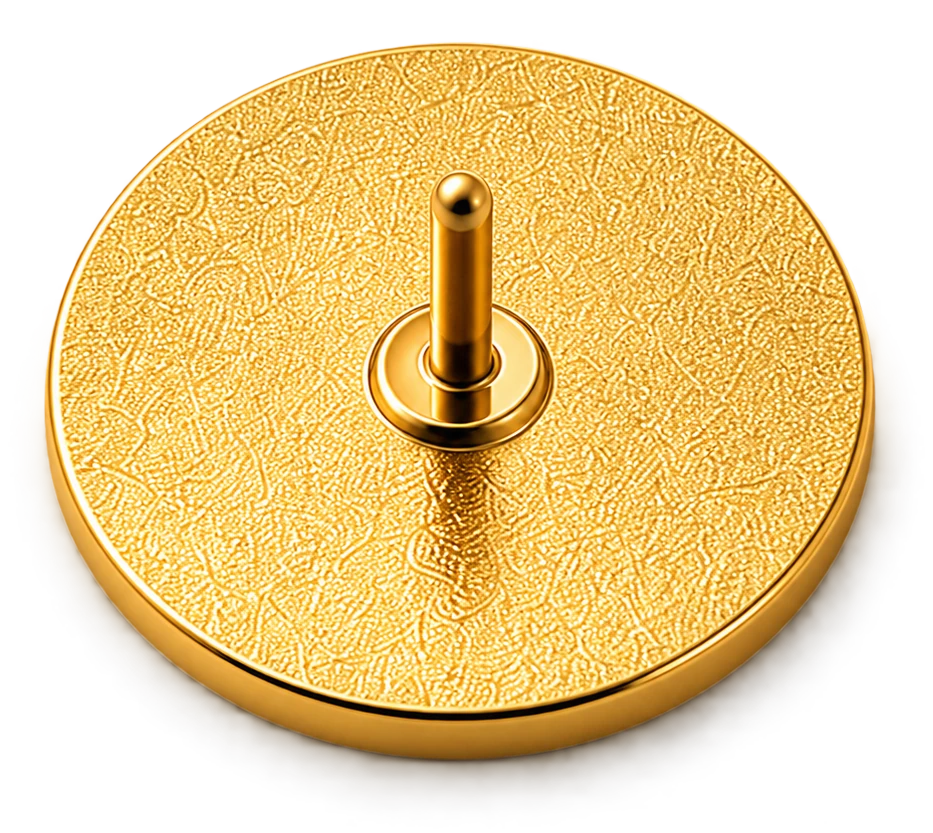
Pin: reverse & fitting
Check orientation, post position and the selected fitting.
Keychain: connection
Review the body, connector and complete assembly.
Medal: ribbon & suspension
Check the suspension and presentation together.
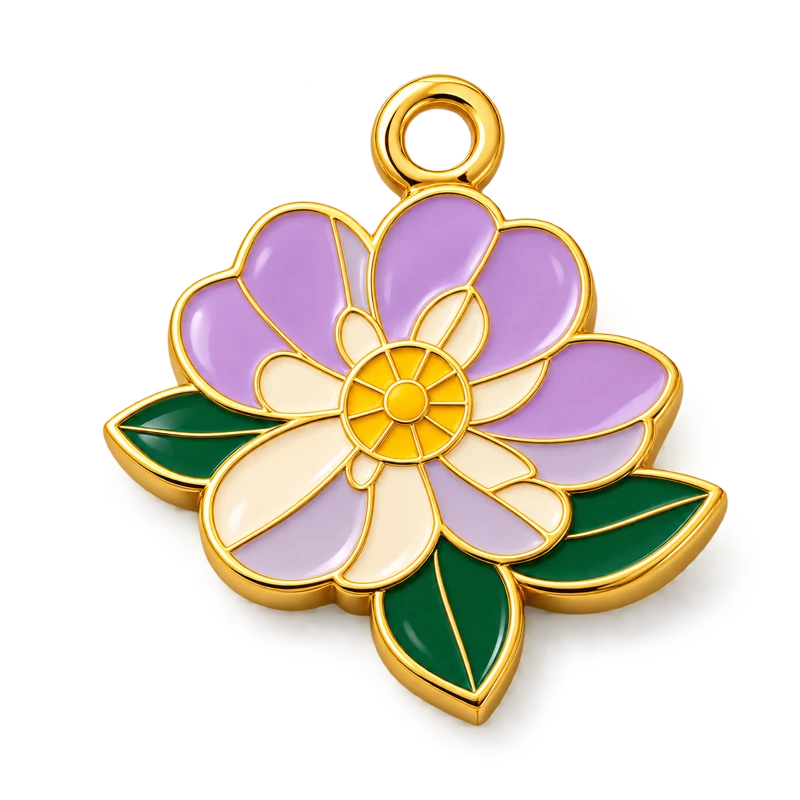
Charm: hole & edge
Review the interface, outline and metal boundaries.
Design version / Colour reference / Fitting / Presentation / Transit protection
Record differences by product and version before production is agreed.
Illustrative product review examples.
FAQ
Questions across product families.
Product range
01Which enamel products can we commission?
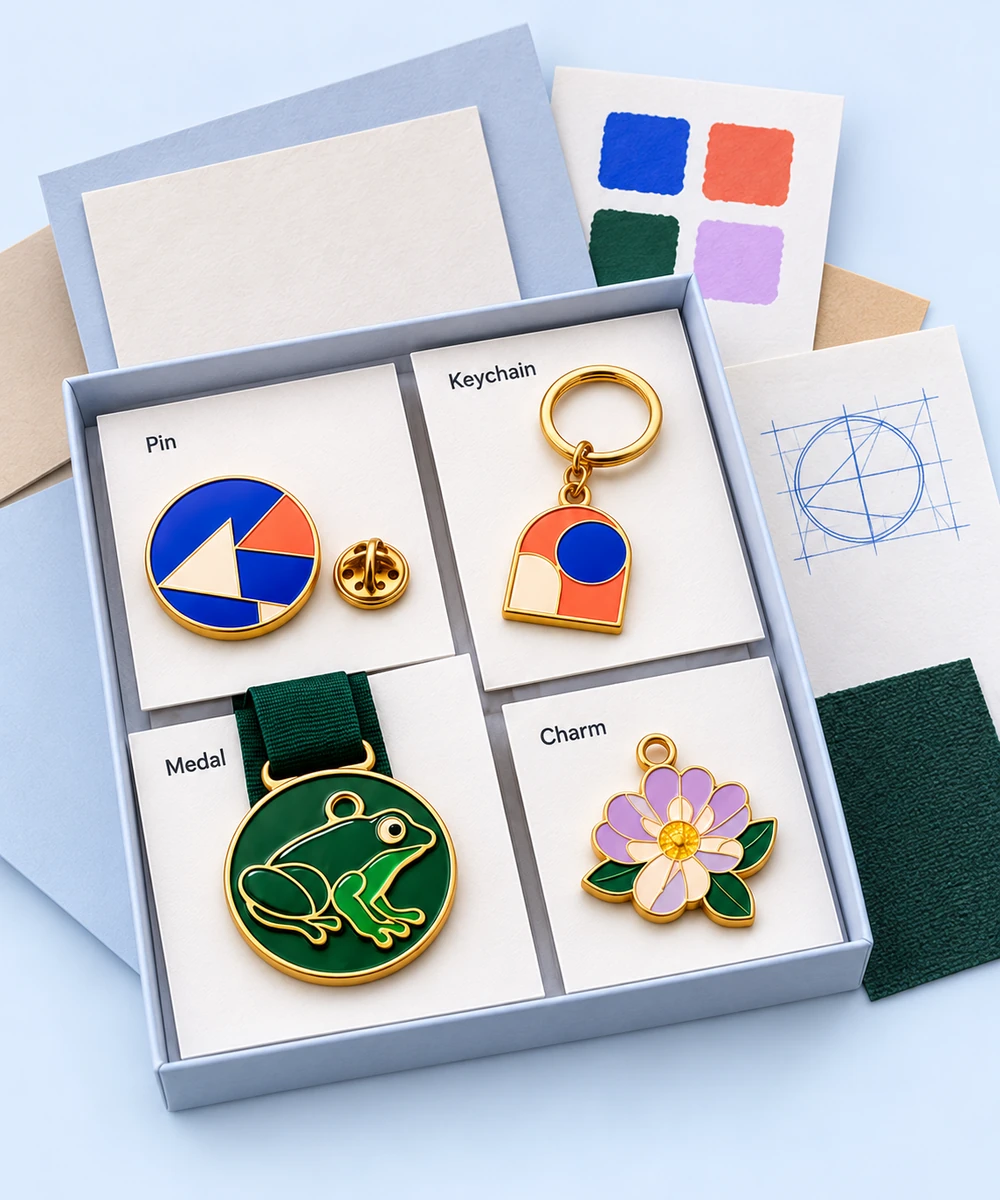
We manufacture custom pins and badges, keychains, medals and charms for business projects. A pin is defined around wearing and attachment; a keychain around its body, connector and ring; a medal around its body, suspension and ribbon; and a charm around its interface and supplied form. The examples introduce these formats. Each enquiry needs its own artwork and construction review.
02How do we choose the right product family?
Begin with the intended use and what the recipient will receive. Consider whether the object will be worn, carried on keys, presented as an award, or supplied as a component for another accessory. Then define how it attaches and which parts are included. Those decisions identify the family more reliably than shape or colour alone.
03Are the example designs available from stock?
No. The displayed designs are illustrative custom concepts, not stock products or customer case studies. They help describe a brief. Your artwork, size direction, construction, fittings and presentation are reviewed for the project; a reference image is not a confirmed production specification.
Supplied scope
04Can a charm be supplied as a component rather than a finished accessory?
Yes. The supplied scope can distinguish the enamel body, a selected fitting, assembly and presentation. State which parts you require and who will assemble the final accessory. The hanging hole, connector and adjoining item must be considered together so that a quotation describes the intended delivery rather than an assumed complete product.
05Are soft and hard enamel separate product categories?
They are process choices within product families. Soft enamel typically retains recessed colour between raised metal divisions; hard enamel is polished to a smooth, flush surface. The artwork, intended appearance, structure and finish must be reviewed together. Choosing a surface does not by itself define the complete pin, medal, keychain or charm.
06Which manufacturing stages are completed in your factory?
Our own factory carries out tooling and metal forming, colouring, polishing, plating, assembly, inspection and packing. The route and checks are defined around the selected product and finish. Factory images currently labelled as AI-generated are illustrations of the manufacturing scope; they are not documentary photographs of our premises.
Project planning
07Can the same brand identity be used across different products?
Yes, a project can develop a shared visual identity across several product families. Each format still needs its own artwork and construction review. A mark that works on a medal may need adjustment for a small pin, and a charm's hanging interface differs from a pin's reverse. Record the design version, supplied scope and quantity separately for each format.
08How should quantities be listed for a multi-product project?
List quantities by product, design and version. State whether each quantity refers to individual pieces or complete sets; for a set, also list the items included. Keep fittings, assembly and packing requirements alongside each line. This prevents a total project quantity from hiding different versions or different supply requirements.
09Will colours look identical across different formats?
Use a common colour reference, but review it against each product's surface, metal finish and sample. The size of a colour area, adjacent metal and viewing conditions can affect its appearance. Record the accepted reference and any product-specific decisions so later reviews do not rely only on photographs or screen colours.
10What should we include in a multi-product brief?
Include the required families, artwork or concept, intended use, size direction, quantity per design or version, and supplied scope. Identify fittings and presentation, the target arrival timing and destination. You can start with an incomplete brief, but mark unresolved points clearly so they can be reviewed before the production scope and schedule are agreed.
Start a business project
Build your product brief.
Choose the product families and list quantities by design. Mark unresolved points so we can define the next step.
Or email [email protected]