
Custom medal manufacturing
Medals for event and institutional programmes.
Commission medals for an event, school or institutional programme. Define the metal body, front and reverse artwork, ribbon assembly, quantities per award version and packing for distribution. Share the approved references and the decisions your team still needs to make.

02 / Organisation projects
Six medal projects with ribbons
Compare six medal briefs with a defined hanging arrangement. For a boxed presentation piece, see the corporate commemoration brief below.
M01 / Custom concept
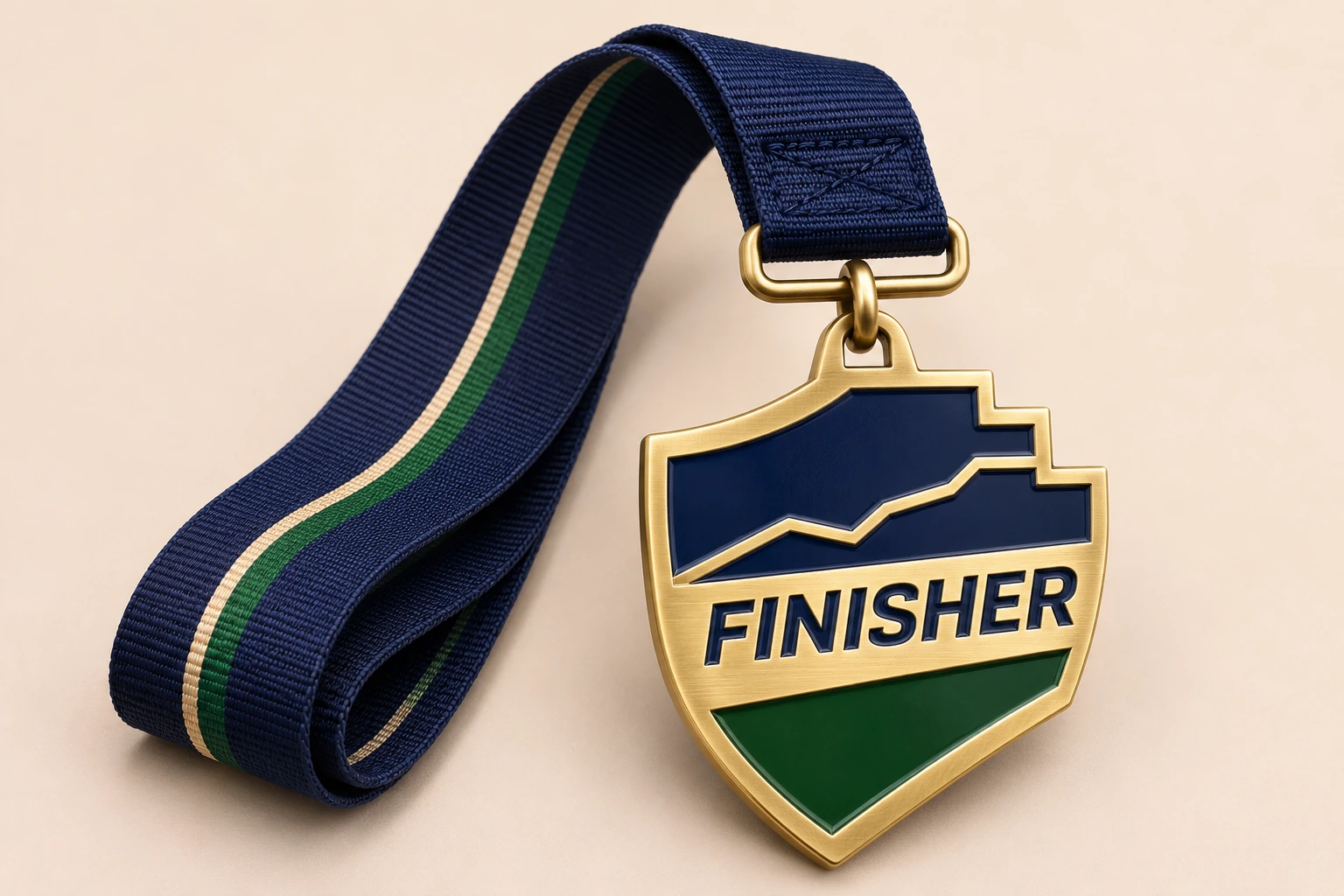
Event organiser orders · Metal and enamel · Finisher medal project
Marathon Medals for Event Organisers
Work with a marathon medal manufacturer on a defined finisher medal project: the medal body, event artwork, reverse details, hanging arrangement and ribbon. We focus on metal and enamel medals commissioned for an event edition, with quantities and packing planned around the versions your team needs to distribute.
- Product
- a finisher medal body with the agreed hanging connection, ribbon and supplied assembly state.
- Event reference
- the authorised event identity, edition and any information that changes between versions.
- Order unit
- medal pieces for each version, with protection and receiving groups identified separately.
- Bring to the discussion
- event and edition reference; pieces per version; exact front and reverse wording; intended body dimensions; ribbon and hanging arrangement; attached or separate supplied state; protection and receiving groups; destination; event date; desired arrival date; open decisions and approving contact.
pieces per version; ribbon and assembly state; individual protection; presentation if requested; group identification; agreed references used for receiving and review.
View marathon finisher medalsM02 / Custom concept
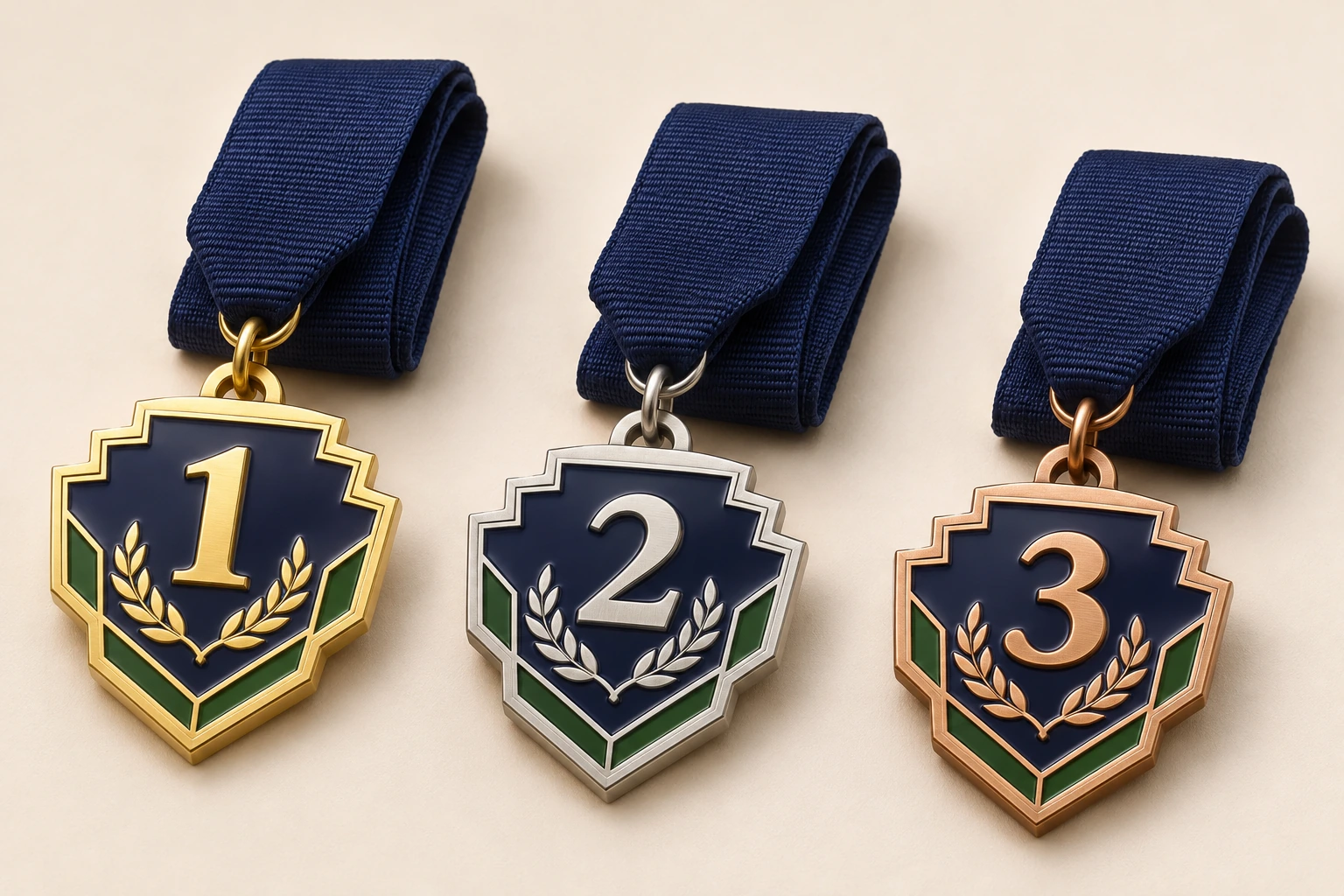
Organiser procurement · Ranked versions · Metal and enamel
Wholesale Competition Medals
Plan wholesale competition medals as one coordinated award family, with clear distinctions between places and competition groups. Your organiser's brief defines the ranking titles, shared design, changing details and medal pieces needed for each award position. The complete supply arrangement includes the metal body, agreed hanging connection, ribbon and packing.
- Supply reference
- coordinated metal medal family; authorised ranking and group references; individual medal counts by version; agreed ribbon assembly and receiving groups.
- Bring to the discussion
- organiser and event reference; rank titles; competition groups; pieces per version; common and changing artwork; ribbon and connection; assembly state; sample coverage; receiving allocation; destination and timing.
rank/group matrix totals; version identifiers; complete hanging assembly; individual protection; requested presentation; group contents; outer identification; agreed sample coverage. Sample arrangements, costs and revisions are discussed for the actual programme.
View competition ranking medalsM03 / Custom concept

School procurement · House and class allocation · Metal and enamel
Wholesale School Sports Day Medals
Plan wholesale school sports day medals around the way your school will recognise and distribute awards across the day. A whole-school brief can connect a common school identity with authorised house, class, year-group or participation references. The order needs clear medal-piece totals and receiving groups that staff can relate to the programme.
- Supply reference
- complete metal medal and agreed ribbon assembly; authorised school and group identity; quantities by physical version; separate class or house receiving allocations.
- Bring to the discussion
- school and event reference; authorised mark; recognition wording; physical version list; pieces per version; house/class allocation; ribbon and connection; supplied assembly state; school-specific requirements; protection and labels; destination; event and desired arrival dates.
physical versions; piece totals; class/house allocations; separately requested extras; ribbon state; individual protection; group contents; identification references; sample coverage. Presentation materials, sample costs and review arrangements are discussed for the specific school project.
View school sports day medalsM04 / Custom concept

Institutional procurement · Graduation cohort · Ceremonial wearing
Wholesale Graduation Medals
Plan wholesale graduation medals as a coordinated wearing item for an institution’s graduating cohort. The project brings together authorised institutional identity, cohort wording, the metal medal, ribbon and complete hanging arrangement. Your ceremony team defines who receives the item and how it will be presented and distributed.
- Supply reference
- complete metal graduation medal; authorised institution and cohort reference; agreed ribbon and wearing orientation; pieces per physical version; ceremony distribution groups.
- Bring to the discussion
- institution and approving contact; authorised crest files; cohort wording; front/reverse references; versions and piece quantities; ribbon and orientation; received assembly; institutional requirements; ceremony groups; protection/presentation; destination and dates.
institution identity; exact cohort wording; front/reverse; ribbon and facing direction; approved version coverage; individual protection; requested presentation; group contents and labels. Sample costs, approval method and revisions are discussed for the particular ceremony.
View graduation ceremony medalsM05 / Custom concept

Structural medal project · Diecast route review · Metal and enamel
Wholesale Diecast Medals
For a wholesale diecast medals enquiry, begin with the metal structure your organisation wants to commission. This concept uses an asymmetric body, an internal open window and a stepped metal band that connects the front design to the outer profile. The opening and relief belong to the physical medal, rather than being printed effects on a standard blank.
- Supply reference
- a specifically shaped metal medal body; necessary open space and stepped relief; agreed suspension, connection and ribbon; individual piece counts; documented structural review.
- Bring to the discussion
- organisational purpose; front/reverse/side views; required outline; open window map; connected-metal priorities; relief intentions; dimensions to review; enamel and metal appearance; ribbon and suspension; versions and pieces; protection; destination and timing.
outer outline; open window; connected metal; stepped relief; reverse and side relationship; internal edges; suspension and facing; selected surfaces; complete assembly; protected received form. Any special inspection or testing requirement, sample costs and revisions require their own agreement.
View shaped die-cast medalsM06 / Custom concept

Institutional procurement · Academic recognition · Metal and enamel
Wholesale Academic Medals
Plan wholesale academic medals for a defined, institution-authorised achievement or qualification-recognition programme outside graduation ceremony identity. The brief may concern a subject distinction, research achievement or approved academic recognition title. Your institution defines the award and recipient eligibility; our project discussion concerns the authorised product wording, metal medal, ribbon and supplied arrangement.
- Supply reference
- complete metal academic recognition medal; authorised title and institution identity; pieces by approved physical version; agreed ribbon assembly; recipient-group receiving arrangement.
- Bring to the discussion
- institution and approval contact; authorised recognition purpose; exact title per version; identity files; front/reverse references; version quantities; ribbon and connection; supplied assembly; presentation/protection; receiving groups; destination and desired timing.
authorised award titles; institution identity; changed-text coverage; front/reverse; metal and enamel appearance; ribbon and orientation; pieces per version; protection; receiving groups; requested presentation. Sampling, charges and revisions are discussed for the specific institutional programme.
View academic achievement medalsM07 / Boxed custom concept
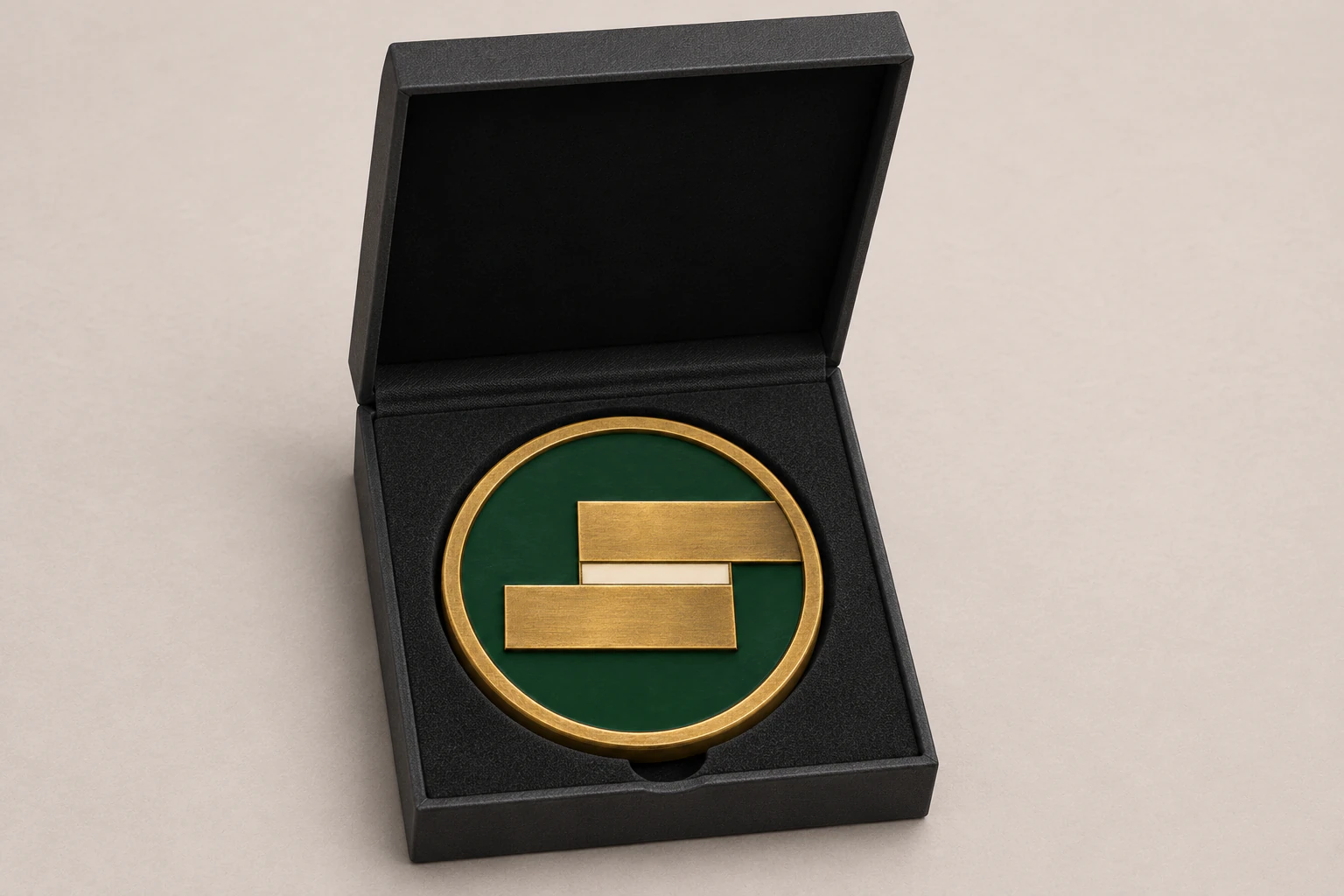
Company milestones · Two-sided artwork · Boxed presentation
Boxed corporate challenge coins
Plan a double-sided enamel coin for company recognition or an anniversary programme. This non-wearable format is presented in a fitted box. Confirm the coin and box as one receiving unit with quantities for each version.
- Artwork and orientation
- Provide authorised front and reverse artwork. Mark how the reverse reads when the coin is turned and which face appears when the box is opened.
- Receiving and review
- Check both faces, the edge and how securely the coin sits in its insert. List the version counts and delivery groups for separate packing and distribution.
03 / The quantity register
Count pieces, versions and sets separately.
A combined total can hide a different version split or packing assumption. For custom medals in bulk, begin with the unit you are counting and keep every change in the product visible.

Illustrative register / no order quantities
One named row for every supplied version.
Ranks, divisions, years and colour variations belong in separate rows when they change what is supplied. If one complete set contains several medals, name its contents and the number of sets separately from the pieces inside.
Keep the event date, desired arrival and destination beside the register. These provide planning context; they do not establish a delivery commitment.
| Version / group | Front & reverse | Ribbon | Counting unit | Packing reference |
|---|---|---|---|---|
| Finisher / named division | Common front; edition on reverse | Named ribbon reference | Pieces for this version — to define | Protection and group — to define |
| Ranking / each named rank | Rank and division identified | Confirm per rank or common | Pieces per rank, or defined set | Per version or complete set |
| Edition / recognition level | Common and changing details listed | Version changes recorded | Pieces per named edition or level | Recipient grouping — to define |
04 / Three connected references
Give the front, reverse and ribbon their own artwork references.

Keep the identity recognisable.
Provide the authorised emblem, lettering, colour references and intended outline. Consider the desired size with the detail that needs to remain readable; a larger drawing alone does not establish readable production detail.
Name the edition and changing information.
List wording, date or edition, relief and the details that differ between versions. Check spelling against one named revision and state which information must stay unchanged.
Review the layout in its hanging direction.
Identify ribbon colours, artwork and orientation alongside the connection. State which references are authorised and which still need development. Ribbon manufacture and printing arrangements form part of the project discussion.
Bring one named artwork revision into every review. Discuss an existing artwork and specification, or discuss a new design direction. The procurement guide shows how to turn an award brief into medal artwork and sample checks.
05 / The complete hanging object
Define the complete hanging assembly.
A medal body, a body with separate parts and a complete ribbon assembly describe different supplied forms. Record the form you need before comparing responses.

- Body
Outline and hanging interface
Consider the front, reverse, upper opening or attachment and intended outward-facing direction as one object. Dimensions and structural details need confirmation for the actual design.
- Connection
How the parts meet
Identify the connection between body and ribbon. Show any separate hardware and state whether it is included, supplied loose or assembled.
- Ribbon
Orientation and supplied state
Confirm which ribbon reference belongs to each version, its orientation and the assembly responsibility. A complete concept picture does not establish the scope of every quotation.
06 / Detail before a process label
Discuss surface, enamel and readable detail together.

Letter edge
Wording has to remain clear.
Review line weight, spacing and the intended size together. Front lettering and reverse text need their own readable reference.
Metal boundary
Visible metal is part of the artwork.
Raised metal and the separation between colour areas affect the visual result. Define the metal appearance with the enamel reference.
Enamel surface
Discuss the route for this design.
Soft enamel typically sits below the raised metal; hard enamel is polished to a more level relationship. Suitability, sequence and finish must be confirmed for the artwork and structure.
Illustrated colours and metal appearances are directions for discussion, not approved finish samples. Ask for the proposed process and review reference to be clear before confirming a specification.
Explore production and quality review07 / The supplied unit
Agree how each version will arrive.
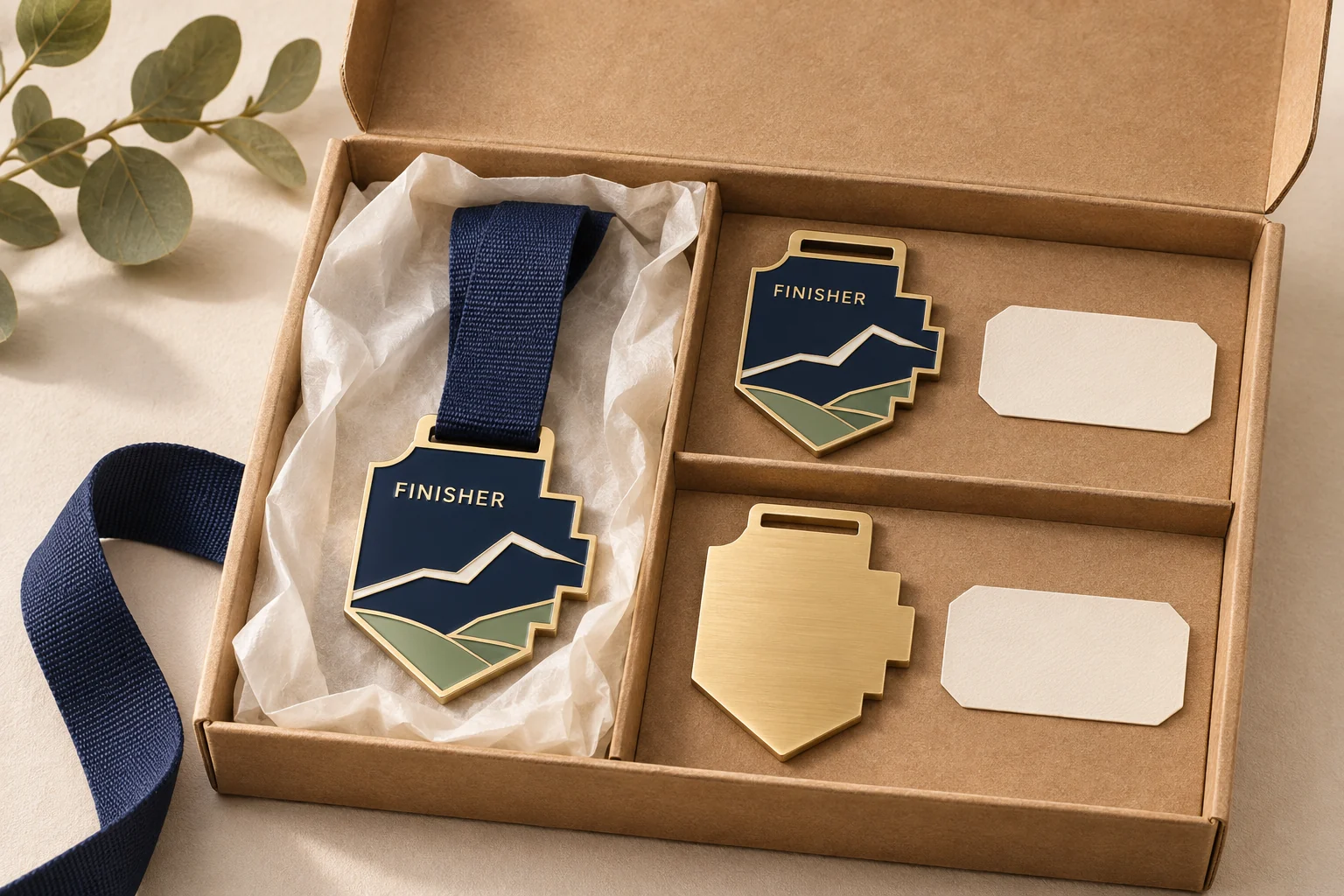
Supplied-form checklist
Protection, presentation and grouping have different jobs.
Describe how the medals will be received and handed out. Individual protection, a backing card or box, recipient grouping and dispatch protection each need their own scope.
- One piece: medal body, ribbon and assembly status.
- One set: named versions and pieces included.
- One group: version identity and distribution grouping.
- Presentation: agreed materials and included items.
- Dispatch: protection and outer-box information to confirm.
Keep the packing requirement beside the quantity register. The scene illustrates a discussion direction; a pictured box is not an automatic inclusion.
08 / Own-factory scope
Our factory, from metal body to packing.
Green Frog Supply is operated by HANGZHOU FORTHRIGHT TRADE CO., LTD in Hangzhou, China. Our own factory carries out tooling, metal forming, enamel colouring, polishing, electroplating, assembly, inspection and packing.

Work area 01
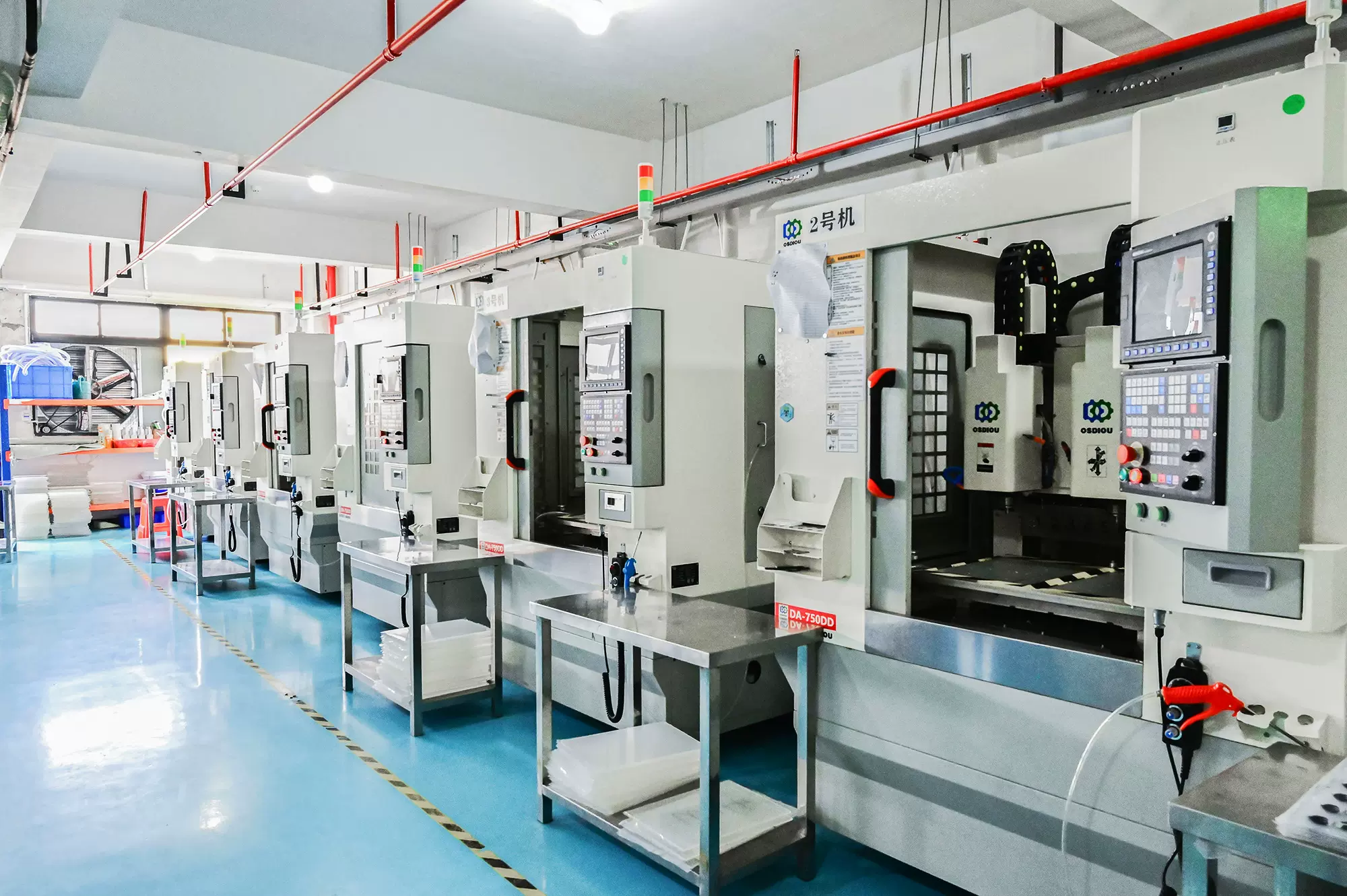
Tooling
The reviewed outline, front and reverse details provide the reference for tooling discussions. Identify wording, relief and connection features that must remain clear.
Work area 02
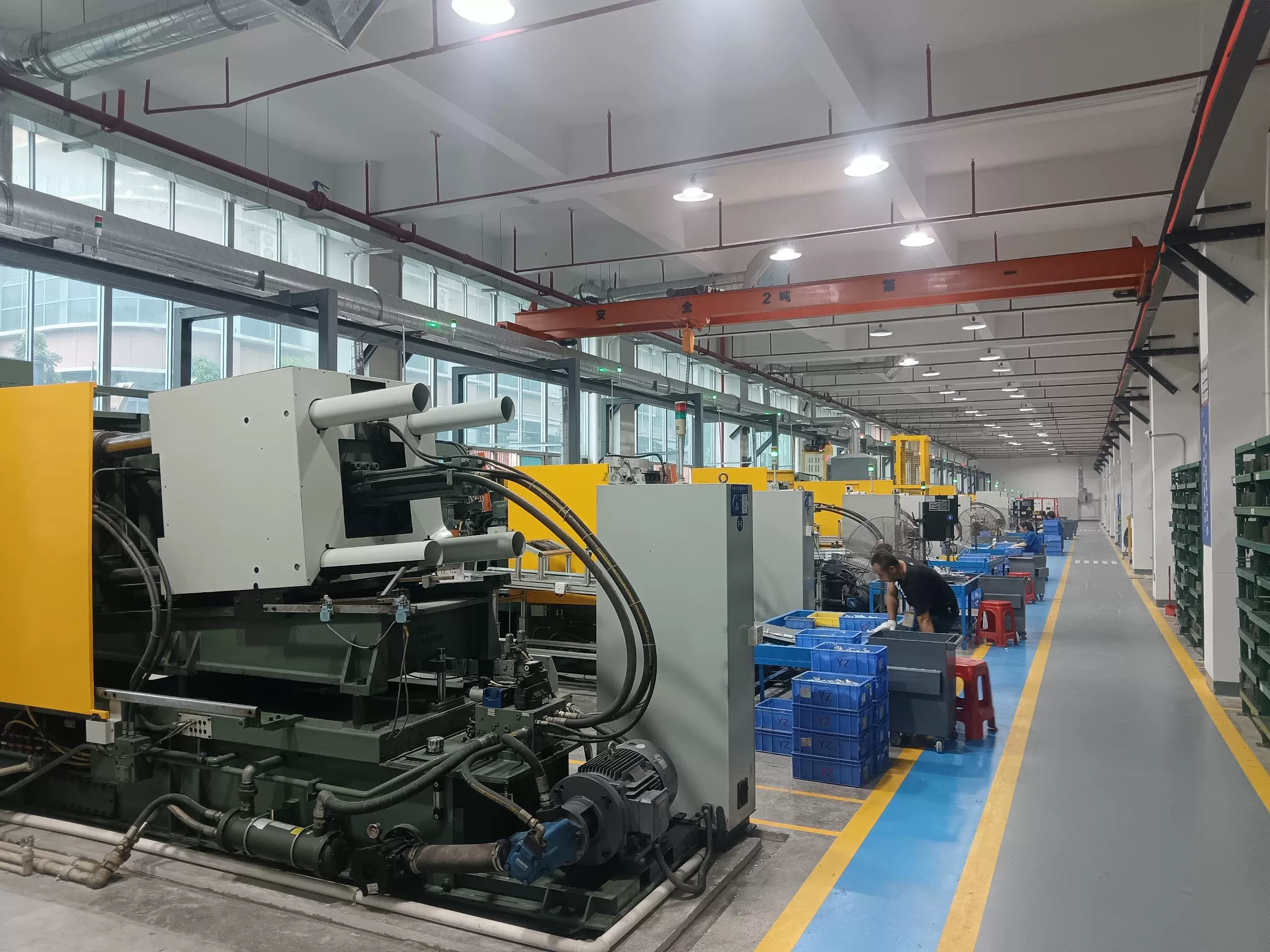
Metal forming
The medal body takes shape around the agreed design and structure. Review the outline, front and reverse relationship and suspension interface together.
Work area 03
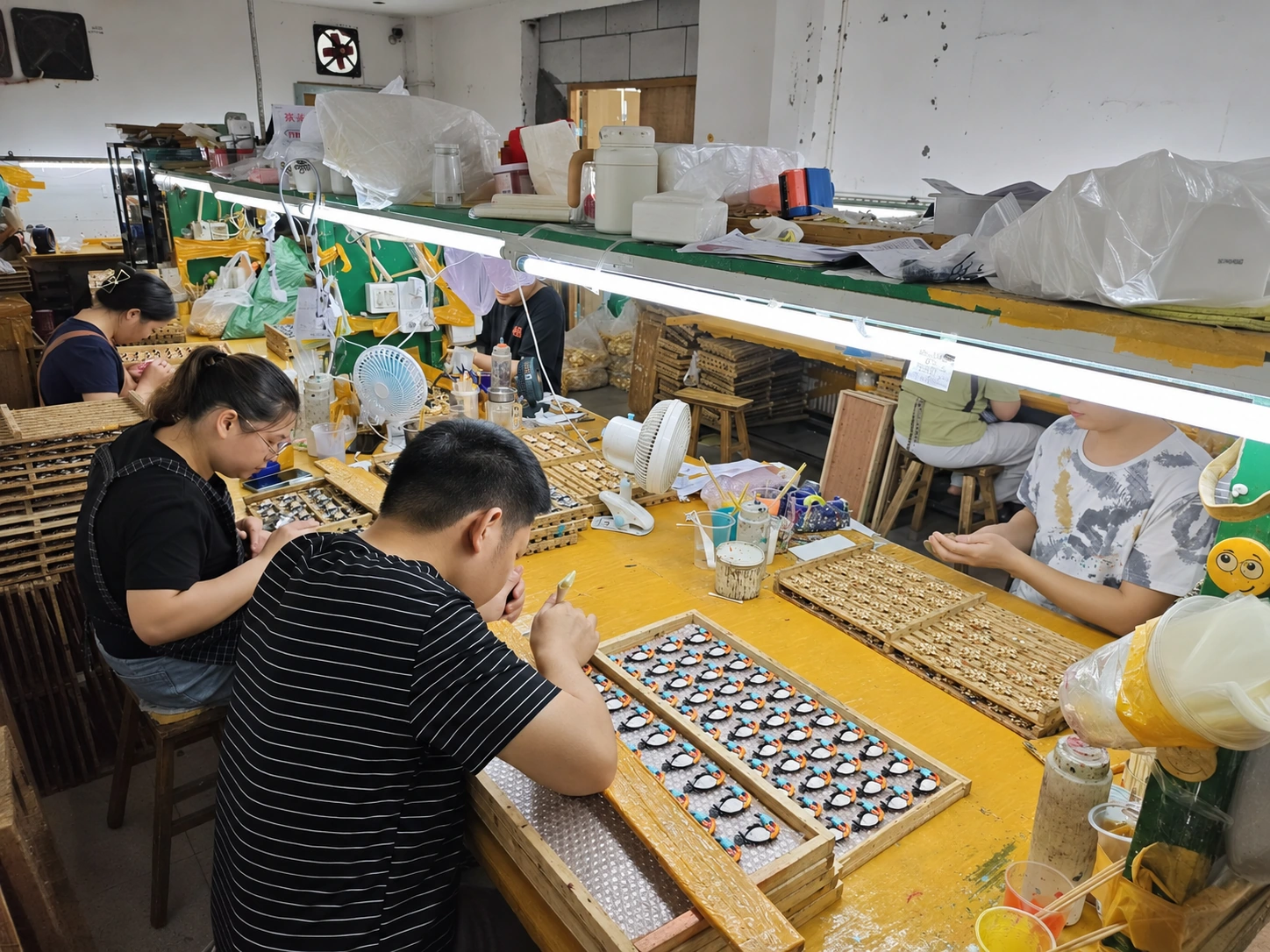
Enamel colouring
Colour areas follow the named artwork and colour references. Their size and separation need to work with the intended visible metal and lettering.
Work area 04
Polishing
Surface and edge work relate to the chosen enamel route and the agreed appearance. The route must be discussed for the actual design.

Work area 05
Electroplating
The visible metal finish is defined alongside the enamel and artwork. A concept image does not establish an approved finish sample.

Work area 06
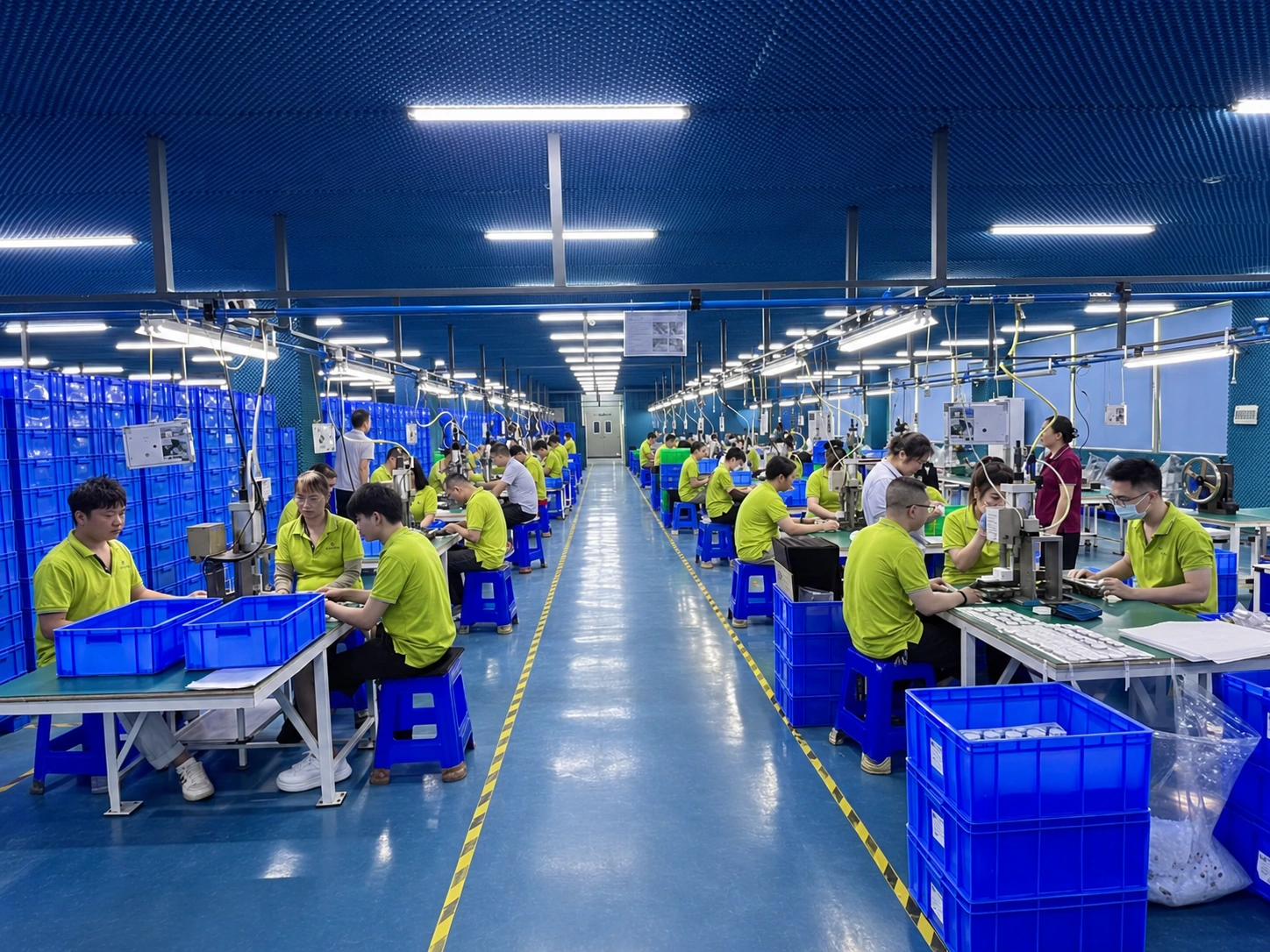
Assembly
The suspension, ribbon and any included parts must match the agreed supplied form. Record which parts are supplied separately and which are assembled.
Work area 07
Inspection
Appearance, dimensions, structure and version identity are reviewed against the applicable project reference. Specific inspection or test requirements must be raised before arrangements are agreed.
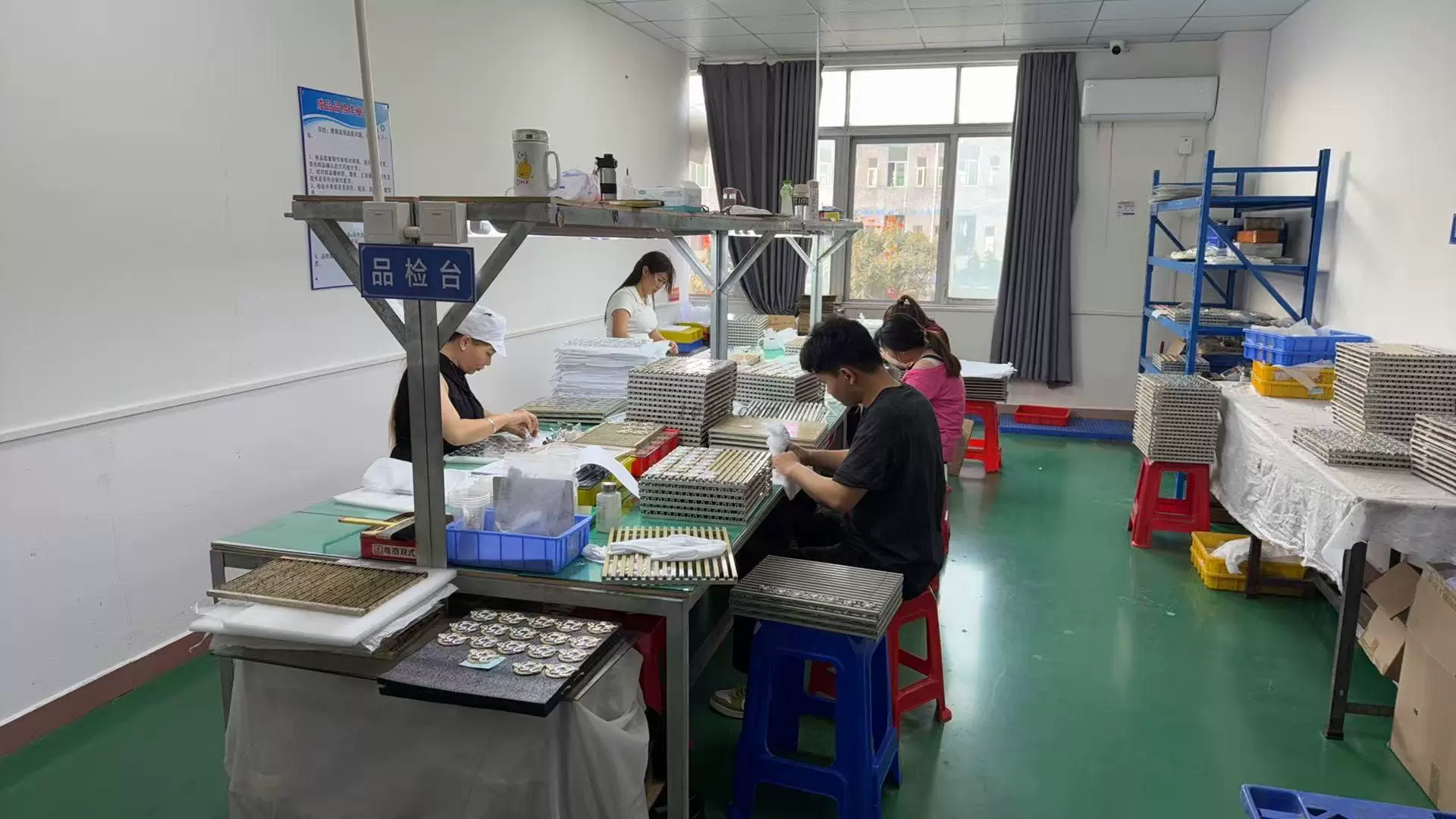
Work area 08
Packing
Medal versions, quantities and presentation are kept connected to the agreed counting unit. Grouping and transit protection are part of the scope to confirm.
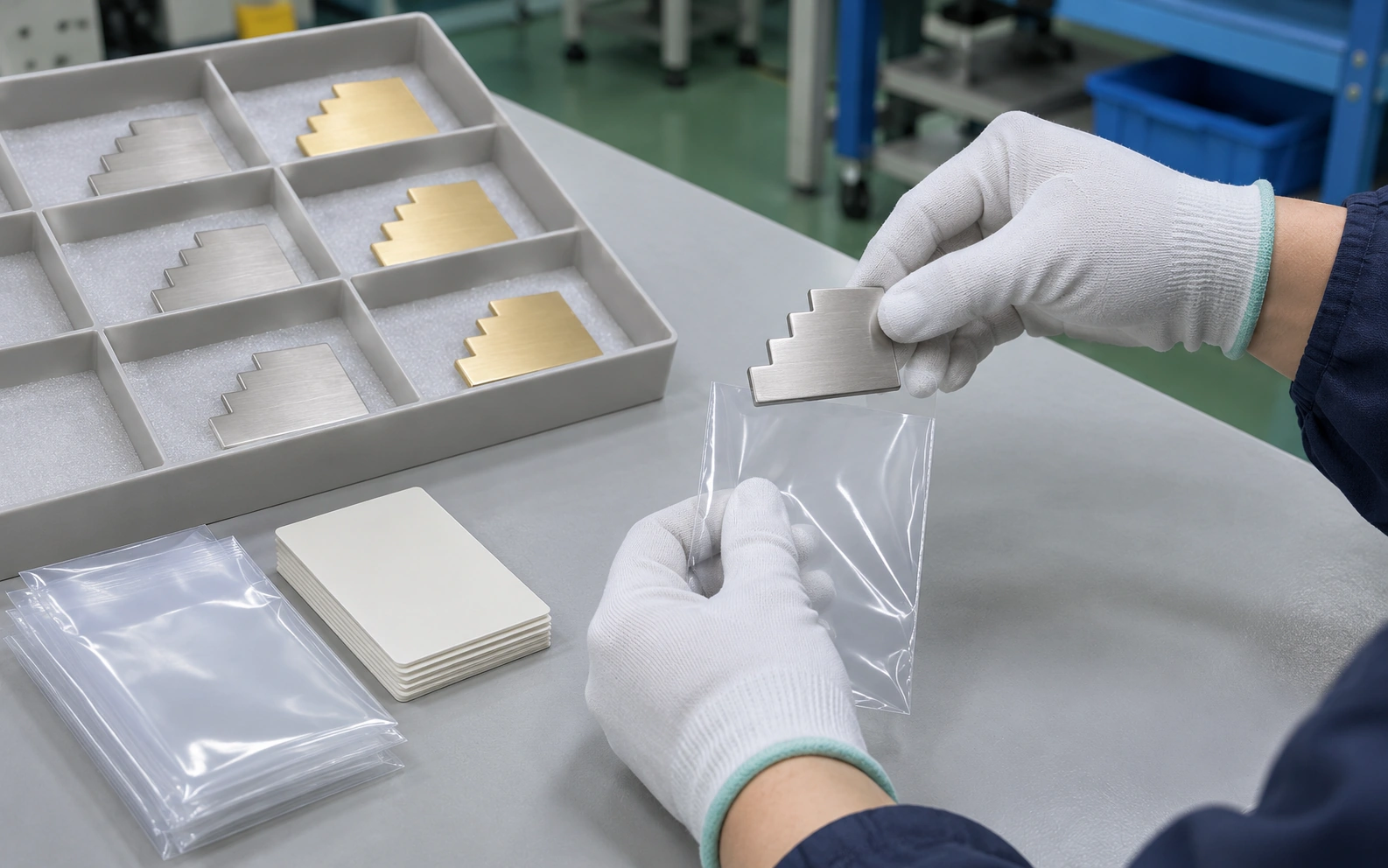
Review the factory information that matters to your project.
On-site visits, video factory discussions and project-specific factory or inspection information can be discussed by appointment. Confirm the agenda, timing and available material for your enquiry; an illustration does not establish equipment, capacity or certification.
Arrange a factory discussion09 / A manufacturing reference board
How a medal project takes shape.
Keep the front, reverse and hanging arrangement associated through all six stages. Company archive photographs show matched work areas; separately labelled studies explain product references or operations without a matching photograph. They do not document one real order or a universal process sequence.
Artwork and tooling reference
The project begins with a named artwork and specification reference. Front and reverse content, outline, enamel areas and the suspension direction need to be considered together before tooling arrangements are defined.

Identify emblem, lettering and enamel boundaries.
Identify wording, edition and relief.
Record the intended direction and interface.
Metal body formation
The metal body is formed to the agreed design. At this stage, the outline, relief, reverse and hanging interface belong to the same product reference; they should not be treated as unrelated options.
The outline and raised detail take physical form.
Reverse structure stays with the same version.
The interface belongs to this medal body.
Enamel and surface route
Enamel colouring, polishing and electroplating complete the agreed colour and visible metal relationship. Their sequence depends on the selected process and finish, so this overview is not a universal routing instruction for every medal.
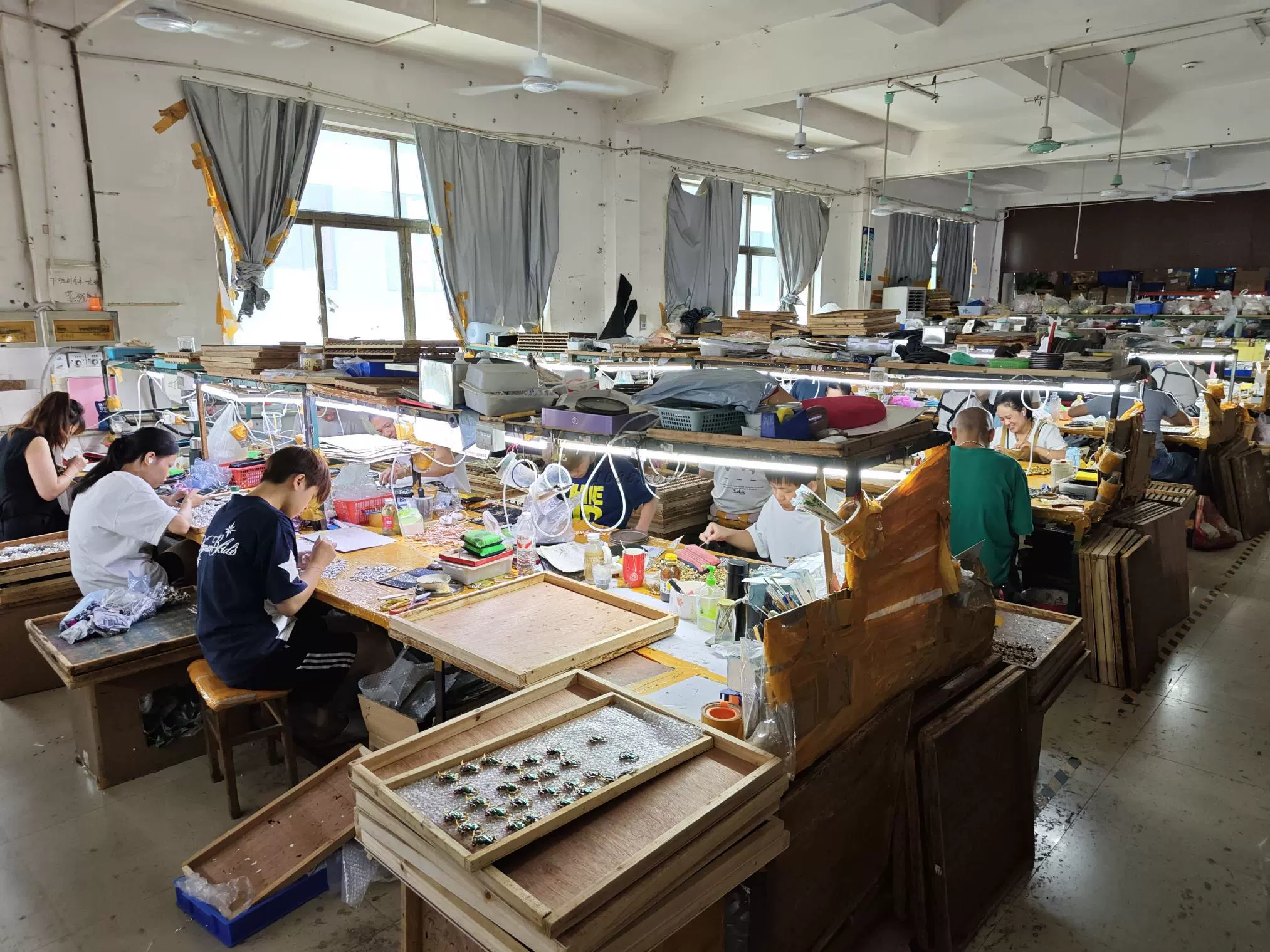
Colour boundaries and visible metal work together.
Confirm the specified surface and reverse appearance.
Protect the defined interface through the chosen route.
Product-reference review
The developing product is considered against the applicable drawing, specification or sample reference. Wording, dates, colour areas, visible metal and the reverse need to stay associated with the correct version.

Review lettering, date and colour against the reference.
Check the corresponding reverse, not a generic back.
Include the connection and orientation in review.
Suspension and ribbon assembly
The medal body meets its agreed suspension and ribbon arrangement. Orientation, connection, included parts and assembly status need to match the supplied form recorded for the order.
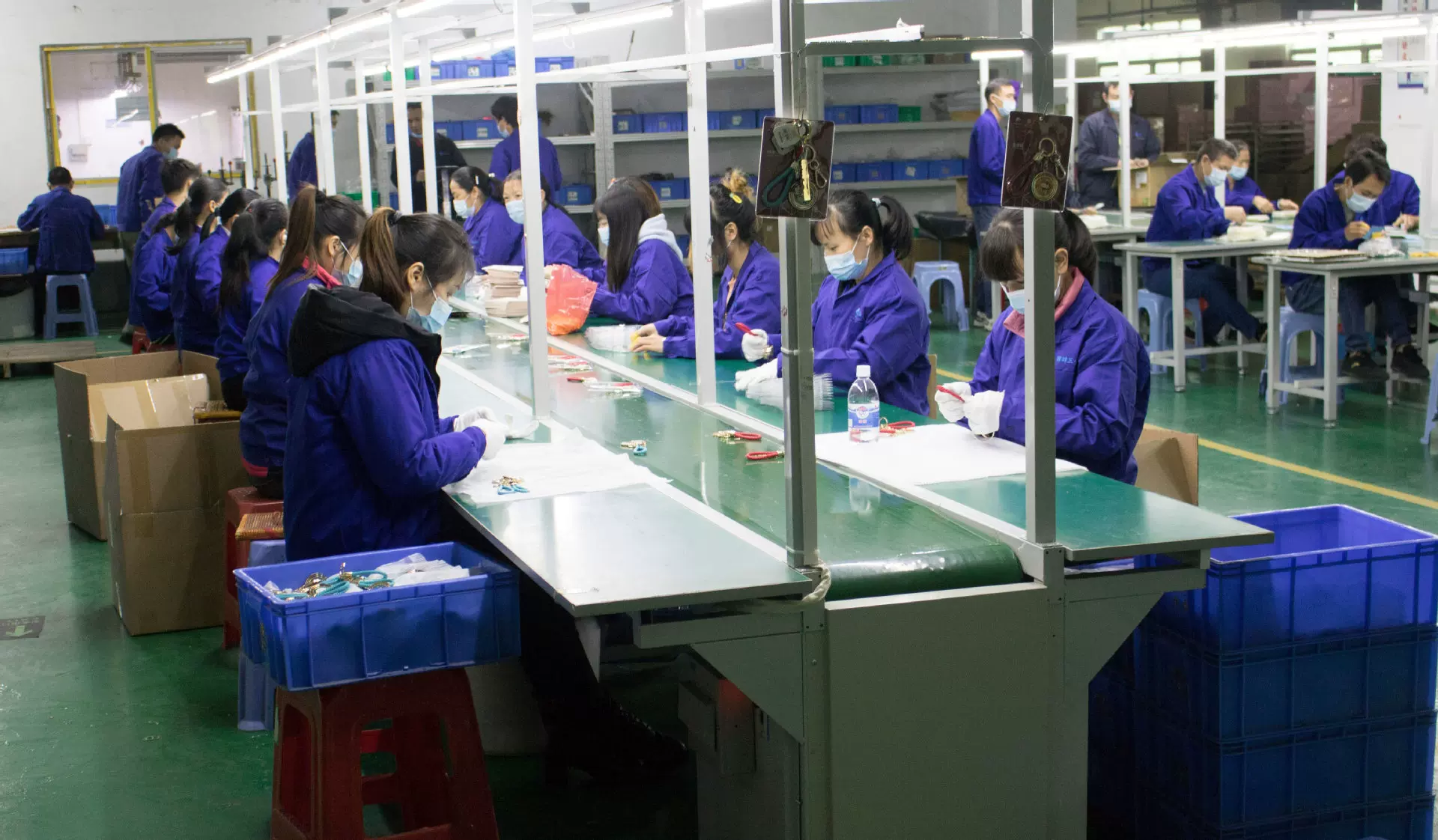
Keep the intended outward-facing side clear.
Retain the correct reverse-to-ribbon relationship.
Use the agreed connection, ribbon reference and assembly scope.
Final review and packing
The completed medal, ribbon and presentation are reviewed as a supplied unit. Version quantities, per-set contents where relevant, grouping and protection are prepared against the packing scope to be confirmed for dispatch.
Associate the front identity with the packed version.
Retain the matching edition or reverse reference.
Review ribbon, protection and presentation as a supplied unit.
Ribbon artwork and supply are inputs to the agreed assembly. This overview does not claim that ribbon weaving or printing is carried out in our own factory. Specific review criteria, testing, timing and dispatch arrangements need to be confirmed for the project. Read the manufacturing overview.
10 / The activity dossier
A clear handover at each project stage.
One programme reference connects the brief, quantity register, artwork, sample feedback, production arrangements and dispatch scope. Keep provisional points visible until they have been discussed.
01 / Event reference
Define the programme
Tell us who is commissioning the medals, their intended use, the destination and the event or recognition context. List the information already available and the decisions still open; a provisional brief is useful when its limits are visible.
ProgrammeYour named event or recognition programme
Open pointsIntended use, destination, existing material
Keep with the project: Project / programme reference

02 / Version register
Agree the quotation scope
Separate pieces, versions and sets. Describe the medal body, ribbon, assembly and presentation you want supplied, then agree which items and assumptions the quotation covers. Costs, quantities and commercial arrangements are project-specific.
- Version reference
- Rank / group / edition
- Counting unit
- Pieces or defined set
- Supply scope
- Body + ribbon + presentation
Keep with the project: Scope version
03 / Front / reverse / ribbon foldout
Develop and review the artwork
Provide authorised front, reverse and ribbon artwork, or identify the parts that need development. Review the wording, date, layout and structure against one named revision before treating the design as agreed.
For an existing authorised specification, discuss OEM artwork inputs. For a new direction, discuss design development.
Keep with the project: Artwork revision
04 / Sample feedback strip
Confirm the sample review
Agree the sampling scope, costs and review steps. Feedback should name the reference and the exact feature to change or retain; a digital concept and an inspected physical sample are different kinds of information.
Feedback names the feature. Keep / change, the affected version and the reference under review belong in the same note.
Keep with the project: Sample / review reference

05 / Production arrangements / margin notes
Discuss production and arrival plans
Bring together the agreed design, version quantities, packing scope and destination. State the event date and desired arrival date separately so that manufacturing and dispatch arrangements can be discussed against the actual project.
- Event date
- Your programme context
- Desired arrival
- Your requested receiving date
- Plan to confirm
- Manufacturing and dispatch arrangements
Keep with the project: Plan to confirm
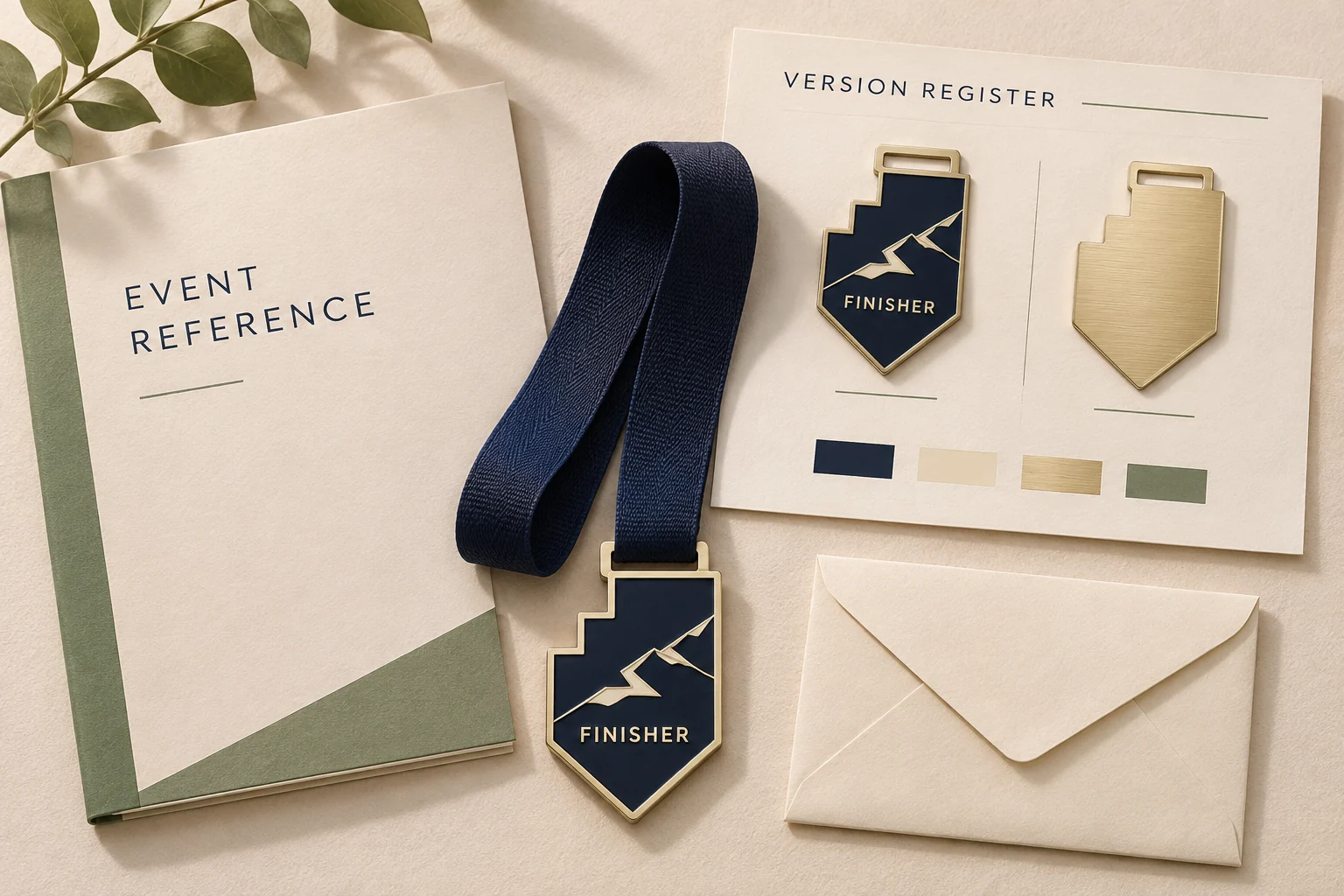
06 / Packing / dispatch footer
Confirm packing and dispatch details
Check how each version or set will be identified, grouped and protected, together with the dispatch information that applies to the enquiry. Keep the final supplied scope and unresolved questions with the reference used for the manufacturing handover.
Supplied form / version grouping / dispatch information / unresolved questions
Keep with the project: Supplied form / dispatch scope

11 / The sample-review desk
Review the medal, the ribbon and the supplied presentation.
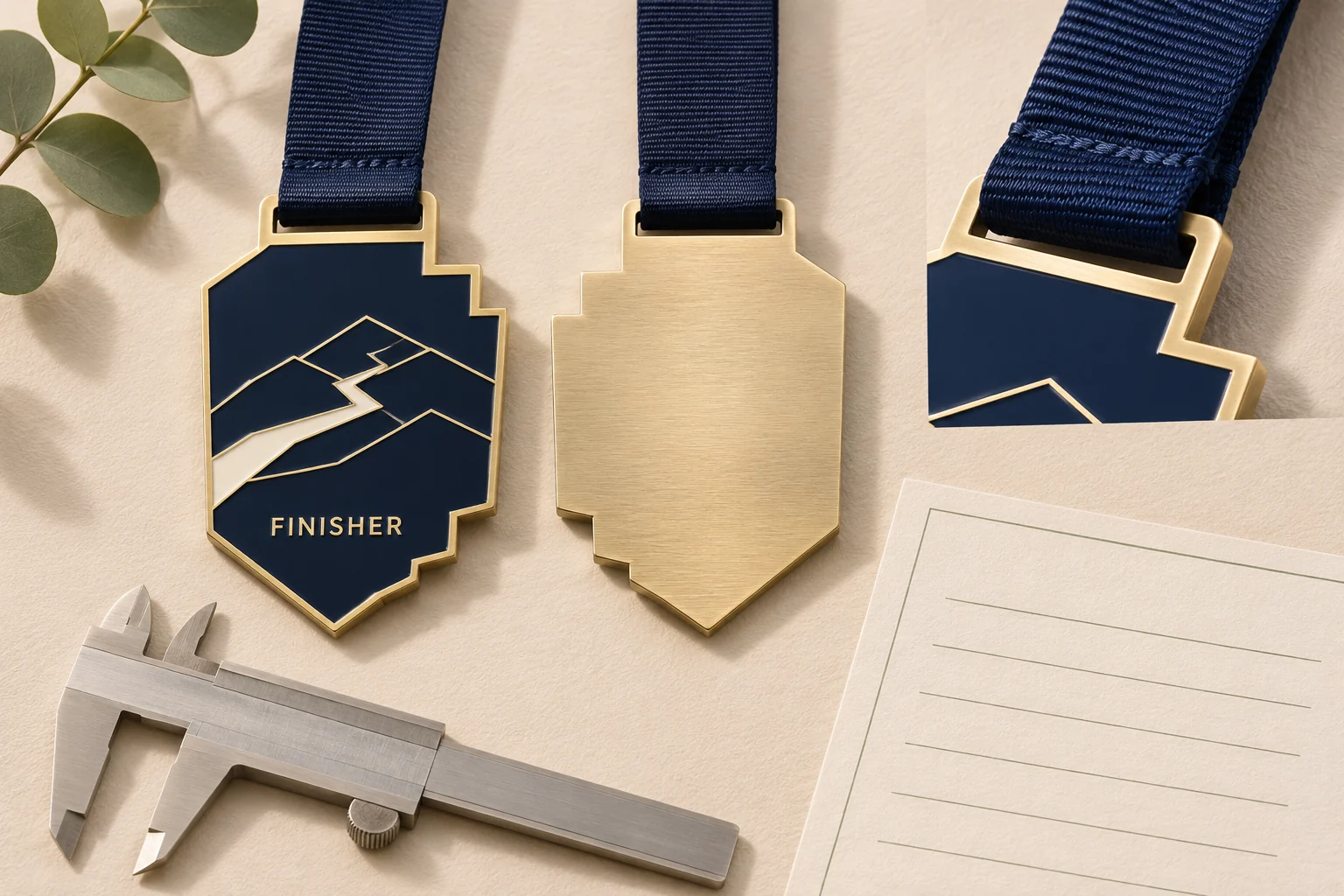
Agree what the sample review covers and which drawing, specification or sample reference applies. A digital concept helps communicate a direction; it is different from an inspected physical sample.
- Front and reverse wording, date or edition, outline and artwork revision.
- Colour areas, visible metal, lettering and the proposed surface.
- Connection, ribbon orientation, included parts and assembly state.
- Version quantities, set contents, presentation and grouping.
Record each change by version and feature. Raise specific inspection or test requirements before the project arrangements are agreed.
12 / The project question register
Questions before you commission medals.

Artwork, quantities, ribbon, dates and review all belong to one project. Open a question to resolve the next decision in your brief.
SupplyAre these custom-manufactured medals or medals available from stock?
This page concerns custom medal manufacturing for business and organisation projects. The illustrated concepts show ways to define a medal body, artwork, ribbon and presentation; they are not a stock catalogue or customer case studies. Your enquiry needs its own design reference, version quantities and supplied scope. If you are comparing a stock offer with a custom project, keep those supply routes separate until you know whether both meet the same brief.
Starting pointCan we start a medal enquiry before our artwork is complete?
Yes. Share the material you have, the intended use and the details that must remain recognisable. State whether the design is an existing authorised logo, a new concept or an adaptation, and mark dimensions, colours and other open choices as provisional. We can discuss the next inputs against that brief. Design development, sampling scope, costs and arrangements must be agreed for the project rather than assumed from a concept image.
ArtworkWhat artwork should we prepare for the medal and ribbon?
Treat the front, reverse and ribbon as related references that each need clear instructions. Provide the wording, emblem or artwork files you are authorised to use, the intended date or edition, and any required colour references. Identify which details change between versions. Ribbon layout and orientation should be considered alongside the hanging arrangement. Keep one named revision so feedback and approvals refer to the same design.
SurfaceHow should we choose the enamel surface and metal appearance?
Consider the artwork, intended size, visible metal, lettering and colour boundaries together. Soft and hard enamel create different surface relationships, so the choice should support the actual design rather than follow a general label. A colour or metal appearance shown in an illustration is a discussion direction, not an approved finish sample. Ask for the proposed process and review reference to be made clear before confirming the specification.
QuantitiesHow do we state quantities when there are several versions or medal sets?
List pieces for each named version and define the counting unit. If you need sets, state how many medals and which versions belong in one complete set, together with the number of sets required. Keep ranks, divisions, years or colour variations in separate rows when they change the supplied product. A combined total on its own can hide a different version split or packing assumption, making responses difficult to compare.
AssemblyDoes a medal project include the ribbon and assembly?
The supplied form must be agreed explicitly. Describe whether you need the medal body only, the medal with specified parts, or a complete assembly with its ribbon and presentation. The hanging interface, connection, orientation and ribbon artwork should be considered together. Ask for included items, separate components and assembly responsibilities to be recorded in the scope; a photograph of a complete concept does not establish what every quotation includes.
DatesCan you confirm delivery from our event date alone?
An event date is important context, but it is not enough to establish a manufacturing or arrival commitment. Share the desired arrival date, destination, design status, version quantities and packing requirements. Artwork and sample decisions, production arrangements and dispatch scope need to be discussed against those inputs. Keep an estimate distinct from an agreed commitment, and raise any immovable requirement before proceeding with the project.
SampleWhat should our team review before approving a medal sample?
Use the applicable drawing, specification or sample reference and identify what the review covers. Consider front and reverse wording, date or edition, outline, colour areas, visible metal, the hanging interface, ribbon orientation and the supplied presentation. Record changes by version and feature. A digital concept helps discuss a design; it does not prove that a physical sample has been inspected. Agree the sampling and approval steps before treating feedback as a production instruction.
PackingCan packing be organised for different groups, versions or complete sets?
Tell us how the medals will be received and distributed, then define the required grouping and identification. The scope may need to distinguish individual protection, presentation, versions per group, pieces per set and outer-box information. Keep those requirements beside the quantity register so they remain traceable. Packing materials, included presentation and dispatch protection are matters to confirm for the actual enquiry, not automatic inclusions inferred from an illustrative packing scene.
RepeatWhat information is needed for a later edition or additional batch?
Keep the original project reference, named artwork revision and the specification or sample information that was agreed. Identify what must stay the same and what changes, such as wording, edition, quantity split, ribbon or packing. An earlier concept does not by itself establish the scope of a new batch, and an exact match should not be assumed without review. Ask for the applicable reference, commercial scope and current arrangements to be confirmed again.
13 / Adjacent supplied forms
Compare the supplied form for your programme.
A ribbon medal and a wearing pin serve different uses. These existing pin projects provide adjacent options when your brief calls for a smaller badge worn on clothing.
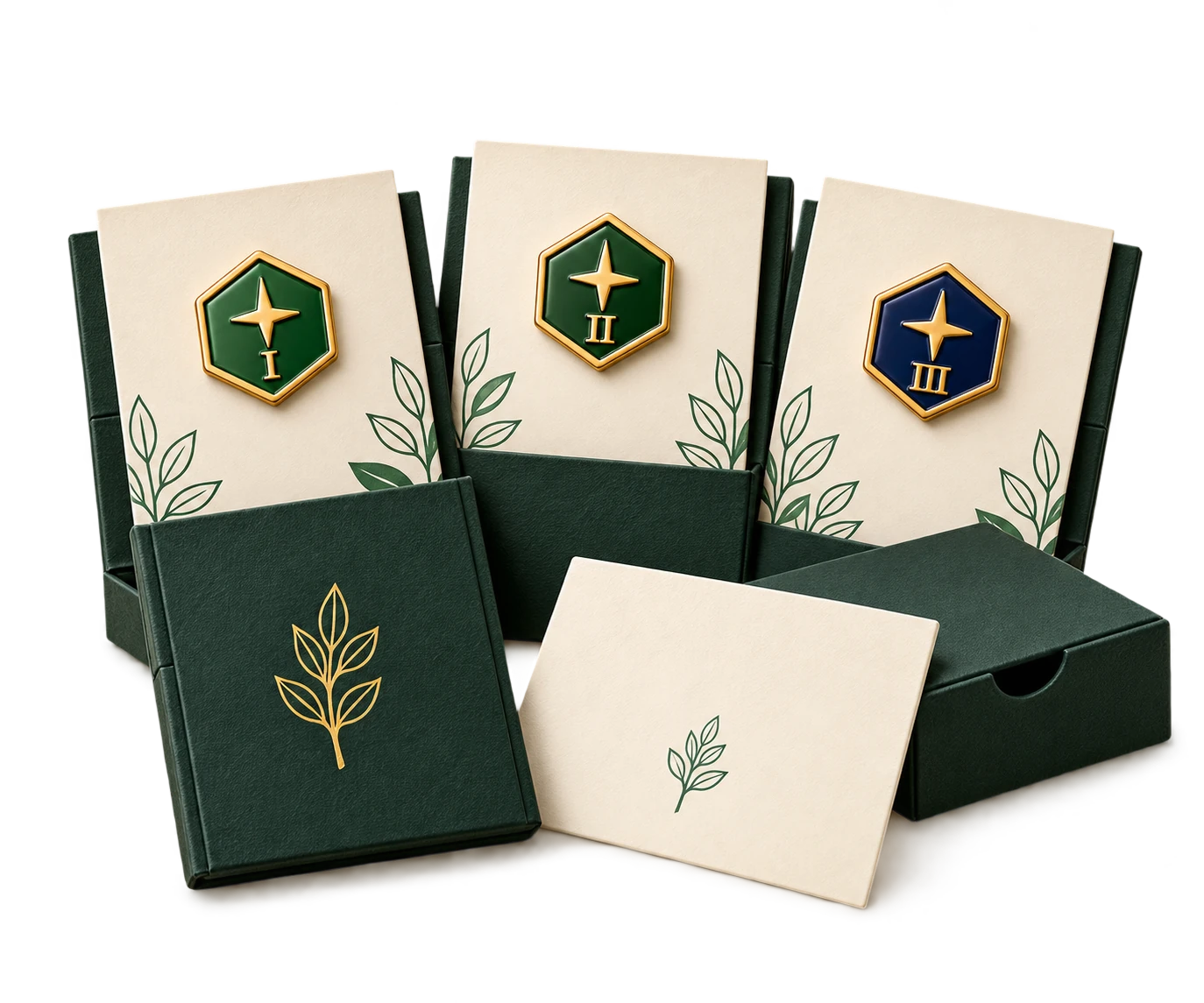
Wearing-pin alternative
Employee recognition pins
Compare a badge worn on clothing with a hanging medal. Recognition levels, back attachments and presentation belong to the pin brief rather than being carried over from a ribbon assembly.
Explore recognition pins
Brand-identity alternative
Company logo pins
For a programme centred on a compact identity badge, compare the artwork area, wearing attachment and individual presentation of a logo pin with the larger front, reverse and ribbon scope of a medal.
Explore company logo pins14 / The event-version enquiry register
Plan a custom medal project.
Describe the project as it stands. Provisional quantities and “To define” are useful when they are clearly identified. Fields marked * are required.
For artwork, drawings or other project files, please email [email protected] and include your project reference.