
CUSTOM ENAMEL MANUFACTURING
Metal Shoelace Charms for Footwear Brands
Develop shoelace charms around your actual lace. Plan the metal body's slots, artwork and orientation, with piece or pair counts, versions and received supply state defined.
Illustrative custom concept, not a stock item or a customer case. Final specifications are agreed for your project.
02 / STRUCTURE
Make the lace path part of the body definition
Review item · Information to provide or agree
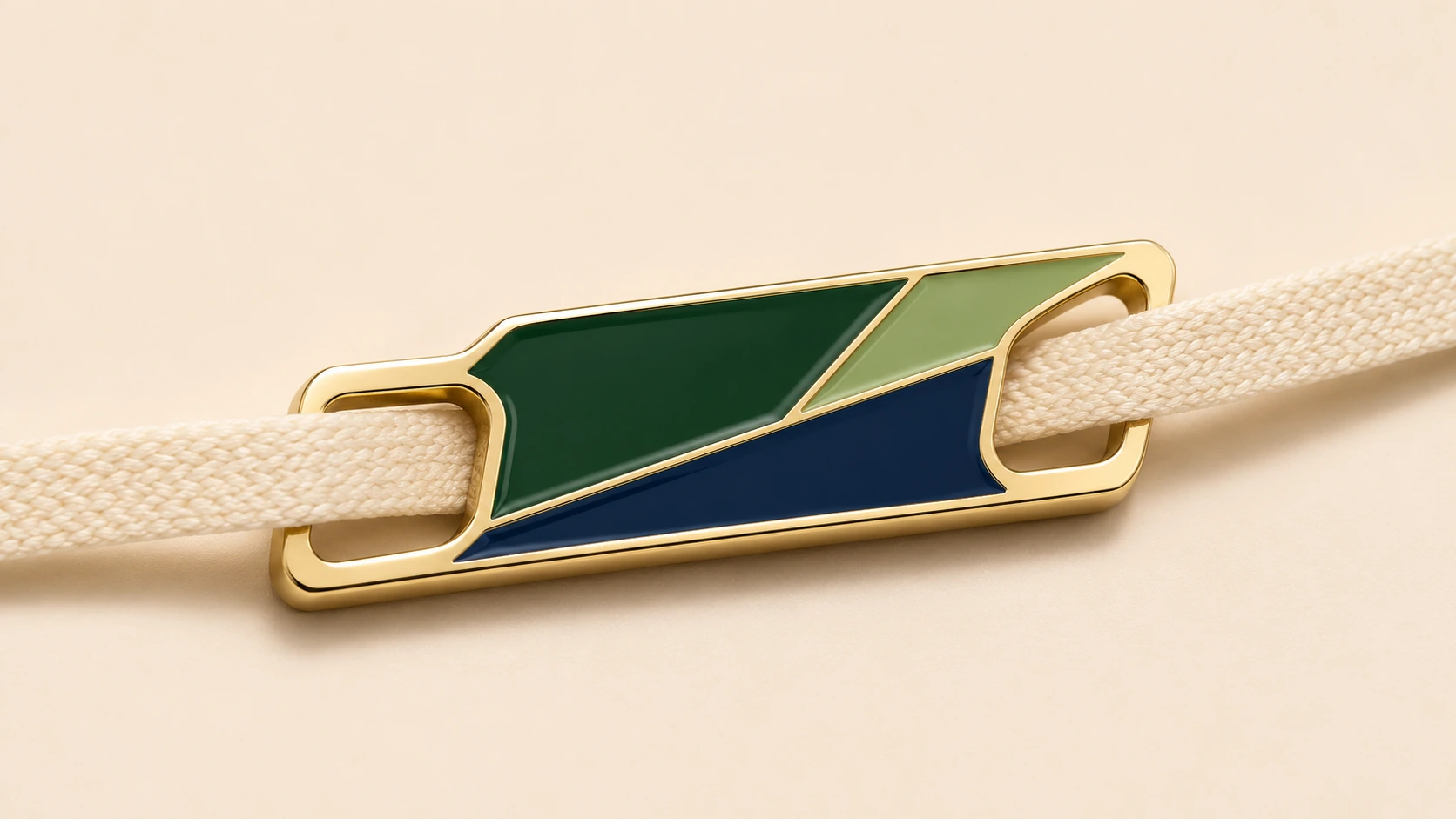
The illustrative body has a horizontal face, an asymmetric enamel panel and two functional slots. The lace must be reviewed along its intended path, including where it enters and leaves the metal. Its profile, width and thickness matter to that discussion; no standard lace dimension is assumed from the illustration.
Alternative ring or attachment constructions require their own reference review. They should not be substituted silently for the approved two-slot concept.
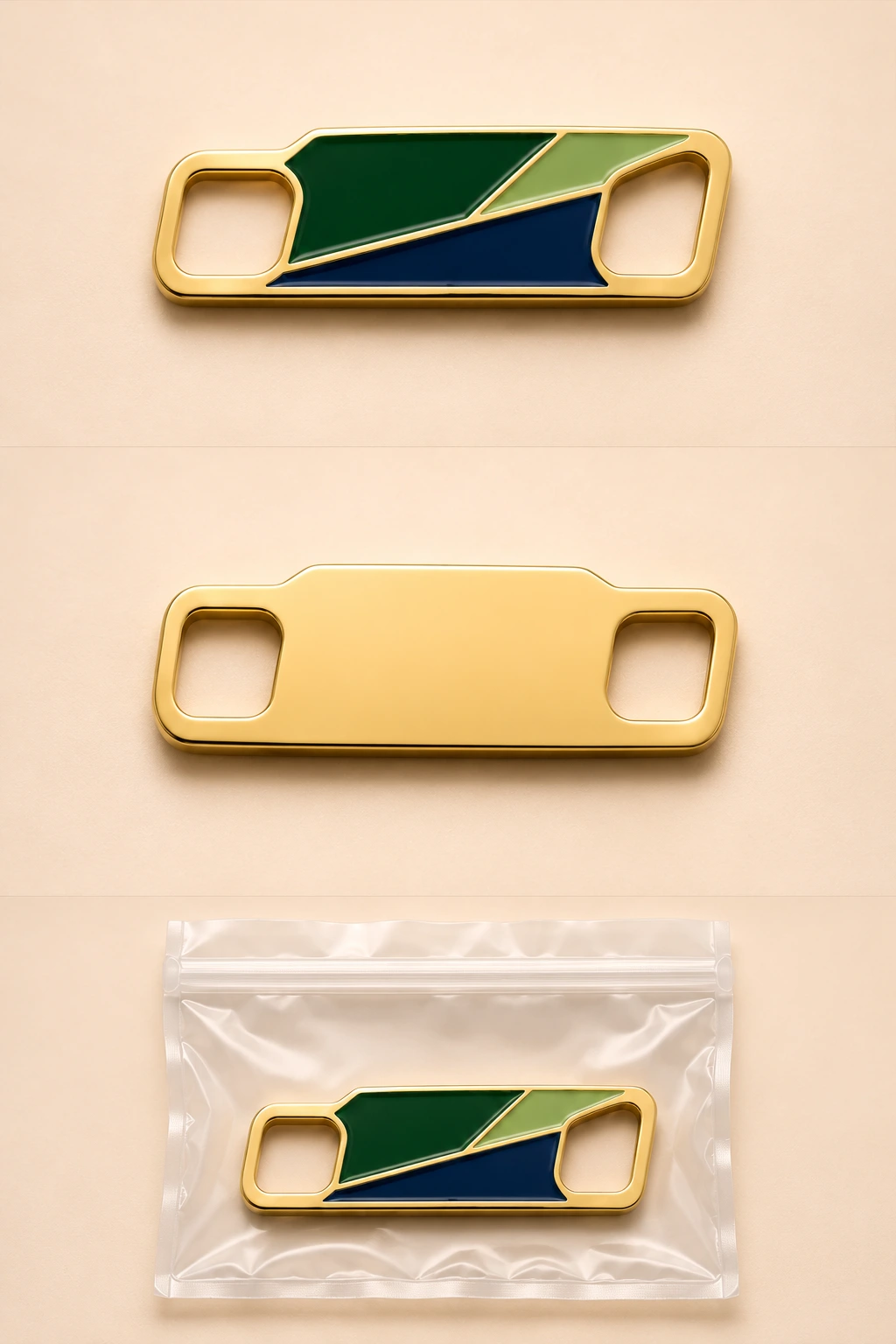
Front
Face, reverse and left/right distinction if required
Structure
Proposed dimensions and orientation on the lace
Reverse
Shape, position and relevant dimensions
Custom concept illustrations. Final specifications are agreed for your project.
FOOTWEAR & BRAND PROGRAMMES · METAL ENAMEL
Plan metal and enamel shoelace charms for a footwear range, brand programme or organised activity. The brief starts with how the actual lace passes through or connects to the body, then brings the authorised artwork, orientation and received quantity into that same reference.
Green Frog Supply discusses a defined metal body and any explicitly included fittings. For the original concept shown here, two elongated lace slots belong to the body itself: they are a structural feature to review with your actual lace reference.
Supply brief — Brand-commissioned metal lace accessory; threading or attachment route defined; actual lace reference reviewed; one piece versus pair stated; versions and receiving state recorded.
03 / ARTWORK
Show the identity with the lace in place
Provide authorised artwork and the lace reference the project will use. Mark the intended top, front and visible area after threading. Artwork that looks balanced on an empty body may need review when the lace occupies the slots or crosses a part of the face.

Project handover
If the programme needs left/right bodies, different messages or separate team versions, identify the common and variable elements. Give a quantity for each body and define any pair contents. Do not assume that two identical pieces form the intended pair, or that mirrored artwork has been approved. Show layout changes clearly before they enter the tooling reference.
04 / ENAMEL AND METAL
Review the slot structure and decorative surface together
The metal construction must accommodate the agreed openings as well as the enamel face. Review slot positions, surrounding metal, edges and reverse with the intended body dimensions and lace reference. Agree how clearance and relevant edge details will be reviewed with the actual lace reference.
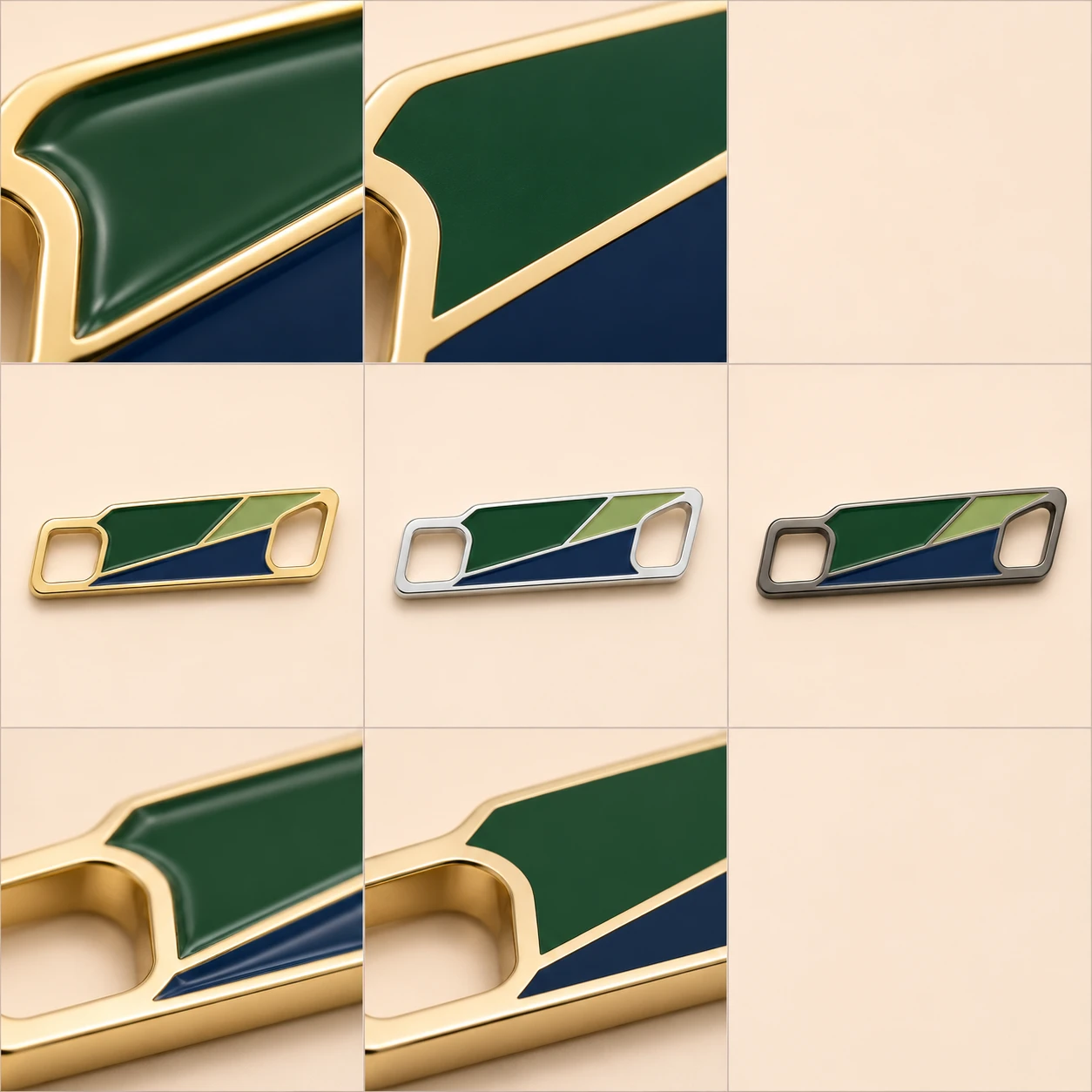
Soft enamel
Recessed colour areas and raised metal lines. This product’s process illustration explains the surface; the product specification is reviewed for the individual artwork.
Hard enamel
A polished face brings colour and metal into a flatter appearance. This product’s process illustration is a comparison, not a fixed specification for this product.
Soft enamel gives recessed colour areas between raised metal lines. Hard enamel is polished towards a more flush appearance. Compare the chosen appearance on the same horizontal body, keeping the functional slots visible. Fine lettering and narrow enamel areas need review at the proposed size rather than being promised from an enlarged image.
Discuss body metal, exposed-metal appearance and the selected forming and surface route. Polishing, colouring and plating follow that route; a finish name does not by itself specify a grade or tested behaviour against a lace. Identify any particular inspection requirement in the project brief.
METAL FINISH OPTIONS
Gold-tone appearance
A warm metal reference. Confirm the actual finish with the artwork and project specification.
Silver-tone appearance
A lighter metal reference for assessing contrast alongside the selected enamel colours.
Dark metal appearance
A darker metal reference. Its suitability and detailed process are reviewed for the project.
Product-specific illustrated surface and metal-appearance references. Availability, construction, process and final appearance are confirmed for the individual project.
05 / PRESENTATION
A piece, a pair and a pack have different counts
State body pieces first, then define any purchasing group. A pair needs a contents list: two identical bodies, a left/right combination or another specified arrangement. Record the number of pairs and the corresponding body totals. An outer bag holding several bodies does not automatically define a retail pack or a product set.
SAMPLE AND RECEIVING REVIEW
Separate artwork versions and paired combinations for receiving. If your team installs the bodies on laces later, keep that responsibility explicit. Laces and footwear are not included by appearing in an interface reference; any requested additional parts require their own listed quantities.
06 / FACTORY
Give the lace interface a role in each work area
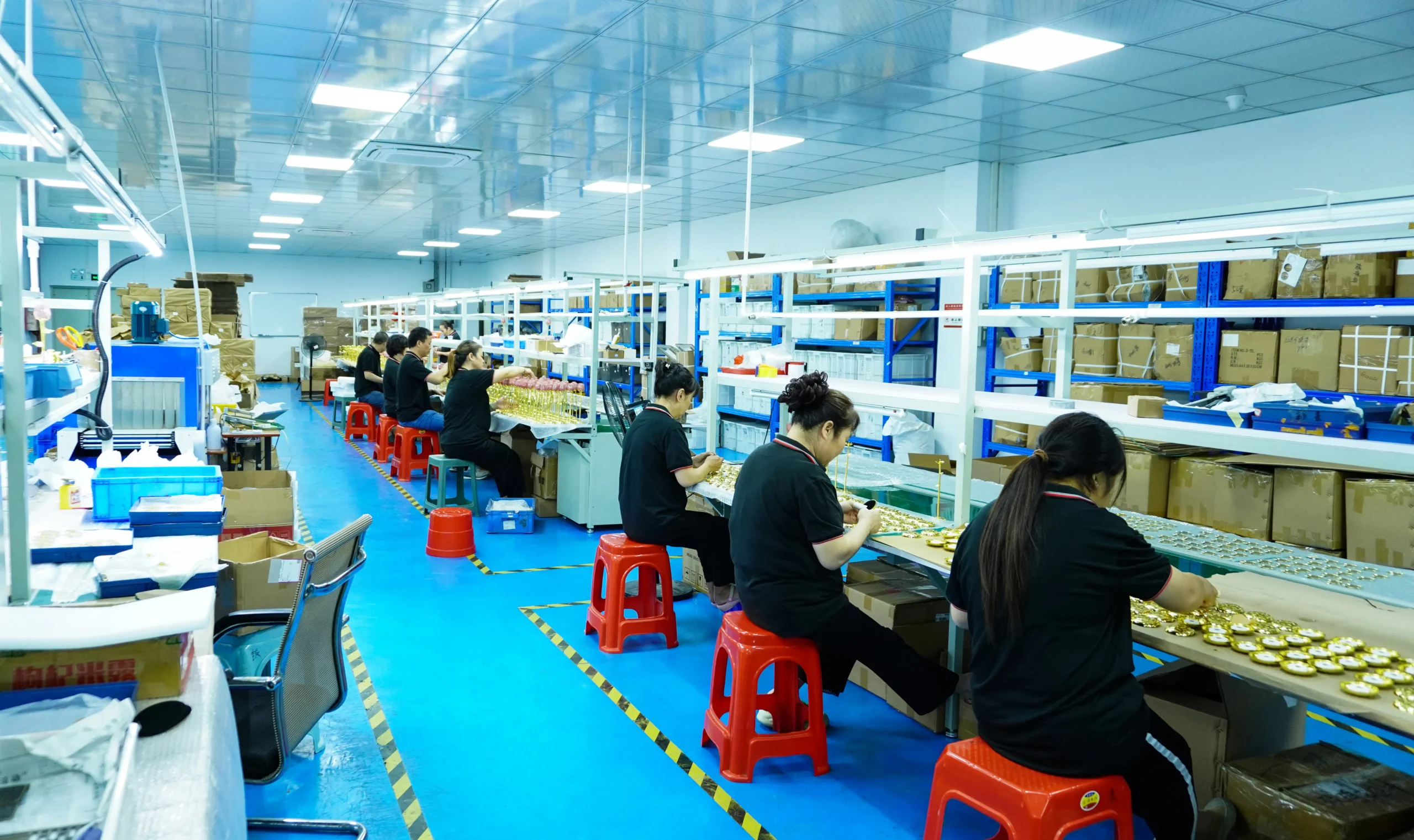
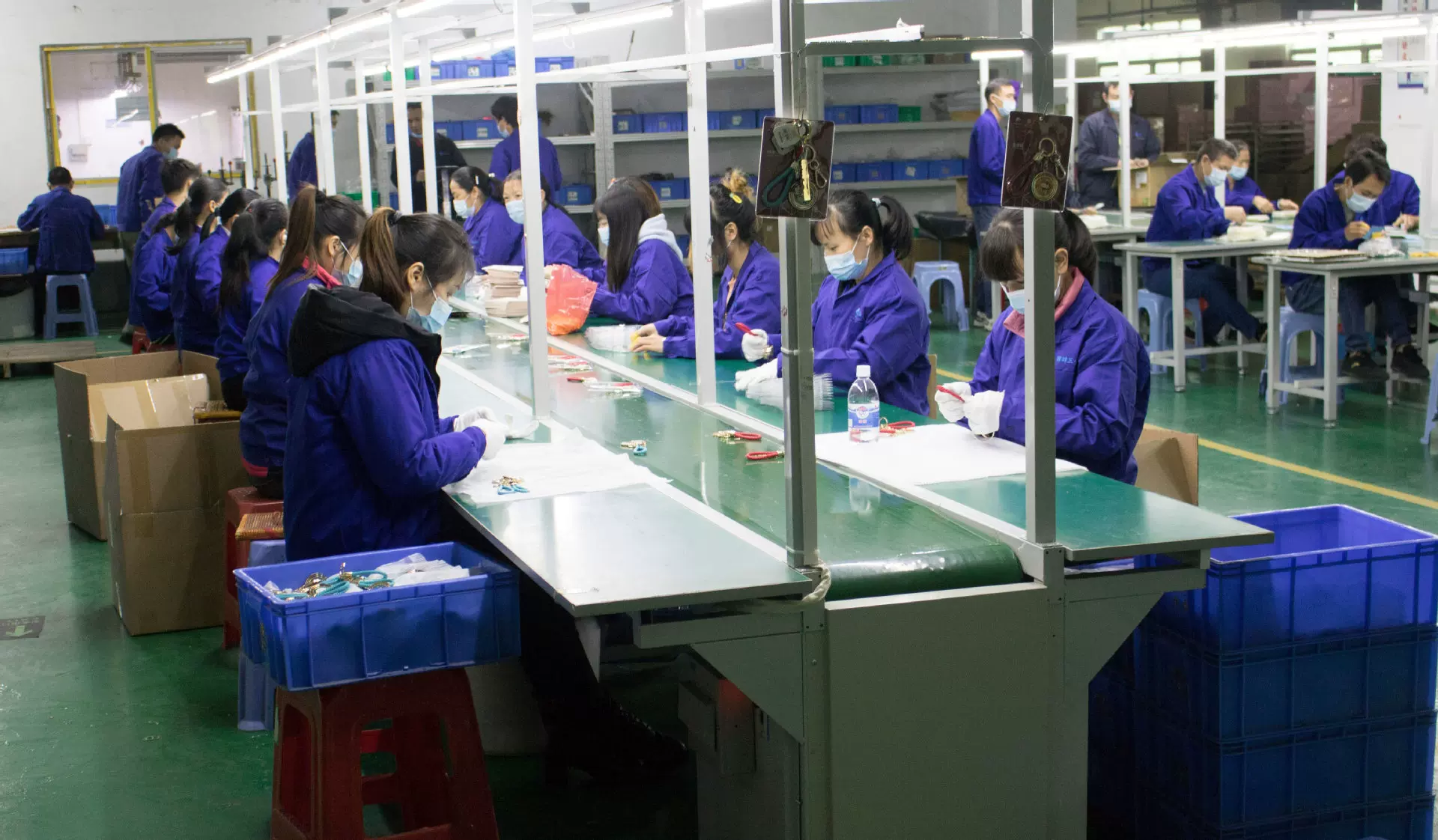
Green Frog Supply is operated by HANGZHOU FORTHRIGHT TRADE CO., LTD in Hangzhou, China. Our own factory carries out the core metal and enamel operations below. Optional parts and the buyer's later footwear assembly remain separately defined.
Discuss a scheduled visit, video walkthrough or project-relevant factory and inspection information for your sourcing review. Our Factory and Manufacturing provide the wider manufacturing context.
Factory disclosure: Company archive photographs show general factory work areas; restored versions are labelled. Polishing, plating and packing remain illustrations. These visuals are not photographs of this footwear programme or evidence of a lace-wear test.
Work area · Shoelace-charm responsibility
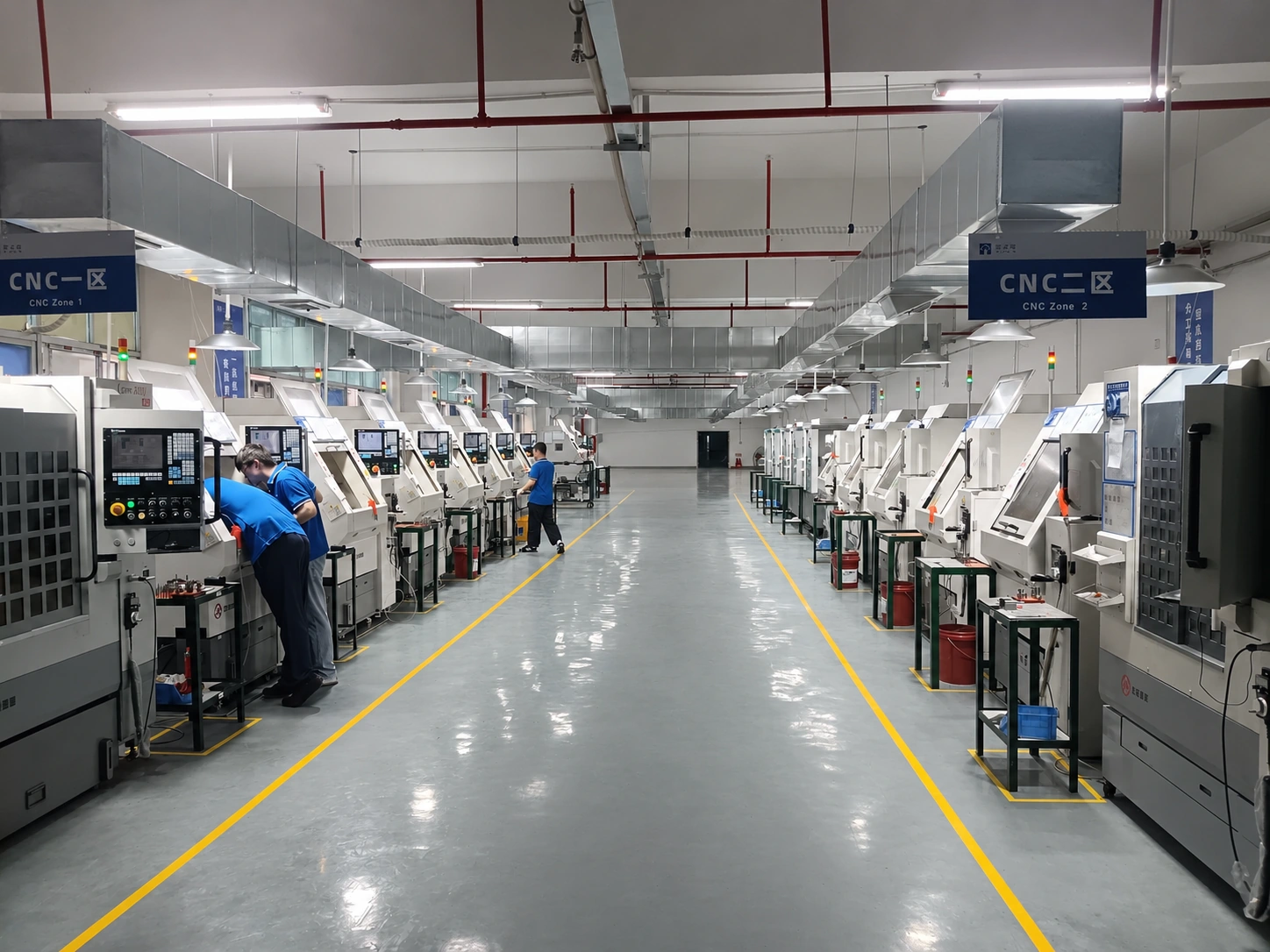
Tooling
Review the horizontal outline, lace slots, enamel divisions and reverse reference.
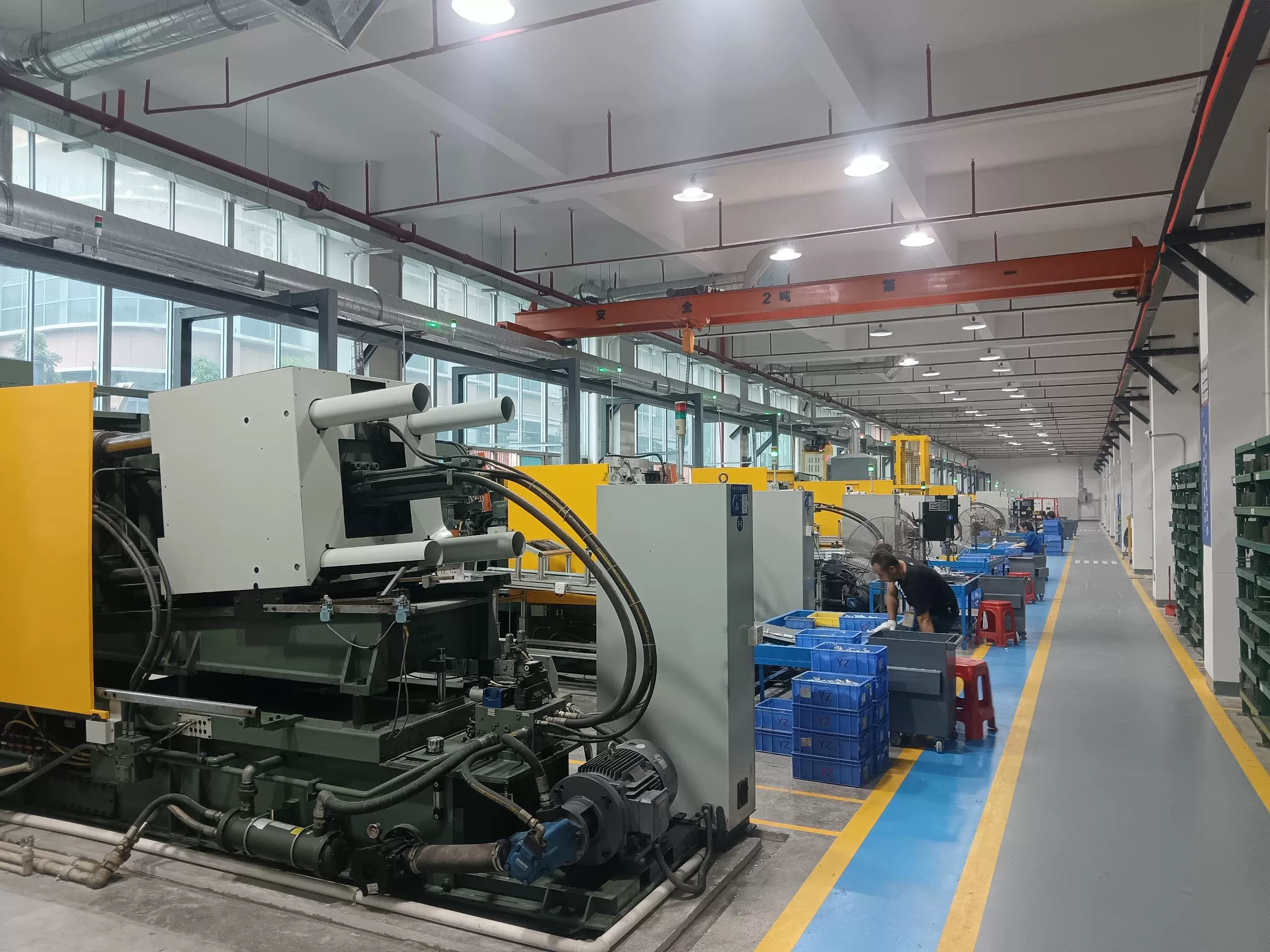
Metal forming
Develop the body with the agreed openings and surrounding metal structure.
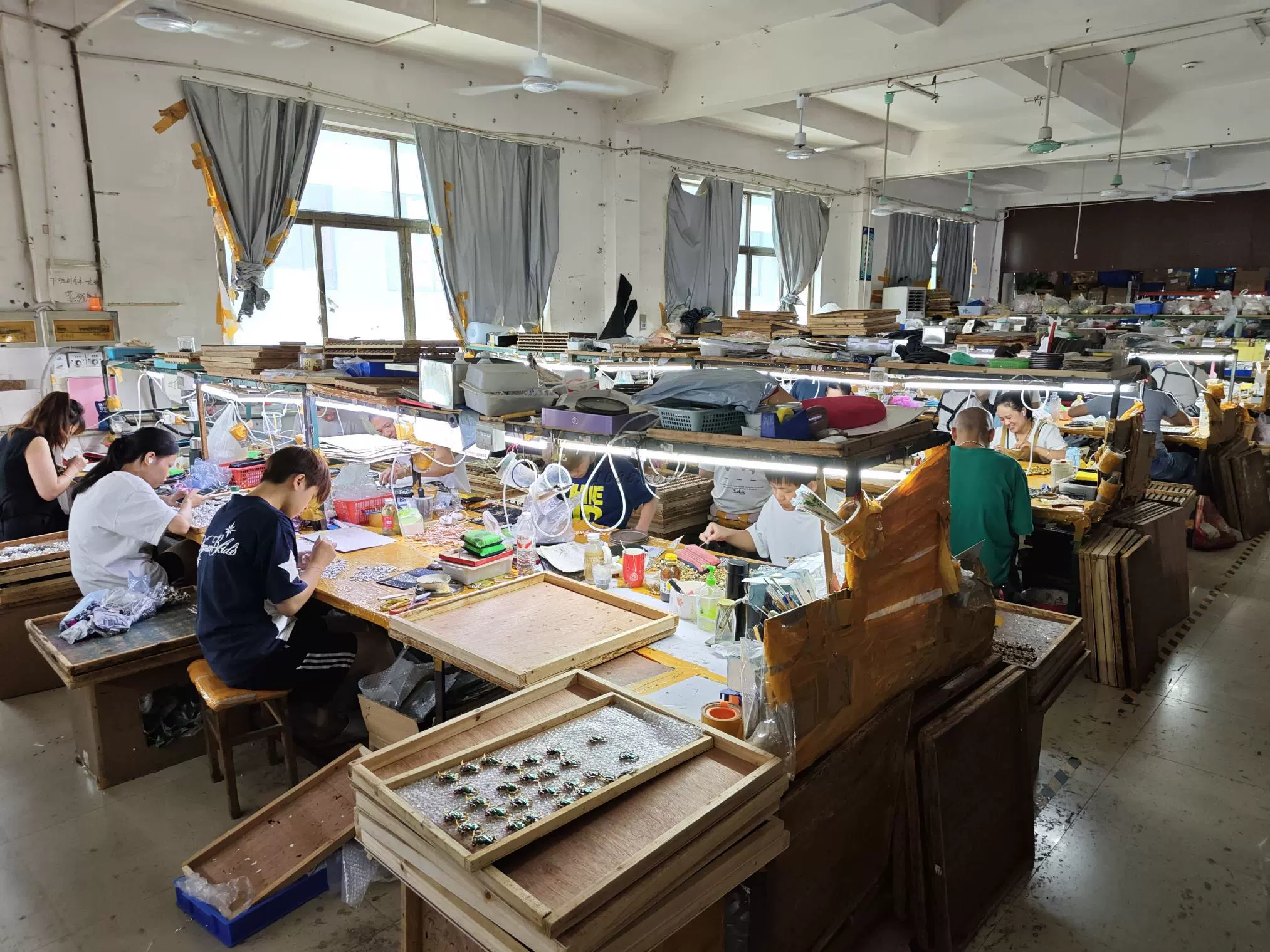
Colouring
Carry authorised artwork colours across the specified visible enamel face.
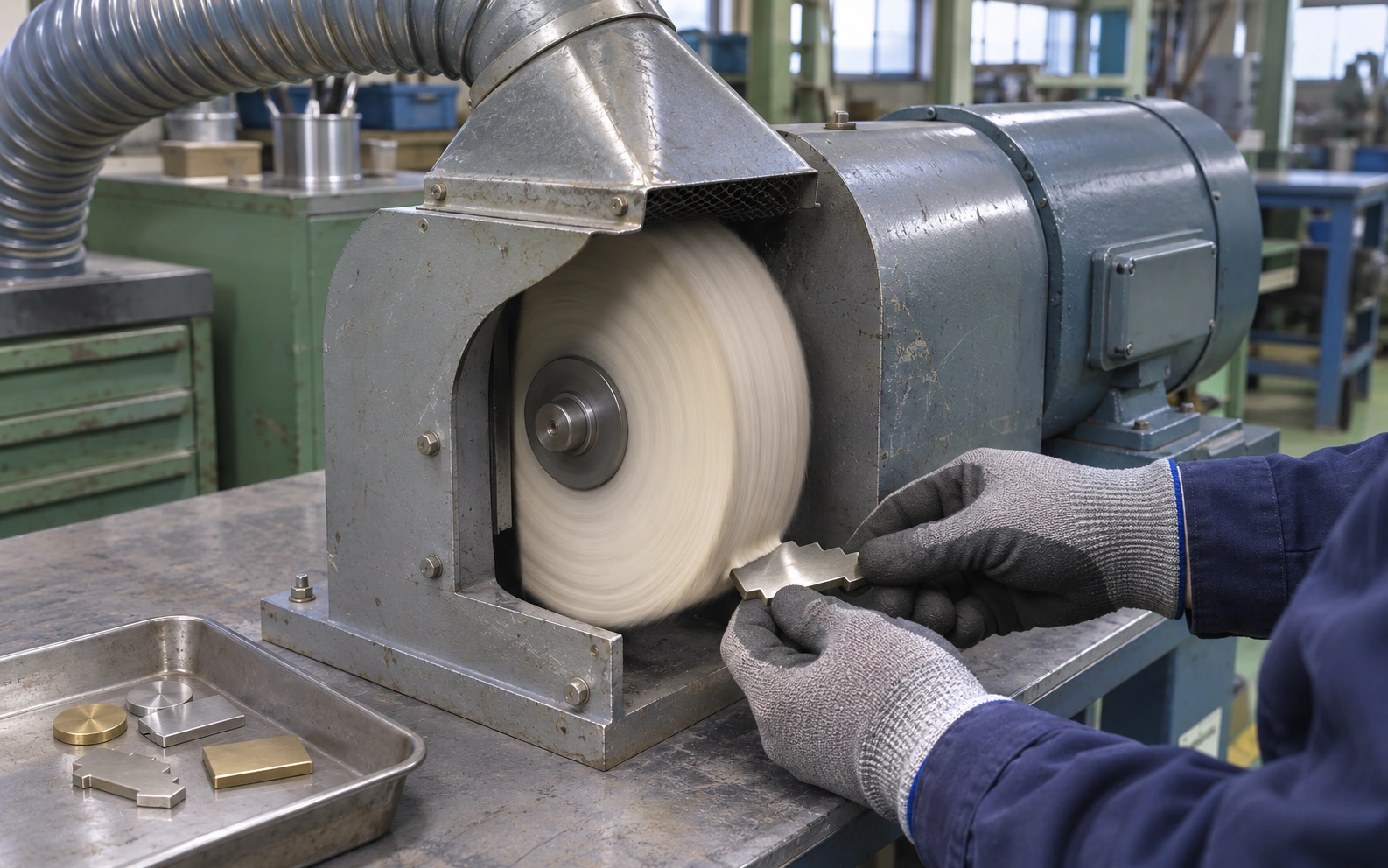
Polishing
Prepare the relevant surfaces, including the body and slot-edge references.

Plating
Develop the agreed exposed-metal appearance on the specified surfaces.
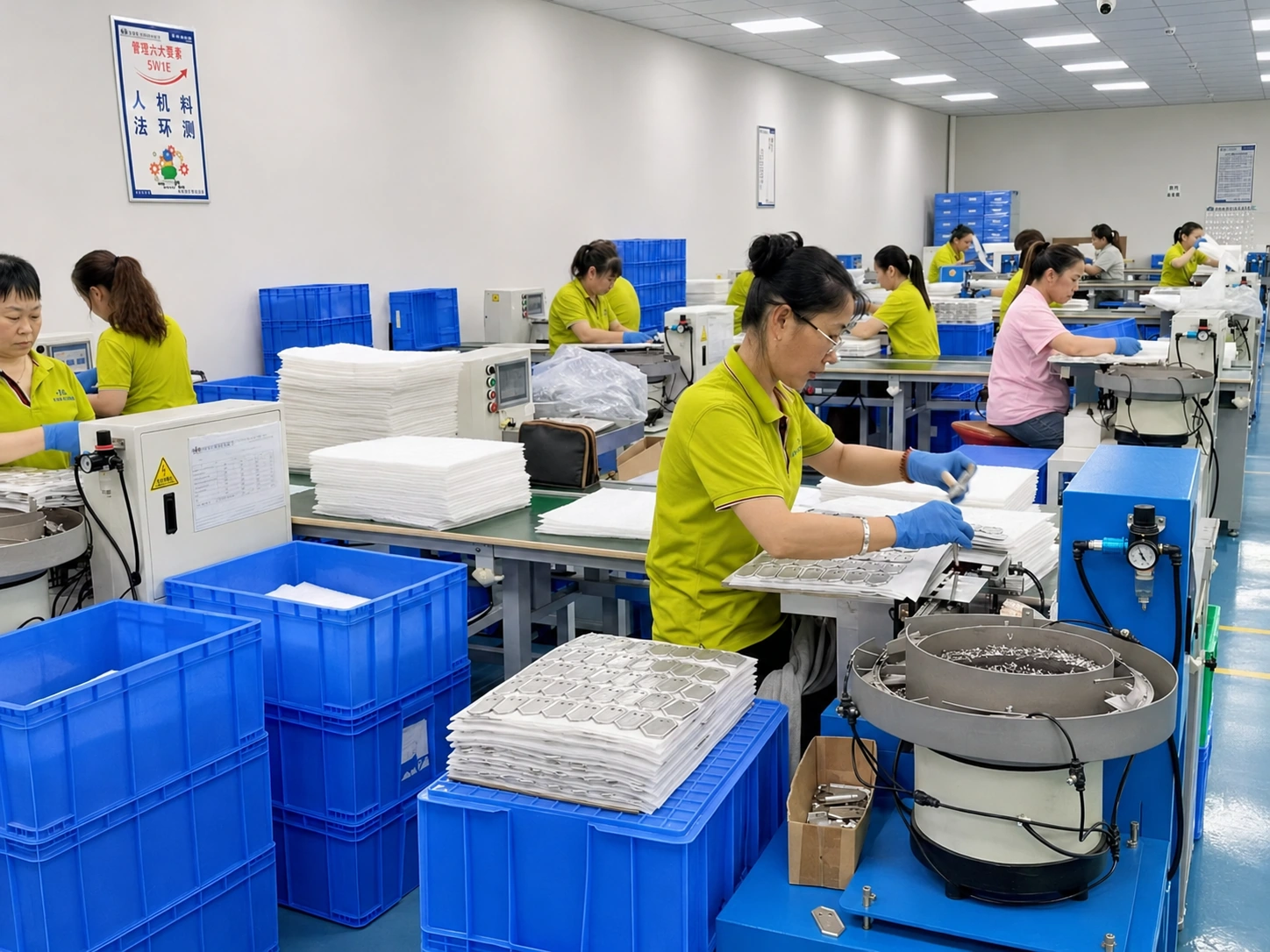
Assembly
Complete only included attachment work; retain body-only supply for later threading where agreed.
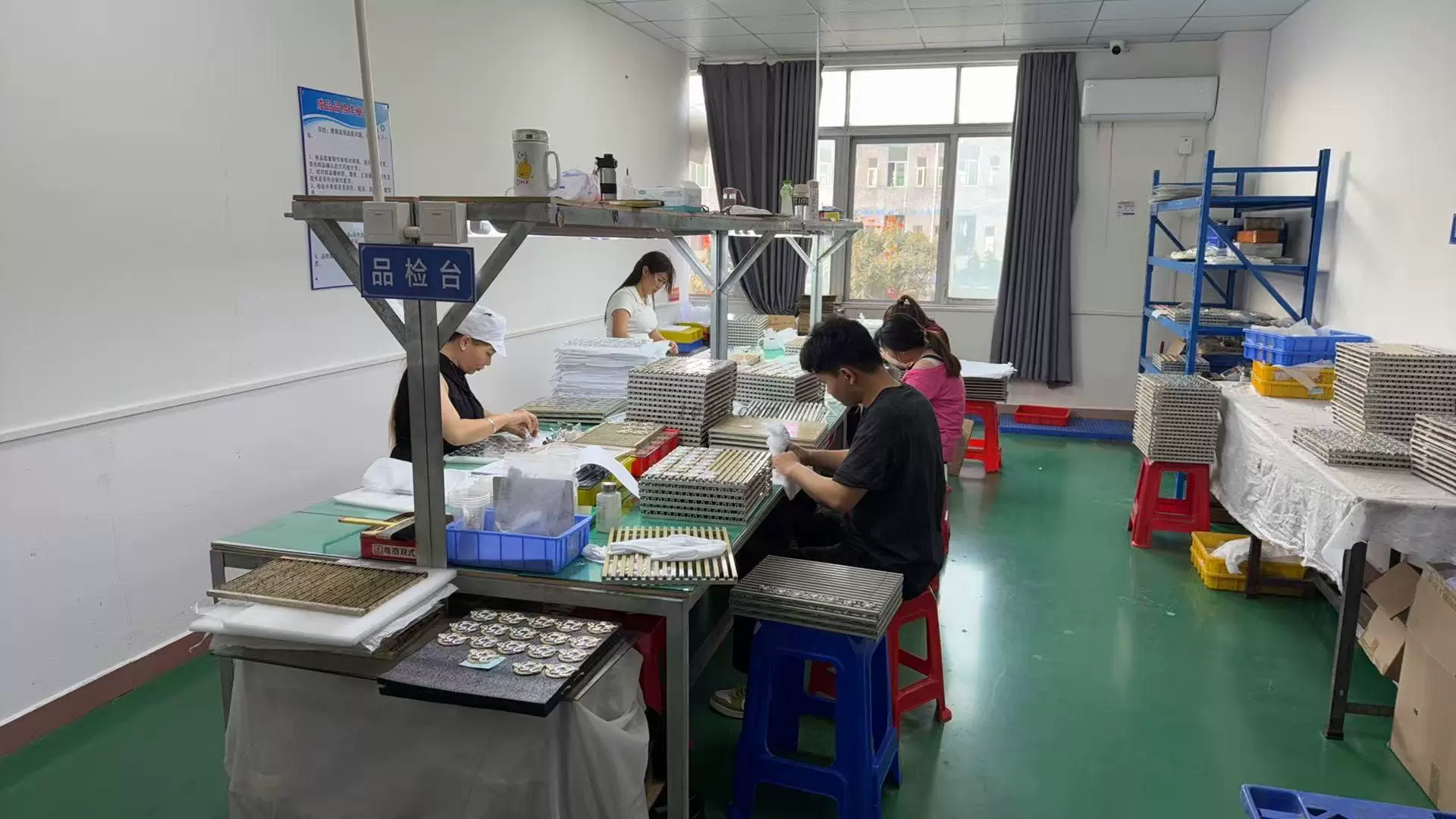
Inspection
Compare identity, opening structure and supplied state against the approved references.
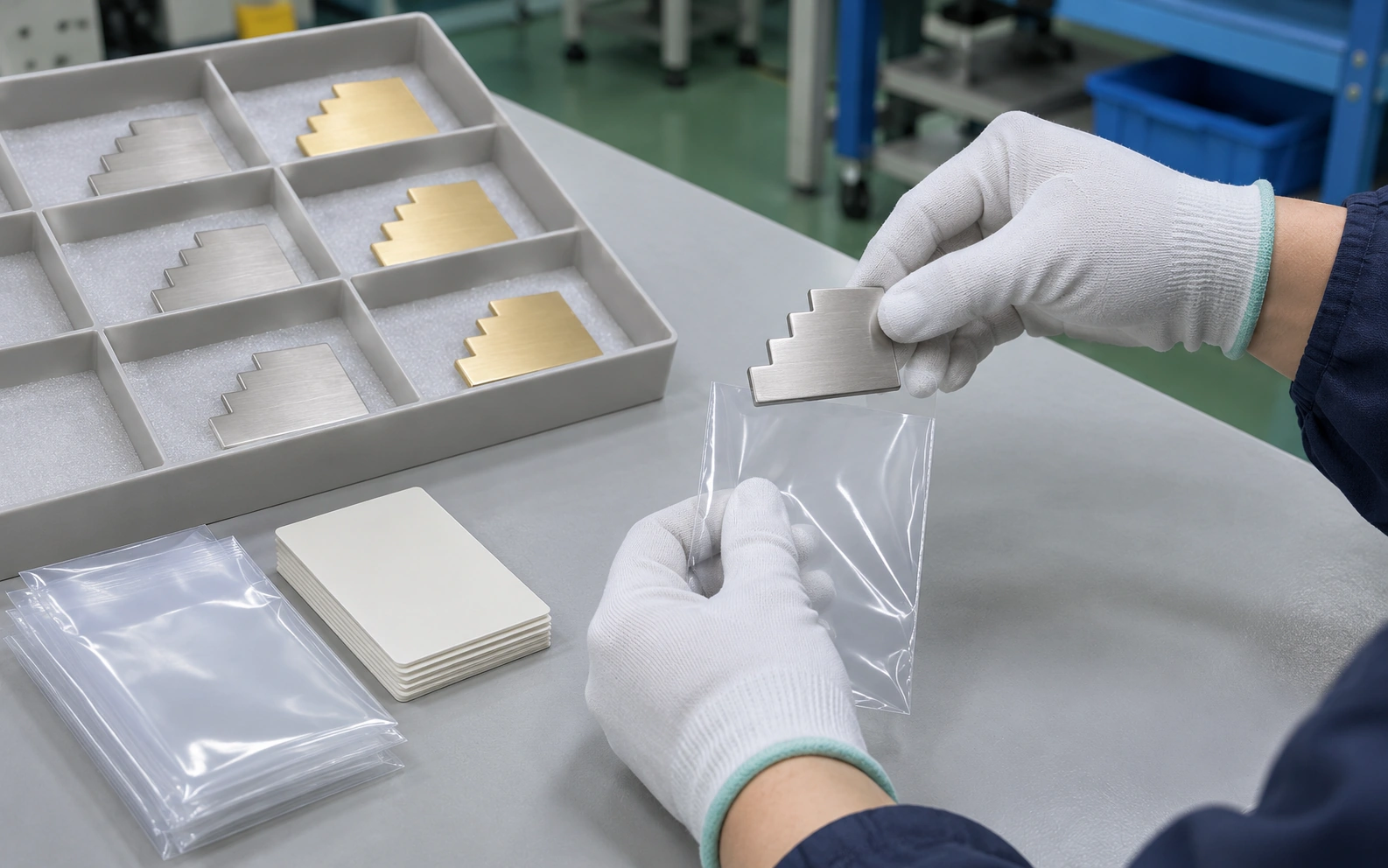
Packing
Separate body versions and defined pair combinations for accurate receiving.
Company archive photographs show general factory work areas; restored versions are labelled. Polishing, plating and packing remain illustrations. These visuals are not photographs of this footwear programme or evidence of a lace-wear test.
07 / PRODUCTION
Carry the threading reference from drawing to packed bodies
The selected metal construction and enamel route determine the detailed operations. These manufacturing states retain both the decorative identity and the lace interface.
The selected material, construction and finish determine the manufacturing route, with enamel included where specified. These operations explain our scope; they are not one universal production sequence.
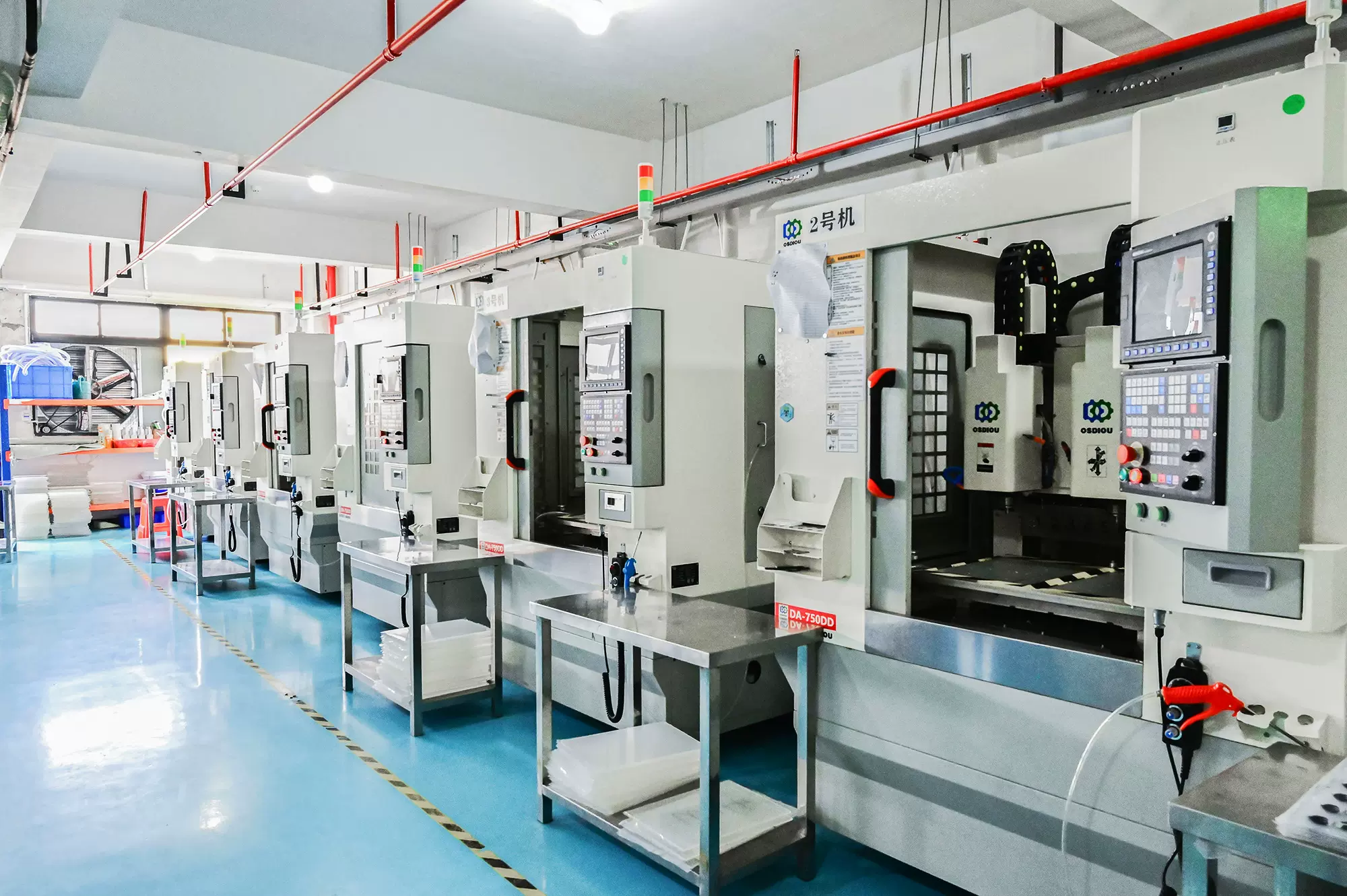
01 / Establish the body and slot reference
Align the authorised front, reverse and intended lace route for tooling review. Record left/right or other version differences before the same outline is interpreted as a common body.
02 / Develop the formed metal structure
Form the agreed horizontal body and its openings. Compare slot positions and surrounding metal with the body reference before completing the relevant surface work.
03 / Complete the chosen surfaces
Develop the enamel and exposed-metal appearance through the selected route. Review the visible face, reverse and slot-edge references as parts of one body rather than focusing only on the logo.
04 / Polishing
Refine the relevant surfaces according to the selected construction and agreed finish. Where enamel is specified, the soft or hard enamel route is reviewed for the design.
05 / Plating
Review the specified metal treatment with the agreed appearance reference. Where enamel is specified, assess it with the selected colours. The construction and finish determine the detailed route.
06 / Follow the agreed supply arrangement
Add only named fittings or assembly work where required. For bodies that your team will thread later, retain that received state and keep the lace reference separate from the included-parts list.
07 / Review identity and interface references
Compare body versions, openings and surfaces with the approval record. Any agreed physical threading review has a defined scope and does not imply general shoe compatibility or wear performance.
08 / Pack pieces and pair combinations
Protect and separate the body quantities as specified. Identify defined pairs and their contents so receiving can reconcile both group counts and individual body totals.
Soft enamel route
Raised metal and recessed colour are part of the intended surface.
Hard enamel route
The filled face is polished for a flatter colour-and-metal surface.
Process order and review points are confirmed for the chosen specification. Company archive photographs show general work areas; polishing, plating and packing use illustrations. These references do not document this particular product being manufactured.
08 / COOPERATION
Define the lace, the body and the counted unit

01 · Share the footwear programme
Explain the intended placement and provide the actual lace reference available. Add authorised artwork, destination and requested timing, identifying any interface or version decision still open.

02 · Define supply and counts
State body quantities and whether the purchasing unit is one piece, a pair or a defined group. List included fittings separately and name who completes installation on the lace.

03 · Review artwork with the path
Check the face, reverse, slots and intended visible area together. Confirm left/right or version names and record any change to the route or body structure alongside the artwork revision.

04 · Agree the approval method
Decide which points require a physical lace reference or sample review. Confirm costs, approving contact and the actual review scope instead of inferring wear or fit results from an image.

05 · Confirm manufacturing handover
Align the quotation, body and group counts, received state and packing identification. Discuss schedule against the actual scope and approval requirements, including the buyer's later threading stage.
06 · Coordinate dispatch and repeats
Confirm destination and final version/pair records. On a later order, identify any new lace profile, slot arrangement or group contents so the earlier drawing is not assumed to approve a different interface.
09 / FAQ
Wholesale metal lace accessories
What defines the lace-specific interface?
The lace path is part of the product definition. The illustrative horizontal body has two elongated slots through which the actual lace route must be reviewed. Use the drawing to show entry, exit, orientation and relevant dimensions. Keep the lace profile and intended visible position beside that reference so your team approves the body and its threading arrangement together.
What information do you need about the lace?
Provide the actual lace or a clear reference showing its profile and relevant dimensions, including width and thickness where useful. Show how it should enter and leave the body. Do not assume that one standard dimension covers flat and other lace forms. Agree the interface review reference and method before treating the slots as suitable for your programme.
Does this page cover PVC charms inserted into clog holes?
No such plug construction is included in this metal lace project. The proposed item uses metal and enamel with a defined threading or attachment interface for laces. It does not establish PVC moulding or compatibility with a third-party footwear brand. Keep any different shoe-accessory construction explicit in the brief rather than treating all shoe decorations as the same supply scope.
Is the quantity counted in pieces or pairs?
State body pieces per version, then define any pair or group contents. A pair may contain identical pieces or a specified left/right combination; give both the pair count and body totals. Several bodies placed in one outer bag do not automatically form a retail pack. Clear counting keeps purchasing, packing and receiving aligned on the number and identity of the bodies supplied.
Can our design have left and right versions?
Discuss the differences with separate artwork references and quantities. Show whether the bodies are mirrored, carry different text or share one outline with another enamel face. Review them with the intended lace route so the identity reads in the required orientation. A two-piece illustration cannot approve mirrored artwork or define pair contents unless those decisions are expressly recorded.
Are laces or shoes included?
Laces and shoes shown for interface discussion are references, not included products. The starting scope is the defined metal body and any expressly listed fittings. Identify who supplies the lace and who installs the charm. If additional items are requested, list them with quantities and responsibilities so the quotation and packing record do not imply a complete footwear product.
Can your team deliver bodies for our later threading stage?
Body-only supply can be discussed for installation by your team or another assembler. Define the openings, approved lace reference and body quantities, then state which work remains after receiving. Packing should identify versions and any defined pairs. The manufacturing handover needs to distinguish a finished metal body from a body already installed on a lace or supplied with footwear.
Does the chosen finish guarantee that the lace will not wear?
No wear guarantee follows from the finish name or enamel route. Soft and hard enamel concern different face appearances, while the slots, edges, lace and intended use need their own review. Identify specific material, inspection or performance requirements in the brief so their scope can be discussed. A polished-looking illustration is not evidence of behaviour against your lace.
What should our sample approval cover?
Review the body outline, intended dimensions, actual lace path, slots, surrounding metal and relevant edges. Include front/reverse artwork, enamel and metal appearance, received state, version quantities and any pair contents. Agree which questions require physical review and record the approval scope. A successful-looking threading illustration does not establish suitability for every lace or a general footwear safety claim.
What if the lace changes after artwork approval?
Bring the changed profile or dimensions forward with the earlier body reference and explain the intended route. Even when the logo is unchanged, the slot and installation discussion may need review. Record the revised scope before ordering rather than assuming that the earlier approval transfers. Tooling implications, samples, quantities, price and timing are assessed for the new combination.
10 / ARTICLES
Planning metal lace accessory programmes
Read procurement guidance on recording lace references, body versions and piece-versus-pair counts. Relevant articles help footwear and brand teams keep the threading interface connected to artwork approval and receiving requirements.
11 / RELATED PRODUCTS
Compare the attachment task

Custom enamel charm range
Discuss other application-specific interfaces in the range when the product is not threaded or attached to a lace.
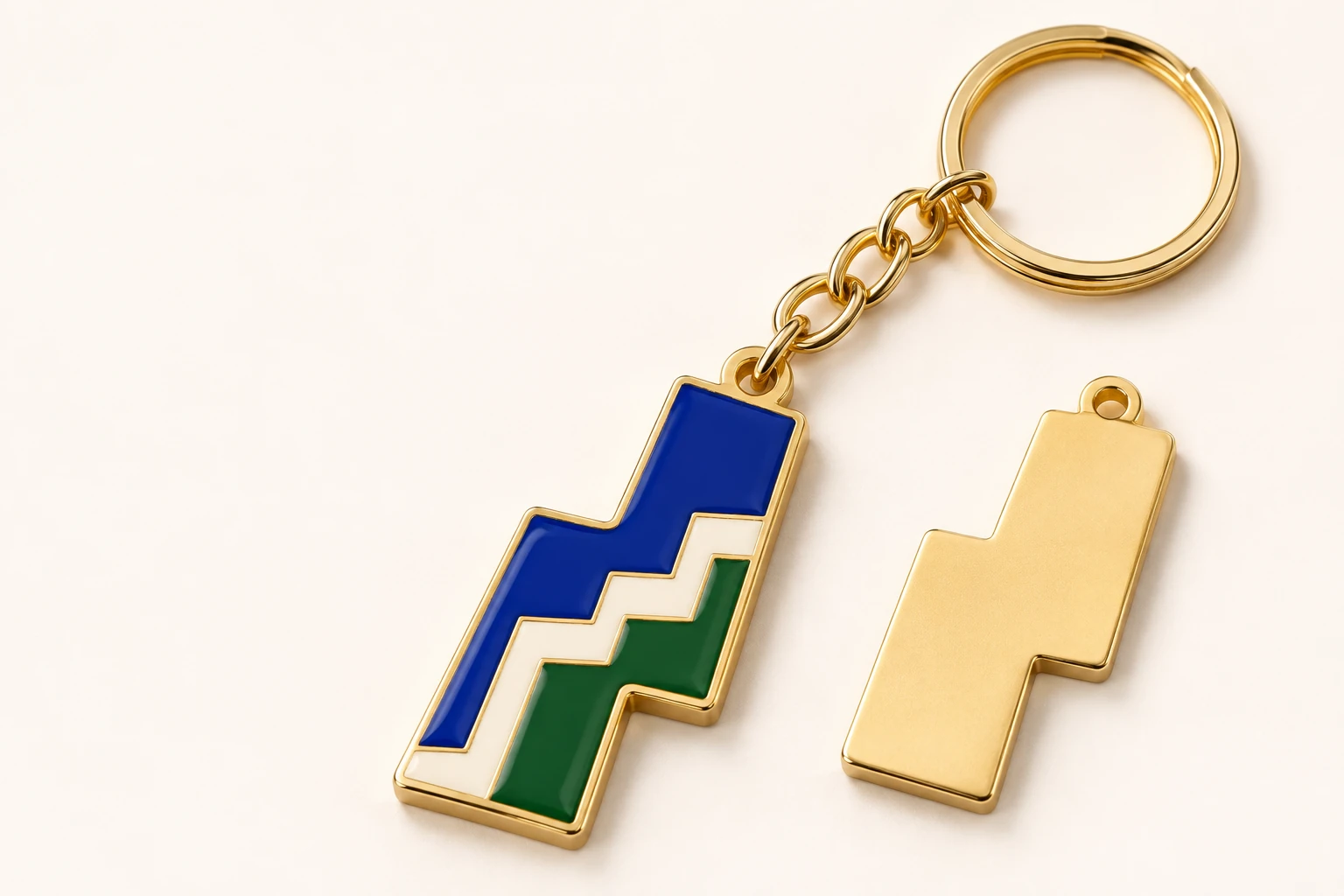
Complete custom keychains
Compare a complete keyring-based product when that is the unit your programme needs to receive.

Custom club pins
Compare a wearable organisation-identity product when the brief calls for a pin fastening rather than a lace interface.
12 / ENQUIRY
Send the lace path and body quantities
Tell us where the metal body belongs on the lace and provide the actual reference available. Share authorised artwork, intended orientation and any left/right or programme differences. Mark unknown dimensions or an undecided route as review questions instead of inferring them from the concept image.
State whether your team buys individual bodies, defined pairs or another listed group, and who performs installation. We can then discuss the body structure, approval reference and receiving plan around the same counted unit.
- Authorised artwork and essential identity details.
- Actual lace reference, profile and relevant dimensions.
- Intended threading or attachment path and orientation.
- Proposed body dimensions, slots and reverse treatment.
- Body quantities and left/right or other version names.
- Pair/group contents and corresponding body totals.
- Included parts, received state and later installation responsibility.
- Protection, receiving identification, destination and requested timing.
Email artwork and the actual lace/path reference to [email protected]. Identify the latest revision and any details still open for review.
Please review the Privacy Policy before sending business contact and project information.
PROJECT BRIEF
Metal Shoelace Charms for Footwear Brands