


CUSTOM ENAMEL MANUFACTURING
Shaped Die-Cast Medals for Event Orders
Develop shaped diecast medals with open windows and stepped relief. Review the front, back and sides, then plan suspension, ribbon and piece counts for your design.
Illustrative custom concept, not a stock item or a customer case. Final specifications are agreed for your project.
02 / STRUCTURE
Define the outline, the opening and the side view
Review point · Structural information to define
The concept’s angular outer body and diagonal raised band form one coherent metal design. The internal window passes through the body and remains part of the intended structure in every view. The stepped band has a relationship to the reverse and edge; it must not disappear when the product is shown from another angle.
A complete enquiry separates the medal’s required visual features from dimensions or construction choices that remain open. Provide references that show the proposed metal and empty space clearly. The construction review can then identify where the design needs clarification or adaptation.
Record proposed bridge widths, relief depths and wall thicknesses as review inputs. Their final values and any required structural assessment belong in the agreed construction record.
Front
Enamel areas, exposed metal, edges and internal opening surfaces
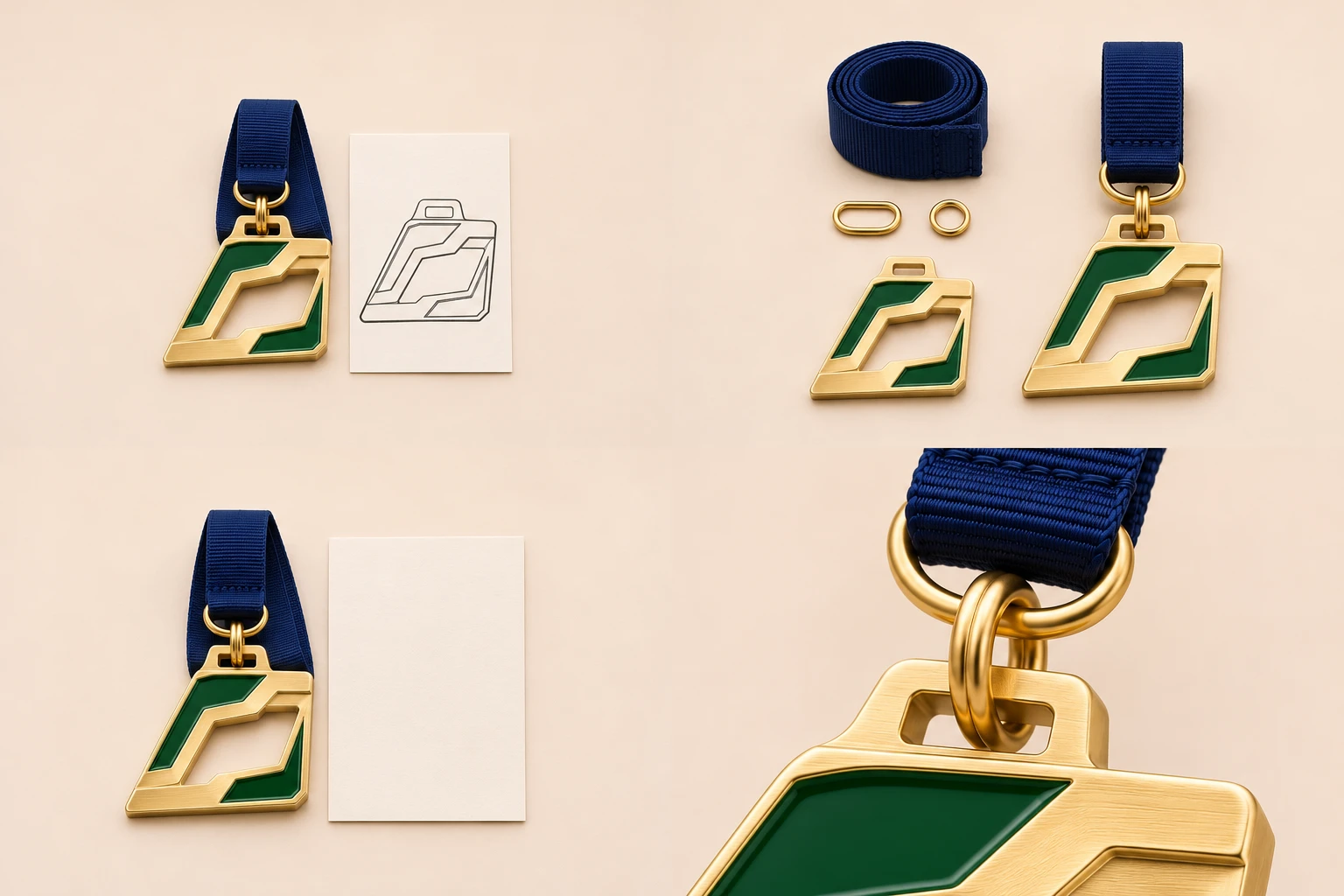
Structure
Position, shape and which surrounding metal must remain connected
Reverse
Appearance and relationship to the front relief and openings
Custom concept illustrations. Final specifications are agreed for your project.
Structural medal project · Diecast route review · Metal and enamel
For a wholesale diecast medals enquiry, begin with the metal structure your organisation wants to commission. This concept uses an asymmetric body, an internal open window and a stepped metal band that connects the front design to the outer profile. The opening and relief belong to the physical medal, rather than being printed effects on a standard blank.
The project brief needs front, reverse and side references as well as the complete ribbon assembly. The proposed construction, tooling approach and surface route require review against the actual design. An illustration establishes a product direction; it does not prove that every proposed bridge, depth or opening can be manufactured as drawn.
Supply brief — a specifically shaped metal medal body; necessary open space and stepped relief; agreed suspension, connection and ribbon; individual piece counts; documented structural review.
03 / ARTWORK
Distinguish metal geometry from decorative graphics
Provide separate views showing the outline, through-open window, relief relationships and surface artwork. A shaded drawing can make a recess look like an opening, so label the intended condition explicitly. Keep any lettering and enamel areas aligned with that physical body.
Artwork handover
Artwork handover: authorised design files; front/reverse/side references; opening map; relief intentions; critical visual relationships; dimensions to review; enamel and metal references; ribbon assembly; version list; approving contact.
Your artwork, or a direction to develop
Mark essential features and areas the designer is willing to adapt. A structural change may affect the face, reverse, edge and suspension together; it should not be approved from a front rendering alone. Exact organisation text and authorised marks remain part of the artwork record, with any versions and quantities identified separately.
04 / ENAMEL AND METAL
Review structure and surface as different decisions
Review the diecast route against the opening, connected-metal regions and relief. Tooling, internal and outer edges, suspended orientation and surface work need a coordinated record before the structure is approved. If you are still choosing the manufacturing route, compare cast and stamped medal samples against the same brief.
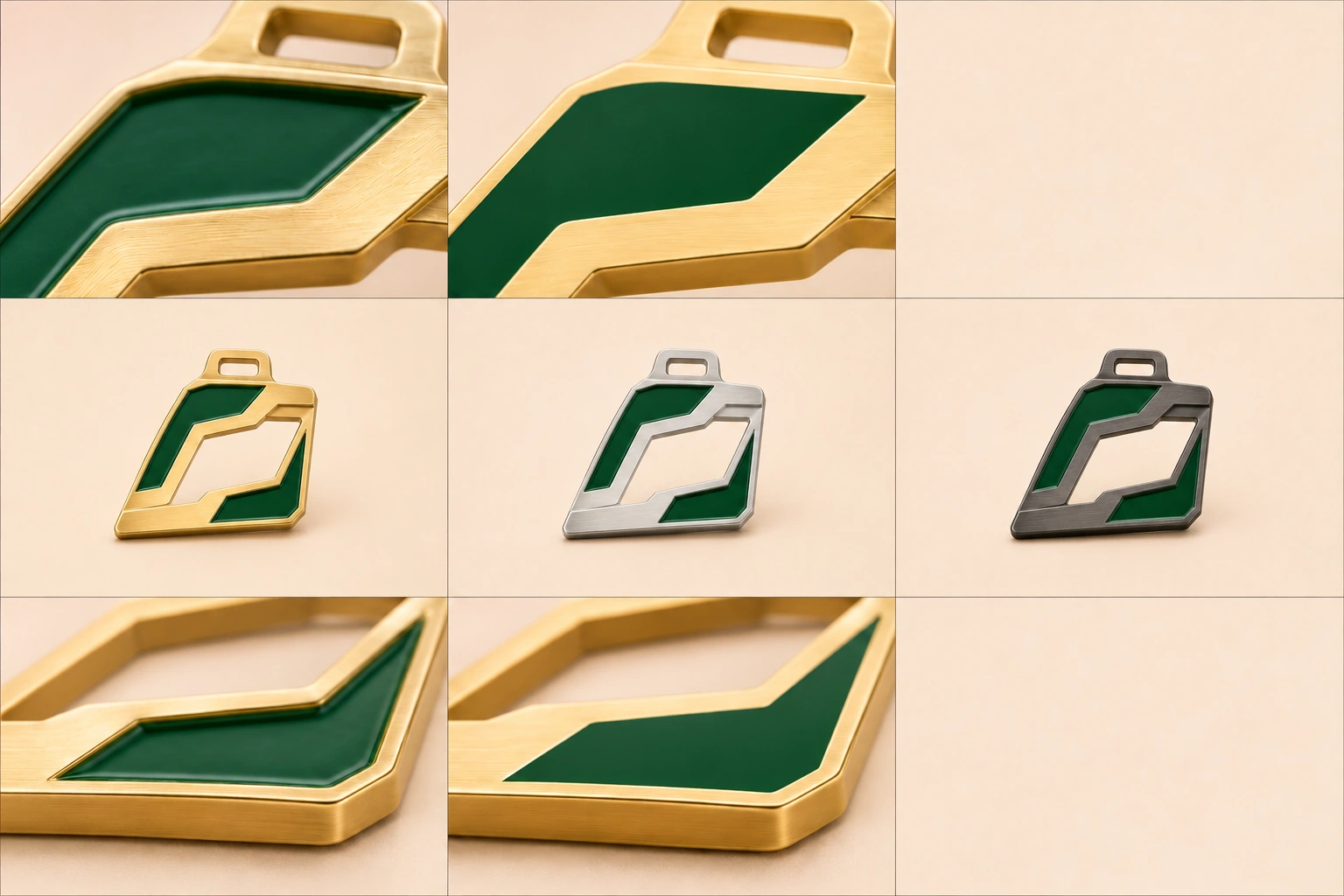
Soft enamel
Recessed colour areas and raised metal lines. This product’s process illustration explains the surface; the product specification is reviewed for the individual artwork.
Hard enamel
A polished face brings colour and metal into a flatter appearance. This product’s process illustration is a comparison, not a fixed specification for this product.
Enamel belongs in the areas the design and selected route can support. Soft enamel leaves colours recessed between raised metal; hard enamel is polished for a flush face appearance. Discuss the intended route alongside exposed relief, internal edges and reverse detail. Do not assume enamel occupies unsupported open space or that every part of a shaped body shares one plane. Surface illustrations do not establish material grade, strength or durability.
METAL FINISH OPTIONS
Gold-tone appearance
A warm metal reference. Confirm the actual finish with the artwork and project specification.
Silver-tone appearance
A lighter metal reference for assessing contrast alongside the selected enamel colours.
Dark metal appearance
A darker metal reference. Its suitability and detailed process are reviewed for the project.
Product-specific illustrated surface and metal-appearance references. Availability, construction, process and final appearance are confirmed for the individual project.
05 / PRESENTATION
Protect the complete silhouette
The open window, outer projections, relief and hanging arrangement need to be visible in the agreed review reference. Decide what the sample or other approval materials must demonstrate, including the relationship between the front and reverse. A flat front rendering cannot approve the depth and empty space of a three-dimensional body.
SAMPLE AND RECEIVING REVIEW
Discuss individual protection and the arrangement of the complete ribbon assembly. Packing should account for the actual silhouette without assuming a standard insert or presentation box will fit. Count medal pieces by version and identify any separately requested presentation materials.
06 / FACTORY
Follow a defined metal construction through the work areas
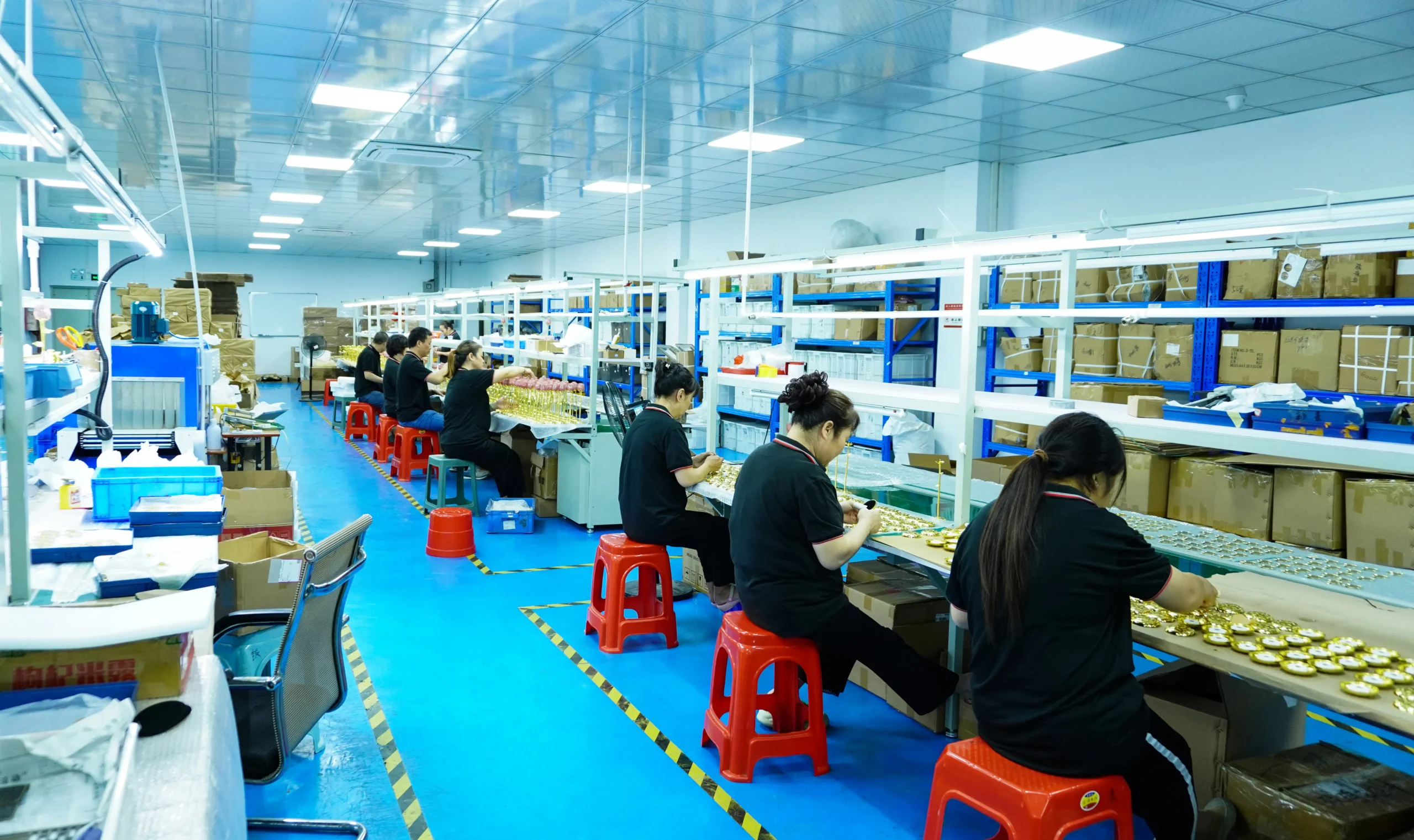
Green Frog Supply is operated by HANGZHOU FORTHRIGHT TRADE CO., LTD in Hangzhou, China. The confirmed own-factory scope includes tooling, metal forming, enamel colouring, polishing, electroplating, assembly, inspection and packing. For a special shaped body, we review the intended forming and tooling route against the opening, relief and suspension together.
Ribbon weaving and manufacture of every purchased component are not implied. We can discuss a factory visit, video walkthrough and project-relevant factory or inspection information for the construction under review.
Work area · Responsibility in this shaped-body review
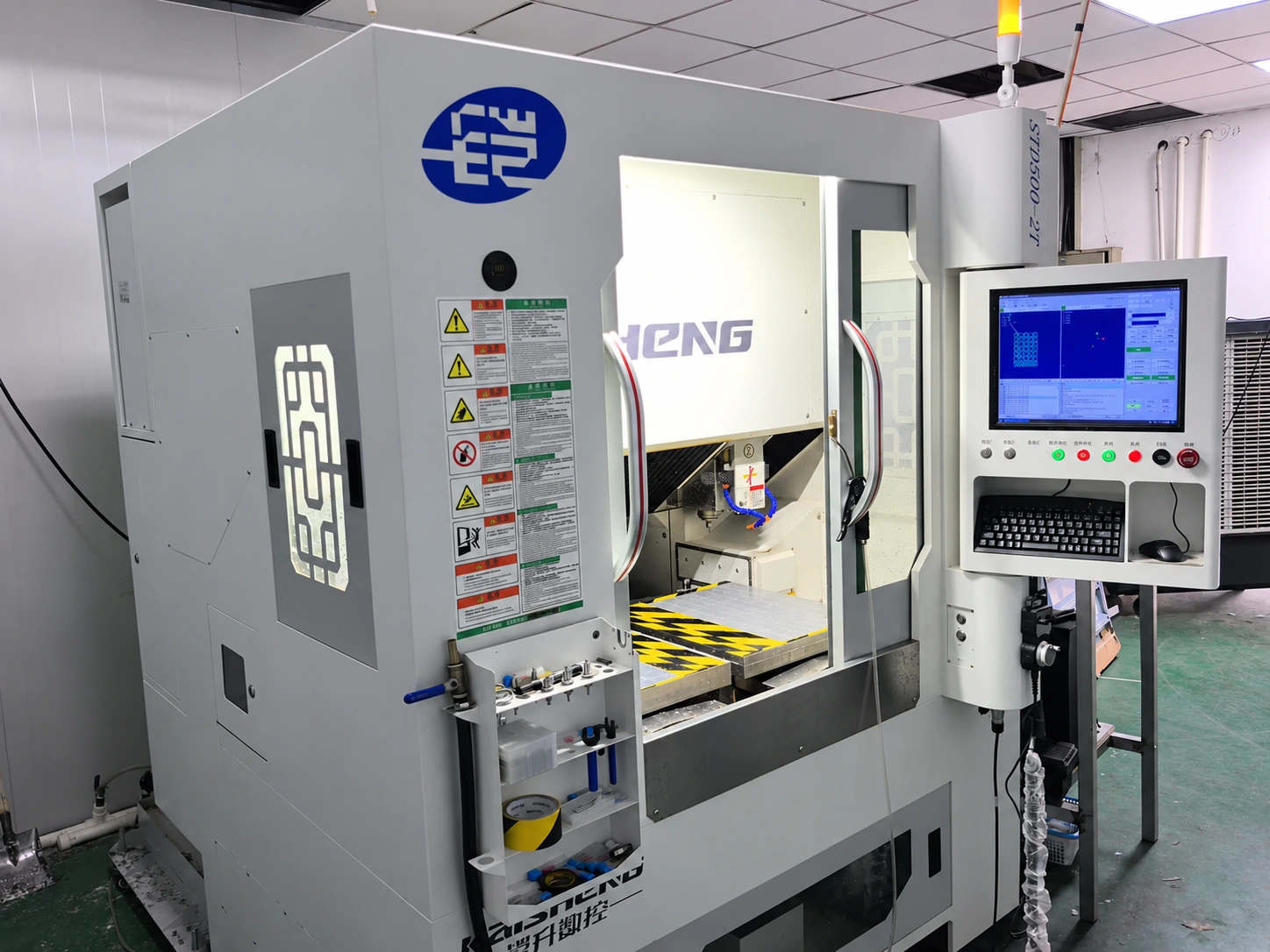
Tooling
Translate approved front, reverse, opening and relief references.
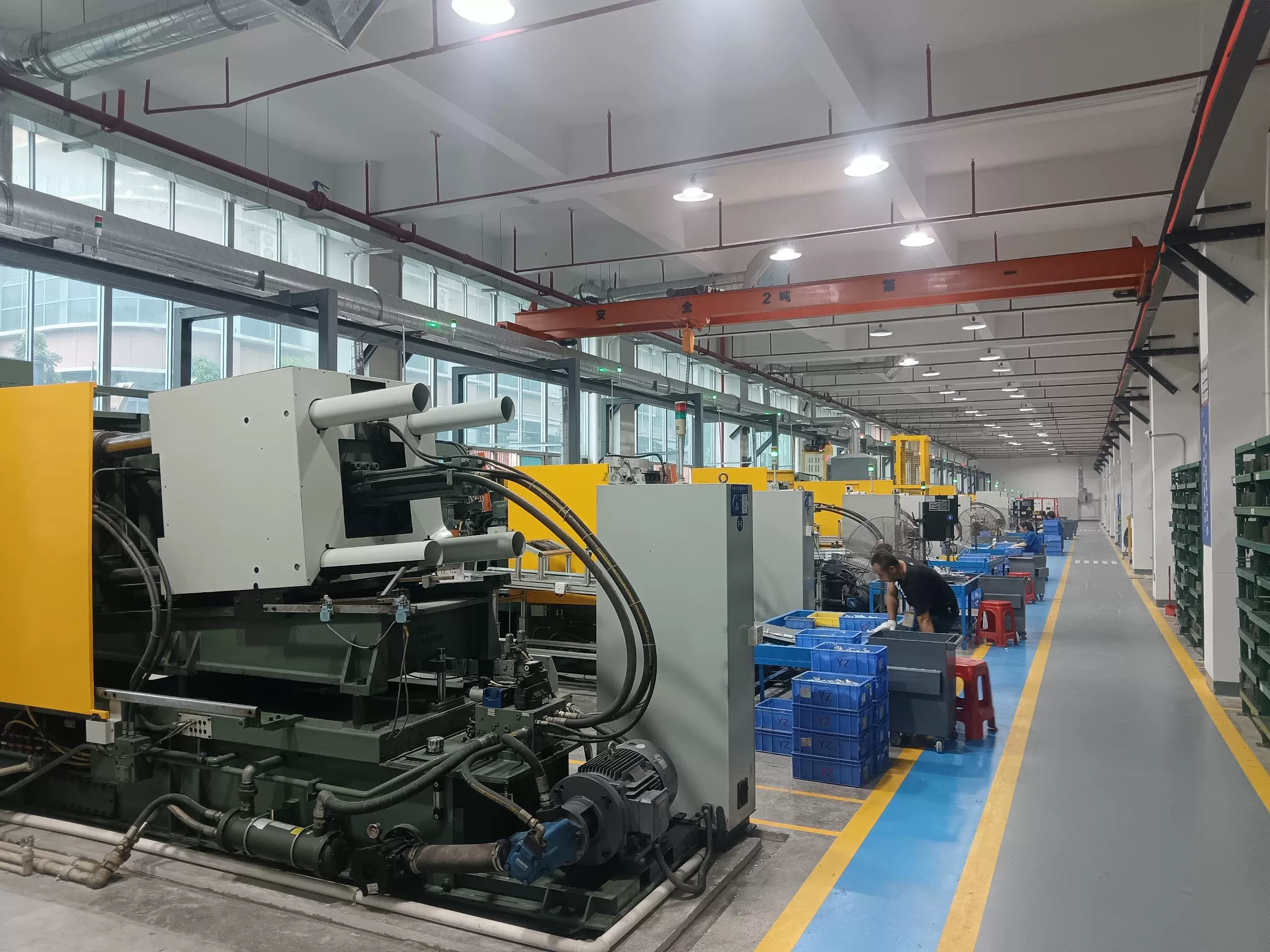
Metal forming
Carry the agreed silhouette and connected metal into the body.
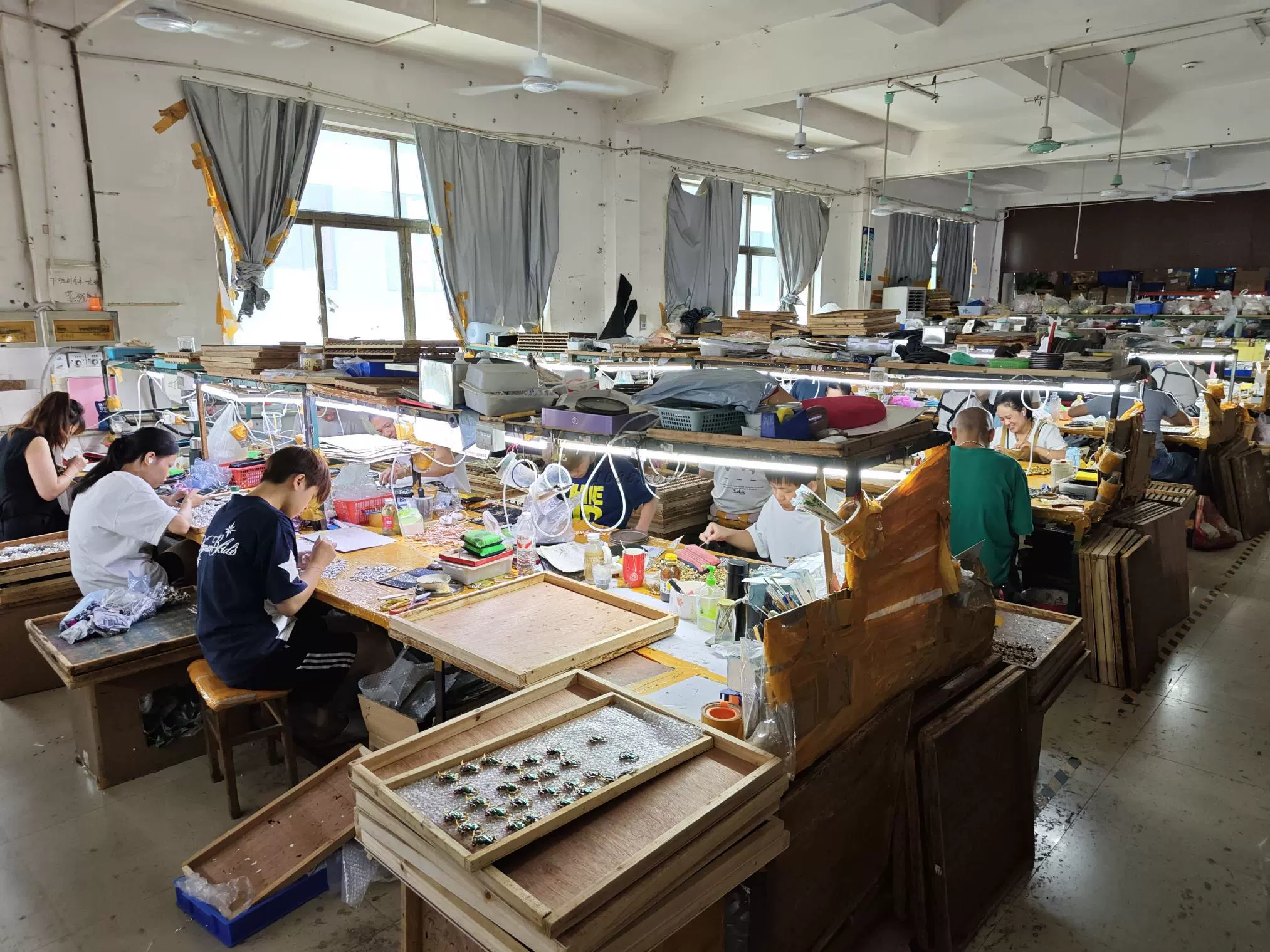
Colouring
Apply the selected enamel areas within the physical design.
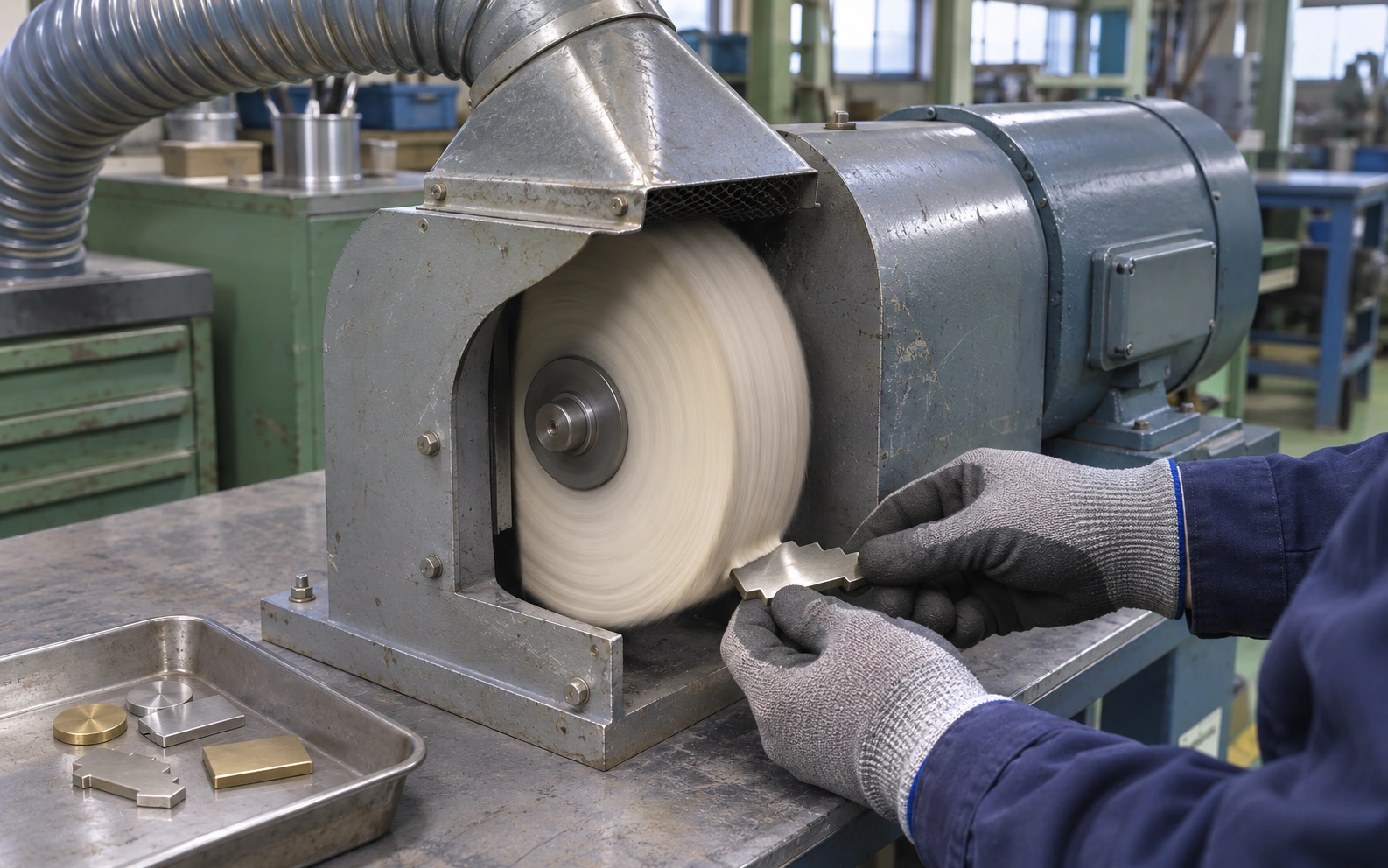
Polishing
Address relevant outer, internal and raised surfaces.

Plating
Develop the metal appearance across the agreed body geometry.
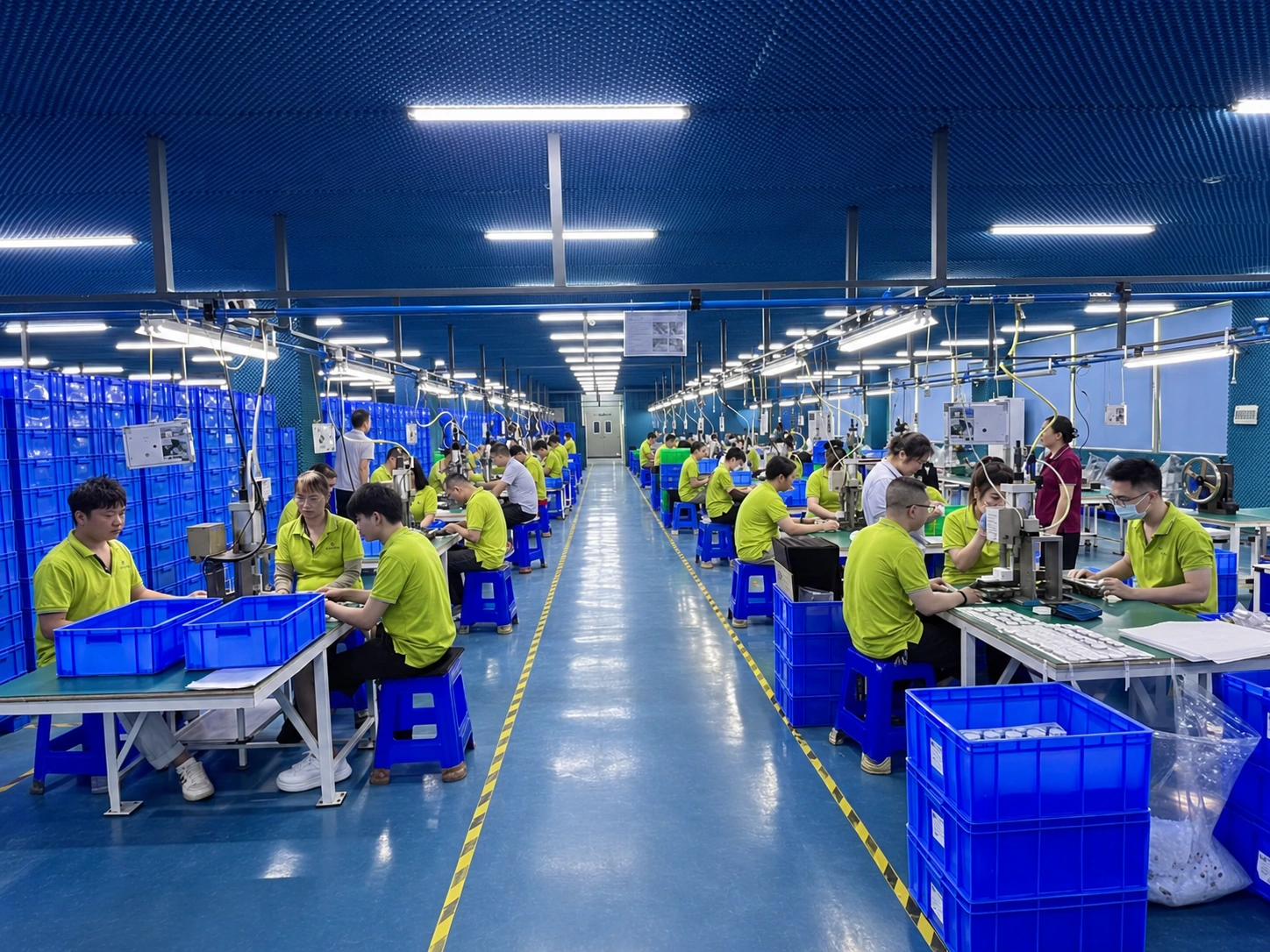
Assembly
Combine the suspension, connection and ribbon in the recorded state.
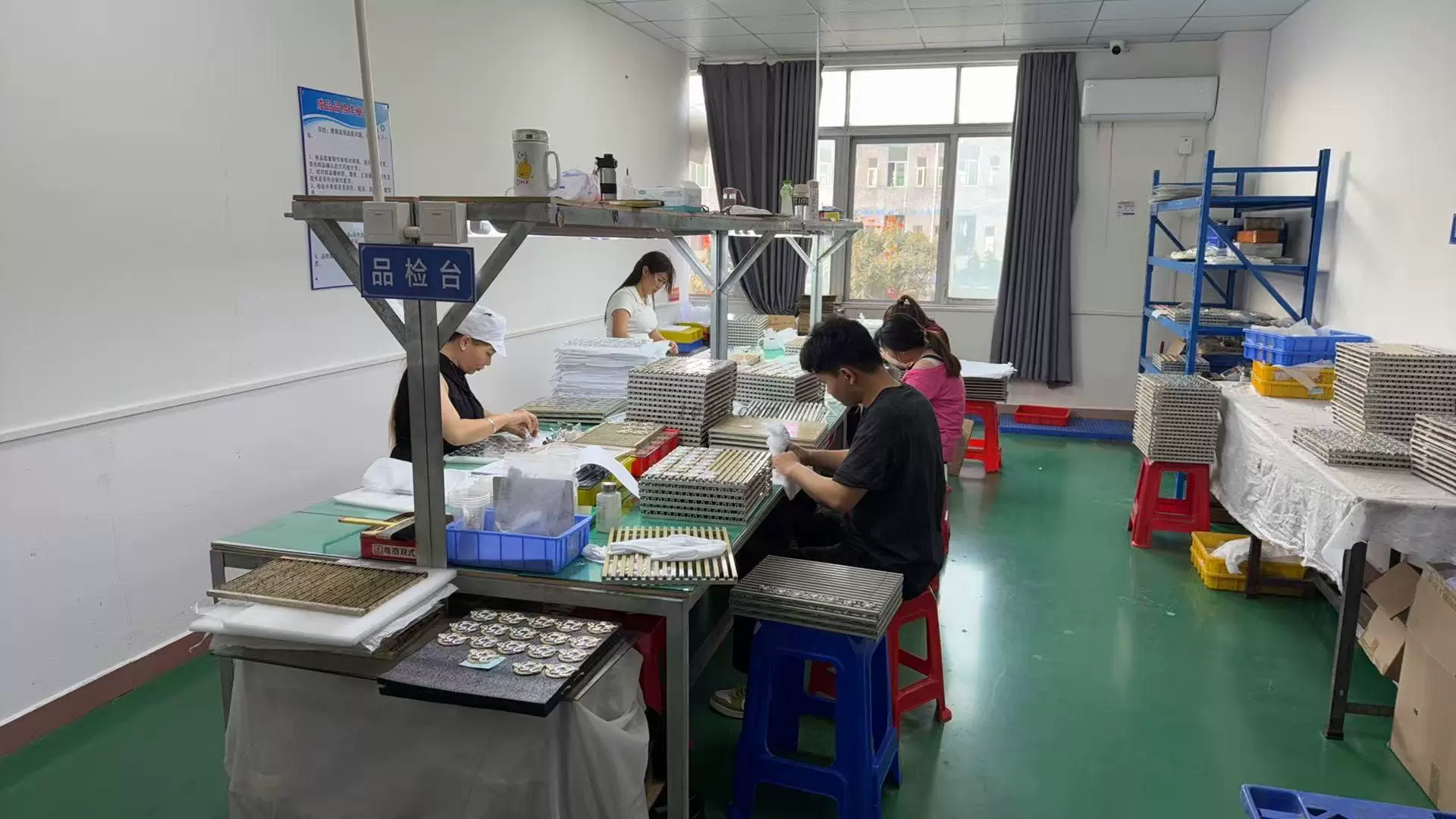
Inspection
Compare geometry, surfaces and assembly with approved references.
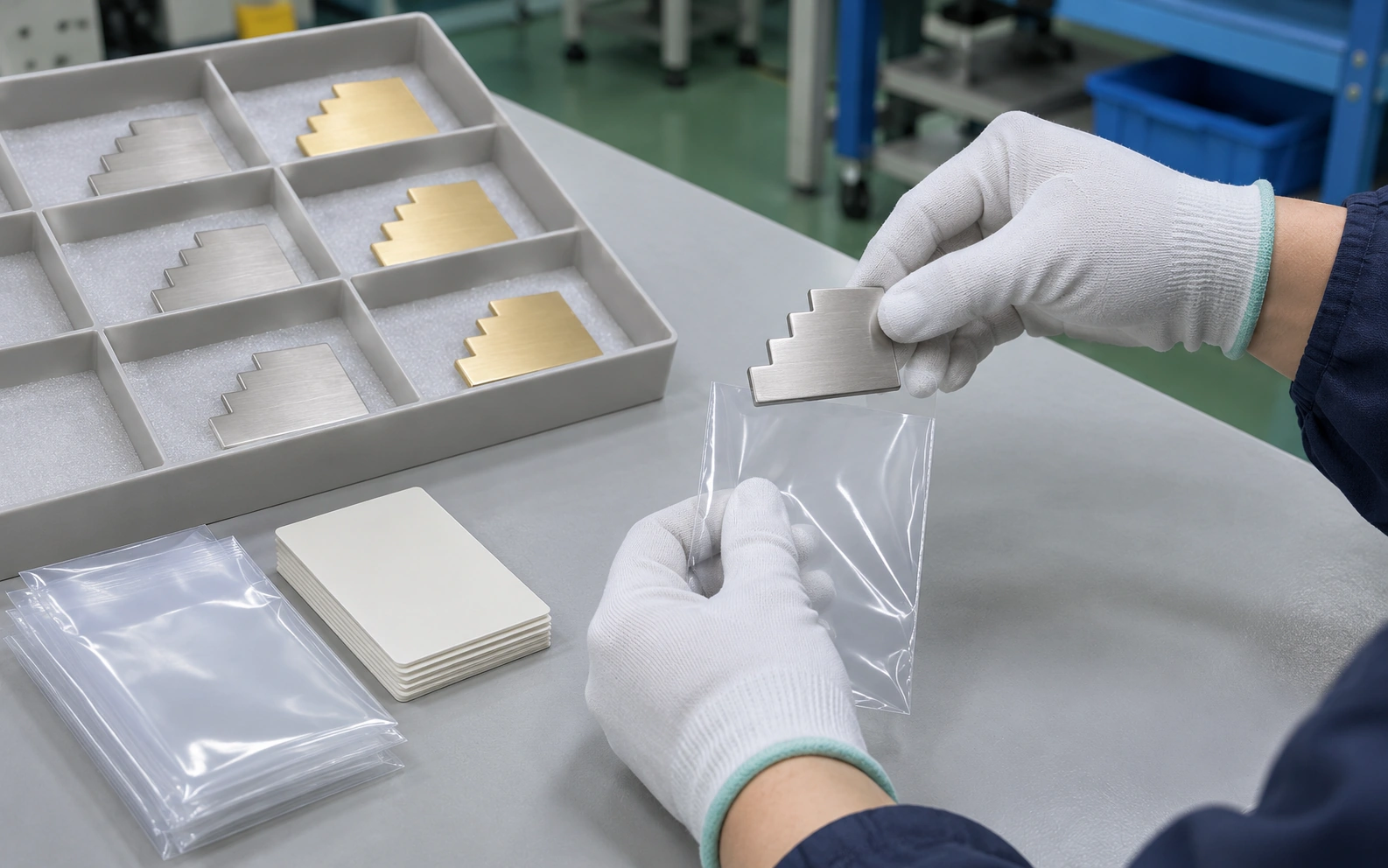
Packing
Protect the actual silhouette and count complete medals.
Company archive photographs show general factory work areas; restored versions are labelled. Polishing, plating and packing remain illustrations. These visuals are not manufacturing or test evidence for this shaped medal.
07 / PRODUCTION
Keep the opening and relief consistent
These production states explain the shaped product. The final construction and surface sequence follow the reviewed route.
The selected material, construction and finish determine the manufacturing route, with enamel included where specified. These operations explain our scope; they are not one universal production sequence.
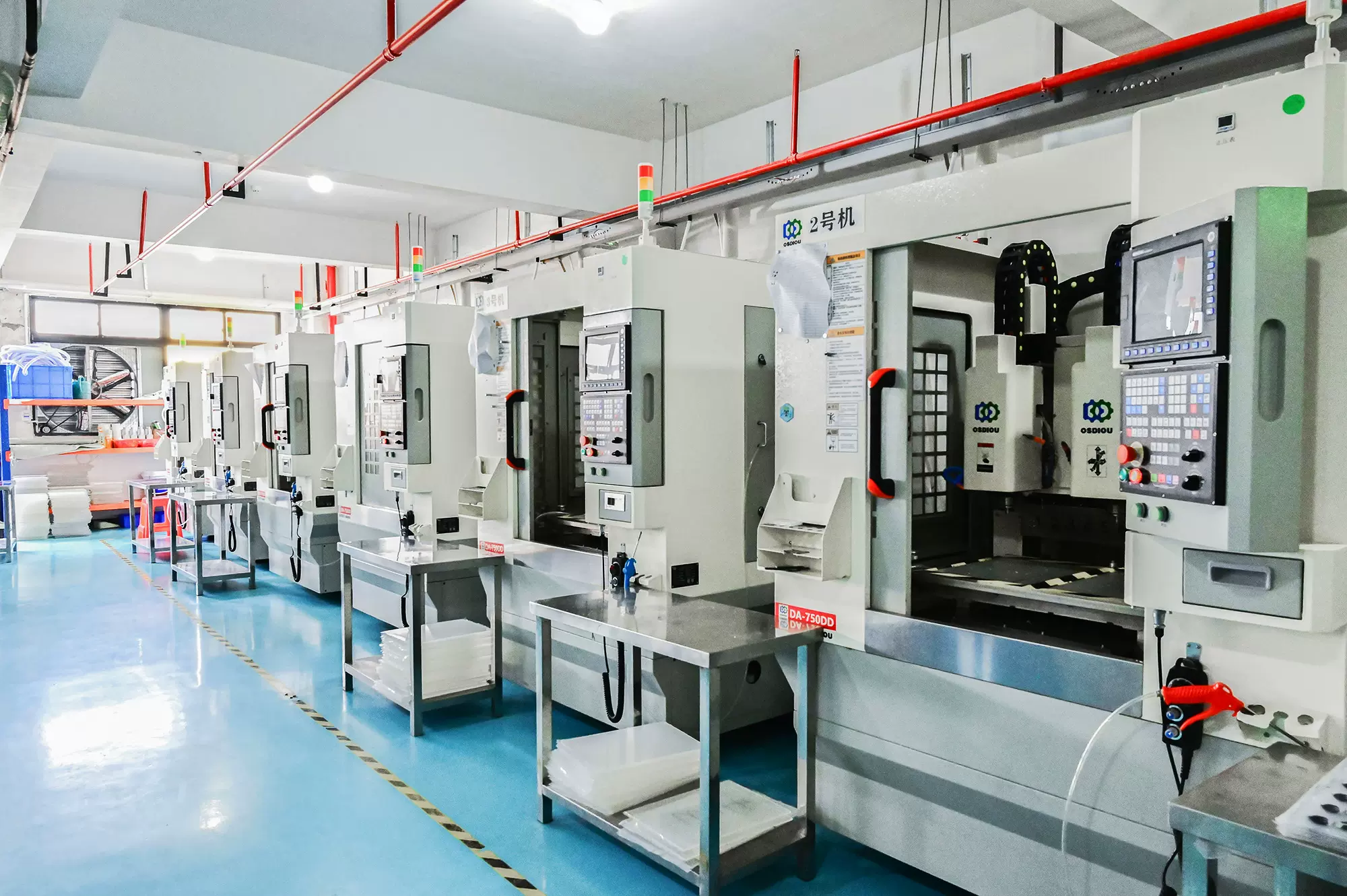
01 / Structural and tooling reference
Establish the outline, open window, connected metal, relief and suspension. Resolve differences between front, reverse and side references before tooling approval.
02 / Shaped metal body
Develop the body through the agreed forming route. Review the physical relationship of the opening, raised areas and outer edge.
03 / Surface preparation and appearance
Carry out the selected enamel and metal surface work in the appropriate sequence. Keep relief and internal edges consistent with the approved appearance.
04 / Polishing
Refine the relevant surfaces according to the selected construction and agreed finish. Where enamel is specified, the soft or hard enamel route is reviewed for the design.
05 / Plating
Review the specified metal treatment with the agreed appearance reference. Where enamel is specified, assess it with the selected colours. The construction and finish determine the detailed route.
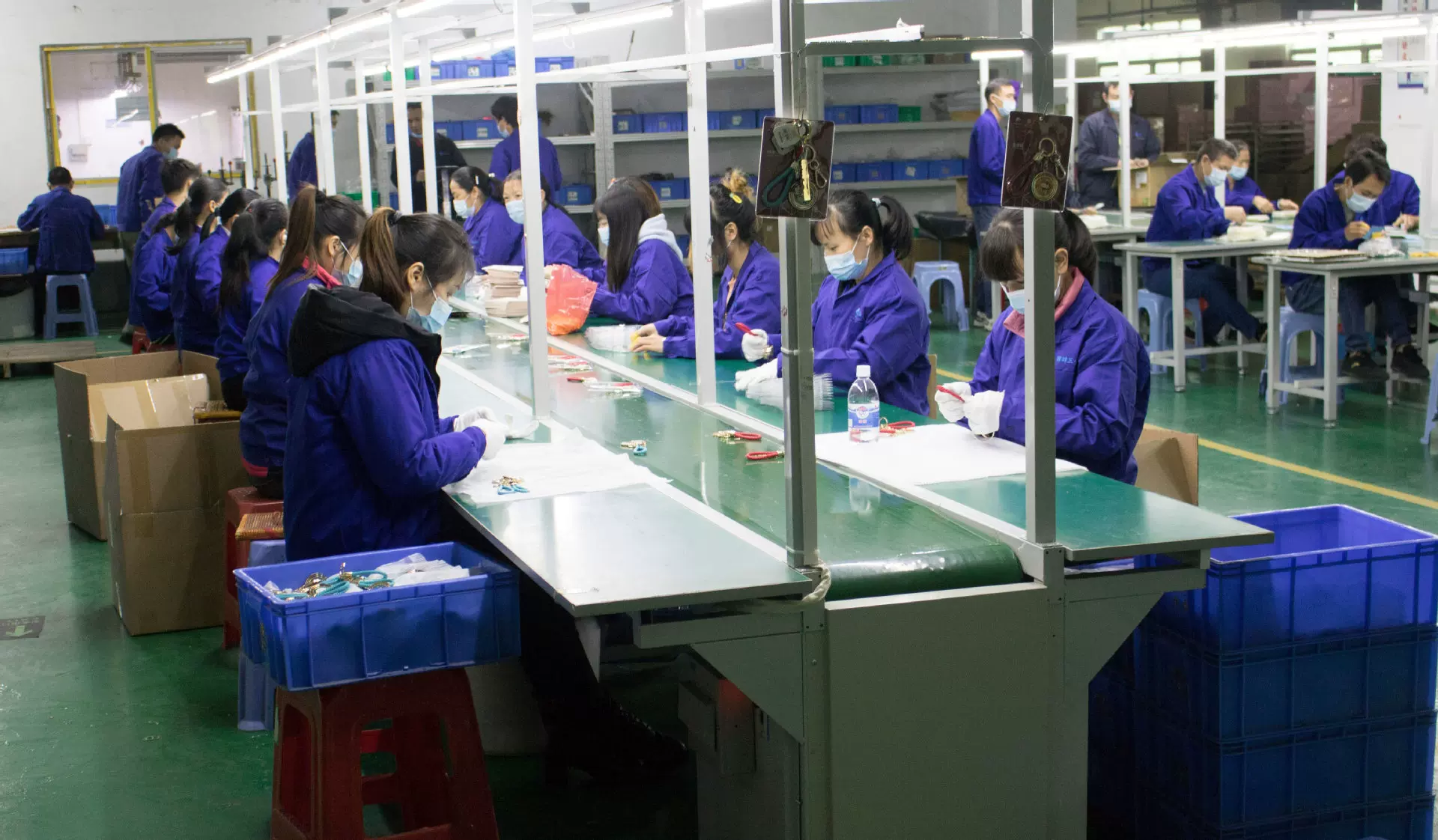
06 / Hanging assembly
Combine the body, selected connection and ribbon. Review the intended facing direction without assuming it from a front-only image.
07 / Structural reference review
Compare the body, opening, relief, surface and assembly with the agreed references. Any dimensional inspection or performance testing scope must be specifically defined.
08 / Shape-aware packing
Protect the complete body and agreed ribbon arrangement. Count pieces by version and review the received form against the actual silhouette.
Soft enamel route
Raised metal and recessed colour are part of the intended surface.
Hard enamel route
The filled face is polished for a flatter colour-and-metal surface.
Process order and review points are confirmed for the chosen specification. Company archive photographs show general work areas; polishing, plating and packing use illustrations. These references do not document this particular product being manufactured.
08 / COOPERATION
Resolve construction before treating artwork as final

01 · Share the product intention
Explain the organisational purpose and why the shape, opening or relief is required. Provide destination, estimated pieces and requested timing.

02 · Define structural priorities
Separate essential geometry from adjustable design areas. Identify front, reverse, side and suspension details that require review.
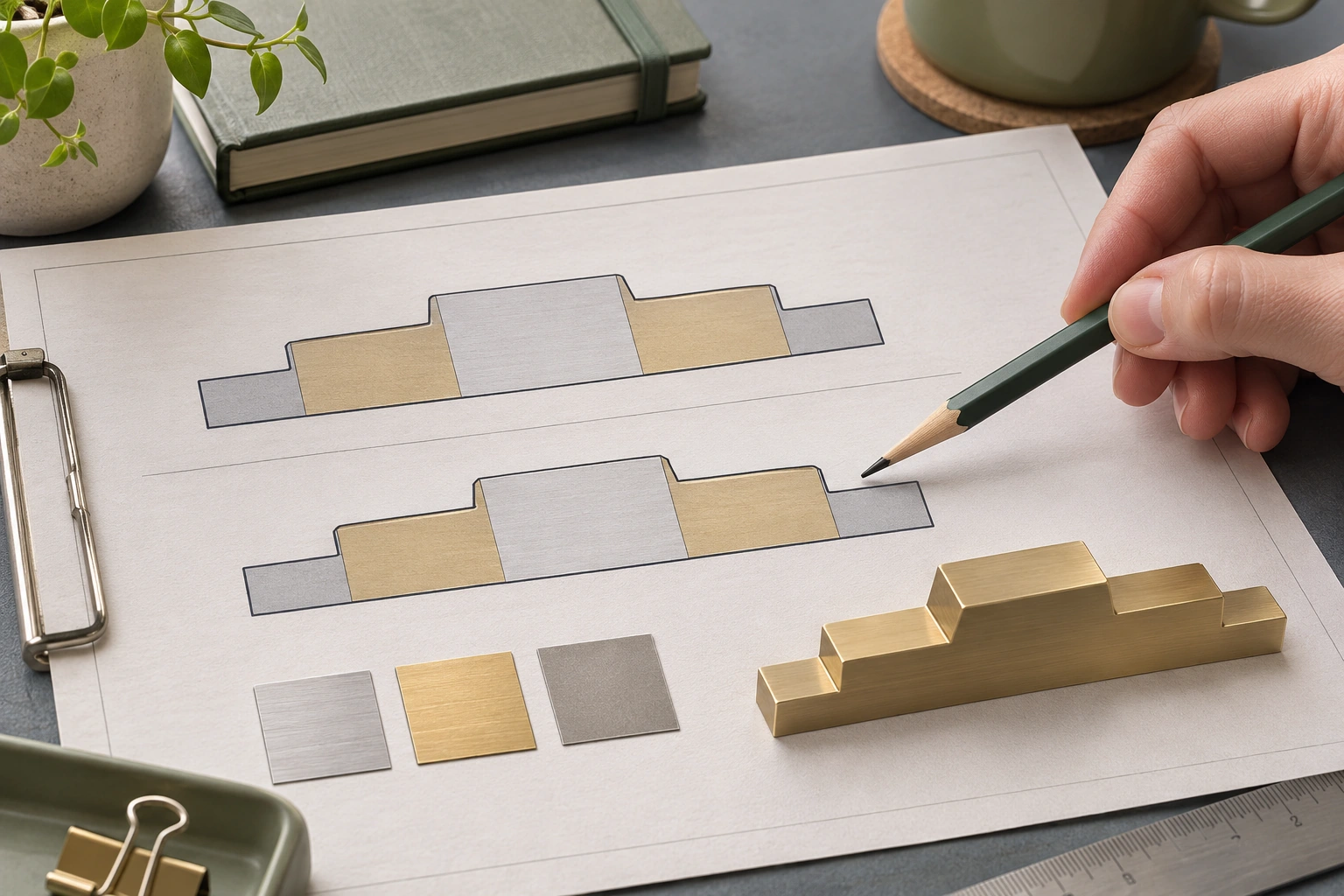
03 · Review route and quotation scope
Discuss the proposed construction, enamel and metal appearance together. Use a consistent body reference for tooling, assembly and packing decisions.
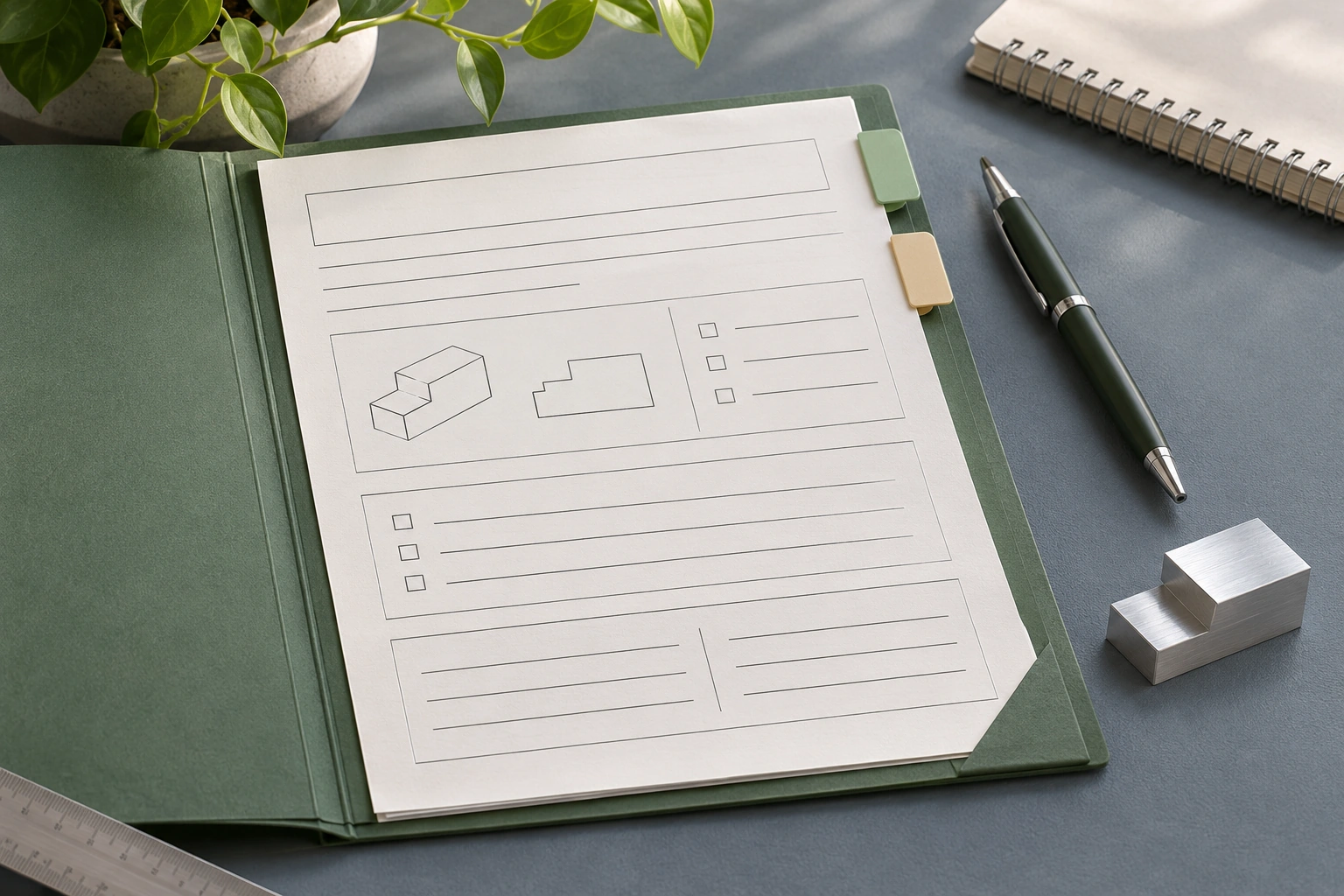
04 · Agree sample evidence
Define which physical and other references establish shape, openings, depth relationships and received form. Record the approving contact and unresolved changes.
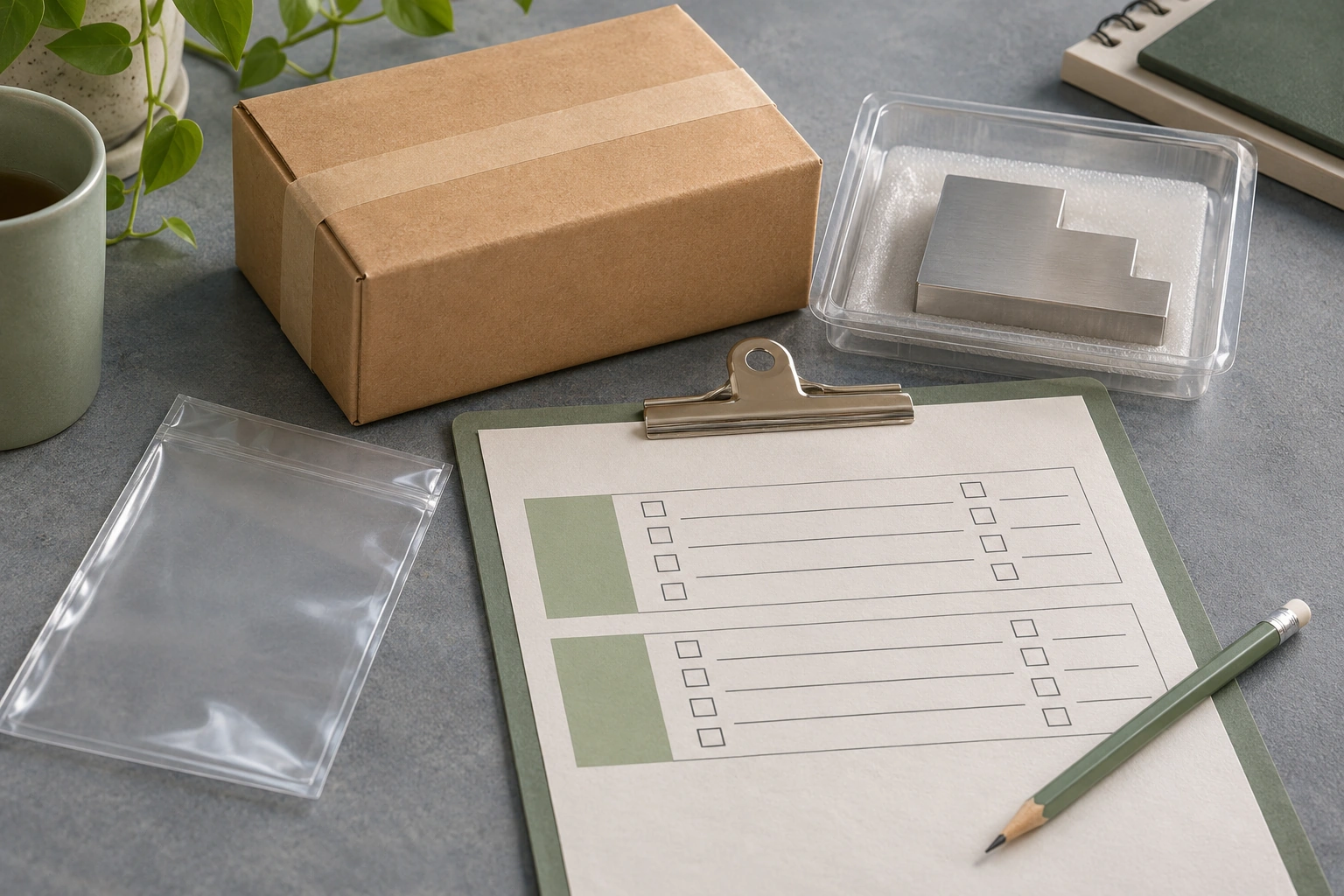
05 · Confirm the approved order
Review version quantities, quotation, protection and schedule against the resolved structure. Treat later geometric edits as revisions needing assessment.
06 · Coordinate handover
Confirm destination and receiving details with the final references. Retain the approved views for receiving and any separately reviewed repeat enquiry.
09 / FAQ
Reviewing a shaped diecast medal
How is this different from a standard medal with a printed cutout effect?
The internal window is intended to pass through the physical metal body, and the stepped feature belongs to its geometry. A printed dark area on a flat blank would not represent the same product. Show the opening and metal relationships in several views so the construction review can address the actual requirement rather than approve a visual imitation.
Does a diecast enquiry automatically require deep three-dimensional relief?
No. The diecast purchasing topic covers a broader construction direction; the relief required for this project must be specified separately. An open window, stepped area and shaped outline each need clear references. Do not assume a particular depth or complex sculptural capability from the process name. The proposed geometry and suitable approval materials are reviewed for the actual body.
What drawings help distinguish openings from recesses?
Provide a front and reverse plus a side or section reference where depth is important. Explicitly mark the areas intended to be empty through the body and the metal that must remain connected. A rendering’s shadows are not enough to define those conditions. Identify approximate intended dimensions for discussion without treating the image scale as an approved technical specification.
Can the metal bridges be made as thin as the rendering shows?
A generated rendering does not establish workable bridge dimensions or strength. Show which connections are essential to the design and which areas can be adapted. The body, opening, relief and hanging arrangement need a coordinated construction review. Any specific dimensional or testing requirement should be agreed with the project references rather than inferred from apparent proportions in the concept.
Does the reverse have to copy the front relief?
Define the intended reverse separately and show its relationship to the front and side profile. The chosen construction may require changes to either view, so they should be reviewed together. A plain-looking reverse illustration is not approval of its physical condition or depth. Include required wording and surfaces in the same record as the openings, suspension and relief.
Can enamel fill the open window?
An open window is empty space through the body, distinct from an enamel recess supported by metal. Specify where you want each condition. Enamel colour should not be illustrated floating across an unsupported opening and then assumed to be a manufacturing instruction. The physical body and selected enamel route need to support the approved design, including any revisions to its boundaries.
How should we review the hanging direction of an asymmetric body?
Include the suspension, connection, ribbon and complete body in the review, with the intended front-facing orientation clearly stated. A decorative outline can change the relationship between the hanging point and the visual body. Do not assume the finished position from a front rendering alone. Agree the appropriate review reference for the actual assembly without making unverified balance or performance claims.
What should a shaped-medal sample establish?
Identify the required outline, open window, connected metal, relief relationships, reverse, internal and outer edges, surface appearance and complete hanging assembly. Include the proposed protection when it forms part of the supplied item. A sample and its agreed review scope should address the features that a flat drawing cannot establish. Provision, charges, revisions and any inspection or testing are separate project arrangements.
Can we use a standard presentation box?
Provide the intended box or insert reference and explain the received arrangement you need. The actual silhouette, relief, ribbon and connection must be considered rather than assuming compatibility from a nominal body size. Presentation materials are included only when specified in the scope. Review the complete protected item and packing reference before treating a standard box as suitable.
Can an event or academic medal use this shaped construction?
Bring the authorised event or academic artwork and explain why the proposed outline, opening or relief is needed. The recognition purpose and the structural review can sit in the same project record, with separate views defining the body and its surfaces. Agree sample coverage for the geometry as well as the wording, ribbon and receiving arrangement. A familiar award design still needs review when its physical construction changes.
10 / ARTICLES
Preparing a structural medal brief
Relevant procurement guidance can help your team describe openings, relief and approval references without relying on a single rendering. Articles should address the metal construction decisions and complete supplied item in this project.
11 / RELATED PRODUCTS
Compare the complete supplied format

Medal project directions
Compare other organisational medal tasks before deciding whether this particular shaped body is necessary.
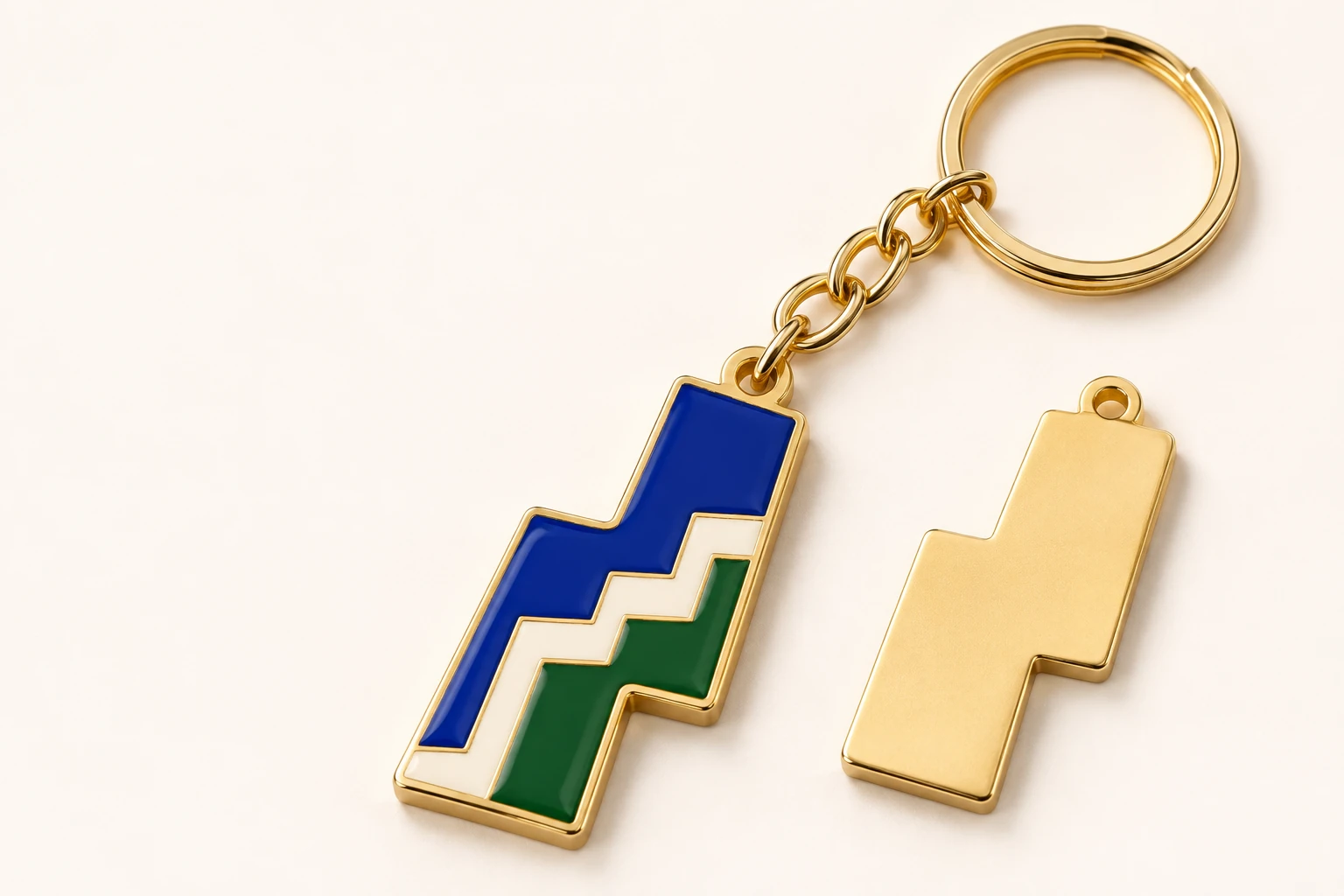
Custom keychain projects
Compare a complete keychain format when the metal body is intended for keys rather than a ribbon-worn award.

Custom charm projects
Compare a supplied metal component for downstream assembly when a complete medal and ribbon are outside the intended scope.
12 / ENQUIRY
Show the metal, the empty space and the assembled item
Share the authorised design direction and explain which outline, openings and relief relationships are essential. Include front, reverse and side references if available, marking unfinished details rather than treating a concept rendering as a production drawing.
Provide estimated pieces, complete ribbon arrangement, desired protection, destination and timing. We can use the information to discuss construction questions and the references needed before a quotation and approval scope are agreed.
- organisational purpose
- front/reverse/side views
- required outline
- open window map
- connected-metal priorities
- relief intentions
- dimensions to review
- enamel and metal appearance
- ribbon and suspension
- versions and pieces
- protection
- destination and timing.
Email authorised front, reverse and side drawings to [email protected]. Identify the latest revision and any details still open for review.
Read the Privacy Policy before sending business contact and project details. We use the information to discuss the proposed medal project.
PROJECT BRIEF
Shaped Die-Cast Medals for Event Orders