
How To Choose Keychain Formats For Brand Promotions
Your events team needs a keychain for a booth handout, and your partner kits may need a different format. Start with what each recipient will do with it.
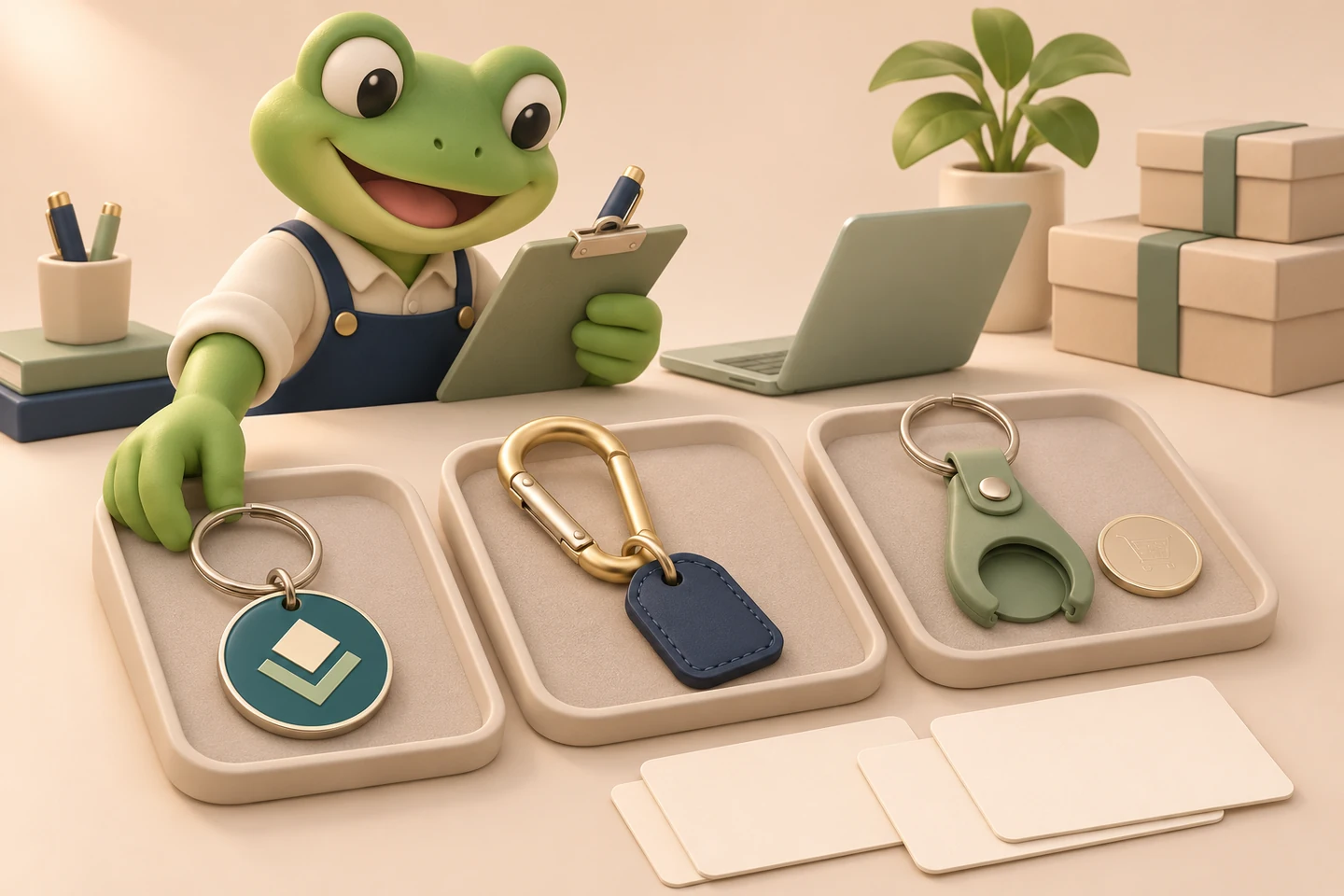
Compare a logo tag, clip and removable coin. Test the shortlist at the handoff before confirming quantities.
Start With The Handoff
Describe where and when someone receives the keychain. A welcome kit gives the recipient time to read a message and inspect the item.
A conference booth may need a simpler handoff. Ask the staff member distributing it what information they can actually share in that moment.
Write down the most likely next use. A rental operator may want an identifying tag, while a retail brand may want an accessory customers choose.
Set the purpose before you request a price. Ask your sales, events, or operations team to agree on the job for each version.
| Use | What To Confirm |
|---|---|
| Event handout | Confirm who receives it, how it is handed out, and where staff can store reserve stock. |
| Welcome kit | Confirm which kit receives the item and when the kit assembler needs it. |
| Retail range | Confirm whether it is sold on its own or included with another product. |
| Operations | Confirm who uses the tag and what they need to identify quickly. |
Avoid treating everyone who visits a venue as a recipient. Give the supplier quantities based on your intended distribution and a named contingency.
Choose one person to approve the format for each use. Resolve disagreements about price and appearance before asking for multiple samples.
Choose A Format People Can Use
Start with the format your recipient would recognize and use. Ask whether the branding belongs on a tag, a functional part, or both.
Consider a metal logo keychain when your identity should be the first thing a recipient sees. Confirm the logo has enough space on the face.
A carabiner keychain puts the clip at the center of the design. Explain the intended everyday use and verify that the quote includes the clip.
A trolley coin keychain gives the recipient a removable part. Confirm which format suits the target market and ask for an assembled sample.
Ask the supplier to tell you what each format includes. A quote for a printed tag and a quote for an assembled accessory cover different work.
Compare Three Formats In The Same Promotion
| Format | Best Brief To Send |
|---|---|
| Logo tag | A product launch or partner handout where the visible brand mark leads. Specify the preferred surface and approved logo face. |
| Clip body | A staff or customer promotion built around an everyday clip. Describe what the recipient will clip it to and how they will open it. |
| Coin holder | A retail or loyalty promotion where a removable trolley token suits the audience. Confirm local trolley fit and retention with the sample. |
For a trade show, try a logo tag beside the other items in your giveaway. Make sure recipients can identify the brand quickly.
For a staff welcome kit, choose a format that complements the other equipment. Check whether people already carry a key or access fob.
For a retail promotion, ask staff to explain the keychain’s function in one sentence. Use their feedback when you compare two sample styles.
If branding covers a functional area, ask for a sample with the mark in place. Check whether the treatment changes grip or legibility.
When two formats meet the same brief, give both to someone who would actually use them. Ask them to explain which one feels more useful.
Record the reason for your choice in the project file. A colleague should be able to understand the decision when they order again.
Make The Brand Recognizable
Send the approved mark and identify the brand rules that affect this item. Ask your designer to mark any protected colors or clear space.
Separate brand identity from campaign wording in your artwork files. One may remain current when the event name, partner, or date changes.
If you need several sponsor versions, assign each a short code and attach its approved artwork. Use that code wherever quantities and approvals are recorded.
Ask for a proof that shows each version on the product. A logo sheet on its own gives no indication of orientation or placement.
Decide whether the message belongs on the object or on the material handed out with it. A lasting message may deserve the visible product face.
Keep campaign artwork separate from your master brand file. Give suppliers the approved version and a clear contact for proof changes.
If a local team needs alternate wording, assign its owner before the artwork is due. Ask that owner to check the proof for their market.
Match Each Format To A Recipient Group
After choosing your formats, assign them to the recipients who can use them. Put the purpose of each format on the same sheet.
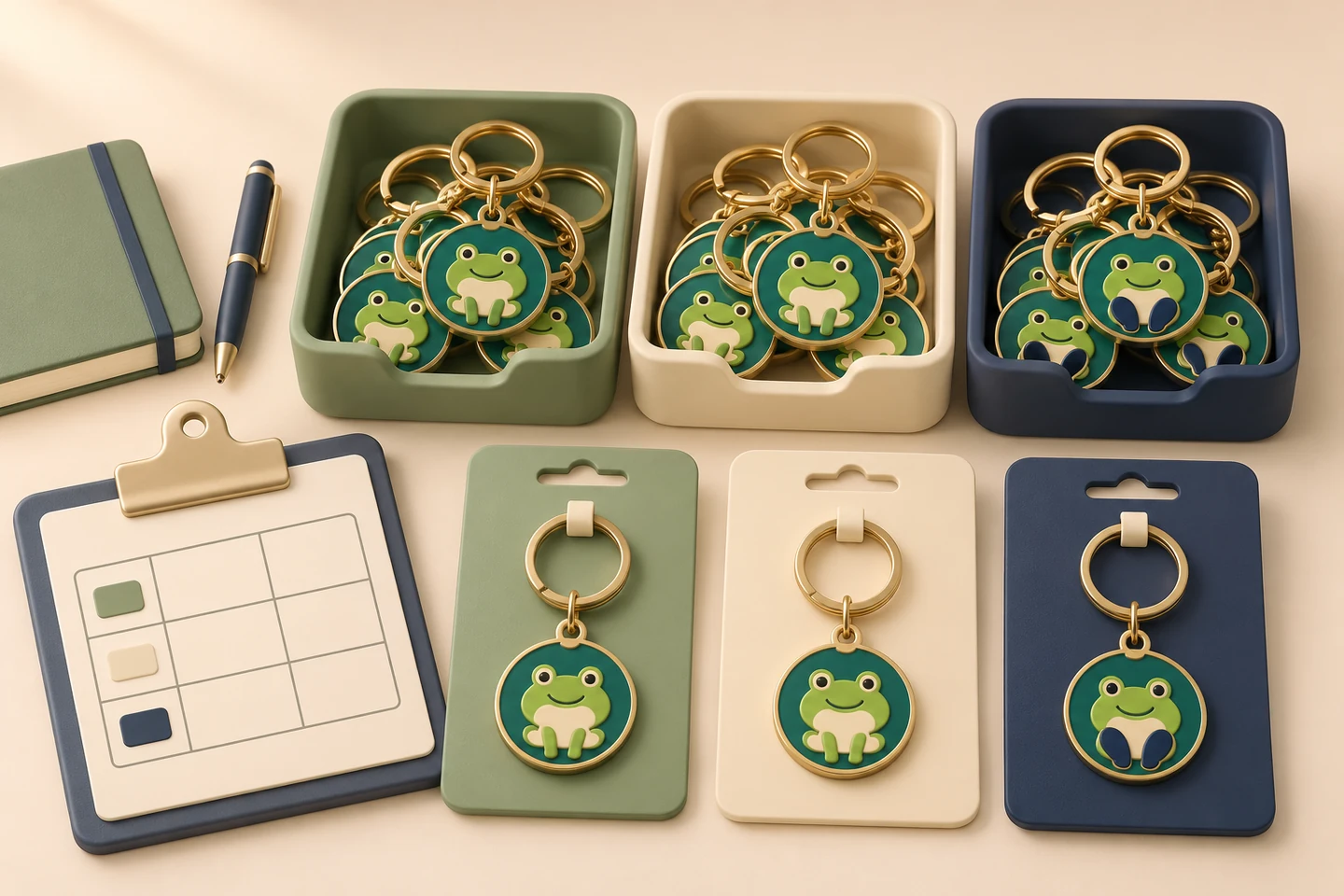
For example, a launch may need 300 for field offices, 150 for partners, and 50 held back centrally. Those are separate destinations.
For each group, record the format, artwork, count, and arrival window. Keep any delivery notes brief enough to review beside your sample.
If you combine artwork versions in one order, ask how quantities are quoted. Some charges may depend on each version rather than the combined total.
| Schedule Field | Buyer Entry |
|---|---|
| Use | Name the event, kit, store, or operating team. |
| Version | List the approved artwork code and any component difference. |
| Units | Record the number intended for each destination and the separate reserve. |
| Owner | Identify who can approve a change or request a transfer. |
If two teams need the same design, compare a single delivery with split shipments. Include the work your own team would do to separate stock.
Agree what happens when attendance changes. Ask which quantities can still be adjusted at each approval milestone, and keep a copy of the response.
Review A Sample Before Ordering
Ask the supplier which configuration the sample represents. Record the artwork code, finish, assembly, and whether it reflects the proposed production method.
Show the sample to whoever will distribute it. Have them handle a few pieces alongside the other items used in the same handoff.
Review a logo tag, clip, or token as the recipient sees it. Check that the product’s branded face stays visible in ordinary handling.
Ask a representative user to open the pack and try the intended action. Record any snag or unclear step against that format. Use the keychain packaging guide to check the packed sample.
Record any acceptable changes beside the sample approval. For example, a minor adjustment to placement may affect every sponsor version using that artwork.
Make the decision visible to your receiving team. Send a photo of the approved sample and describe which differences they should report.
If the sample raises a hardware question, use the keychain clasp guide to compare attachments. Then ask the supplier to update the exact assembly.
Make A Reorder Record
Write down the details your team would need to order the same item six months later. Store the approved proof and sample reference together.
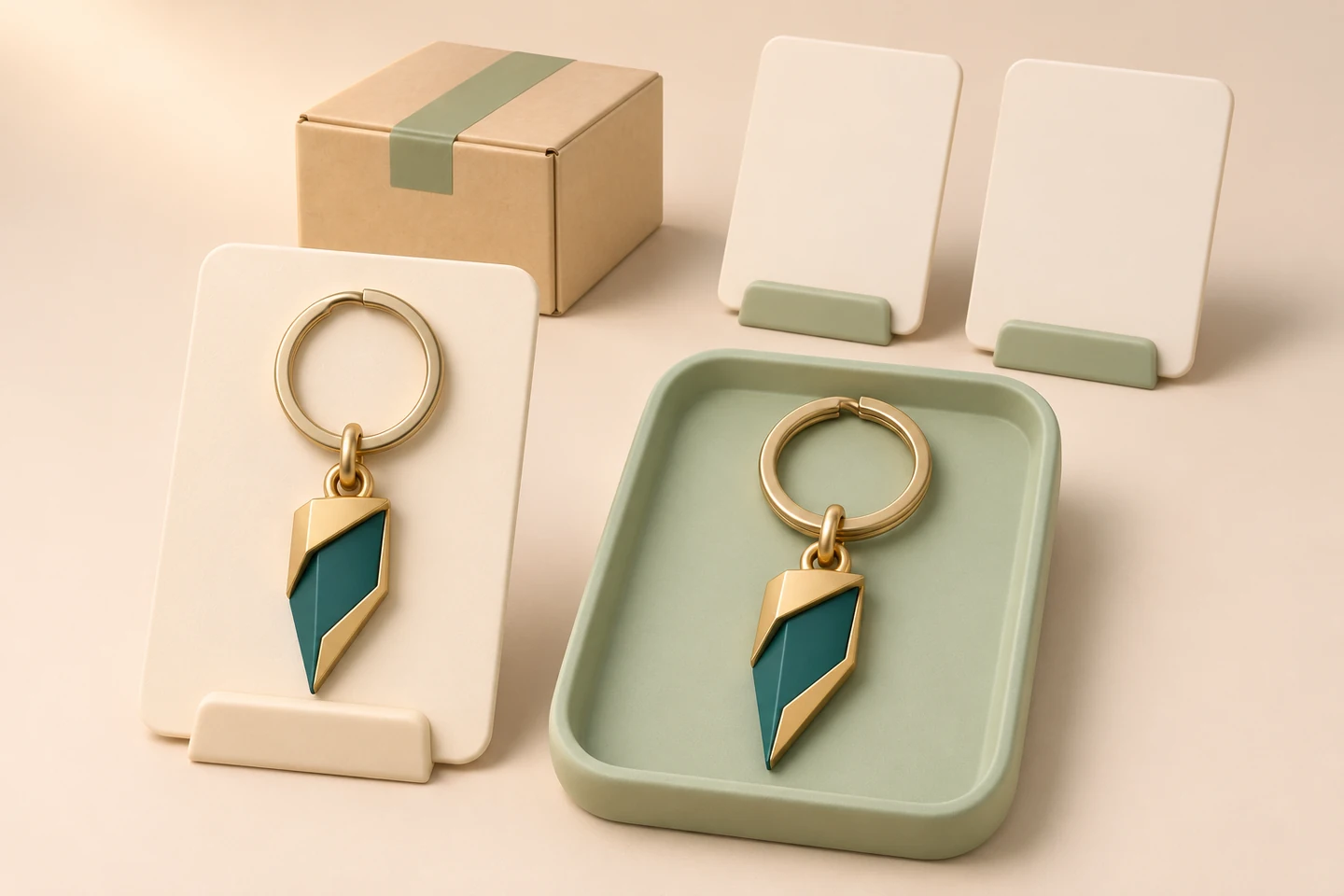
Name who owns the artwork and who can authorize a change. Ask your supplier what reference they will need when you contact them again.
Check whether the last order used a component or color that could change. Ask the supplier to disclose any substitution before starting the next run.
Decide which previous version should be retired when the campaign ends. Keep retired art visible to purchasing staff with a clear status.
Set a reorder trigger that matches how you distribute stock. A monthly kit program may work from stock on hand and the next confirmed intake.
If the next order adds a destination, update the quantity schedule. Ask the original approving team to check any meaningful format change.
Keep a retained sample where receiving staff can find it. Confirm whether your supplier also keeps an identified sample and how they reference it.
Send One Complete Request
Bring together the recipient groups, formats, artwork files, version counts, delivery destinations, and sample expectations. Send the same brief to every supplier you compare.
Ask suppliers to note their assumptions directly against your schedule. Check whether freight, proof changes, assembly, and destination splitting are included.
Compare the handoff you can actually deliver, including time your staff need to sort or rework units. Confirm who owns the outstanding decisions.
Ask your supplier to flag the earliest point when you can approve the sample. Align that date with your internal artwork and event deadlines.
If a quote needs an alternate format, request it separately with its assumptions listed. Keep the original comparison visible so your team can choose deliberately.
Before issuing your order, assign one owner to the quote, one to the approved artwork, and one to receipt. Record where they will log changes.
Frequently Asked Questions
Should We Put A Date On Every Keychain?
Use a date where it matters to the event or recipient. Keep a date-free version for ongoing stock if your team may reorder it.
Can Two Sponsors Use The Same Body?
Ask whether both proofs can use one outline with different artwork. Compare the cost and sample approval required for each version.
Who Should Hold The Central Reserve?
Assign it to a team that can see shortages across destinations. Give that team a count and a named contact for each destination.
What If A Logo Has A Very Small Tagline?
Ask the designer and supplier to proof it at actual size. Use an approved shorter treatment if your brand team accepts the change.
What Should Our Fulfilment Partner Receive First?
Send the approved sample reference, destination schedule, and version codes before the stock arrives. Confirm who reconciles deliveries with your purchase order.
Can We Use Leftovers At The Next Event?
Check the artwork and version before moving stock. Unused pieces with expired campaign wording may be unsuitable for a different audience.
Final Thoughts
Choose the keychain format for your promotion, then note who receives it and what they will do with it. Explore custom keychain formats or send your brief.