
How To Approve VCI Packaging For Plated Metal Merchandise
Your plated merchandise needs protection through shipping and storage. A proposed VCI pack must also suit its cards and other materials.
Map the complete combination before approving it. Use a representative trial to decide which pack and route you can accept.

Decide What The Protection Must Solve
When a packer proposes VCI, ask which observed or expected corrosion problem it should address. Bring photographs, the affected product revision and the route history into that discussion.
VCI means volatile corrosion inhibitor, supplied through a particular packaging product. Your purchase decision concerns that product around your finished merchandise throughout its proposed journey.
List the time before dispatch, the transport stages and storage after arrival. Identify inspection stops where someone might open the protective enclosure.
Ask whether the concern is a changed metal surface, a visible stain or contamination on the display materials. Those findings can require different corrective actions and different comparison samples.
First compare the proposed pack with the current arrangement. Ask the material supplier which change should improve protection and which existing problems need separate handling.
The Boxon VCI guide connects selection with metal type, enclosure and transport conditions. Use those factors to question a proposal before approving a trial.
Write a decision question against the actual order. For example, ask whether the proposed enclosure preserves both plated charms and their printed presentation cards along the agreed route.
Map The Metals And Contact Materials
Obtain the confirmed material description for every metal part inside the pack. Include rings, clasps, pin backs and any separate findings supplied with the decorated body.
Record the substrate and the surface layers as separate entries. A gold-tone appearance alone gives the packaging supplier too little information to confirm a suitable formulation.
For company logo enamel pins, include the reverse and fitted backing in the material list. Mark any point where the presentation card touches metal.
For custom logo charms, identify whether loose components share the enclosure. Different attachment parts can introduce a material missing from the body specification.
Add the card stock, printing, varnish, adhesive, tissue and cushioning to the same record. Ask each material owner to identify its exact product or revision.
An ARMOR compatibility explanation recommends application checks for the materials present. Ask for a response addressing your complete combination, including nonmetallic materials.
Keep unknown materials visible as unresolved rows. If the supplier cannot identify a clear coating or adhesive, postpone compatibility approval for the configuration containing it.
- Metal body, substrate and finish revision, including any clear surface layer.
- Every included attachment, backing or loose component, with its own material identity.
- Printed card, coating and adhesive identifiers, showing their contact with the product.
- VCI product code, material batch and the proposed position inside the enclosure.
- Outer enclosure, closure and every intended opening point along the shipping route.
Compare Proposals On The Finished Unit
Ask the packer to describe each candidate arrangement with the same merchandise count. Keep the card, protective sleeve and outer enclosure identifiable when comparing alternatives.
One proposal may place treated paper near the metal, while another uses a VCI enclosure around complete presentation packs. Obtain instructions for the specific material proposed in each.
Ask which surfaces the material supplier expects the arrangement to protect. Have it identify barriers, inaccessible areas or mixed materials that need additional evaluation.
For metal bag charms, show the full assembly in its selling position. Check that the proposed insert and restraint still protect projecting hardware.
Include packing work and receiving work in the comparison. Count any extra removal, sorting or replacement of presentation materials before the stock becomes usable.
Ask who supplies the VCI material and who controls substitutions at the packing bench. A named product code helps purchasing detect an apparently similar replacement.
Use the table to record open questions for each proposal. Ask the responsible supplier to resolve them before choosing which complete packs enter the trial.
| Proposal | Complete Arrangement | Evidence Still Needed |
|---|---|---|
| A | Current sleeve and card inside the proposed sealed VCI bag. | Material confirmation for all metal finishes, printed card and adhesive. |
| B | Treated paper positioned beside the loose plated parts. | Instructions for orientation, allowed contact and the final enclosure. |
| C | Existing protective pack with a revised moisture-control arrangement. | Supplier explanation of suitability for the same route and storage stages. |
| Compare | Same product revisions, count and receiving deadline. | Packing effort, presentation condition and unresolved compatibility questions. |
Freeze The Pack Before Comparison
Give each trial arrangement a drawing or packing revision before anyone assembles it. Record the actual quantities and positions inside the enclosure.
Photograph one open pack from above and one view of the closure. Include enough detail to show the card orientation and the VCI location.
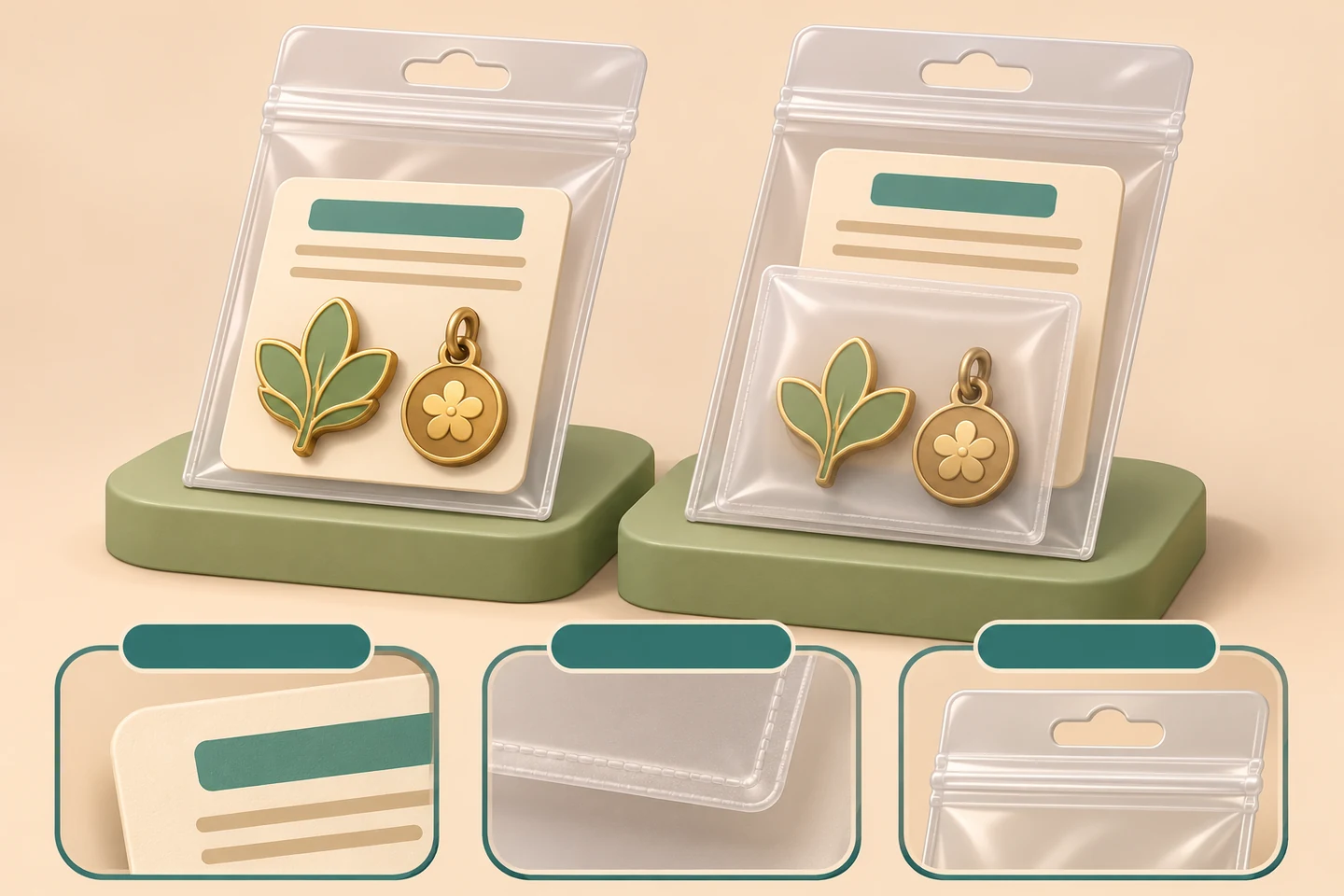
Use complete production-intent merchandise where practical and identify any exceptions. A sample with different plating or an unprinted card leaves that difference outside the comparison.
Keep contact points consistent between matched groups. If one pack places the charm against ink and another separates it, record that as the variable under review.
Ask the packer to confirm the specified closure can be repeated with the filled load. Note any protrusion that could puncture the enclosure during ordinary handling.
Approve the individual pack arrangement through the bulk accessory packaging guide where relevant. Carry its accepted card and restraint revisions into this compatibility record.
Keep a reference set containing unused materials and accepted merchandise. Label where each item was stored so later changes can be compared with the correct starting condition.
Design A Trial For The Actual Route
Agree the trial question with the packaging specialist before selecting samples. State the intended route and storage window, then ask which observations can support that decision.
Use matched product revisions across the proposed pack and a suitable comparison group. Record how each group was prepared and which difference the comparison is intended to explore.
Include the actual card and adhesive in a group where compatibility matters. Retain an unused card to distinguish a pre-existing print defect from a later change.
Ask how to represent planned inspection openings and resealing. An uninterrupted sealed journey and repeated warehouse access place different demands on the same proposed arrangement.
Select arrival observations before the trial begins. Identify the visible metal areas, card surfaces and adhesive joints the reviewer must compare with the reference.
If environmental testing is proposed, ask the specialist to explain the relationship to your intended route. Record what the selected evaluation leaves unrepresented.
Agree how trial parcels will be identified and returned for review. An unlabelled mixed collection of parts cannot show which enclosure or material produced the observation.
| Record | Illustrative Trial Entry |
|---|---|
| Product | Logo charm C7, finish F3, fitted ring R2 and printed card D4. |
| VCI | Supplier-proposed material V1, batch P18, positioned as drawing PK2. |
| Control | Identical merchandise and card in existing pack PK1, prepared at the same packing session. |
| Journey | Buyer-defined export route followed by destination warehouse storage through the planned issue date. |
| Access | One group stays sealed; another follows the recorded receiving opening and resealing proposal. |
| Observe | Compare marked metal faces, card print and adhesive seam against retained unused references. |
| Authority | Buyer reviews the complete compatibility findings with the packer and packaging-material supplier. |
Ask the receiver to record the condition before removing any wrap or separating the components. A photo after cleaning can obscure the contact arrangement associated with a new mark.
Where the trial omits planned destination storage, leave that stage outside its documented coverage. Agree how to evaluate the missing period before extending the approval to stored inventory.
Read A Filled Compatibility Matrix
Consider an illustrative trial for a carded logo charm and matching plated pin. The buyer is comparing presentation condition and corrosion observations after its defined journey.
The material supplier has confirmed the proposed VCI grade for the disclosed metals. Its response leaves the printed card and adhesive to the planned complete-pack comparison.
Group A uses the existing presentation pack inside the proposed sealed enclosure. Group B adds an approved separator between the printed card face and the charm.
Group C follows the same arrangement as B but includes a recorded inspection opening. Group D retains the existing packaging as the agreed comparison.
All groups return with identifiable samples and route records. The observations below are hypothetical findings from this particular comparison, without a universal time or performance claim.
Review the metal and presentation findings separately before making the order decision. A clean metal face can coincide with a card condition the buyer refuses to distribute.
Ask the packaging specialist which differences need another comparison. Approve only the combinations supported by the recorded findings and your agreed acceptance criteria.
| Group | Hypothetical Finding | Buyer Decision |
|---|---|---|
| A | Metal matches the reference; printed ink transfers at the contact area. | Reject this contact arrangement for the carded order. |
| B | Metal, print and seam meet the agreed comparison criteria. | Approve the recorded sealed arrangement for the defined route. |
| C | Metal changes after the recorded opening; cause and exposure remain unresolved. | Hold the opening arrangement and request a revised access evaluation. |
| D | Existing-pack comparison shows a separate metal appearance change. | Retain the evidence when evaluating the proposed improvement. |
Decide What An Inconclusive Trial Permits
Consider what the comparison can establish when every returned metal piece looks unchanged. Record that observation while asking whether the journey challenged the concern you originally identified.
You may have useful evidence about card compatibility and packing execution. Ask the specialist what additional evidence is needed before making a broader corrosion-protection claim.
If the VCI group and existing-pack group both show the same staining, preserve the shared and differing materials. Request examination before attributing the condition to one packaging ingredient.
If a mark appears only where a ring moved against a card, record that contact evidence. Check the restraint as well as the material compatibility question.
An appearance change in the opened group also leaves several possible influences. Ask whether the opening duration, warehouse conditions or resealing differed from the agreed plan.
Keep unauthorized substitutions out of the approved matrix until their identities are resolved. A trial assembled with an unknown bag grade cannot establish coverage for the named proposed material.
Use the conclusion that fits the observations and their limits. The buyer may approve a restricted arrangement, reject one contact combination or request another targeted comparison.
Write the unresolved question beside the next proposed action. That makes the additional work specific enough to commission without repeating an entire trial that answers the wrong question.
| Observation | Supported Decision | Remaining Question |
|---|---|---|
| All Groups Unchanged | Record observed compatibility for the documented journey. | Did the evaluation address the original corrosion concern sufficiently? |
| Same Stain Across Groups | Preserve samples and investigate shared materials. | Which feature or condition caused the change? |
| Unknown Material Substituted | Keep that configuration outside the approval. | What material was actually used and is its intended role confirmed? |
| Contact Mark Near Moving Ring | Review restraint and affected presentation materials. | Can a revised position solve the observed contact problem? |
Write The Warehouse Opening Rule
Ask receiving whether it must open every enclosure or inspect a defined group. Document that actual need before transferring an approval into warehouse instructions.
For an approved sealed configuration, state where the protection period ends operationally. Name the person who reviews stock held after opening or after the planned issue date.

If resealing is needed, obtain material-specific instructions from the packaging supplier. Record which material can remain in use and what condition requires replacement.
The approved instructions should identify the enclosure and the permitted closure method. Warehouse staff need a visible reference showing the filled pack after it has been closed.
Keep unused VCI material identified and stored according to its own supplier instructions. Record the batch issued to the packing job so a later substitution can be traced.
Train the checker to distinguish a damaged bag from an unexplained metal change. Preserve the affected materials together while the buyer and specialist review their relationship.
Arrange a route back to the buyer when staff find an unplanned opening or prolonged storage. They need a decision tied to the actual pack rather than an assumed protection period.
Issue A Bounded Packaging Approval
Write the approved combination as a complete material and route record. Include merchandise revision, card, adhesive, VCI code, enclosure, closure and the trial identifiers.
Attach the material supplier response and the observed comparison matrix. Resolve exceptions in the same record so the packer sees which alternatives remain unapproved.
Use a separate line for every approved opening arrangement. If only the sealed configuration has support, make warehouse access a review trigger before using it.
Keep transport restraint on its own inspection line. The parcel packaging acceptance guide helps identify movement and contact damage alongside your corrosion findings.
Keep any required coating corrosion evidence linked to the actual finish and specimens. The salt spray report guide covers that separate procurement record.
Ask purchasing to flag a new card ink, adhesive, metal finish or material supplier before substitution. Request a focused compatibility review for the combination that changed.
Use the same review when the route or storage window expands beyond the agreed trial. Keep the old approval retrievable so you can see exactly which configuration it supported.
Frequently Asked Questions
Can We Approve Two VCI Brands As Interchangeable?
Ask each material supplier to identify the exact formulation and instructions proposed for your combination. Keep separate approval lines until the buyer has evidence supporting substitution.
What If The Material Supplier Will Not Disclose Its Full Formulation?
Request a written suitability response covering the disclosed product materials and intended use. Record any unanswered compatibility question before deciding whether the proposed trial is sufficient.
Can A Destination Distributor Repack The Merchandise?
Identify the repacking step in your route record and confirm who supplies the next protective materials. Review the new combination and storage conditions before extending the existing approval.
Who Keeps The Trial Samples After Review?
Name a custodian for the accepted reference and each disputed finding. Record sample locations and handling instructions so the supplier and buyer can revisit the same evidence.
Final Thoughts
Bring the material list, presentation pack and route record when specifying custom logo charms. Ask which actual combination can be sampled, then record the compatibility decision with its closure and opening conditions.