
How To Specify Single-Unit Packaging For Enamel Pins
A supplier can deliver the right pins in the wrong packs. That leaves your team sorting or rebuilding them.
Give the supplier one packaging specification. Use it to price the work, approve a packed sample and check the delivery.

Define One Deliverable Pack
Start with what a person at your venue or distribution desk should be able to hand out. Write that complete object as one unit pack on the sheet. A pack may contain one pin or a deliberate set.
List each pin design and its count within that unit. Record the fitted backing, card, protective sleeve and any insert in separate fields. If you need optional spare clutches, specify whether they ship loose inside each pack or separately.
Use one order unit for quoting and another field for the component totals if they differ. For example, 600 two-pin sets require 1,200 fitted pins and 600 sleeves. Ask the supplier to confirm both totals in writing.
Name the material or drawing that controls each component. When a common backing fits several designs, identify the backing once and show its quantity for each version. This lets a different reviewer reconstruct the same pack from the sheet.
Put Release Information On One Sheet
Give the sheet a pack code, revision, approval date and named owner. Reference the specific pin drawing, card art, bag or box and label files. Record the assembly side and orientation beside a small placement sketch.
President Container Group’s specification guide describes a similar record for corrugated orders, covering dimensions, materials and printing. Use that document discipline for your pin pack. Set dimensions and acceptance conditions that suit your actual order.
If a card must fit a close-fitting sleeve, ask for usable internal dimensions and the closure space. If a lid covers a pin face, record clearance from the thickest fitted part. Check both on the packed sample.
| Sheet Field | Copyable Entry |
|---|---|
| Order Line | PO __. Line __. Order unit __. Deliverable packs __. |
| Parts | Pin part and revision __. Card part and revision __. Count per pack __. |
| Fitted Backing | Backing part __. Fitted quantity __. Loose spares and location __. |
| Assembly | Pin orientation __. Sleeve seam relative to fitted closure __. Position sketch __. |
| Pack ID | Finished pack code and revision __. Pack and carton label position __. |
| Owners | Card supplied by __. Supplier assembly lead __. Buyer release owner __. |
| Approval | Closed sample ID __. Open sample ID __. Label proof __. Acknowledged by __ on __. |
Write quantities and codes as text your supplier can acknowledge. The pictures show orientation and assembly. A printed reference can travel with the sample even when people on the line lack access to your original files.
Tie Each Version To Order Lines
Separate versions when an event name, card language or backing instruction changes what your team can issue. Give each version its own line or a clearly identified schedule entry. Use the same identifier in packing and receiving.
Use one sheet for PO 482 with two controlled entries. Line 10 calls for 720 EV-A conference packs, revision C. Line 20 calls for 180 EV-B presenter packs, revision B.
Each pack takes one PN-07 pin, revision D, a fitted clutch and a sealed sleeve. Line 10 uses card CA revision C, while line 20 uses card CB revision B. Confirm the combined requirement of 900 fitted pins.
On EV-A, mount the pin upright and place the sleeve seam behind the lower card edge. Keep the seam clear of the sleeve opening and the area around the fitted clutch. Check that placement while opening a complete pack.
Agree when each pack version may be combined in one outer carton. If you approve a mixed carton, ask for partitions or separated bundles and an outside count by code. Record whether partial cartons may ship.
Include version quantities on your request for company logo enamel pins when several programs share one emblem. The supplier can separate common pin production from version-specific printed material and assembly. Ask for those costs on the same quote.
Approve The Assembled Pack
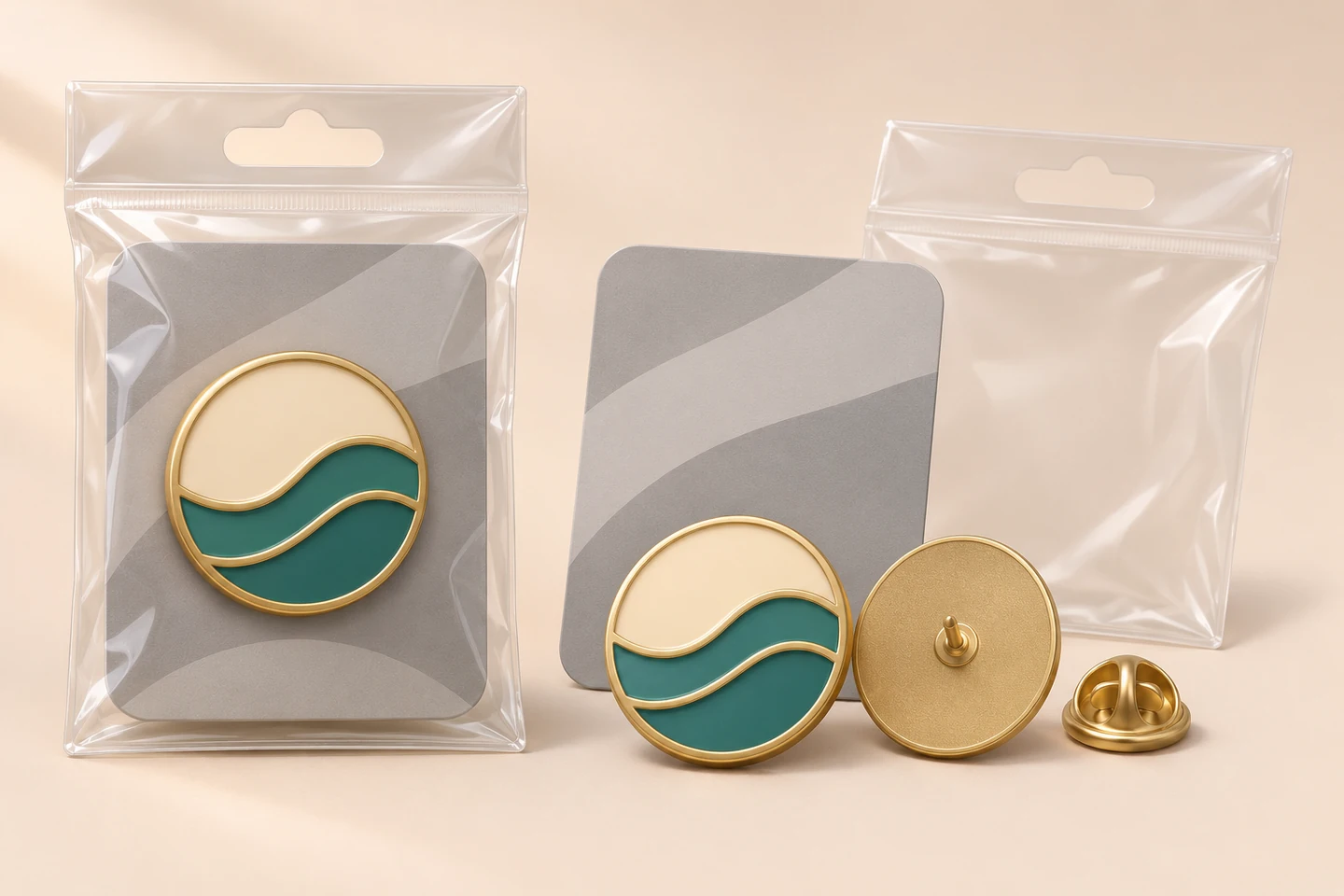
Ask for a sample using the intended pin, card material and closure. The pack should resemble what your receiver will open, including its label. If a component is provisional, mark exactly which part still needs approval.
Review a closed pack first to see presentation and confirm the identifying information. Then open another sample and check the mounting position and backing stability. Check whether the pin rotates, the backing mark shows or the post contacts the sleeve.
Ask the factory to show how the packed units lie when several are stacked. Review a packed inner bundle or carton when pressure could move the pin. Tell the supplier if your team opens and reseals packs before distribution.
Label the approval copy with the pack code, revision and sample ID. Keep an agreed reference with the person checking deliveries. Have the supplier confirm which matching copy or controlled record the assembly team will use.
Review Cost And Version Sign-Off
Give each supplier the same sheet and order schedule. Ask for packaging production, setup, assembly, pack quantities and carton quantities on distinguishable lines. Ask when each approved component must reach assembly to protect your delivery date.
Ask the supplier to identify exceptions to your sheet and describe the proposed pack. If an option changes the unit delivered, obtain a separate price and sample. For example, a loose bundle of cards leaves assembly work with your team.
Put the approved revision on the PO or point to one named attachment. Ask the supplier to confirm that the pack, artwork and label revisions are the ones released to the line. Record who can approve changes after release.
For PO 482, the buyer supplies released card artwork and the supplier sources the cards and assembles the packs. The event purchasing lead approves S-04 for EV-A and S-05 for EV-B. The assembly supervisor acknowledges both samples and their drawings.
Name those two people on the revision record and record the date each signed. Give receiving a copy and the matching label proofs. The supplier’s assembly team must have the same file before it starts work.
Set The Cutover For A Pack Change
Suppose the event lead requests a new venue line after 240 EV-A revision C packs are complete. The supplier has also bought 260 unused C cards. The remaining 220 packs have no cards committed.
Hold the assembled lot PK-14 and separate the loose C cards while the buyer decides. Record packed product, bought unused material and outstanding units separately. The supplier reports the costs and dates for releasing or replacing each group.
| Pack Status | Illustrative Buyer Decision |
|---|---|
| 240 Packed C | Release PK-14 for the original venue desk only, against sample S-04. |
| 260 Unused C Cards | Keep segregated. Agree their disposition and cost with the supplier. |
| 220 Uncommitted | Order revision D cards for these units and the 260 whose old cards are held. |
| 480 Remaining Packs | Start PK-15 using revision D after sample S-07 and its label are approved. |
| 180 EV-B Packs | Line 20 keeps revision B and its original reference S-05. |
Issue a written change with lot PK-14 and the 240-pack limit for revision C. Authorize revision D against the approved sample for the other 480. The two EV-A groups still total 720, and line 20 keeps its 180 packs.
If the original desk cannot use the old wording, keep all 240 packs on hold. Ask for a documented rework proposal before approving another disposition. Confirm whether opening and resealing changes the packaging appearance or acceptance.
Read Labels Before Counting Packs
Show the supplier the exact carton label fields and where your receiver should find them. Include the PO, pack code, count and applicable job or lot reference. Ask for a label proof with plausible order values.
A buyer specification from Allegion gives suppliers packaging and labeling requirements to coordinate inbound handling. Use that as an example of buyer and supplier alignment. Your pack label can be simpler when fewer fields serve your receiving process.
Allocate a visible code to packs that look alike from the front. Check that the code remains readable after the actual pin, insert or sleeve covers part of the card. Keep a separate inventory count for any loose accessories.
Define which identifier drives your handout or stock ledger. The supplier’s job code may remain useful alongside your version. Add a mapping on the packing list if the two teams use different systems.
Match Receiving To The Release
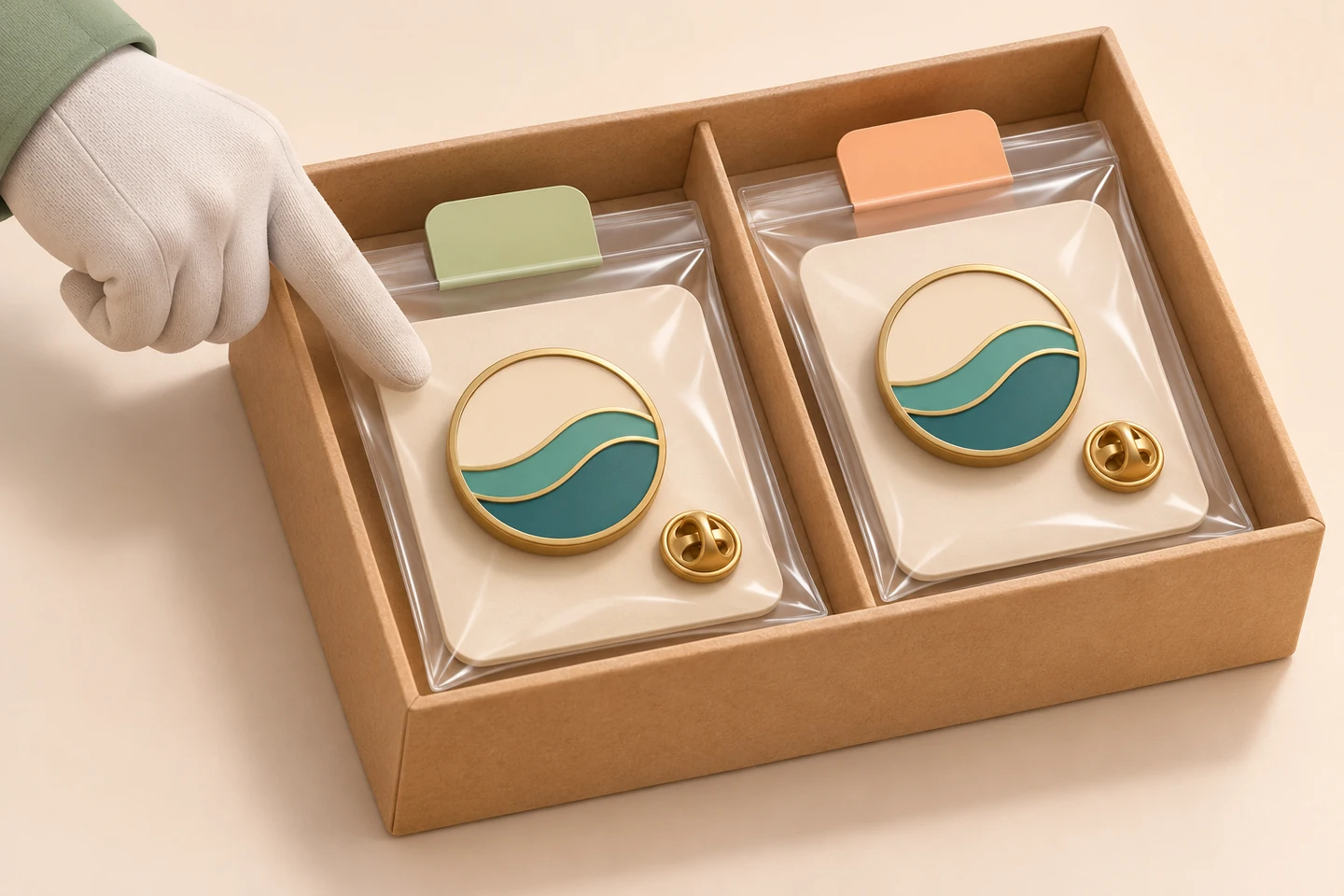
Give receiving the final sheet and approved sample record before delivery. Check carton labels against the packing list, then select packs from each identified version. Confirm the complete unit and compare the assembled example with your reference.
If your reference says one fitted clutch per pin, count the pack accordingly. A loose component calls for checking the signed contents and assembly line on the document. A correct carton total can still contain incomplete units.
Set aside a mismatched version and record its carton, pack code and received count. Take one closed and one opened photograph if the issue involves assembly. Ask the supplier to trace the job and propose how to recover usable packs.
- Count the cartons and group them by pack code before releasing stock.
- Record the inspected unit count separately from the carton count.
- Keep a sample of any different pack with its carton label.
- Record the affected quantity and the buyer’s decision by version.
Keep release decisions visible to the person scheduling distribution. They may use verified versions while a different group remains on hold. Save the resolved packing sheet and disposition with the order for an easier repeat.
Frequently Asked Questions
Can We Send Cards To The Supplier Ourselves?
Yes, if the supplier agrees to receive and assemble them. Record who supplies the cards, the delivery date and the expected quantity. Ask the supplier to count and confirm usable cards before assembly starts.
What If We Add One More Pack Version After Approval?
Assign it a new pack code and agree a quantity and ship date. Ask which printed materials and completed packs are already committed. Approve an assembled sample for the added version before including it in the order.
Can We Use The Same Front Artwork For Multiple Packs?
Yes. Give each controlled pack its own identifier and specify where that identifier must appear. Review the reverse and outer carton labels if the fronts look alike.
Should Reference Packs Be Included In The Delivery Count?
State that on the PO. If you need both the full distribution quantity and retained control samples, order and label the samples separately. A pack opened for review may no longer meet your distribution requirements.
Can The Pack Specification Use A Supplier Drawing?
Yes. Reference the drawing number and revision on your sheet, attach the approved drawing and list any buyer instructions. A dimensioned drawing can show geometry while the sheet states contents and release responsibilities.
Final Thoughts
Send the approved pin artwork, unit pack sheet and order quantities together. When planning corporate event lapel pins, identify any location or team packs. Request a separate approval record for each version.