
How To Match Metal Charm Finishes Across Parts And Lots
A gold charm and a gold clip can look different once assembled. The shared finish name leaves room for both results.
Approve the look on actual parts before you order. Use the same view and reference when each lot arrives.

List The Parts People Will See Together
Lay out the actual charm assembly as the buyer will receive and use it. Mark the side of the body, ring and clip that will normally face outward.
Ask whether each visible part uses the same base metal and surface treatment. A cast body and formed fitting may take different production routes before their finishes are compared.
Record visible areas on both the front and reverse. A rotation between the ring and charm can expose an edge that was hidden in the approval photograph.
For a logo charm supplied as a component, identify who supplies the matching hardware. Ask that team to send the actual parts to the person approving the assembled appearance.
Keep the finish requirement separate from the fitting requirement. A ring that looks right still needs to meet the connection and handling checks agreed for the order.
Name the parts individually on drawings and order lines. A supplier should be able to identify the affected part when you flag a difference in appearance.
- Charm body, front, reverse and exposed edges
- Connecting rings and other visible fittings
- Visible areas that touch or rest against one another
- Finisher, part owner, revision and lot identity
Agree Which Differences Are Acceptable
Approve Tone And Sheen On Actual Parts
State the relationship between the surfaces. One order may require a close metal tone across the assembled parts, while another may intentionally use a subdued fitting.
Use words such as warmer, cooler, brighter or less reflective to describe a visible difference. Show those differences on parts or marked photos instead of relying on the terms alone.
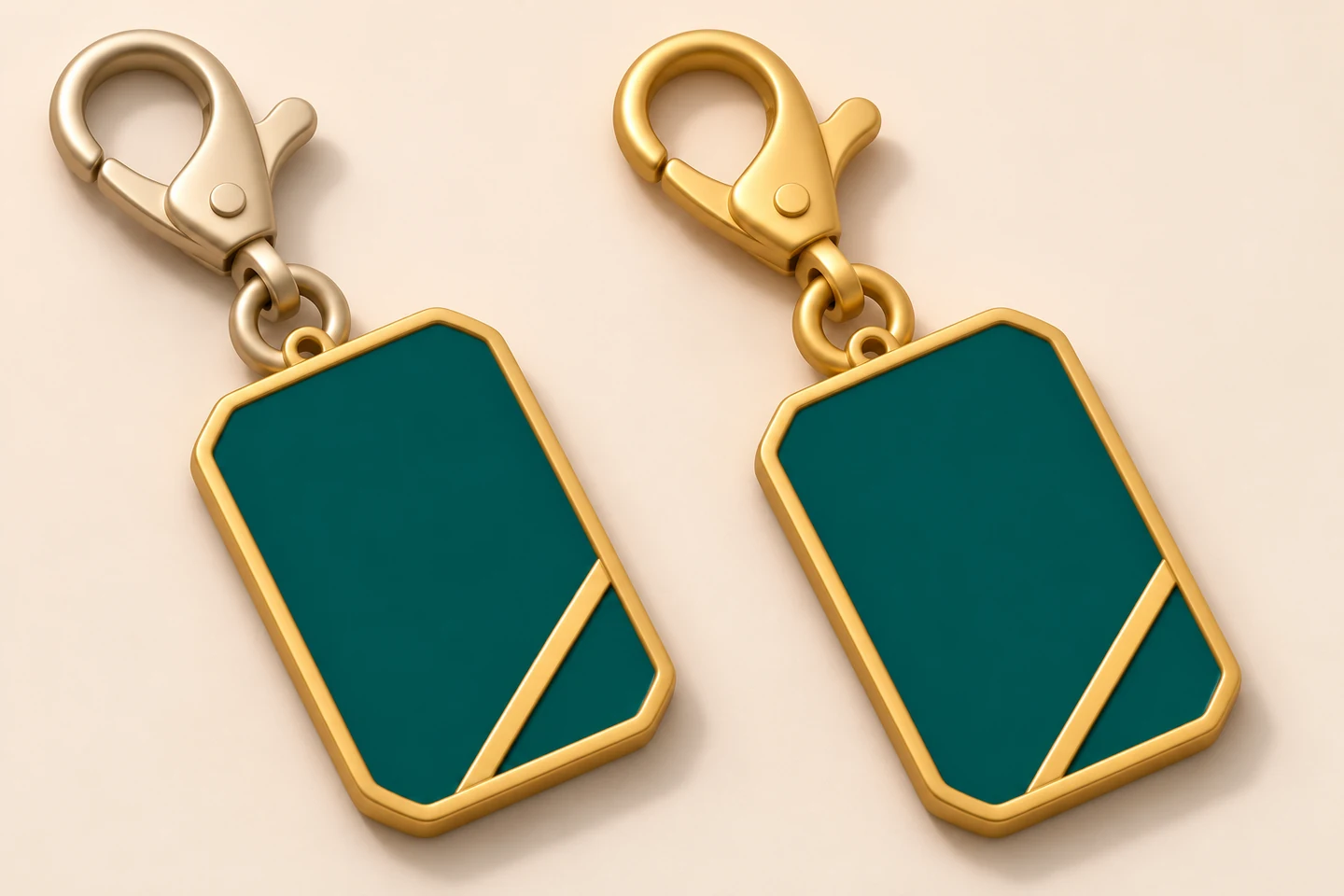
Show how close the surfaces sit together in the final assembly. A slight difference can become obvious when a ring lies directly against a polished edge.
If a supplier recommends a different surface preparation, ask for the actual part after finishing. A flat swatch can communicate a target, while shape and texture change reflected light.
For a metal bag charm, compare the exposed mounting loop with the main charm while it hangs. Check it in the intended front orientation and again when it turns.
If the design needs an intentional contrast, describe it on the drawing. The receiving team should be able to distinguish that approved contrast from a mixed lot.
Build A Physical Approval Master
Approve an assembled sample made from the actual parts wherever possible. Retain a matched loose set when one surface needs to be measured or viewed separately.
Record each part revision and any finish code beside the master ID. Attach a photograph that shows where the parts meet and how the assembly faces forward.
Set the viewing conditions with the buyer and supplier. Use a consistent light, background, viewing angle and orientation when comparing the same surface.
View both samples side by side and then rotate them together. A part tilted toward a bright reflection can look different from the same part in another position.
| Master Record | What To Confirm |
|---|---|
| Actual parts | Body, connector and fitting revisions in the approved assembly. |
| Visual setup | Light, background and orientation for repeat viewing. |
| Expected match | Which metal areas should look close and which contrast is deliberate. |
| Change owner | Who decides whether a substitute or new lot can use this reference. |
Keep a reference set for inspection and one protected for longer use if practical. Store them away from normal handling and replace any master whose appearance has changed.
Agree separately on any instrument method when a numerical limit is needed. A finish code or a single reading without the setup cannot establish an adequate comparison.
Compare Separate Lots Before Mixing Them
Ask which parts were finished together and which came from separate lots. Keep their lot identifiers available before assembly combines the hardware with the bodies.

Review components before assembly when the suppliers deliver separate parts. Compare each with its own approved reference, then compare the proposed combination beside the assembled master.
For a metal phone charm, compare any visible metal links beside the body. Confirm which links the supplier provides and which your assembly team adds.
Check the start of an assembled lot when one component replenishes earlier than the rest. A new ring lot can introduce a visible difference across only part of the order.
For example, two fitting lots may look similar alone but differ beside the same charm body. Keep them separate while you determine whether each combination matches the approved master.
Record lot identifiers on the inspection note and the stock that remains on hold. The next inspector should be able to locate the exact combinations you reviewed.
Send One Finish Brief To Every Part Owner
Decide who owns the appearance of the full assembly when the parts come from different suppliers. One person needs access to the same physical master and release record.
List which supplier provides each visible part and where final assembly happens. Tell suppliers whether their finish needs to match a specific neighboring component.
Send the same master reference and a view that identifies the relevant faces. Ask each supplier to flag any reference they cannot reproduce on the planned substrate.
If a supplier prepares a translation of the master for a particular component, link the two references. Confirm that the translated reference still works beside the assembled master.
Where suppliers use different finish names, put the approved part and master IDs on each order line. Have the buyer reconcile names before releasing the component orders.
Give the assembler a list of combinations that have been reviewed. If a different fitting arrives, have them pause before blending it into an approved set.
If one supplier is late, review the appearance before approving an alternate fitting. A delivery decision can change the visible result even when the new part fits.
Use A Part-Lot Decision Record
Suppose the charm bodies arrive from one lot and the clips arrive in two lots. Both clip bags carry the same commercial finish name.
Set one proposed assembly from each clip lot beside the retained master. Hold the orientation and lighting steady, and place the clips next to the same body finish.
If one clip lot looks visibly cooler than permitted, retain the comparison and lot labels. Keep rows for the two clip lots separate in the inspection record.
| Decision Item | Illustrative Record |
|---|---|
| Clips A | Assembly matches the retained master. Record the approved body and clip lot pairing. |
| Clips B | Tone differs from the approved pairing. Keep the lot separate for buyer review. |
| Next delivery | Check the new clip lot against the same body finish before combining stock. |
If the buyer accepts the second lot for a different pairing, keep that permission with the specified combination. The exception does not change the first pairing.
Use the same checks when the charm bodies change but the fittings stay in stock. Compare the new body against both the loose component master and assembled master.
Keep the decision with the inventory handoff. The person receiving the next replenishment should know whether both lots can be used or only the accepted pairing.
Decide What Can Be Released
If the difference is outside the agreed appearance, keep those parts or assemblies separate. Record what changed, the affected lot, and the retained sample used for comparison.
Ask the supplier to confirm whether the observation follows one component, one finish lot or the assembled combination. Share a photo that shows the compared parts in the same frame.
Have the named buyer confirm the disposition of each affected combination. If a revised finish is accepted, document where it applies and whether it becomes the future master.
When a supplier changes a substrate or finishing route, ask whether the original master still represents the expected part. Recheck the visible combination before releasing the change.
Link the reference code to the order, inspection record and carton identification. This makes a receiving question easier to isolate without mixing stock from unrelated lots.
Use the production and quality guide to plan who holds the photos, lot evidence and approved sample. Keep the reference accessible when the next order is placed.
Frequently Asked Questions
Can We Approve A Color From A Photo?
Use a photo to document which parts were compared. Confirm subtle differences on real parts under the agreed viewing conditions.
What If The Hardware Supplier Sends Only A Swatch?
Use it to explain the target and request a part with the proposed surface. Review that part beside the actual charm before final approval.
Can A Master From Another Product Be Used?
Check whether it represents the substrate, sheen and visible assembly you need. Make a dedicated approval reference when those conditions differ.
Do We Need A Different Master For Each Finish?
Keep a unique identifier for every approved combination. Where products share one master, state exactly which parts and revisions it covers.
When Should Receiving Escalate An Appearance Difference?
Follow the agreed visual acceptance and hold instruction. Send the affected lot identity and a comparison with the approved reference to the assigned reviewer.
Can Matching Part Numbers Replace A Visual Check?
Part numbers identify the intended components. The assembled comparison shows how their surfaces look beside one another in the delivered condition.
Final Thoughts
Bring your body, hardware list and finish reference to our custom metal charm team. Agree how the finished combination should look before releasing production.