
How To Approve A Plating Finish For Bulk Enamel Pins
Your supplier can quote a plating finish by name and still leave tone and sheen open. That can leave two buyers approving different appearances.
Compare physical references on the same artwork and under the same light. Record the accepted sample against each order version.

Define Which Metal Your Buyer Will See
Look at the full pin before you choose a metal finish. The rim, dividing lines, rear surface, and fitting may all contribute to the appearance.
Mark the metal that carries a brand detail on your artwork. A thin outline can play a bigger role than the surrounding fill.
Identify which surfaces face the user after fitting the pin. If the reverse is seen on a display card, include it in the brief.
- Mark which metal lines, edges, and rear areas the recipient will see.
- State which fittings require a finish match and where a separate finish is acceptable.
- Flag fine text formed by metal so it gets a close review.
- Name the appearance you want the finish to deliver.
Ask which components the quoted finish covers. A pin body and a separate clasp may have different surfaces, so name each part you need checked.
Describe your priority in plain language. Examples include a bright border around dark fill or a subdued edge that leaves the emblem as the focus.
Use separate fields for metal tone and enamel colour. This keeps changes to the surrounding lines from being mistaken for changes to the filled areas.
Compare Tone On The Same Artwork
Ask to see the same design with different metal tones. Keep the filled areas and viewing angle consistent so you can judge the border.
Warm and cool metal tones can change the apparent balance of a design. Compare them directly with the actual colours your brand has approved.
| Metal Appearance | What To Compare | Where To Check |
|---|---|---|
| Warm gold tone | Visibility of the rim and separation between dark fill colours. | Against the intended garment or display surface. |
| Cool silver tone | Contrast between bright metal lines and pale fill. | Under the lighting where your team will use the pin. |
| Dark metal tone | Legibility of narrow dark outlines near darker fill. | At the finished scale and typical reading distance. |
A dark tone may frame a light design clearly. It can also make narrow metal outlines harder to distinguish beside dark fills.
Test that difference on the physical sample at its finished size. Look first for the outline and then for the smallest feature your buyer must read.
For example, a fictional navy and cream badge could use two finish trials. View the same letter shapes in both so the choice reflects contrast.
Use a nearby garment or display card as a second reference. The best contrast on a white desk may change against the actual background.
Specify Sheen Along With Metal Tone
Describe the amount of shine you want to see. A finish with a strong reflection can look different from a quieter surface of similar colour.
Ask the supplier to show examples on representative parts. Broad flat metal and narrow raised lines can reflect light in different ways.
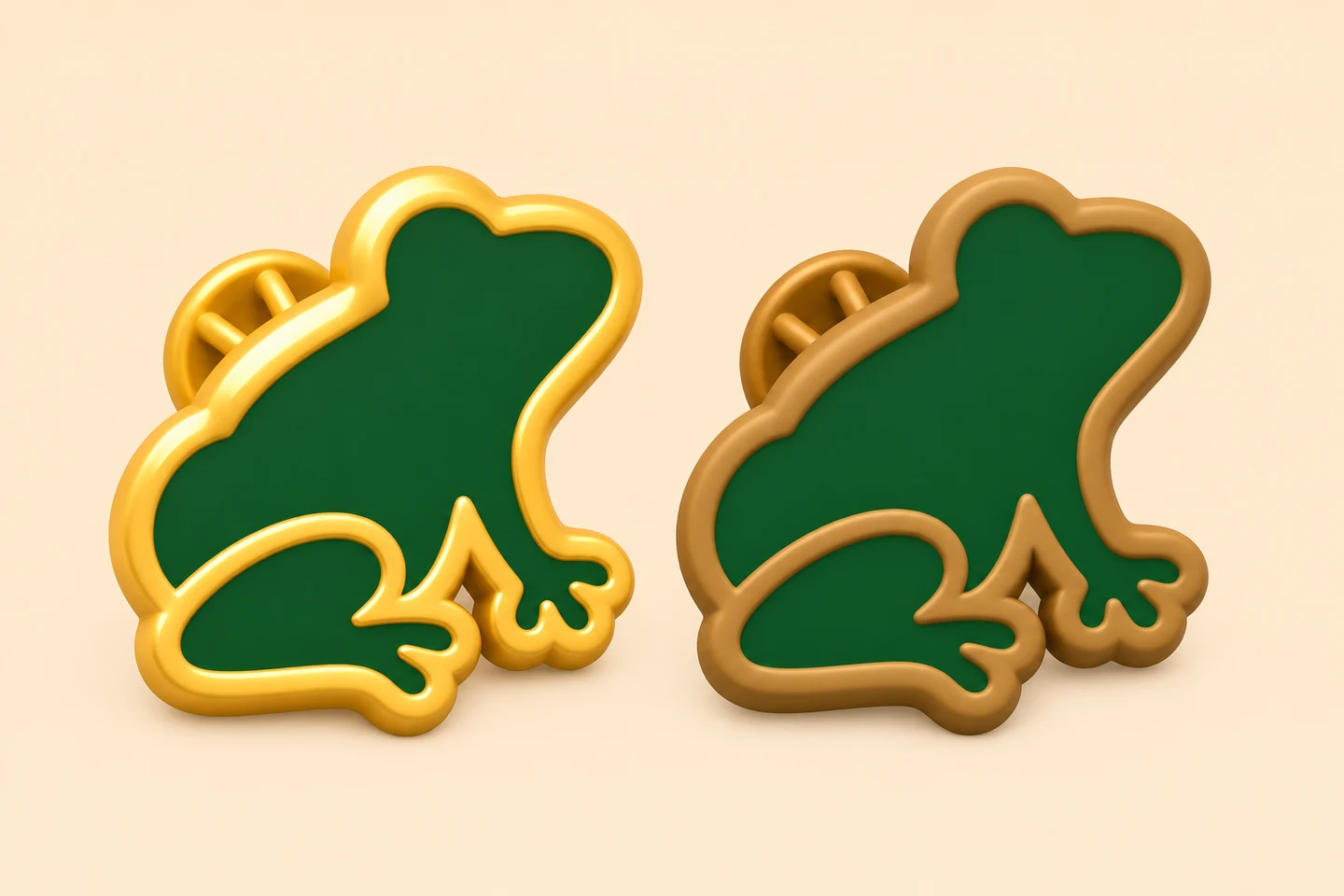
Move both samples under the same light. Check whether a bright reflection covers wording or changes the apparent outline at a normal viewing angle.
If you want a softer appearance, show an actual reference. Terms such as satin and matte can be used differently between suppliers.
A darker recessed area can emphasise relief on a metal feature. Ask the supplier to show what that effect would look like on your design.
Record a view that shows the typical finish rather than only its brightest angle. Keep a separate view of any reflection that concerns your team.
Keep Plating Separate From Enamel Fill
Choose the enamel treatment for the surface profile you need. Record the metal finish separately so both decisions remain visible in the quote.
Soft enamel can leave the fill lower than the surrounding raised lines. A hard enamel option is usually discussed when you want a smoother face.
Ask how the proposed route affects your finish choice. Check whether the expected metal tone and surface appearance are available for the chosen combination.
Mark any place where the metal itself must carry a detail. Fine dividers, lettering, and a plain reverse area are useful areas to examine.
- Use one field for enamel route and another for the metal finish.
- Confirm which coloured areas are fill and which surfaces remain exposed metal.
- Record finish availability for the exact body and artwork version.
- Request material documentation separately when the buyer needs it.
Ask for a proof showing fill areas and exposed metal separately. Have the supplier identify which features are expected to change in the physical sample.
Treat the finish name and any specified process as separate entries. If a buyer needs a particular material or coating, request a clear written specification.
Review Physical References Under Comparable Light
Use physical references for the decision where possible. A phone screen can shift colour and exaggerate the brightness of a reflective surface.
Lay the samples side by side in one place. Use a plain neutral background first so nearby colours do not dominate your judgement.

Then move to the setting that matters for your order. Compare a jacket fabric, a display card, or the surface behind a presentation pin.
If your team approves remotely, ask for photos of both samples together. Request one straight view and one slight angle under the same light.
Keep the approved sample or swatch labelled with its identity. A colour name alone is hard to match when the order is repeated.
If the body and reference are different shapes, acknowledge that difference. The reference is useful for tone while the made sample shows the complete effect.
Keep Finish Options Comparable In The Quote
Ask each supplier to price the same body, fill, fitting, quantity, and delivery scope. Then give each proposed finish its own quote line.
Check what is included for each option. A change to the finish may be quoted with a different setup or sample arrangement.
Ask whether the quote assumes the same finish for all variants. If one design has a different metal tone, list its quantity and reference separately.
| Field | What To Ask The Supplier To Confirm |
|---|---|
| Body and fitting | Which surfaces are covered by the requested finish. |
| Finish reference | Sample identifier, tone, and expected sheen. |
| Colour variants | The quantity and approval reference for each finish combination. |
| Cost and sampling | How finish changes are reflected in the quote and sample scope. |
For example, two versions could use the same design with different metal tones. Use a short version code that makes the finish difference visible.
Ask whether one physical sample can represent both versions. Decide which differences need their own samples before making the final order decision.
Use the same sample identifiers in your email, purchase order, and version list. The supplier should be able to repeat the selected finish without interpretation.
Check The Made Sample Before Release
Review the made sample next to the reference you approved. Look at the front, edge, and reverse before you decide that they match.
Check the metal lines beside the darkest and palest filled areas. Record any hard-to-read letters or outlines as specific review findings.
Inspect the surface from a normal distance and from closer up. Agree how the supplier should assess any visible blemish or appearance difference.
- Check the front and edge under the same light as the approved reference.
- Review small metal lettering and the boundary between adjacent colours.
- Identify the fitting and note any agreed appearance difference.
- Record the physical sample identity alongside the approved artwork version.
If the proposed fitting differs from the reference, review it mounted. Check whether the difference remains visible in the way recipients will use the pin.
Mark every requested change against the sample identity. State whether you need another physical sample or whether written confirmation and photos are enough.
Discuss the review record using the production and quality guide. Confirm what evidence your team needs before authorising the order.
Keep A Finish Record For Repeat Orders
Store the approved sample where both buyer and designer can find it. Link its identity to the purchase order and the finish notes.
If there are separate versions, identify the finish for each one. Keep the version label on the storage bag or sample card.
When you reorder, send the full reference again. Ask the supplier to flag changes in route, part availability, or reference interpretation before they quote.
A previous photograph is useful context, especially if the original sample is unavailable. Treat it as a guide while you discuss how to confirm appearance.
If your brand changes its design, run the contrast check again. A finish that worked for the previous artwork may obscure a revised detail.
Give your receiving team the finish and version references. They can compare the first checked unit with the appropriate approval before mixing versions in stock.
Frequently Asked Questions
Does A Gold Tone Confirm Gold Content?
No. A colour description identifies the intended appearance. Ask the supplier to state the actual material and coating if your brief requires it.
Can Two Suppliers Match The Same Metal Finish Name?
Ask both to compare against the same physical reference. They should explain any differences you need to accept before approving a quote.
Which Finish Should You Use For An Exact Brand Colour?
Identify whether the brand colour belongs in the fill or the visible metal. Review actual samples rather than treating a digital colour value as approval.
Can You Specify A Finish On The Pin Body Only?
Yes, state which parts the finish applies to. Ask how the reverse and fitting will look beside the body before confirming the scope.
How Should You Address Material Sensitivity Concerns?
Tell the supplier which use and material requirements apply to your order. Request the information your team needs to check suitability before approval.
Final Thoughts
Use a physical reference to describe your finish before production. Explore our enamel pin options or send us your finish brief to discuss the design.