
Build A Wine Glass Charm Set That Fits And Stays Distinct
Your six wine charms look different on a drawing. Their rings still need to fit the actual glasses.
Approve the complete assemblies and the set together. This guide builds a glass compatibility record and a counted release decision.
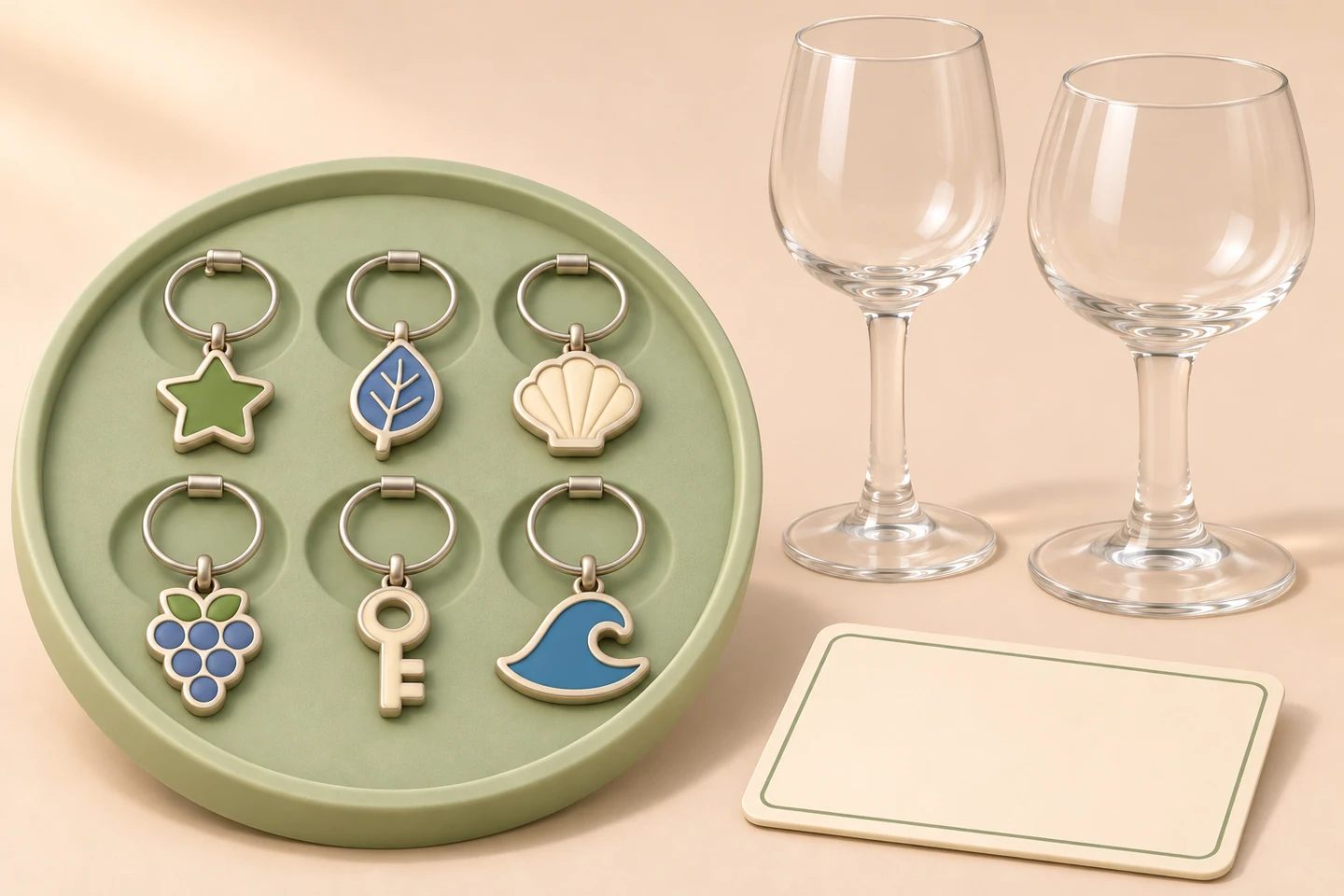
Define The Complete Approval Unit
Begin with the glassware and the hospitality task your set must support. Name who attaches the charms and where glasses are placed. A winery tasting and a seated event can involve different handling.
Write the supplied unit before reviewing decorative artwork. Identify the metal body, its connection opening, the detachable ring and any separate connector. State whether the supplier delivers these assembled or as named components.
The wine glass charm product reference separates the identifier family from the stem ring. Use that distinction in your brief. Neither the illustration nor a family name establishes your final dimensions or glass compatibility.
For this hypothetical order, one set contains six complete ring-and-charm assemblies. Each assembly has a different named symbol. Glasses and replacement pieces are separate purchasing lines, rather than implied set contents.
Wine-n-Gear lists several wine charm formats, including packaged offers. That variety makes the ordered format important. It does not establish that any particular ring fits your glasses.
Give the sample build its own reference before testing it. Record which body and ring versions belong together. A loose decorative charm can receive artwork approval without receiving permission for a complete wine charm set.
Identify The Actual Glass References
Obtain representative glasses from the locations that will use the order. Record their maker or purchasing reference when available. Keep physical sample identifiers even when two glasses share the same commercial description.
Photograph the stem, its transition toward the base and the intended ring position. Add a scale where measurements are useful. A photograph supports identification, while the physical glass establishes how the proposed assembly moves.
Ask the venue to identify replacement glassware already in circulation. An older glass and its newer substitute may need separate review. Avoid approving every glass in a venue from one familiar-looking sample.
The following references belong only to the hypothetical example. They are not glass standards or dimensions to copy. Enter your own references and preserve the actual samples used for approval.
| Glass Reference | Recorded Scope |
|---|---|
| G1 | Tasting glass from venue A; physical sample G1-01, current purchase reference retained. |
| G2 | Banquet glass from venue B; sample G2-01, different stem-to-base transition. |
| G3 | Stemless glass proposed for another campaign; outside this detachable stem-ring approval. |
Assign ownership of each sample so the supplier can request clarification. Record whether production glassware will match those references. If the venue cannot identify its glasses, keep the compatibility claim correspondingly narrow.
List glass condition during the trial without treating damage as a useful fit feature. Do not force a sample against chipped or otherwise unsuitable glassware. Ask the venue to provide appropriate intact references for the intended handling.
Agree which variations within a glass reference the evaluation should represent. A trial on one physical glass has a limited scope. The venue and buyer should decide whether further samples are needed before making a wider claim.
Check The Ring Path And Mounted Position
Review how the ring opens before placing it around the stem. Identify the intended opening and closing action with the supplier. Do not assume a ring should stretch over the base because it appears circular.
Check access with the complete charm attached, rather than an empty ring. Observe whether the body blocks the closure or masks its seating. Record the actual closed position and any uncertainty about how it is secured.
Place the assembly at the intended stem location using the agreed normal action. Examine its movement toward the base and the adjoining stem shape. Note where metal touches glass, without assuming contact proves damage or acceptable performance.
Compare the resting arrangement when the glass stands on the proposed surface. Check whether the charm becomes trapped beneath the base or interferes with standing. A ring that can close still needs this installed observation.
Keep the proposed ring version identifiable throughout the trial. Changing its shape or closure can change access and the mounted position. Repeat the affected glass checks before accepting a replacement fitting.
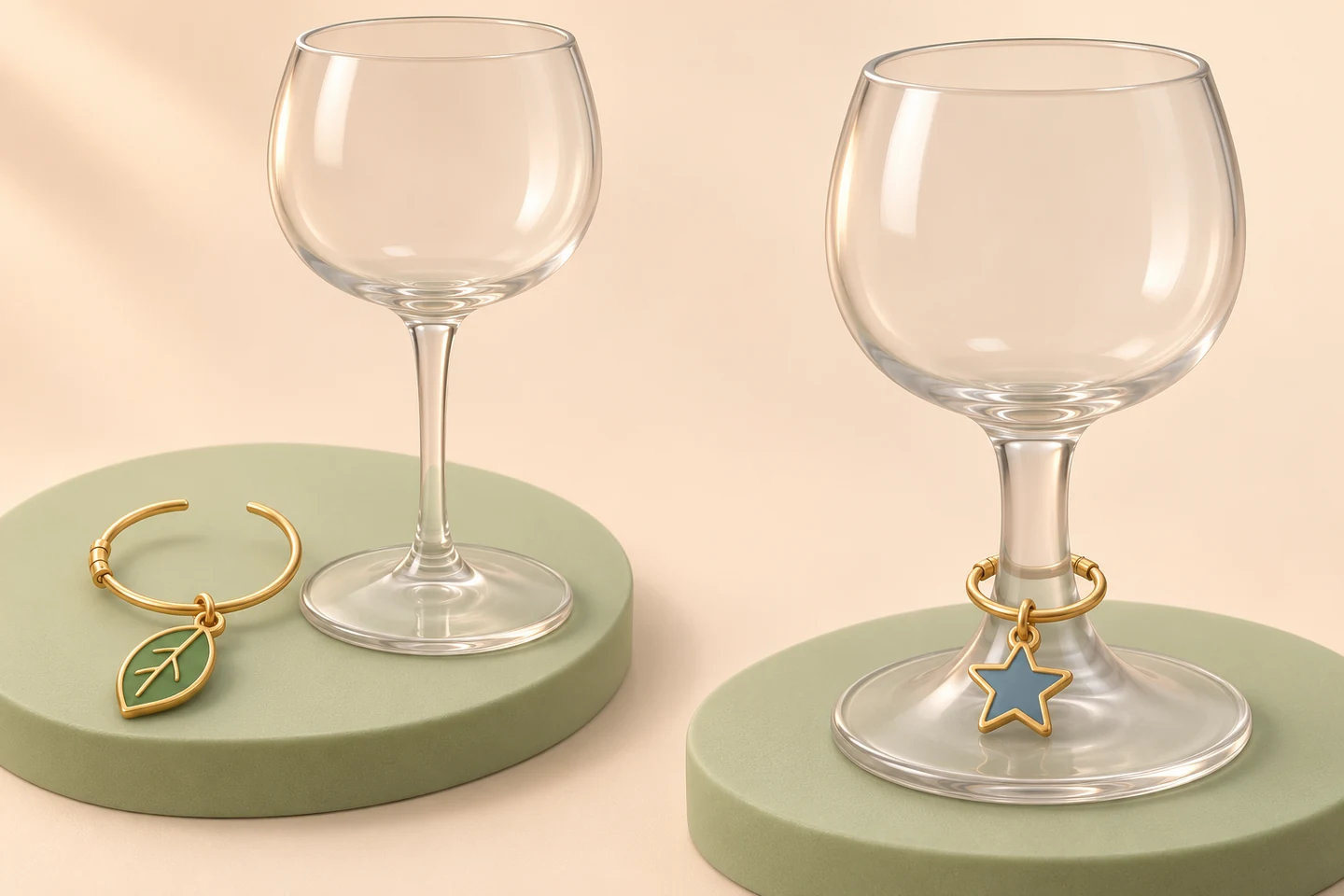
Agree any required force or retention evaluation separately with the responsible reviewer. This guide supplies no universal force or ring size. If the sample needs unusual pressure, stop and resolve the interface before repeating the action.
Make The Six Identifiers Distinct
Build a set map with one row for each identifier. Use names that production and packing teams can understand without interpretation. Keep the symbol reference separate from the finished assembly reference.
For the example, the six symbols are leaf, star, shell, grape, key and wave. These are illustrative design choices. The buyer must approve their actual outlines, artwork and permitted use before manufacture.
Do not rely on a screen colour difference alone. Compare the physical pieces under the lighting expected at the venue. Ask the intended users whether their chosen identifiers remain distinguishable during the handling task.
| Set Position | Complete Assembly Required |
|---|---|
| Leaf | One leaf body with approved ring; assembly W1. |
| Star | One star body with approved ring; assembly W2. |
| Shell | One shell body with approved ring; assembly W3. |
| Grape | One grape body with approved ring; assembly W4. |
| Key | One key body with approved ring; assembly W5. |
| Wave | One wave body with approved ring; assembly W6. |
Review front and reverse positions as the bodies move. A distinctive front may turn away during use. Decide whether recognition remains adequate, or whether the symbol needs a different outline or another agreed treatment.
If you change only a colour, identify the exact variant in the map. If you change an outline, give it a revised body reference. Do not let a visual substitute enter packing under an unchanged informal nickname.
Use the logo charm component reference when discussing separately supplied bodies. A component approval still excludes the wine ring unless expressly included. Keep those two supply states distinct on the quotation.
Repeat the recognition task after the presentation card is removed. If guests need that card to distinguish two symbols, record the dependency. Decide whether the service can reliably retain that reference or the identifiers need revision.
Run A Representative Handling Trial
Agree the handling sequence with the venue before judging the samples. Include attachment, placing glasses down, normal movement and removing the assemblies. Use the surfaces and staff handling that the intended service actually involves.
Ask each participant to select a named identifier and then identify that glass again. Record the result and the conditions. This is a buyer-defined observation, rather than a promise that every guest will recognise every symbol.
Include the actual filled-glass handling only where the venue permits it. Keep the trial controlled and appropriate to the setting. The purpose is to observe the supplied assembly, rather than invent a demanding stunt.
Keep visibility and physical fit as separate findings. In the example, G1 permits the intended attachment and placement, but two green symbols appear similar. Changing the ring would not address that recognition problem.
On G2, the same proposed ring closes but the charm rests awkwardly against the base during placement. Record that specific observation. Do not replace it with a broad statement that the set failed every possible use.
Write the trial conditions beside photographs of the complete assemblies. Name the observer and any unresolved disagreement. A quiet photograph without the handling record cannot show how the closure or recognition task was assessed.
Unpack the evaluation set in the condition your team expects to receive. Check whether the instructions identify any final attachment step. Approval of preassembled display samples should not conceal work that venue staff must perform.
Reconcile Sets Pieces And Replacements
Convert the approved set map into quantities before ordering. The example requires 480 delivered six-piece sets. That means 2,880 complete assemblies, with 480 of each identifier in those sets.
The buyer also orders 24 complete star replacements as a separate line. The delivered requirement is therefore 480 sets plus 24 stars. It is not 484 sets, and the replacements cannot repair incomplete sets without affecting their own balance.
Keep development samples outside those production quantities unless the purchase order expressly includes them. A supplier may retain physical approval sets. Record their ownership and availability without silently counting them as delivered stock.
| Quantity Group | Hypothetical Order Balance |
|---|---|
| Delivered Sets | 480 sets; six complete assemblies each; 2,880 assemblies. |
| Per Identifier | 480 leaf, star, shell, grape, key and wave assemblies within sets. |
| Separate Replacements | 24 complete star assemblies; separately identified and packed. |
| Accepted Deliverables | 2,904 complete assemblies across two distinct purchasing lines. |
Now suppose five packed sets contain two leaves and no star. Place those five sets on hold. The other 475 sets can be considered separately under the agreed inspection and release arrangements.
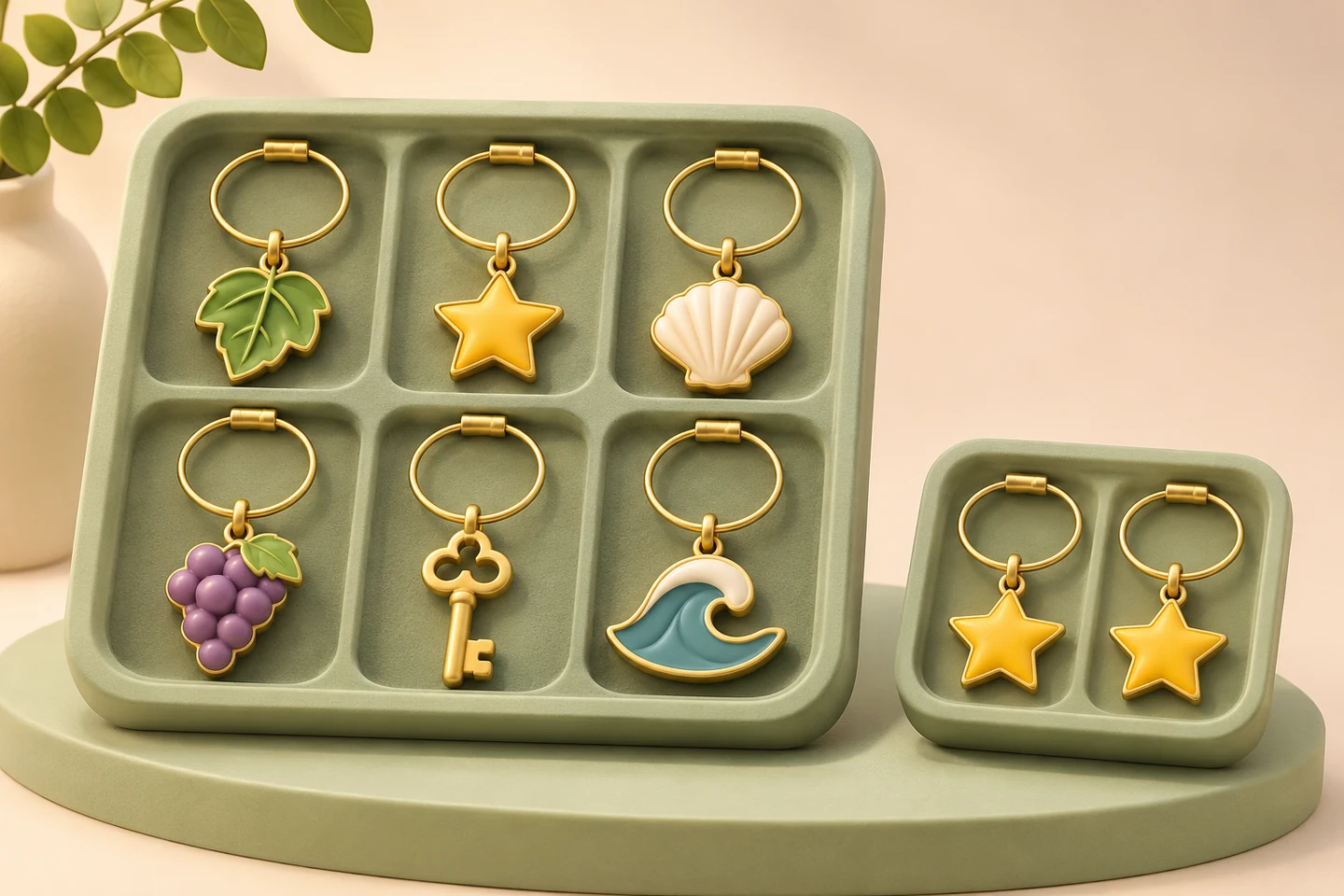
If five stars are borrowed from replacements, only 19 replacement stars remain. Replenish five before closing the original order. Keep the five removed duplicate leaves separately identified, with their disposition recorded rather than counted as accepted extras.
Check the correction against each affected set and its ring assemblies. Counting six metal bodies alone could miss a missing fitting. Record who checked the corrected packs and who can release them for dispatch.
Write A Restricted Set Approval
An approval should name the glass references, assembly versions and set map together. State the intended handling and the observations supporting the decision. Leave other glasses or ring alternatives outside that approval.
For this example, approve W1 through W6 on G1 only after the recognition issue is corrected and reviewed. Keep G2 pending a revised fitting trial. Exclude G3 because it has no stem for this interface.
Give the corrected artwork and ring their own references where either changes. Retain the earlier sample as a clearly superseded comparison. Do not replace every sample identifier with the vague phrase latest version.
Define which physical reference the packing team will receive. It should show the six accepted assemblies in their supplied condition. A set photograph can accompany it, while the actual pieces establish closure and movement.
Finish matching remains a separate decision from this fit and set approval. Where components need visual matching, use the finish consistency comparison. A matching finish does not resolve the G2 contact finding.
Confirm whether the buyer permits a partial release for the G1 venues. Identify the allocated quantity and pack statement before dispatch. Avoid shipping an unrestricted campaign carton whose contents were only approved for one named glass reference.
Define Cleaning Storage And Return Boundaries
Ask the venue how assemblies will be removed and stored after service. Record whether charms remain attached to glasses or are collected separately. That operational choice affects what the buyer needs to evaluate.
Do not infer dishwasher suitability from the appearance of the metal or enamel. Any cleaning requirement needs its own agreed conditions and supporting evaluation. Approval for one dry handling trial cannot establish repeated washing performance.
Keep glassware supply and food-contact questions outside the charm-set agreement unless separately addressed. The reference is a stem-mounted accessory, not a drinking surface. Avoid turning that location into an unsupported compliance claim.
If the venue expects reuse, describe the intended reuse scenario to the supplier. Agree which observations and changes would trigger another review. Do not introduce an arbitrary cycle count and present it as an industry acceptance threshold.
Choose storage compartments that keep the six identifiers accounted for. Review whether closures become caught together in the proposed pack. This is a packing observation to resolve on the actual arrangement, rather than a guarantee against damage.
Keep loose replacement assemblies distinguishable from unopened complete sets in the venue inventory. Record their identifier and approved ring version. Otherwise, a later replacement could restore the piece count while changing the fitted configuration.
Hand Over The Set And Glass Record
The final handoff should let someone outside the development meeting identify the approved build. Send the glass register, set map and completed observations together. Link them through the same sample and order references.
Add the supplier acknowledgement for the ring, body and supplied assembly state. Confirm who checks set composition and who approves corrected packs. Allocate those responsibilities before a shortage appears near the event date.
Give the venue a short statement of the glass references actually reviewed. Identify the G2 and G3 exclusions in the example. An internal restriction that never reaches the service team cannot control where the sets are used.
If another venue changes glassware, collect the new reference and review the affected interface. Reuse the existing artwork evidence where it remains applicable. Do not repeat unrelated artwork approval simply because the glass has changed.
Commercial identity changes belong with the responsible product data owner. The set and case GTIN guide addresses that separate decision. This record establishes physical set contents and supported glass use, not a barcode allocation.
Close the order only when the accepted set quantity and separate replacements reconcile with dispatch. Retain held-item decisions and the final reference location. The next buyer should inherit a usable approval, rather than six attractive but unexplained photographs.
Frequently Asked Questions
Can The Same Artwork Be Used On A Campaign Keychain?
Discuss that as a separate complete product with its own hanging point and supplied hardware. Shared artwork does not establish shared physical approval. Keep the keychain outside the wine charm set count unless the order expressly includes it.
Can We Mix Four-Piece And Six-Piece Sets In One Order?
Give each set its own composition reference and ordered quantity. Check every shared identifier against both maps. Avoid describing different compositions as interchangeable six-piece stock during packing or invoicing.
What If The Venue Cannot Send A Glass?
Record that physical fit remains unverified and request suitable reference information. Agree whether a controlled local trial can provide the missing evidence. Do not turn a drawing-only review into unrestricted glass compatibility.
Can A Distributor Substitute Another Colour After Approval?
Ask the buyer to assess whether the proposed change affects recognition and the approved set map. Keep the original requirement until that decision is recorded. A similar colour name is not permission to substitute an identifier.
Final Thoughts
Bring your glass references, six-identifier map and quantity split when discussing custom wine charm sets. Approve the actual assemblies and the supported venues before releasing complete-set production.