
How To Approve Colour Fastness For Printed Medal Ribbons
A printed medal ribbon can look right on a proof. Colour may still rub onto clothing when people wear it.
Decide which rubbing checks your event needs. Then use a matched print sample and report to release production.
Start With How The Ribbon Will Be Worn
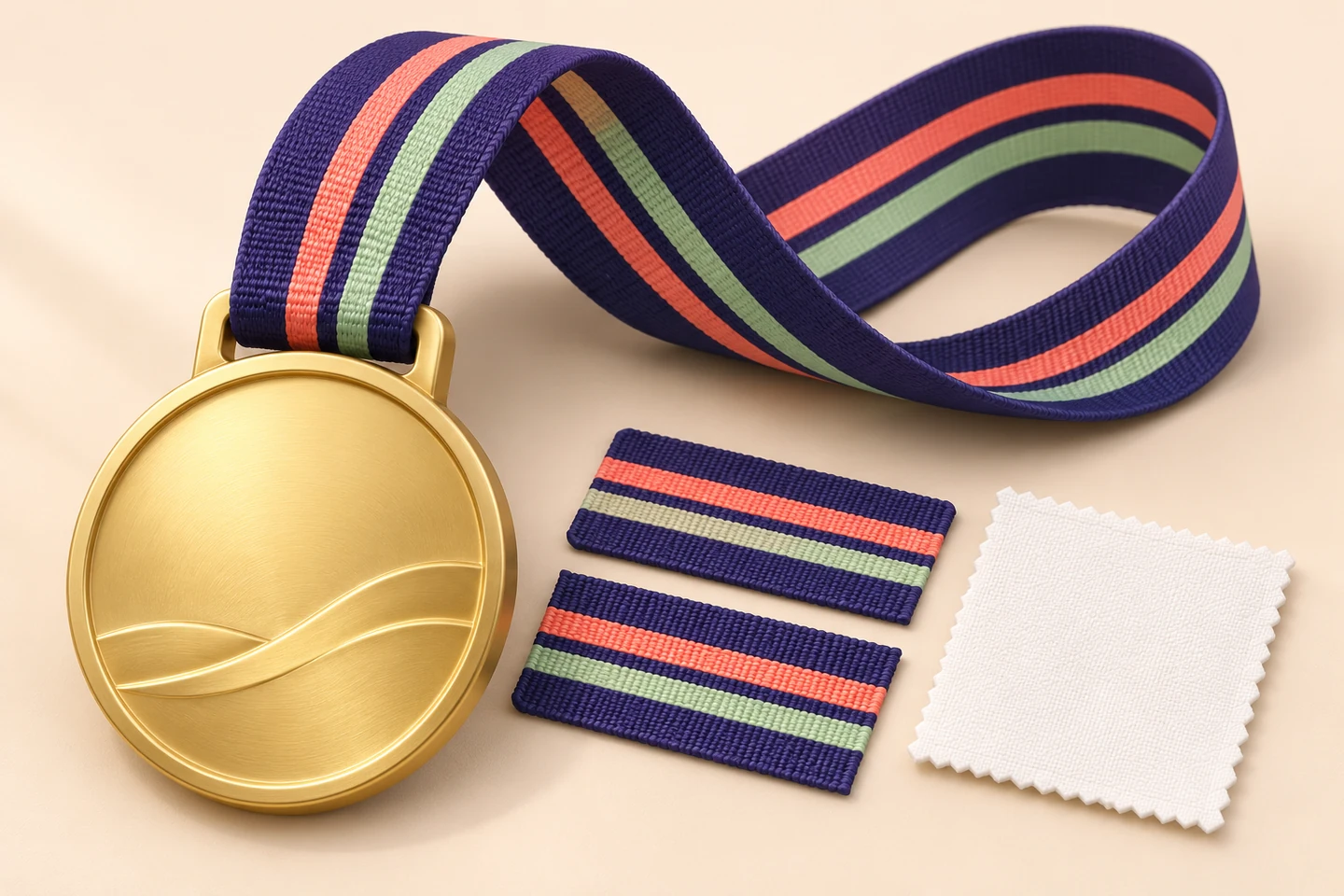
List who wears the medal, what the ribbon touches and whether the venue exposes it to rain or damp clothing. Ask the event team whether recipients are likely to wear pale jerseys. High contrast makes transferred colour easier to see.
For a brief dry presentation, discuss whether a dry rubbing result answers your immediate concern. For a race where participants receive medals in damp kit, discuss both conditions. Write the selected checks into the request before collecting quotes.
If the ribbon has a dark reverse or several printed colour blocks, mark the likely contact face on the drawing. Use folds and the fitted medal when judging contact. A bright outer print may barely touch the wearer.
Finish choosing the width, attachment and artwork direction with the medal ribbon specification guide. Carry that agreed construction into the test request. It helps the supplier match the evidence to the ribbon that runners will wear.
Name The Rubbing Test And Conditions
ISO 105-X12:2016 describes how to assess resistance to colour rubbing off and staining an adjacent material. Its scope includes dyed and printed textiles. It describes a dry rubbing cloth and a wet rubbing cloth as separate conditions.
The British adoption is BS EN ISO 105-X12:2016. Put the edition and the requested conditions on your enquiry. Confirm with the supplier and lab that their report will identify the method actually used.
As of November 2026, ISO lists the 2016 edition as published and under systematic review. Keep the agreed edition on the order. If it changes before the next run, confirm which edition your lab will use.
Set your own acceptance levels and agree them with the supplier before testing. The method describes how to check a specimen. The order states which result your event will accept and who signs the decision.
Ask about separate methods if you need evidence for perspiration, washing or outdoor fading. State the actual concern so the lab can suggest an appropriate check. A damp rubbing test answers the defined transfer question under its own conditions.
Select Samples From The Intended Ribbon
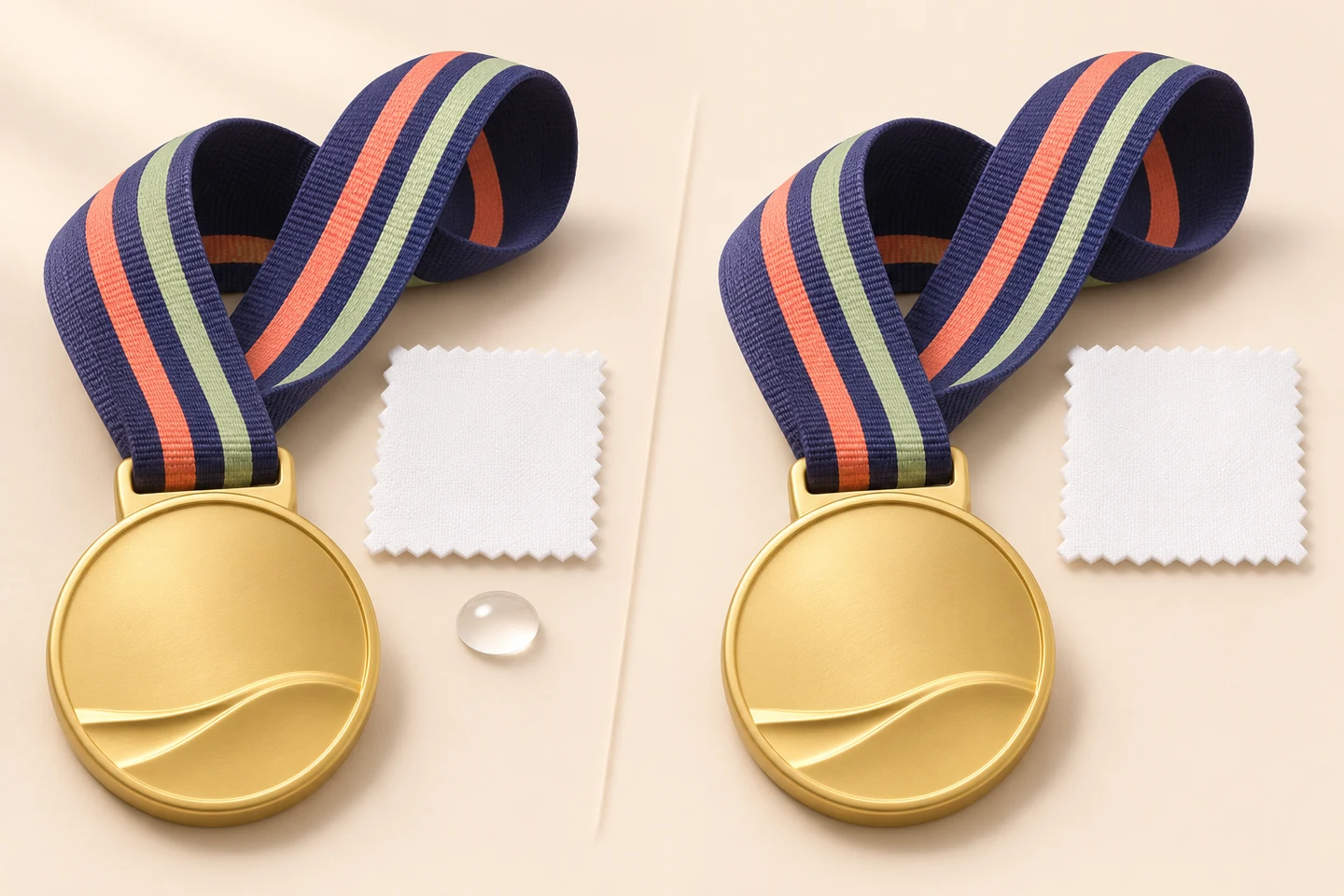
Ask for a specimen from the intended ribbon fabric and print route. Record the ribbon artwork revision, fabric code, printer and sample identifier. Ask whether the tested piece came from a trial or the lot planned for delivery.
Send the lab the marked print face and relevant colour areas. Confirm whether it can test the narrow ribbon as supplied. If it requests a larger specimen, agree in advance how the supplier will match fabric and print conditions.
Choose specimens to represent the areas likely to transfer colour. If the ribbon is printed on both sides, ask the lab and supplier which face each result covers. Record any untested colourways or contact faces alongside the results.
Retain an untested piece from the represented ribbon and a matching finished medal if available. Label the piece so it can be traced without relying on memory. Keep a second reference with the supplier when your team and supplier review separately.
Write The Acceptance Brief Before Testing
State the required method, each contact face, requested conditions and minimum grade in the same brief. Tell the supplier which variations need distinct results. The brief becomes a clear basis for quoting and review.
The table shows a possible brief for an illustrative dark printed race ribbon. The grade values are the buyer’s example choices. Set your own levels with your quality contact and confirm the lab reports on the agreed scale.
| Decision Field | Illustrative Event Order |
|---|---|
| Substrate | Woven polyester, fabric code WT20. |
| Dye sublimation. Artwork R6, sample MR-03. | |
| Contact Area | Face B, dark printed section touching the jersey. |
| Dry Rubbing | Minimum grade 4. Reported grade 4. Meets brief. |
| Wet Rubbing | Minimum grade 4. Reported grade 3. Hold this revision. |
| Sign-Off | Event quality lead records both results and decides release. |
| Retest | MR-03B, print R7. Confirm fabric, face and both conditions on report RF-77. |
If the supplier proposes a different condition or scale, ask for the difference in writing. Decide before samples go to the lab. Pricing and schedules are easier to compare when each supplier is working from the same requested checks.
Read The Report With The Physical Sample
Check that the specimen ID and print revision on the report match what you approved visually. Confirm the tested face, condition and result for each requested comparison. Ask the lab to clarify any result whose identification is incomplete.
Compare each result with its own requirement. In the example, the dry score meets the order and the wet score falls short. Keep that ribbon revision from being released until the buyer records a disposition.
Bring the assembled medal into the review so you can see where the printed face rests. If a lab report excludes an area that actually touches the wearer, ask what further specimen is needed. Keep that follow-up on the order record.
Ask for the report before the last date on which your ribbon choice can change. Leave time for a revised sample, another report and assembly. Confirm with the supplier which activities can proceed while testing is pending.
Hold A Failed Variant And Confirm The Next Sample
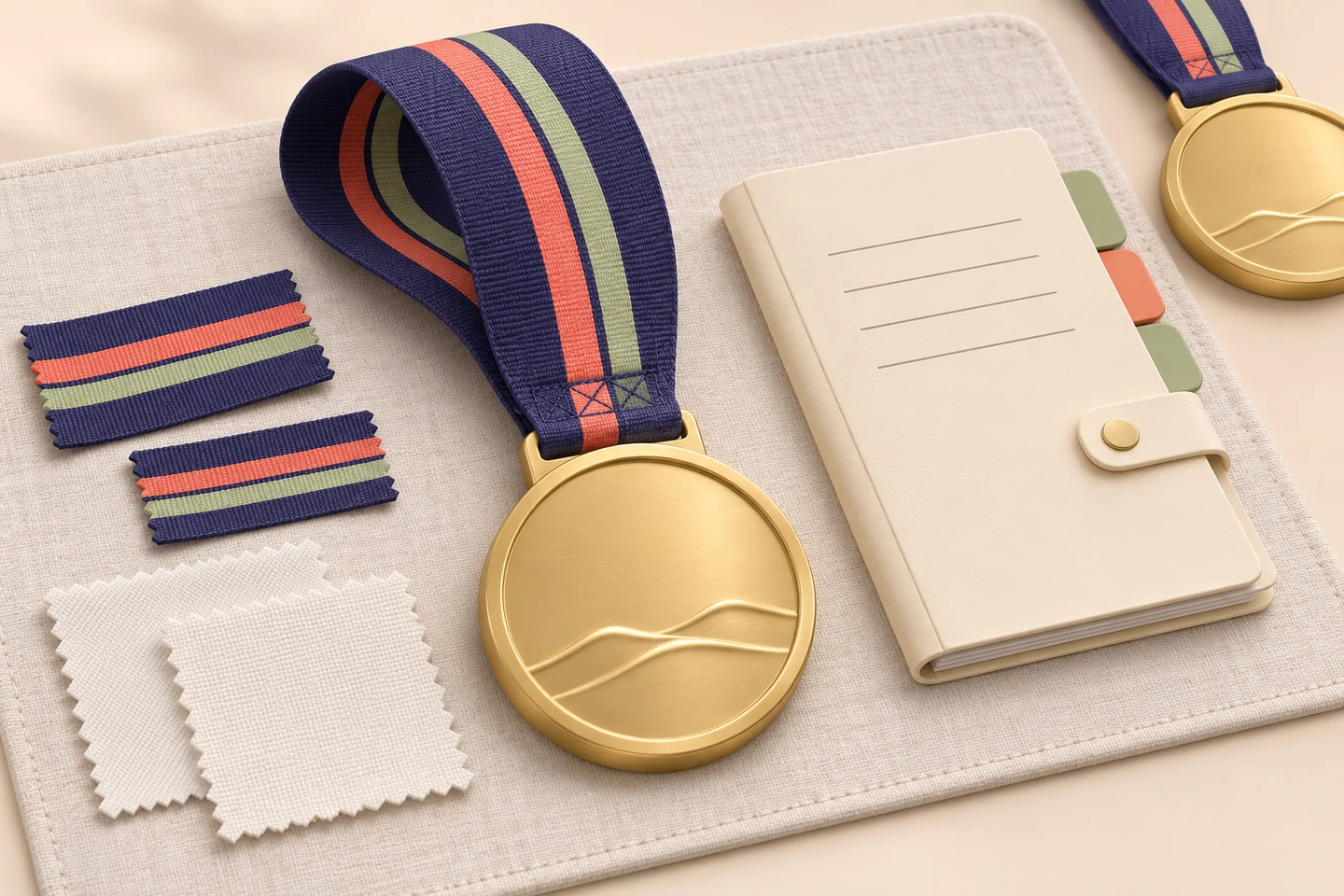
Hold the affected print revision and ask how much has been printed or assembled. Mark which other variants have separate evidence. Work with the supplier to avoid mixing held ribbons with versions that your buyer has already released.
Ask the supplier what will change on the next sample. A revised print, a different fabric or an alternate stock ribbon may affect other specifications. Review the visual proof again and request the agreed transfer evidence for the new version.
If your event deadline requires a fallback, choose an option with documented availability. Confirm that a substitute keeps the approved width, attachment and event identity. Record the authorisation and its applicable quantities on the order.
- Record the affected print revision, physical specimen and lab report ID.
- Identify quantities printed, assembled and still available for change.
- Assign who approves the revised appearance and the next test result.
- Tell the supplier which version may be released after the decision.
Scope The Wet Failure To The Right Order Line
Consider a race buyer with 600 outdoor finisher ribbons and 300 indoor podium ribbons on the same order. The event team expects damp jerseys at the finish. It expects dry ceremonial wear at the podium.
The buyer assigns MR-03 to the outdoor line and requires separate passing dry and wet results. It assigns MR-04 to the indoor line and requests a passing dry result. The supplier identifies each print revision and takes samples separately.
The outdoor trial falls short in the wet condition shown in the table. The indoor ribbon meets its dry requirement. The event quality lead clears the 300 indoor ribbons and pauses the planned 600-piece outdoor run F-14.
If the supplier already printed any R6 ribbon, segregate it and stop further processing or assembly. Record that quantity separately from the run still on hold. The supplier reports where the material is stored and how it is labeled.
Ask the supplier to report whether the failed version shares material or printing steps with other ribbons. Hold any implicated version until you know whether the issue applies. Save the supplier’s trace information alongside the decision.
The supplier proposes trial MR-03B for the outdoor line, with revised print R7 and the original attachment. In this example, lab report RF-77 shows dry grade 4 and wet grade 4. Both meet the agreed limits.
The event quality lead signs the RF-77 decision against MR-03B and authorises R7 for F-14. The signed release names the artwork revision and both results. Any segregated R6 material stays outside that release.
Use the approved trial to specify the planned production run. Ask the supplier to confirm the bulk fabric, artwork, print route and contact face against that trial. Agree whether an actual production specimen and report are due before assembly.
Before accepting a new date, ask for separate timing for the trial, lab report, printing and assembly. The sponsor can then decide when a fallback must be chosen. Record the last date on which your team can change ribbon versions.
Tie The Release To The Print Order
Put the approved ribbon code and print revision on the purchase order or its signed attachment. Record the specimen, test report and cleared conditions. Ask the supplier to confirm the approved version appears on its production instruction.
Ask the supplier to flag changes to the fabric or print route before it repeats the order. Agree which changes require fresh transfer evidence. A new colourway can warrant review even while the artwork and award shape are unchanged.
Give receiving the retained visual sample and list of cleared ribbon versions. They can verify that the shipment carries the agreed print and lot identifiers. Keep the lab decision attached to that record for repeat orders or event questions.
Frequently Asked Questions
Can We Approve The Medal And Hold The Ribbon?
Yes, if your order allows separate approvals. Record that the metal sample is approved and that ribbon printing remains on hold. Ask the supplier to identify any effect on assembly or dispatch dates.
Can A Supplier Report Cover Two Events?
Ask which fabric, print and production lot the report represents. It may support both orders when they use the same documented material and print conditions. Get separate evidence when a change could affect transfer.
Can We Use The Fabric Maker's Unprinted Test Report?
Use it to understand the base fabric. Ask for a report on the agreed printed construction if your concern is transfer from the printed ribbon. Record which specimen supports the finished ribbon approval.
Can A Good Dry Score Replace The Wet Result?
Keep the results separate. Release only against the conditions you wrote into the order. If wet results were required and are missing, hold the ribbon or have the authorised buyer revise the brief in writing.
Can We Share The Report With An Event Sponsor?
Agree who receives test records before order placement. A short summary can state the sample ID, method and disposition. Keep the full report linked to your internal order so the original results remain recoverable.
Final Thoughts
Before ordering custom marathon medals, send the ribbon artwork and intended wearing conditions. Agree which samples and results your team will review before authorising the printed ribbon run.