

CUSTOM ENAMEL MANUFACTURING
Custom Motel Keychains in Bulk
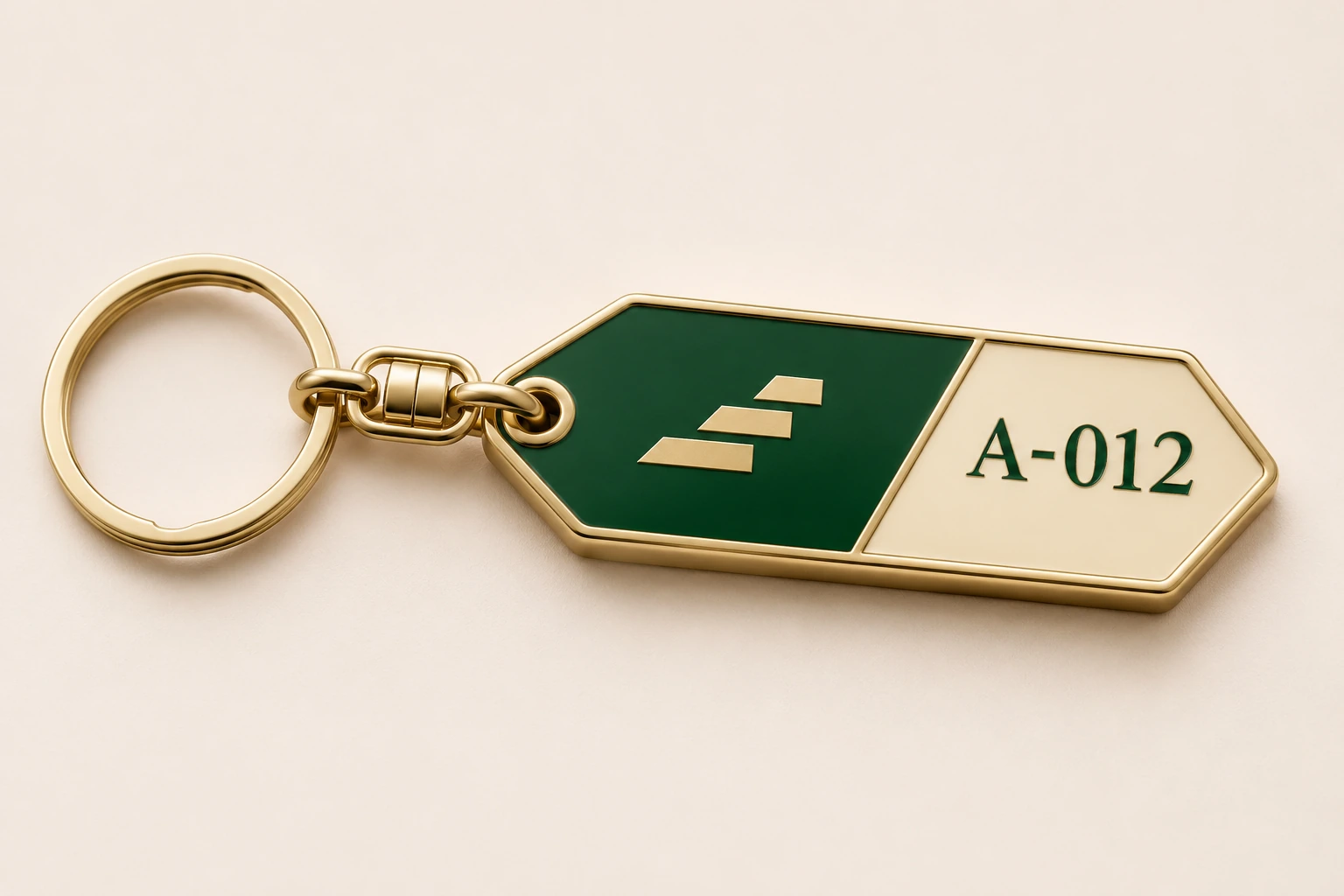
Develop room keychains around your property's approved codes. Plan shared branding, room or zone codes and keyring assembly, with quantities and duplicates listed by code.
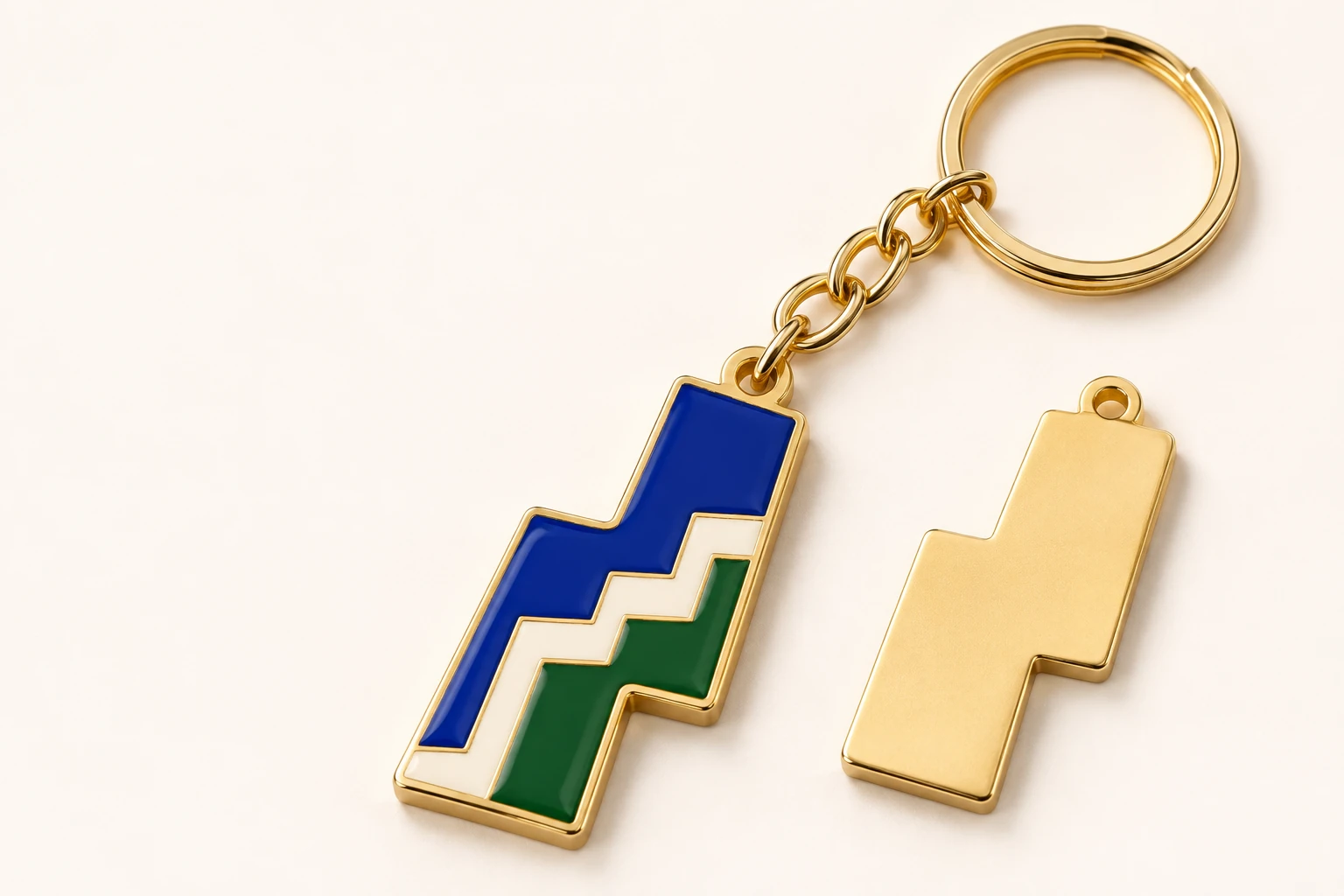
Illustrative custom concept, not a stock item or a customer case. Final specifications are agreed for your project.
02 / STRUCTURE
Keep the common body and the changing code distinct
Review point · Required project information
A property programme has two linked specifications: the physical keychain and the identification schedule. The body outline, connection and common identity may stay consistent, while the room or zone reference changes. Agree which elements are shared before preparing the code list.
The supplied item is the complete tag keychain, not the property key itself. If your team needs the ring or connector to work with an existing key arrangement, provide that reference for review. Do not assume that a room code, a key number and a floor designation are interchangeable.
A repeated code can be intentional, such as an agreed spare quantity, but it must be explicit. A missing or duplicated row should not be resolved by guessing. Retain the code-list revision with the physical-item approval so the same instructions govern production and receiving.
Front
Authorised property or group artwork and fixed wording

Structure
Exact room, building or zone code format and location
Reverse
Plain metal, fixed information or separately specified variable content
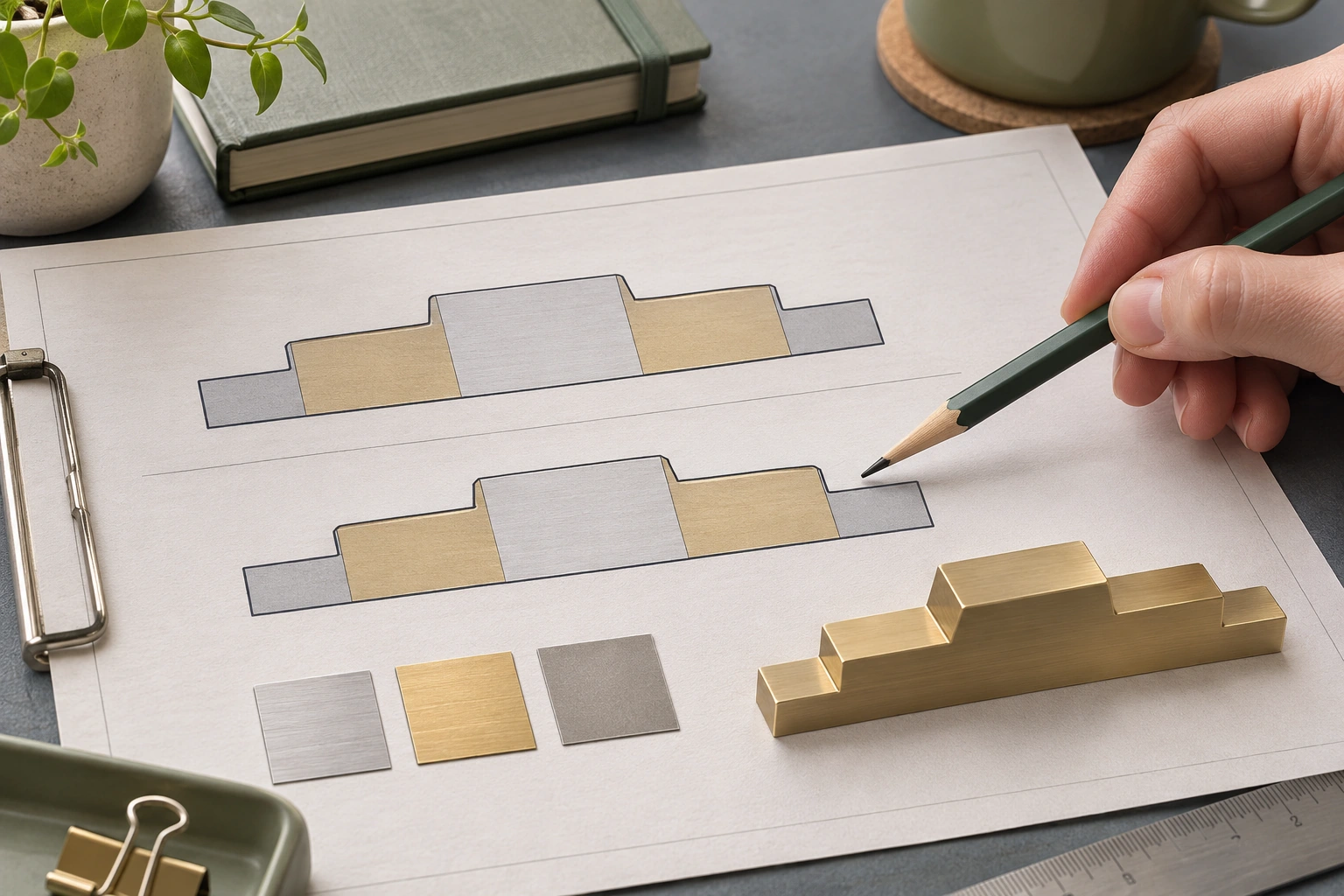
Custom concept illustrations. Final specifications are agreed for your project.
Hospitality identification · Metal room tags · Complete keychains
Plan metal room keychains around the codes your property team actually uses. The shared identity, room or zone reference, metal body and keyring should be reviewed as one operational item, with a clear quantity list for every code and a received arrangement your team can check.
This custom supply option is for motel, hotel and hospitality purchasing teams or their distributors. The illustrated elongated angular tag uses an original identity panel and a separate room-number area. It is a design discussion, not a souvenir collection or a claim of an existing hospitality customer.
Product — a complete metal room-tag keychain with an agreed connector and keyring.
Variable content — room, building or zone codes supplied in an approved schedule.
Receiving task — reconcile complete quantities by code, including any deliberately ordered duplicates.
03 / ARTWORK
Approve the identity and the schedule as separate records
Provide the authorised property identity and a typed schedule of the variable information. Keep leading zeros, letter case, punctuation and spaces exactly as intended. An example image showing one room number does not approve the rest of the order.
Artwork handover
Artwork handover: authorised identity; body and reverse reference; variable-text format; final code schedule; quantity by code; colour choices; connection direction; approval responsibility. Mark placeholder codes clearly and remove them from the production record.
Your artwork, or a direction to develop
Establish the distinction between fixed artwork and variable text. A wing prefix or floor reference may be part of the code rather than a decorative heading. Identify which elements must be read together and how the variable area relates to the body orientation and hanging point.
Use the artwork reference to review text size, contrast, spacing and the proposed production route. Use the schedule to approve the exact entries and quantity of each. Give both records revision names and nominate the person who can approve changes. If a code is confidential, describe the available reference in your initial enquiry and agree its project handover instead of inventing substitute information.
04 / ENAMEL AND METAL
Make the identification readable within the metal design
A metal room tag should be reviewed for its identification task, not only its front decoration. Consider the common identity and the variable number together with the edge, reverse and keyring direction. The project needs an agreed route for creating the variable information; do not assume that every example marking method is included.
Soft enamel
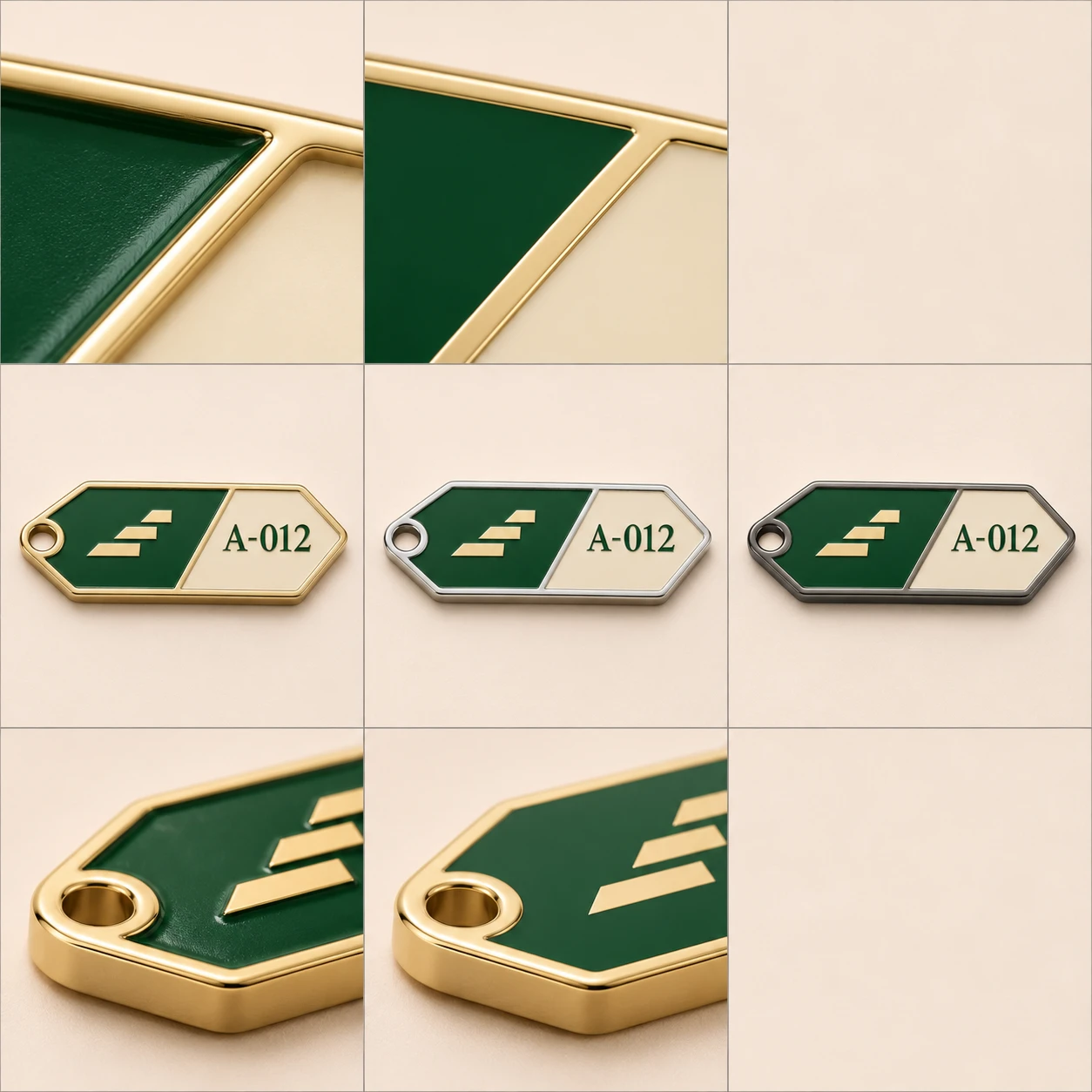
Recessed colour areas and raised metal lines. This product’s process illustration explains the surface; the product specification is reviewed for the individual artwork.
Hard enamel
A polished face brings colour and metal into a flatter appearance. This product’s process illustration is a comparison, not a fixed specification for this product.
An enamel panel can carry a shared identity or specified colour zones. Soft enamel has recessed colour between metal divisions; a hard-enamel route is polished towards a flatter face. These options describe appearance and process choices. They do not establish how a room code will be applied, its readability under every condition or a promised service life.
Discuss the variable-code treatment against the selected body and surface. Confirm the proposed contrast and reference used for review rather than requesting an unverified marking technology by implication. If the reverse also carries variable information, include it in the same code record.
Decision record: common metal body; shared identity; variable-code area and route; front-to-reverse relationship; surface appearance; connection; approved sample scope. The route and sequence are confirmed for the actual combination requested.
METAL FINISH OPTIONS
Gold-tone appearance
A warm metal reference. Confirm the actual finish with the artwork and project specification.
Silver-tone appearance
A lighter metal reference for assessing contrast alongside the selected enamel colours.
Dark metal appearance
A darker metal reference. Its suitability and detailed process are reviewed for the project.
Product-specific illustrated surface and metal-appearance references. Availability, construction, process and final appearance are confirmed for the individual project.
05 / PRESENTATION
Reconcile the order by code, not only by total
The total keychain quantity is only one part of receiving. Agree a breakdown by room or zone code, including the number of complete items for each entry. If spares are required, put their intended codes and quantities in the schedule rather than adding an undefined extra allowance.
SAMPLE AND RECEIVING REVIEW
Specify how the packed order should be grouped: for example, by a supplied building or floor sequence when that is useful to your team. The exact grouping remains a project choice. Labels and packing records should use the same code spelling and revision as the approved schedule.
Review a representative physical item together with the full variable-data record. Agree what the sample represents and how the changing information will be checked. A sample of one code does not silently approve a different font, layout or reverse on another version.
06 / FACTORY
Join metal production with controlled identification records
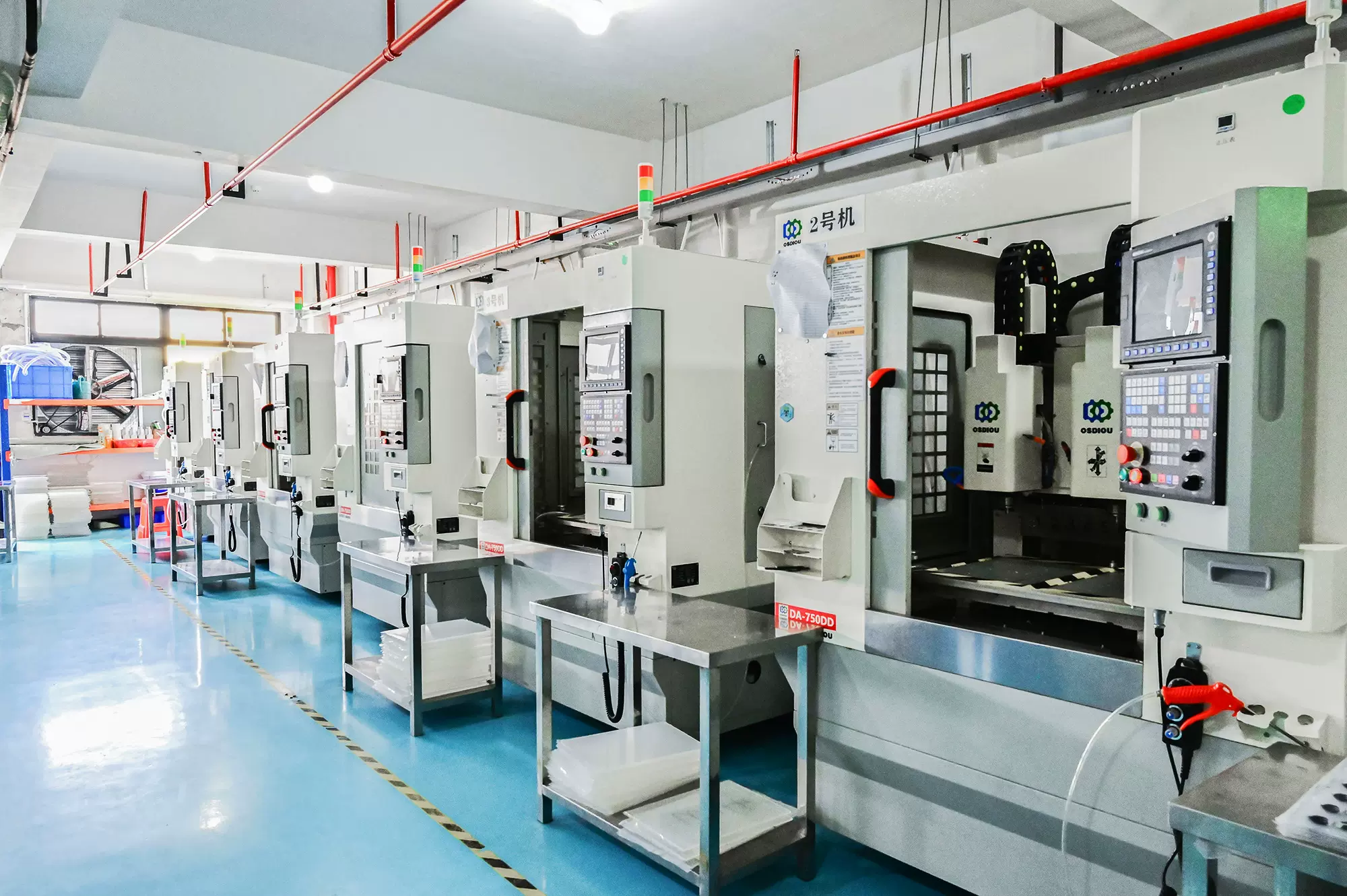
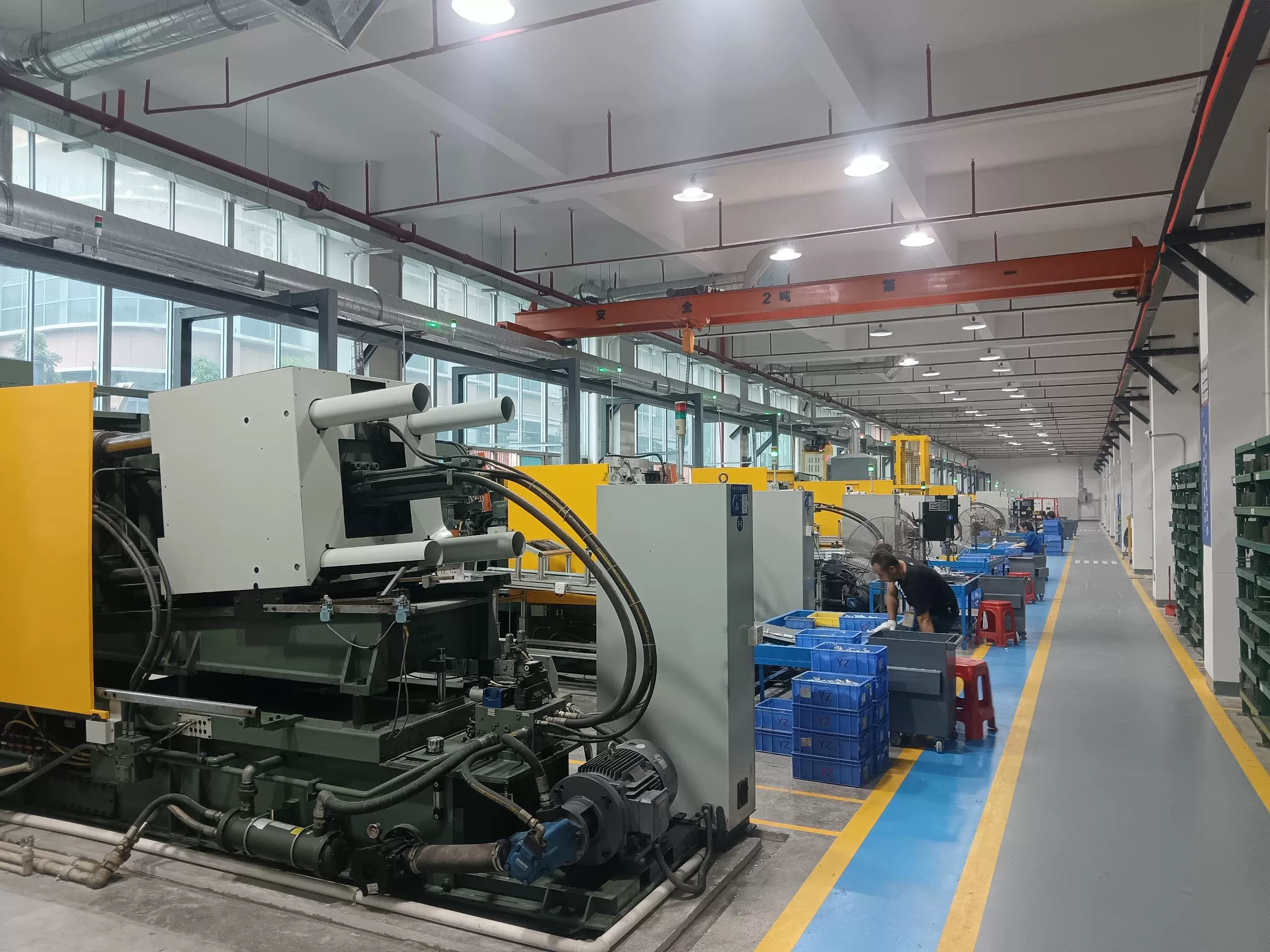
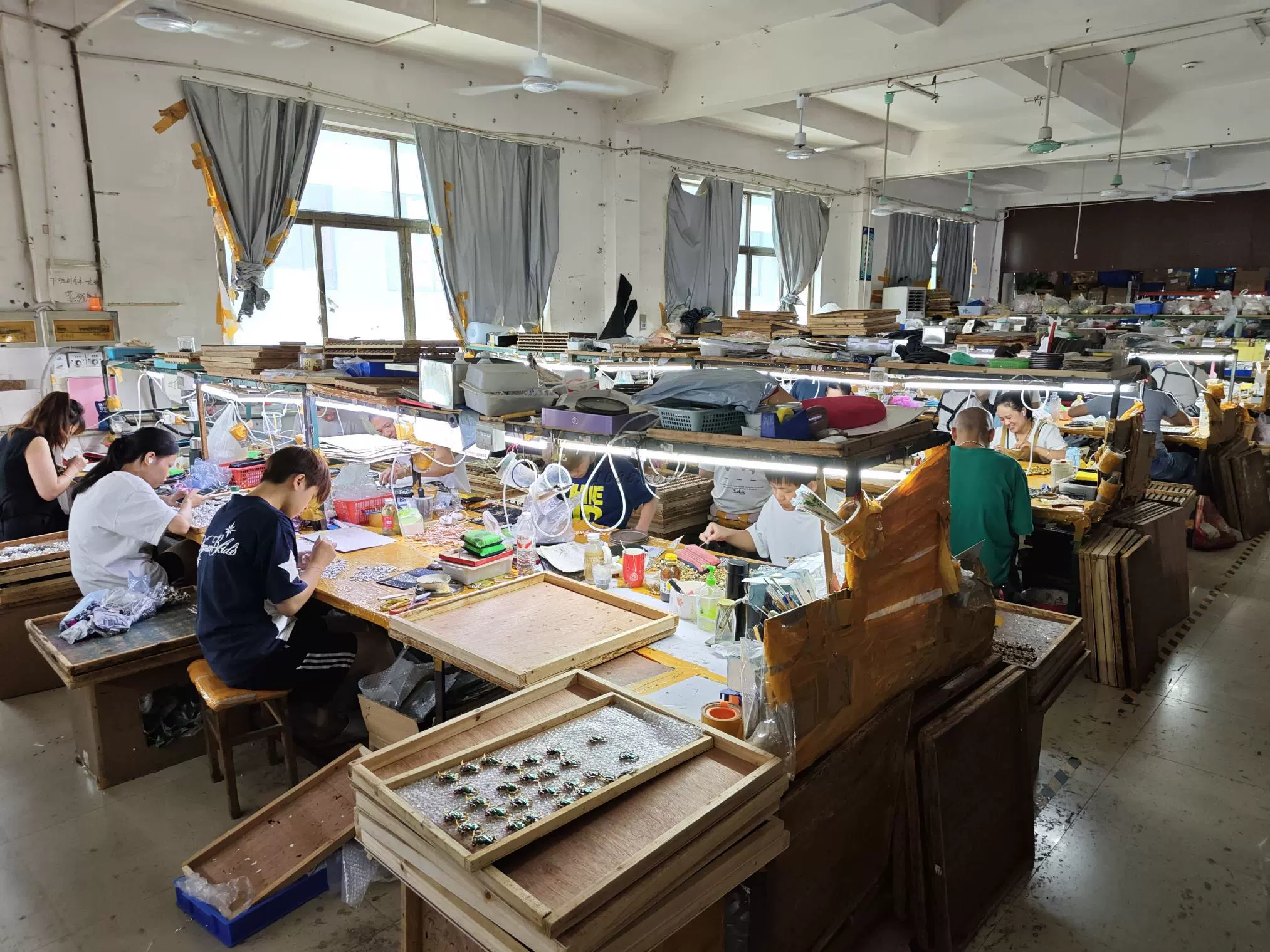
Green Frog Supply’s confirmed in-house manufacturing scope includes tooling, metal forming, colouring, polishing, plating, assembly, inspection and packing. For room keychains, those work areas need to carry the common body reference alongside the approved variable-code instructions. Any specific marking route is reviewed separately; the general scope does not establish a particular machine or technology.
Arrange a factory visit, video walkthrough or project-relevant factory and inspection information when needed for supplier review. Clarify which records concern general capability and which relate to your particular code schedule and order.
Explore Our Factory and Manufacturing.
Work area · Room-keychain project responsibility

Tooling
Establish the agreed body, common identity layout and hanging point
Metal forming
Produce the common metal-tag construction for the approved project
Colouring
Apply the specified shared identity or colour version

Polishing
Finish relevant surfaces and edges under the selected route

Plating
Provide the agreed metal appearance while accounting for the identification layout

Assembly
Combine each correct tag with the specified connector and keyring
Inspection
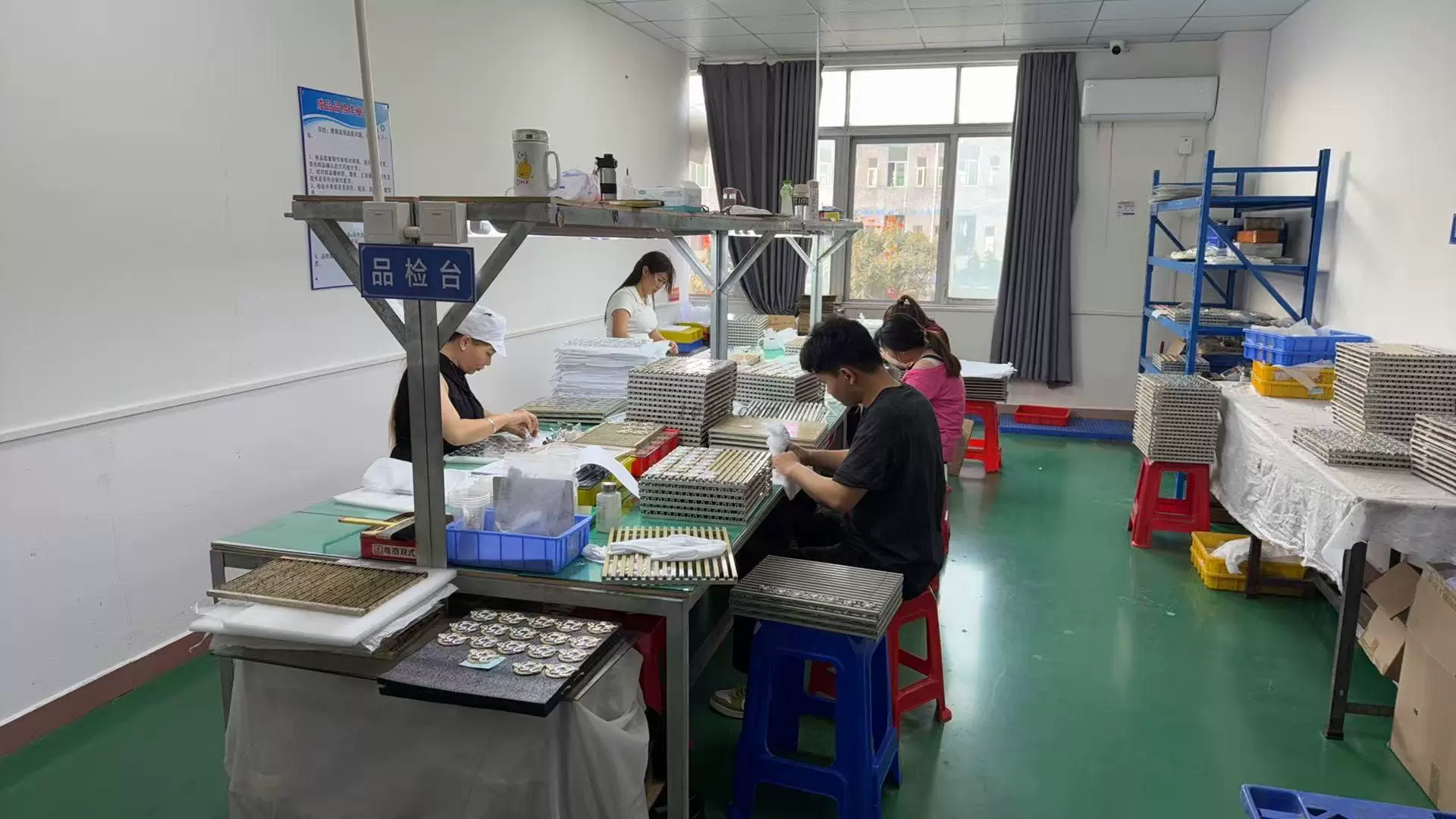
Review physical references and the agreed code-and-quantity schedule
Packing
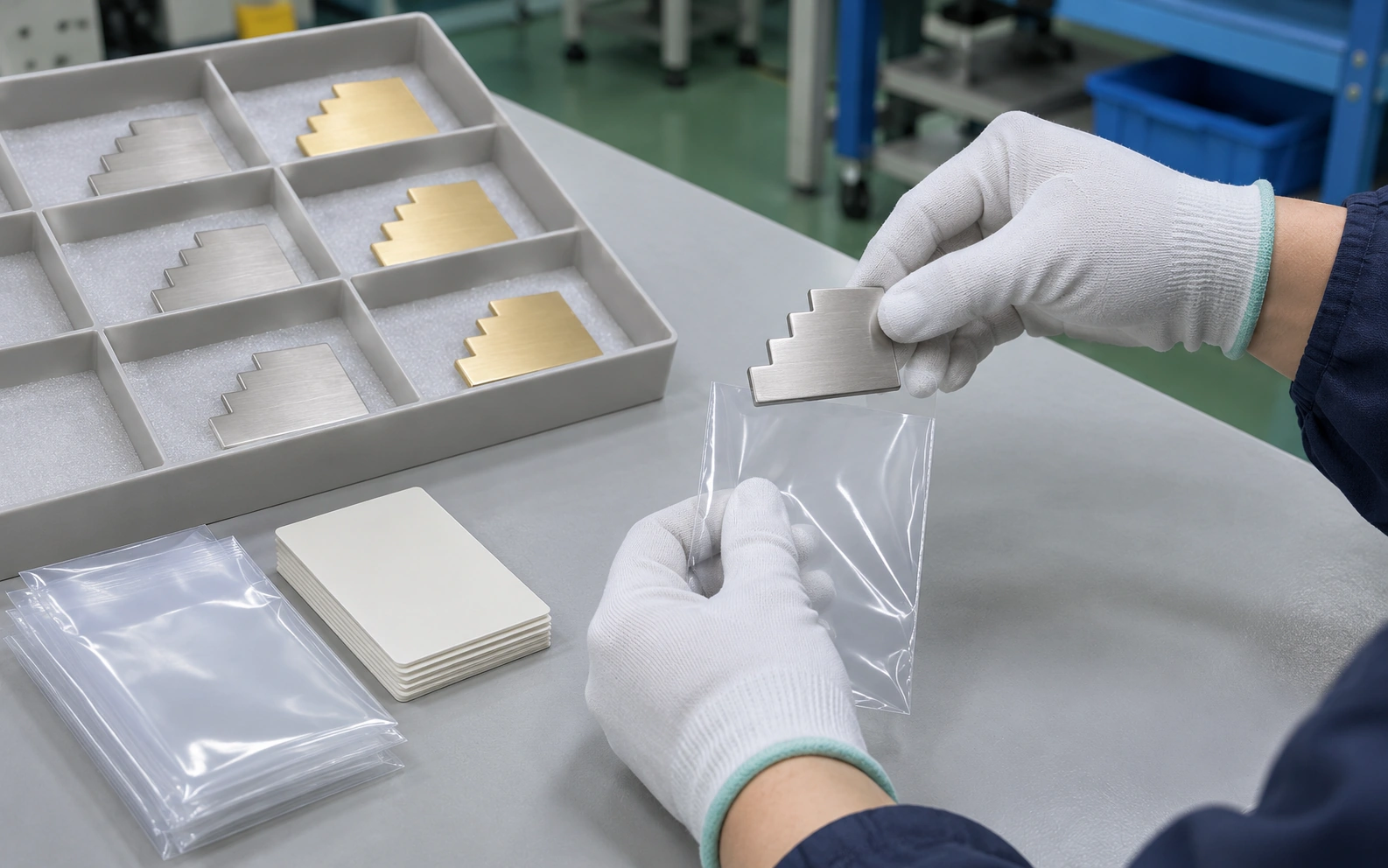
Group and identify complete items for the receiving team's reconciliation
Company archive photographs show general factory work areas; restored versions are labelled. Polishing, plating and packing remain illustrations. These visuals are not photographs of an identified property's room system or evidence of an inspection result.
07 / PRODUCTION
Carry the approved code record with the physical item
The construction and variable-information route determine the actual production sequence. These stages show the required states and handovers without prescribing an unconfirmed marking process.
The selected material, construction and finish determine the manufacturing route, with enamel included where specified. These operations explain our scope; they are not one universal production sequence.
01 / Common body and code reference
Establish the authorised identity, body outline, reverse, hanging point and variable area. Lock the schedule revision and identify deliberate repeated codes or spare quantities.
02 / Metal tag formation
Produce the common body under the selected construction. Keep the identity area, variable area and connection provision consistent with the approved reference.
03 / Surface and identification work
Follow the agreed colour, metal treatment and variable-code route in the appropriate sequence. Maintain the link between each code entry and its physical version rather than treating all tags as interchangeable.
04 / Polishing
Refine the relevant surfaces according to the selected construction and agreed finish. Where enamel is specified, the soft or hard enamel route is reviewed for the design.
05 / Plating
Review the specified metal treatment with the agreed appearance reference. Where enamel is specified, assess it with the selected colours. The construction and finish determine the detailed route.
06 / Complete keychain assembly
Fit the agreed connector and ring to the identified body. Review the readable direction in the complete item and keep it associated with the correct schedule entry.
07 / Physical and schedule review
Use the agreed sample and code record to review identity, variable content, quantities and assembled scope. Any specified inspection method and reporting arrangement must be agreed for the order.
08 / Grouped packing
Protect and group the complete keychains according to the receiving plan. Carry the approved code references into the labels and packing record rather than relying on a total count alone.
Optional soft enamel route
If an enamel identity panel is specified, raised metal and recessed colour are part of the intended surface. Review that panel with the complete item and agreed construction.
Optional hard enamel route
If an enamel identity panel is specified, the filled face is polished for a flatter colour-and-metal surface. Review that panel with the complete item and agreed construction.
Process order and review points are confirmed for the chosen specification. Company archive photographs show general work areas; polishing, plating and packing use illustrations. These references do not document this particular product being manufactured.
08 / COOPERATION
Give the property team clear approval responsibilities

01 · Describe the property programme
Share the intended use, complete-item quantity, destination and requested timing. Explain whether the enquiry covers one property or a group with different identities or code systems.

02 · Define the body and identification format
Review the metal construction, connector, ring and common artwork. Agree how rooms, buildings or zones will be represented and identify any unresolved code-format question.
03 · Reconcile the proposed schedule
Provide the typed code-and-quantity list and compare it with the artwork reference. Resolve placeholder entries, leading zeros, repeats and totals before approval.

04 · Agree sample and sign-off scope
Confirm the representative item, variable-information review and any additional assessment required. Name the approving contact and record charges, changes and the revision to be used.

05 · Confirm production and grouping
Review the actual quotation, quantities, schedule and packed form. Approve the group labels and receiving sequence using the same names as the property records.
06 · Coordinate receiving and reorders
Confirm delivery arrangements and retain the approved body and code records. A later replacement or added room should identify the old reference and the exact new entries rather than relying on an informal photograph.
09 / FAQ
Questions for hospitality identification orders
Is this a souvenir motel keychain or an operational room tag?
This page addresses metal keychains bought for an agreed room or zone identification system. The common identity and changing codes are part of one procurement brief, with complete quantities reconciled by entry. A souvenir using a motel-style outline but no operational code schedule is a different task. The project scope should state which use your organisation intends before the body and artwork are approved.
Are actual property keys included?
The supplied scope discussed here is the metal tag with its agreed connector and keyring. Property keys, lock systems and access credentials are not implied. If the ring or arrangement must suit an existing key, provide the relevant reference and explain the requirement. Confirm the exact received contents in the quotation and approval record rather than assuming that a pictured key is included.
How should we provide room numbers and other codes?
Send a typed schedule with each exact code, its version or property identity and the quantity required. Preserve leading zeros, case, punctuation and spaces. Explain whether a building or floor prefix is part of the code. Give the schedule a revision and keep it linked to the artwork approval; a screenshot of several example tags is not a reliable record of the full order.
Can one order include repeated codes and spare tags?
Discuss the requirement explicitly and assign a complete-item quantity to each code. An intentionally repeated entry should not be treated as a duplicate to remove, while an accidental repeated row should not be interpreted as an extra order. Identify spares in the approved record and agree their grouping. Commercial conditions and the production arrangement are reviewed for the actual schedule.
Can properties share a body but have different identities?
A common body with different authorised identities can be discussed. Keep the shared construction separate from the changing logo, colour, reverse and code format, and give each version a clear reference. The artwork and quantity schedule must show which entries belong to each property. Any effect on tooling, sample review, price or packing is confirmed for that combination.
How will the variable codes be put on the metal?
The route needs to be reviewed against the body, surface, content and intended appearance. Provide the code format and any existing reference your team needs to match. Confirm the agreed treatment in the proposal and approval record, together with the reference used to review the variable information. Keep the marking choice linked to the approved body, surface and exact code schedule.
Can the reverse repeat the room code?
Include that requirement in the brief, with the exact relationship between front and reverse. If both sides contain variable information, the schedule and approval record need to account for both. A plain reverse is also an explicit option to record. Available space and the proposed construction affect the artwork review; a front-only illustration does not define the back.
What does approval of one sample code cover?
Agree that scope before approval. A representative sample may help review the body, surface, connection and identification layout, while the full schedule approves the exact changing entries and quantities. Record any differences that the sample does not represent. Approval of one physical tag should not be assumed to approve every code, a different property identity or an unshown reverse treatment.
Can packing follow our room or floor sequence?
Provide the sequence or grouping your receiving team needs and use the same codes as the approved schedule. Discuss labels, protection and the number of complete items for each entry. The packed arrangement is a project scope to agree, not an automatic feature of a metal tag. Confirm it alongside the quotation and receiving record before the order is authorised.
How do we plan a later replacement or additional room?
Retain the approved body, artwork, component and code references from the order. For a new enquiry, identify the exact entries and quantities to add or replace, along with any changed identity, reverse or packing requirement. The current material, components, commercial conditions and timing must be reviewed for that order; an earlier photograph alone does not establish a complete reorder specification.
10 / ARTICLES
Hospitality keychain buying notes
Relevant guidance can help your team prepare a code schedule, review a representative sample and define receiving quantities. Published articles will appear here when their topic matches this identification task.
11 / RELATED PRODUCTS
Compare identification and distribution tasks
Choose a product according to the information it carries and the way it will be used, rather than using the same logo layout for every item.
Company logo keychains
Discuss a shared decorative identity without a room-by-room code schedule when the programme is a general brand distribution order.

Company logo pins
Choose a wearable brand identity when the programme calls for a clothing fastening instead of a room-code keychain.

Metal charm components
Discuss bodies and specifically agreed fittings for your own downstream assembly when a complete room-identification keychain is not the required received unit.
12 / ENQUIRY
Build the brief around your identification schedule
Tell us the property or group context, the number of complete keychains and the format of the room or zone codes. Provide the authorised identity and describe the code schedule available. Explain which choices are fixed and which need review.
Include the receiving arrangement, destination and requested timing. The body construction, identification route, sample scope, MOQ, pricing and delivery arrangements are confirmed for the actual project. The example artwork does not substitute for an approved property schedule.
- Complete quantity and typed quantity-by-code schedule.
- Authorised identity and any property-specific versions.
- Exact code format, including prefixes and leading zeros.
- Body dimensions, reverse content and surface preferences.
- Connector, keyring and existing key-arrangement reference.
- Representative-sample and variable-data approval needs.
- Protection, grouping sequence and receiving-label requirements.
- Destination, requested timing and approving contact.
Email property artwork and the room/zone code schedule to [email protected]. Identify the latest revision and any details still open for review. Review the enquiry privacy notice before sending your business contact and project information.
PROJECT BRIEF
Custom Motel Keychains in Bulk