

COMPLETE CUSTOM GARMENT BUTTONS
Custom Metal Buttons for Garment Orders
Develop custom metal buttons for apparel brands, uniform suppliers and garment factories. We supply complete buttons with the agreed construction. Review the brand face, sewing interface and actual garment closure together before releasing the bulk order.
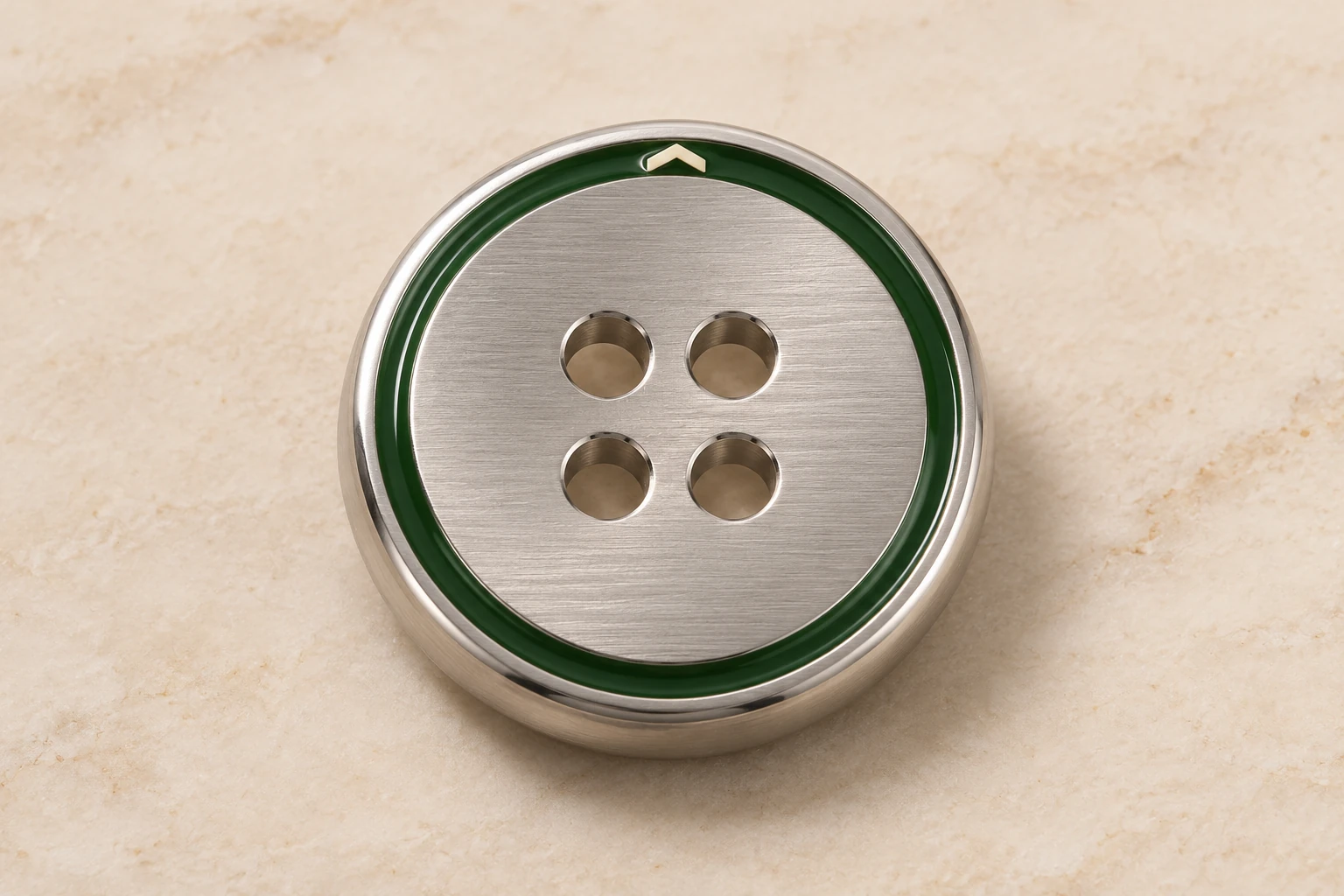
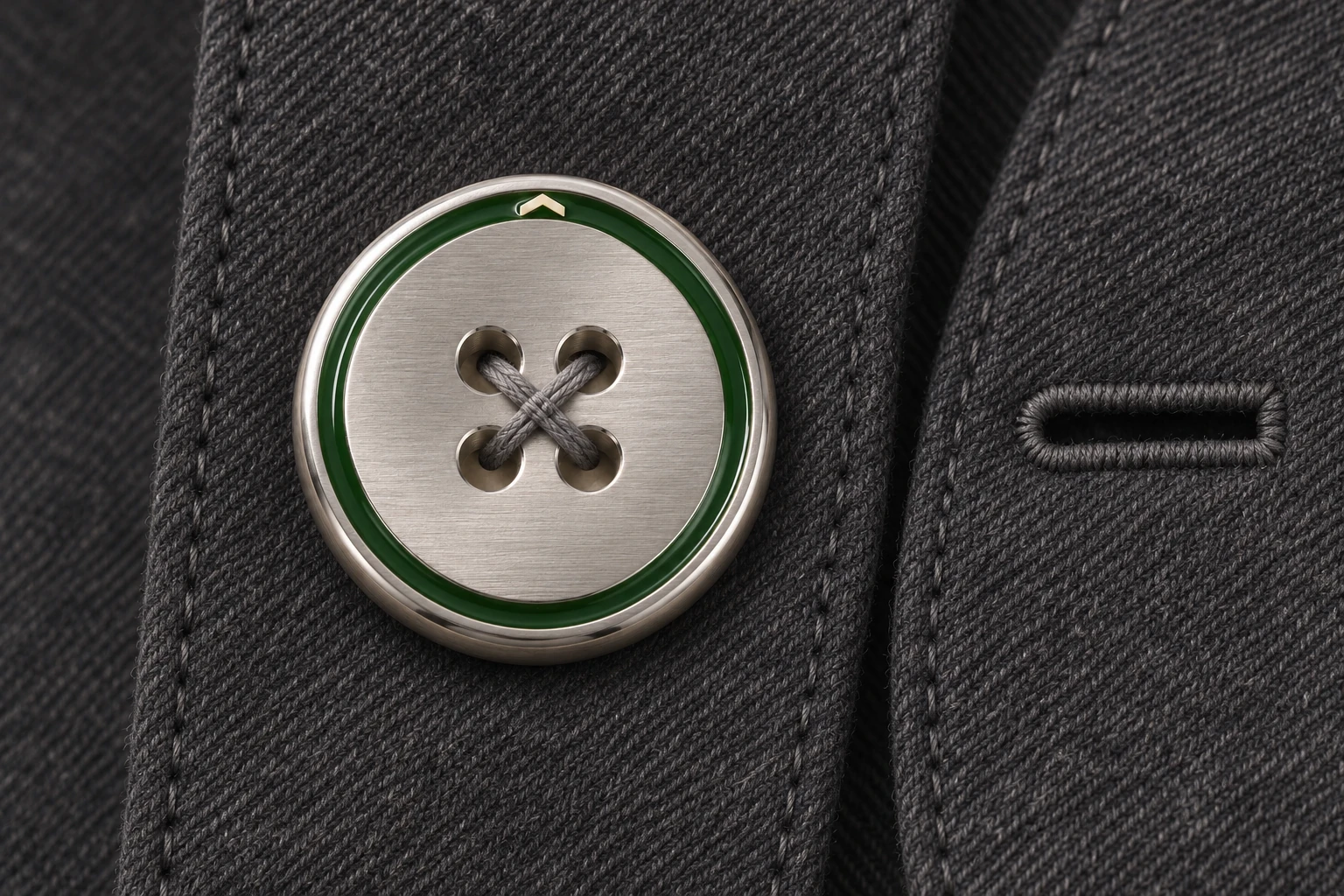
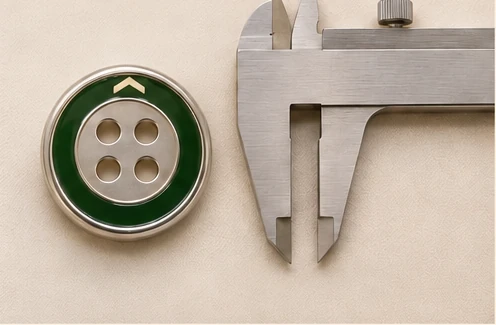
Illustrative four-hole sewing-button reference. Metal, dimensions, other hole or shank configurations and finish are reviewed for each project.
02 / PRODUCT DETAILS
Specify a working garment closure alongside the brand face.
The reference is a round, silver-tone metal button with four open sewing holes and a small abstract geometric brand mark. It is supplied as a complete button for sewing onto a garment. Its profile, thread path and matching buttonhole need approval together; a face proof alone does not establish closure fit.
Brand face
Review the artwork, outline and visible metal boundaries.

Functional interface
Check the finished sewing holes and buttonhole fit with the intended garment fabric.
Reverse and assembly
Review the supplied construction and all fabric-contact areas.
Illustrative four-hole sewing-button reference. Metal, dimensions, other hole or shank configurations and finish are reviewed for each project.
03 / ARTWORK
Keep the logo, hole layout and garment reference aligned.
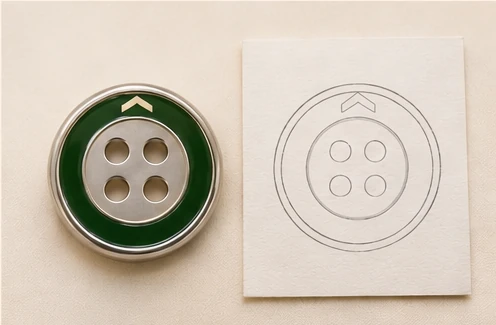
Send authorized brand artwork with the complete button drawing and the intended garment position. Give the sewing team and sample reviewer the same revision so a logo change does not obscure a change to the closure.
Email artwork, garment references and technical drawings to [email protected] with your project reference.
Garment closure reference
Supply a sample or technical reference for the fabric, reinforcement and mating buttonhole. Mark which garment sizes or constructions the approval needs to cover.
Version register
Separate changes to the button body from changes to the logo or finish. Assign each combination a reference and quantity, including any spare-button packing version.
04 / ENAMEL AND METAL
Review the surface on the complete sewing button.
The silver-tone reference leaves the four holes visible around the small brand motif. If color is requested, its position and surface route must suit the actual metal and body. Compare the finished button loose and sewn, with the thread and garment fabric present.

Recessed enamel review
Discuss recessed color where the brand drawing allows it. Review the metal divisions and fill near the motif while keeping the sewing openings and thread path clear.

Smooth enamel review
Review a smoother enamel face if required for the design. Confirm the proposed route on the actual button profile and check the definition left around the holes and brand detail.
METAL FINISH REFERENCES
Gold-tone appearance
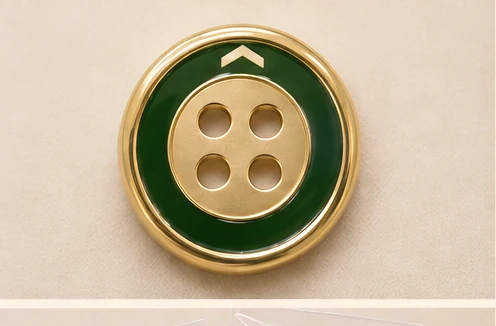
Compare a physical finish reference with the garment fabric, zipper and other trims. Record the approved tone and brightness without treating a color name as a material specification.

Silver-tone reference
Examine the face, rim and reverse together. Use the same lighting for comparing the small geometric mark, the exposed metal and the finished hole edges.
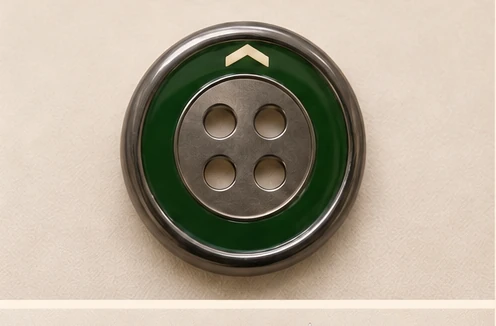
Dark metal appearance
Assess the contrast around the logo and sewing holes. Check the face and reverse against the garment reference before approving a darker finish for a version.
Any required washing, rubbing or repeated-closure evaluation is agreed with its method, sample and acceptance criteria. The illustration does not establish a performance grade.
05 / PRESENTATION
Keep complete buttons identifiable at the sewing line.
The packing specification should let the receiving team identify the correct button without relying on appearance alone. Review the packed sample for face protection and clear separation of closely related sizes or finishes.

SAMPLE REVIEW
Pack materials, contents and quantities are confirmed for the order. Garment sewing is assigned separately from the supply of complete buttons.
06 / FACTORY
From tooling to packing. In our own factory.
Green Frog Supply is operated by HANGZHOU FORTHRIGHT TRADE CO., LTD in Hangzhou, China. Our factory carries out tooling, metal forming, colouring, polishing, plating, assembly, inspection and packing in-house.
Company archive photographs show established work areas. Review the proposed product route, responsibility for supplied parts, assembly and sample for this project.

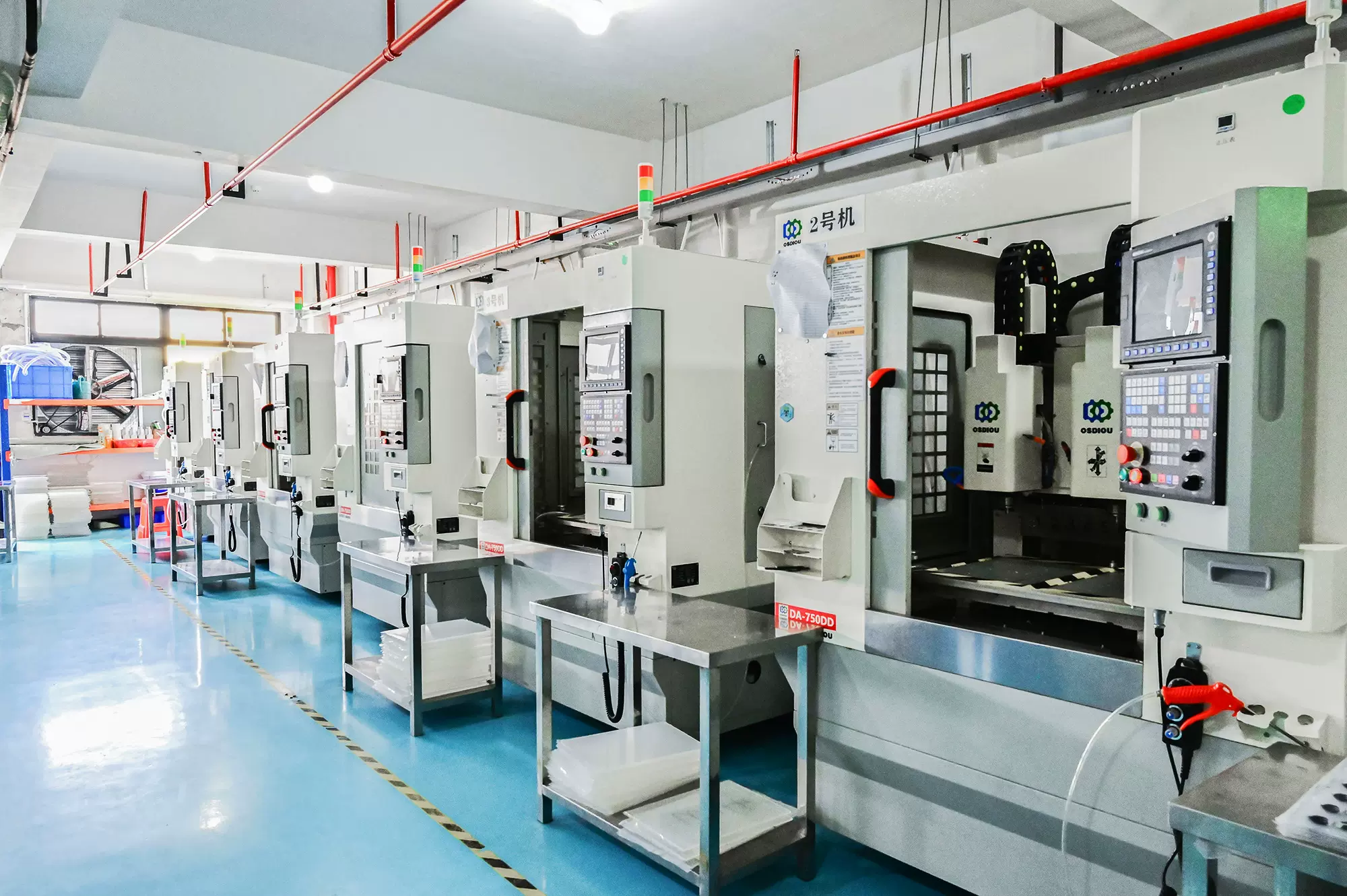
Tooling
Keep the round outline, four-hole layout and brand detail on the controlled drawing. Resolve the proposed profile and metal around the openings before releasing the tooling reference.
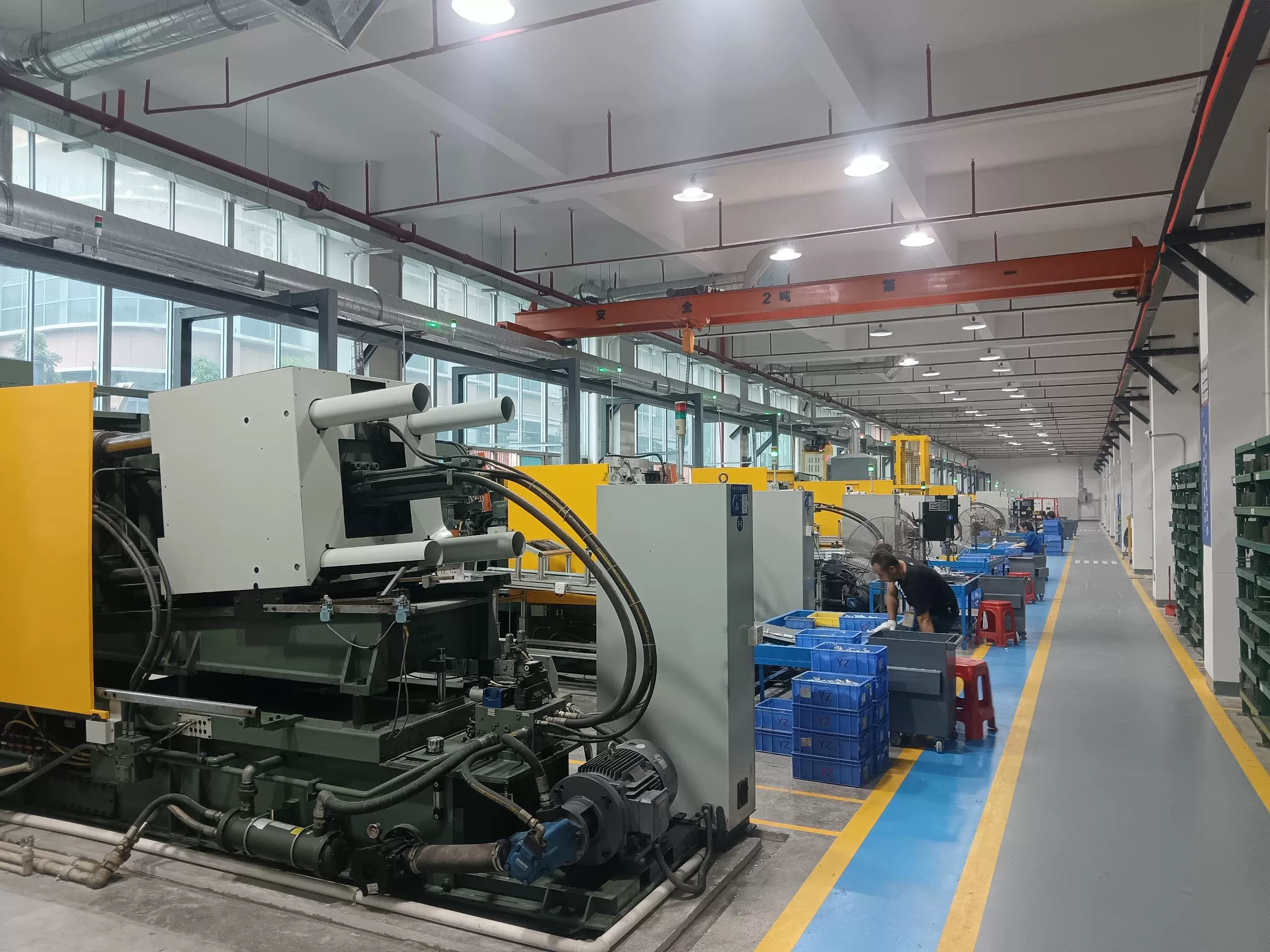
Metal forming
Compare the body with the agreed shape and profile. Check that the hole positions and reverse correspond to the construction intended for the garment sample.
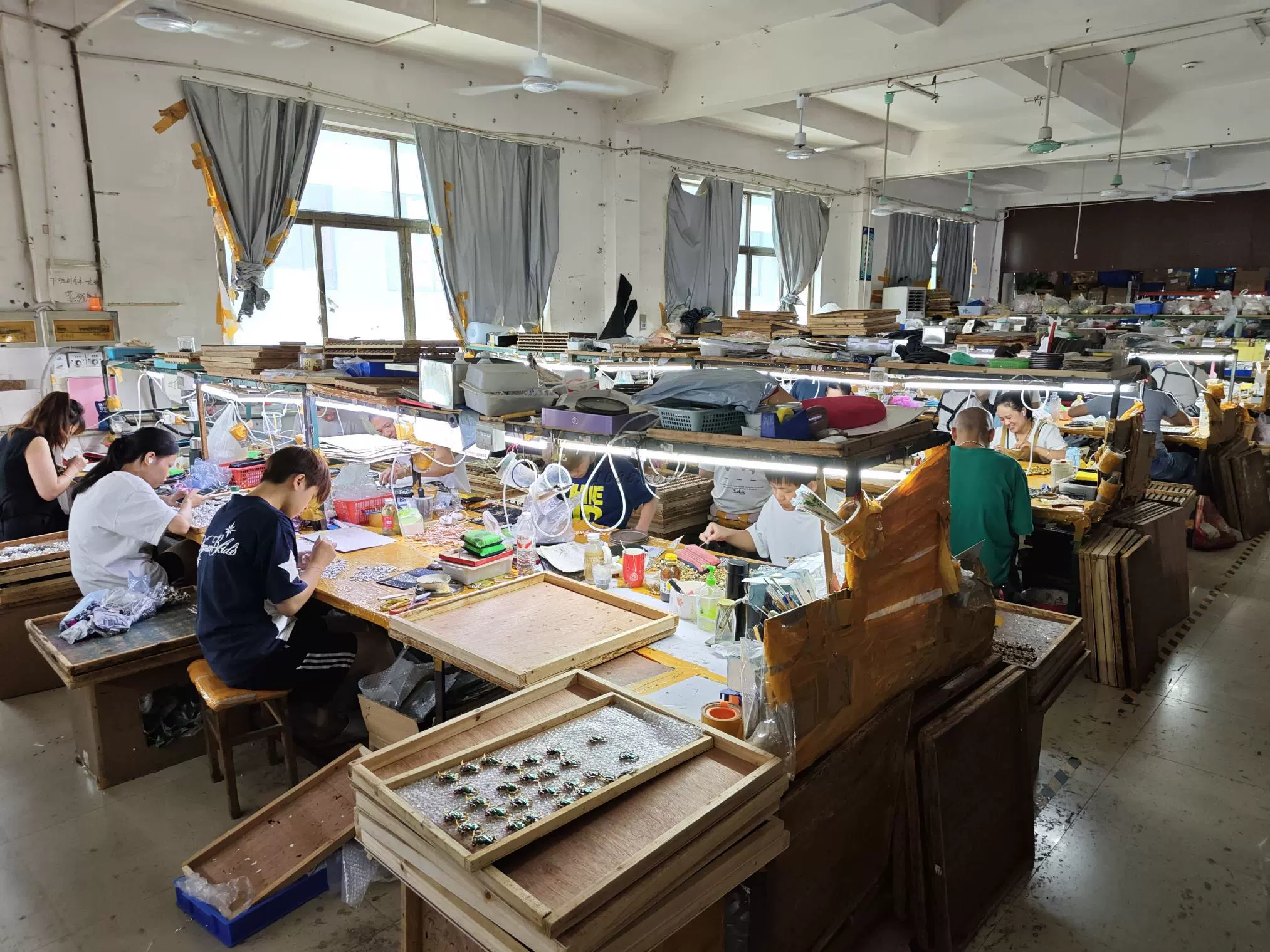
Manual work area
Company archive view of manual small-part work. Review the proposed enamel route separately against the approved sample.
Polishing
Inspect the outer rim, reverse and both sides of each opening. Include the surfaces that meet the thread and fabric in the accepted sample reference.
Plating
Compare the finished body with the selected appearance. Recheck the openings and profile after the surface work, using the drawing and garment approval references.
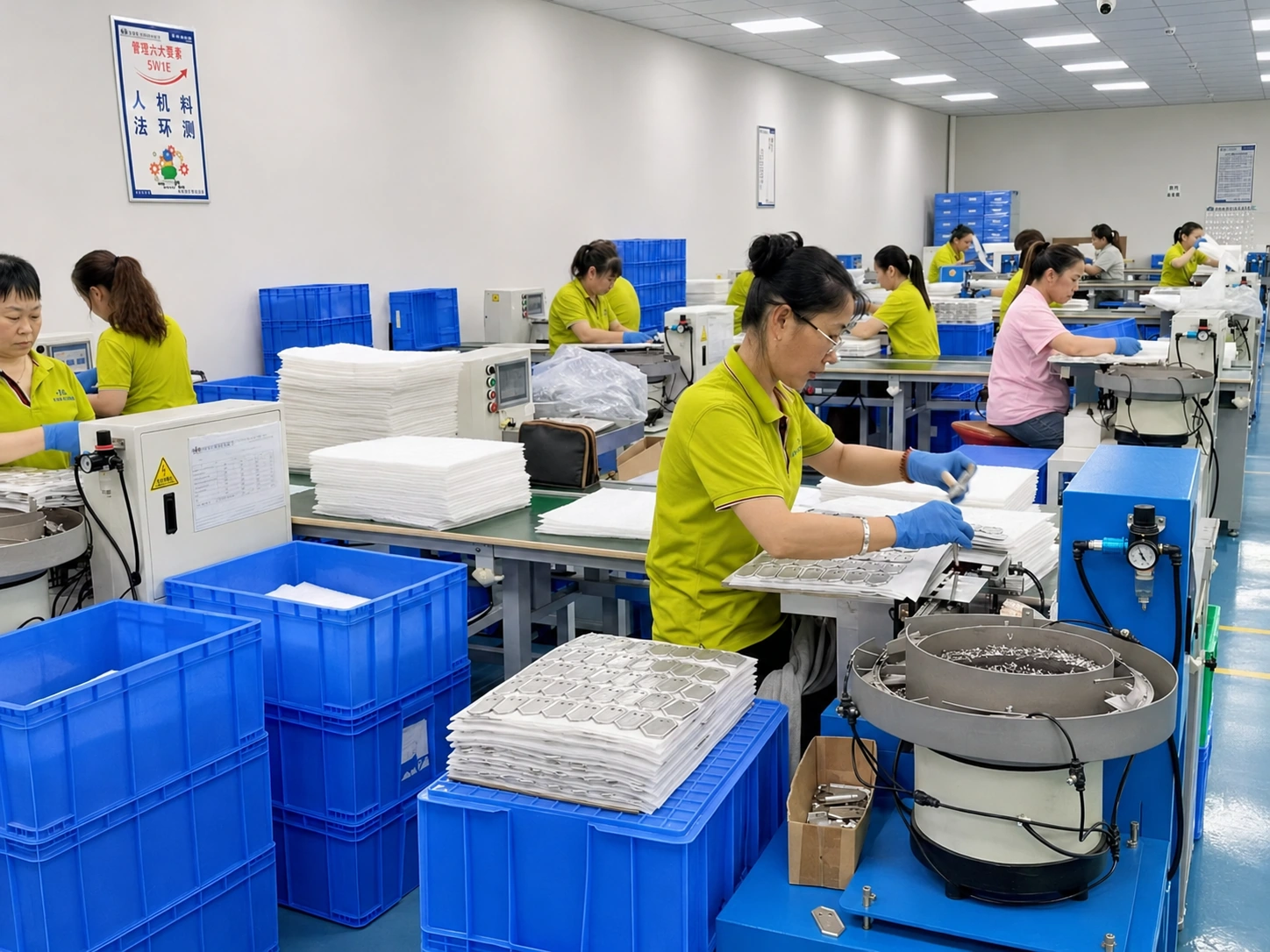
Assembly work area
Company archive view of small-part assembly. The button is supplied complete; garment sewing and fitted approval are coordinated with the receiving garment factory.
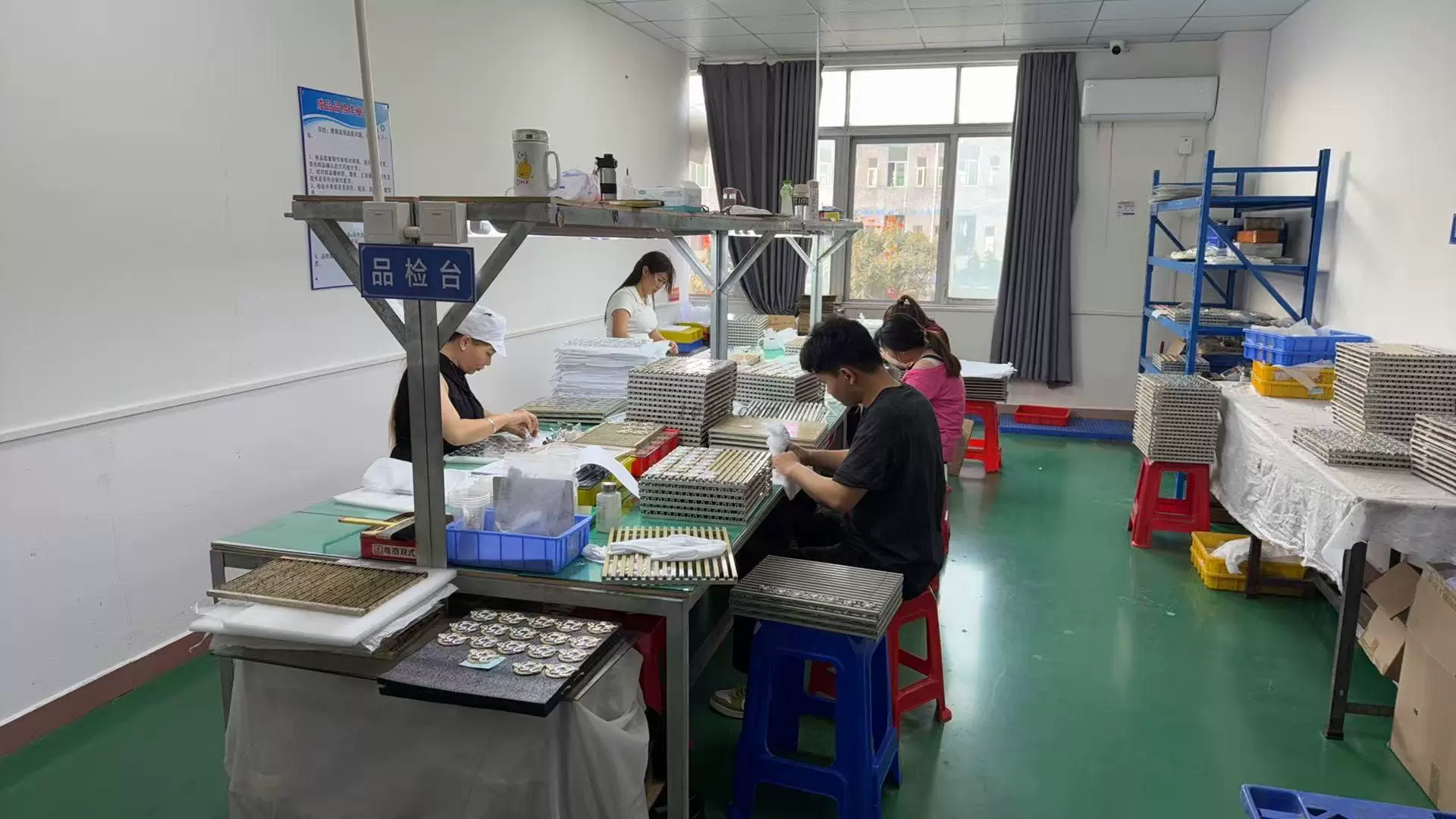
Inspection
Use the approved drawing and sample to review body dimensions, holes, brand detail and finish. Keep the agreed sewn-closure observations with the inspection requirements.
Packing
Separate styles, sizes and finishes before counting. Protect the completed faces and reconcile the contents of each pack with the approved order and replacement-button lines.
Company archive photographs identify general work areas. Product process and packing images are illustrative references for discussion.
07 / PRODUCTION
Carry the closure specification through production.
Our own-factory scope includes tooling, metal forming, enamel coloring, polishing, electroplating, assembly, inspection and packing. The reviewed button drawing defines the applicable route. General factory photographs show the relevant workplace context; they do not document a dedicated button line or a completed test.
01 / Tooling review
Keep the round outline, four-hole layout and brand detail on the controlled drawing. Resolve the proposed profile and metal around the openings before releasing the tooling reference.
02 / Metal body
Compare the body with the agreed shape and profile. Check that the hole positions and reverse correspond to the construction intended for the garment sample.
03 / Brand detail
Review the geometric mark and any agreed enamel areas against the face proof. Identify details affected by scale and maintain the clear sewing zones around the holes.
04 / Polishing
Inspect the outer rim, reverse and both sides of each opening. Include the surfaces that meet the thread and fabric in the accepted sample reference.
05 / Metal finish
Compare the finished body with the selected appearance. Recheck the openings and profile after the surface work, using the drawing and garment approval references.
06 / Closure sample
Review complete buttons sewn onto the intended fabric stack by the agreed installer. Check buttoning, unbuttoning and the closed position with the actual mating opening.
07 / Inspection
Use the approved drawing and sample to review body dimensions, holes, brand detail and finish. Keep the agreed sewn-closure observations with the inspection requirements.
08 / Packing
Separate styles, sizes and finishes before counting. Protect the completed faces and reconcile the contents of each pack with the approved order and replacement-button lines.
Recessed enamel review route
Discuss recessed color where the brand drawing allows it. Review the metal divisions and fill near the motif while keeping the sewing openings and thread path clear.
Smooth enamel review route
Review a smoother enamel face if required for the design. Confirm the proposed route on the actual button profile and check the definition left around the holes and brand detail.
A loose-button approval and a sewn-closure approval answer different questions. Retain both references and identify the garment constructions they cover.
08 / COOPERATION
Connect the brand decision with the garment factory's approval.
The brand approves its identity and appearance. The garment team confirms how the button is sewn and used. Name the reviewers and record their decisions before the production quantity is released.

01 / Project brief
Identify the garment collection, button position and intended closure. Send artwork, initial size direction, quantities by version, destination and any garment samples available for review.

02 / Specification
Agree the complete button construction, material proposal, face and finish. Define the sewing reference, mating opening, supplied packing and any requested assessment before the sample scope is confirmed.

03 / Sample review
Examine the finished button, then the sewn closure. Record thread contact, passage through the buttonhole, resting position and the agreed appearance with the garment closed.

04 / Production plan
Release the drawing and sample revisions with quantities for each style, size and finish. Confirm the inspection record, receiving labels and project schedule with the order.

05 / Packing and dispatch
Agree the inner-pack counts and carton allocation with the receiving garment factory. List any replacement buttons or separate presentation requirements so they are not mixed into line-use quantities.
Illustrative project materials. Quantities, sampling and timing are specified for the order.
09 / FAQ
Planning a custom metal button order?
Develop custom metal buttons for apparel brands, uniform suppliers and garment factories. We supply complete buttons with the agreed construction. Review the brand face, sewing interface and actual garment closure together before releasing the bulk order.
Do you supply complete metal buttons?
Yes. We supply complete buttons with the construction and finish agreed for the project. The reference shown is a four-hole sewing button. The order should identify each style, physical size, finish, quantity and packing arrangement. Sewing the buttons onto garments is assigned to the agreed installer.
Does the four-hole reference cover other hole or shank arrangements?
It shows one development direction, not an established range of every construction. Send the required hole layout or shank reference with the garment and mating opening. The actual construction, material and sample scope are reviewed before that version is included in the quotation.
Why do you need the actual garment and buttonhole?
The opening, fabric layers and stitching affect how the button passes through and rests when closed. A button that looks correct in a face proof still needs a sewn fitting review. Identify the garment constructions and size range that the representative sample should cover.
What should the sewing-hole drawing show?
Show the finished opening dimensions, center positions and intended stitch path. Include the reverse profile and any required clearance beneath the sewn button. Check the completed holes with the intended thread, rather than assuming the surface route leaves every opening unchanged.
Can the brand mark sit beside the sewing holes?
Provide its proposed position on the front drawing and identify the essential details. Review it at the actual size with stitches present. The artwork may need adjustment where fine lines, color areas or raised detail compete with a hole or the thread path.
How should we specify the metal and finish?
State any material requirements and provide a physical appearance reference if available. Review the proposed metal, profile and finish together on the sample. Silver-tone, gold-tone or dark appearance describes the intended look; it does not by itself identify a metal grade or performance level.
How are washing and closure checks agreed?
Tell us the garment's intended care and any assessment your team requires. Define the method, representative sewn sample and acceptance criteria as part of the project. Keep appearance, thread contact and closure observations separately identifiable; no wash rating or operating-life result follows from an illustration.
Can several button sizes share one approval?
List each physical size and construction separately. A shared logo does not establish the same sewing or buttonhole fit across sizes. Agree which drawing and garment samples cover each version, and identify any changes to hole spacing, profile or artwork before releasing the quantities.
How are production buttons and replacements counted?
Use complete buttons as the piece unit. State the quantity for each style, size and finish, then list any extra replacement buttons separately. Keep those references on pack labels so receiving staff can distinguish sewing-line stock from the separately ordered replacements.
What should we retain for a repeat order?
Keep the button drawing, face proof, finish sample, sewn-closure reference and packing revision. Send them with the new version quantities. Flag changes to the fabric, buttonhole, sewing method or care requirements as well as artwork changes, so the affected approval can be reviewed.
10 / ARTICLES
Related purchasing guidance.
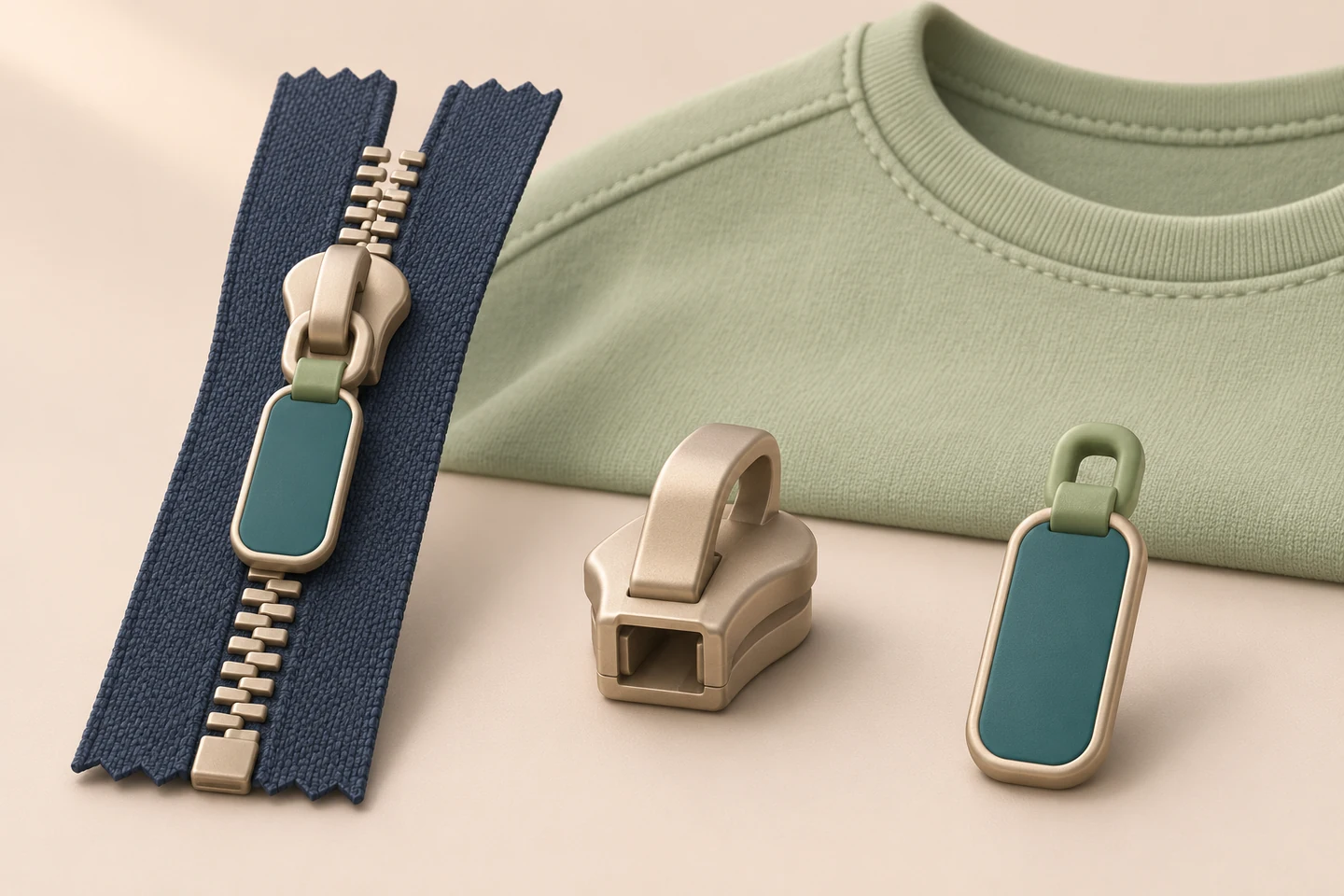
How To Compare Zipper Pull Suppliers For Apparel
Decide which zipper parts you need, give suppliers the actual slider, and compare what each quote includes before approving an installed sample.
How To Match Metal Charm Finishes Across Parts And Lots
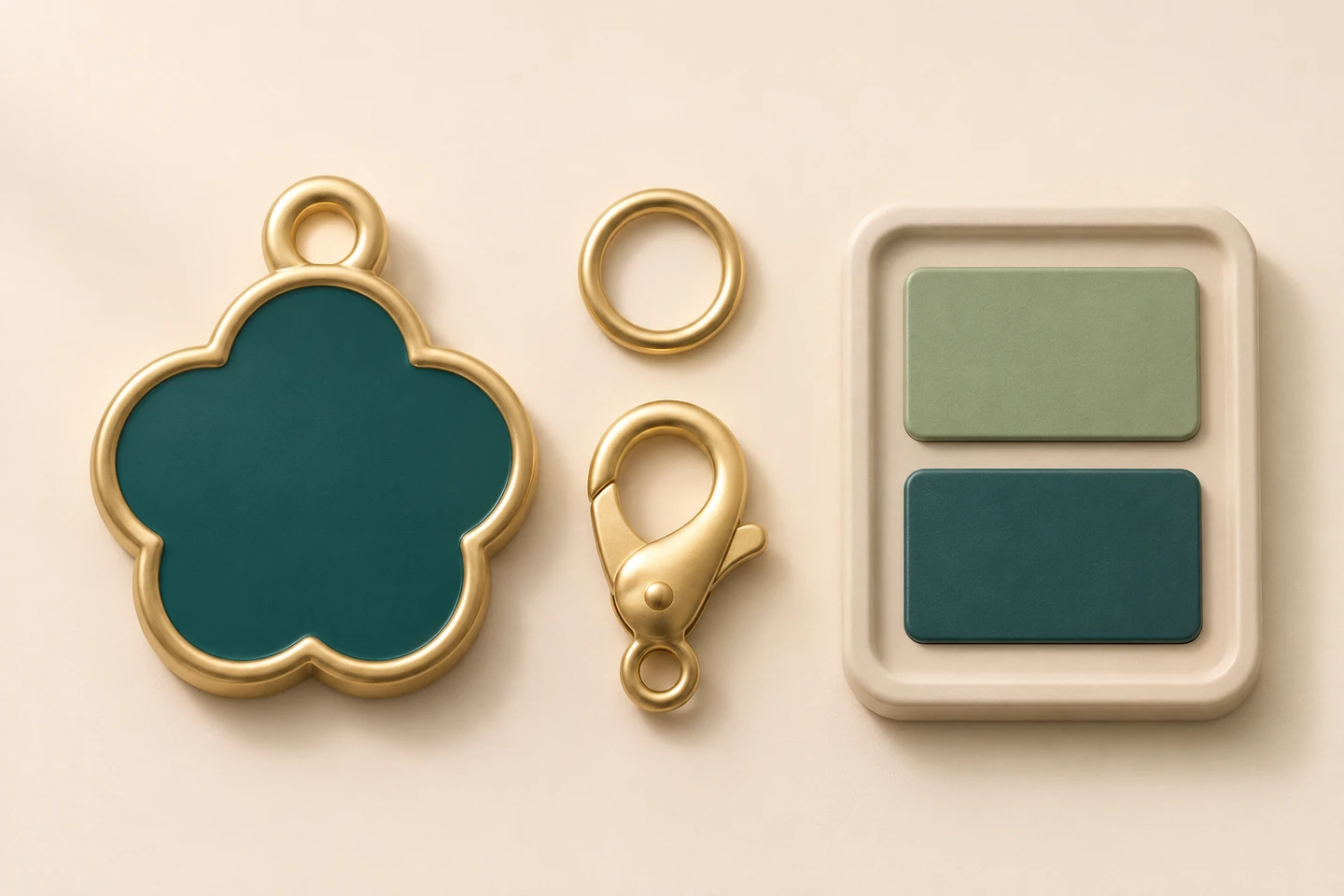
Approve a physical finish master that includes the separate parts, then use it to compare assemblies and decide whether to release a production lot.

How To Reorder Custom Metal Merchandise
Reconcile the approved sample and tooling record, identify substitutions, and set the checks needed for a repeat metal merchandise order.
11 / RELATED PRODUCTS
A different brief? Start with the right product.

Custom Metal Clothing Labels
Specify a separate sewn brand label when the garment also needs fixed identification.
Metal Zipper Pulls
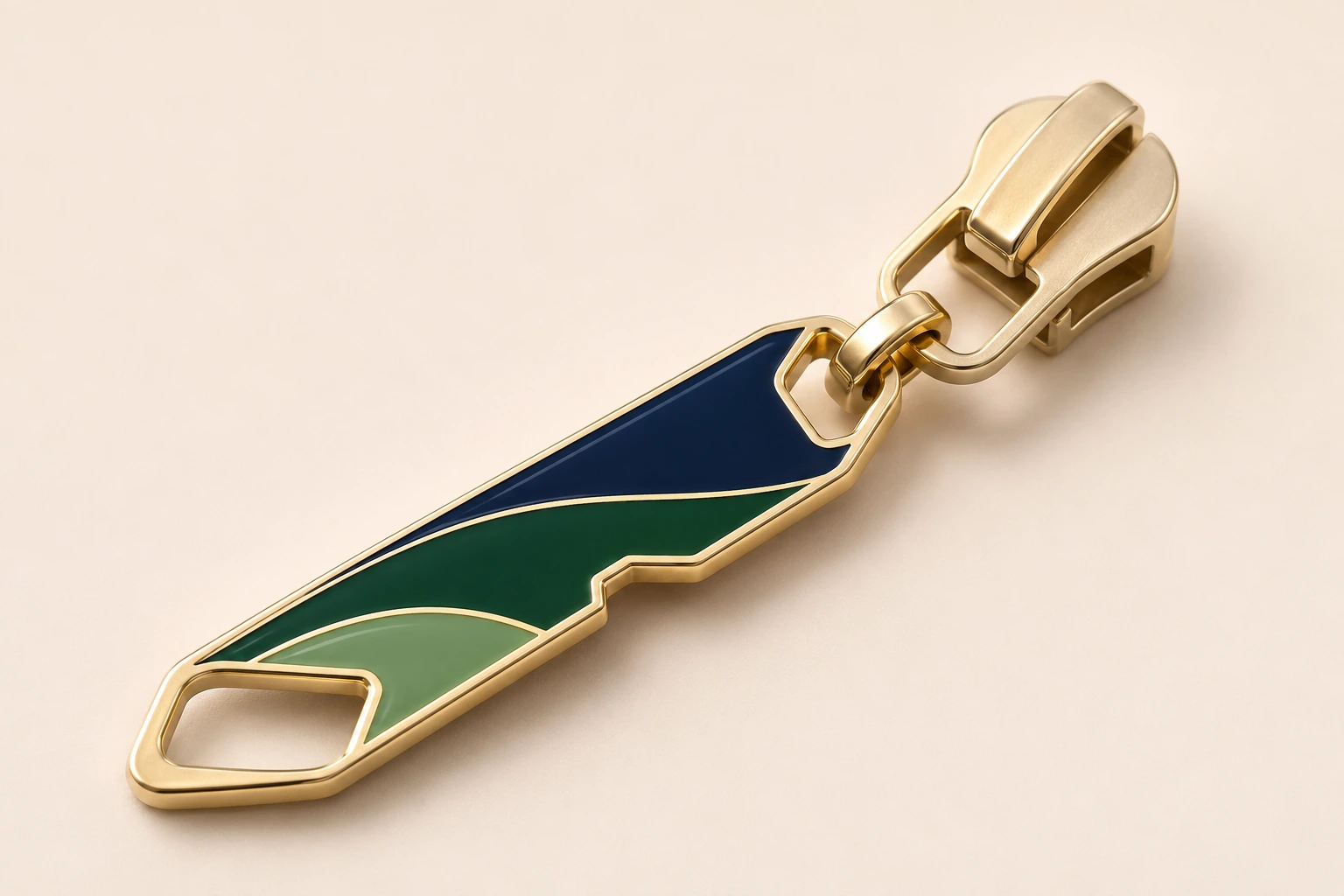
Develop the collection's branded zipper pull around its own slider and connector.

Company Logo Pins
Plan wearable company pins with a separate pin body and reverse fixing.
Illustrative custom concepts, not stock products.
12 / ENQUIRY
Prepare your custom metal button enquiry.
Send the brand artwork, intended garment and approximate button size. Include quantities by style, the hole or shank construction you need reviewed, and a reference for the fabric and mating closure.
Email artwork and technical files to [email protected] with your project reference.
State complete-button quantities, artwork and finish versions, packing, destination and requested arrival date. The quotation confirms the reviewed construction, minimum order, sample or tooling charges and schedule; none is a fixed condition inferred from the reference image.
For artwork, drawings or other project files, please email [email protected] and include your project reference.

PROJECT BRIEF
Custom Metal Buttons for Garment Orders