
How To Specify Medal Ribbons For Bulk Orders
A bulk medal order needs more than a ribbon colour. Your supplier needs dimensions, artwork direction and the exact way each ribbon attaches.
Put those details on one drawing before requesting quotes. Approve a finished medal with its ribbon attached before releasing the order.
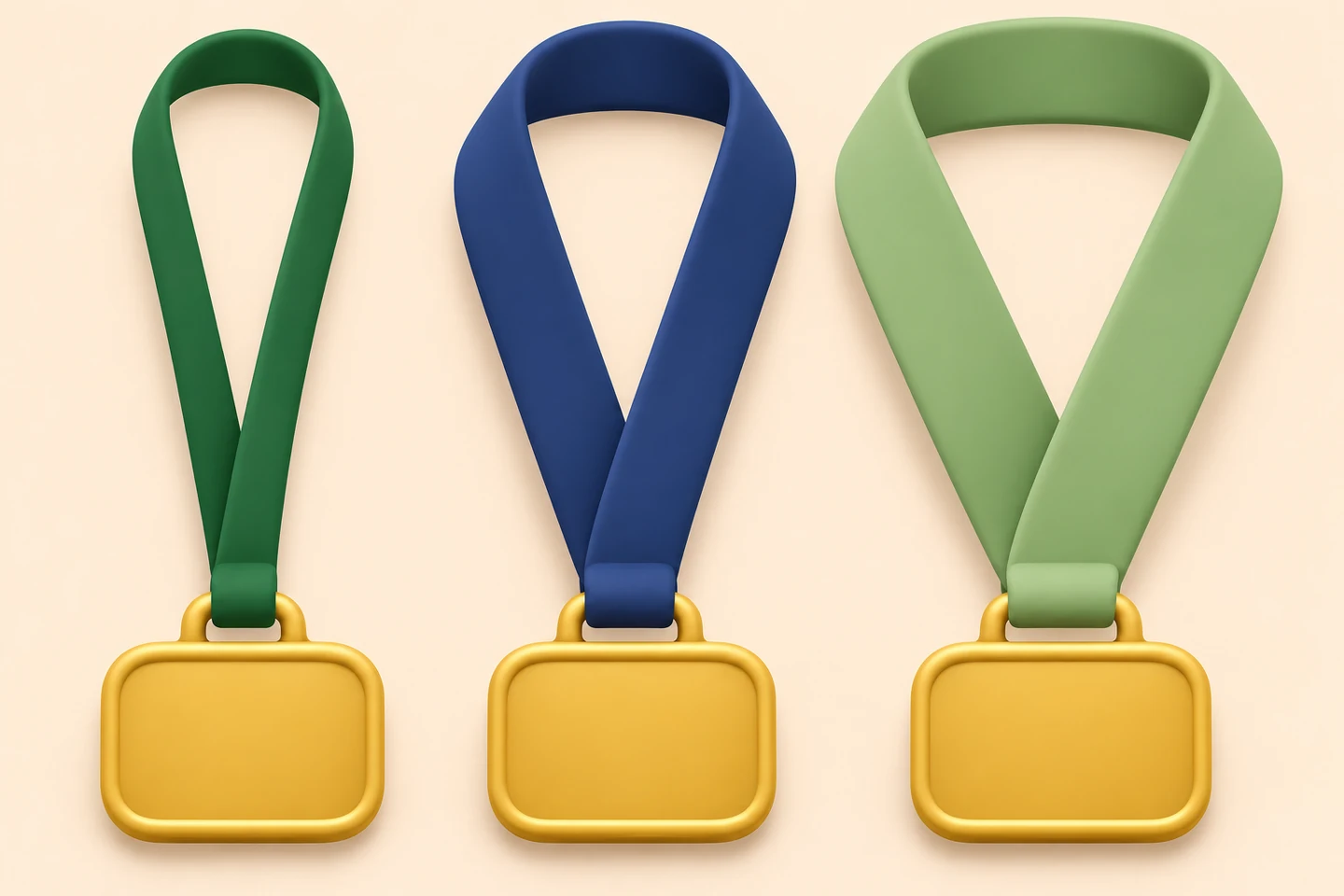
Start With How Your Award Is Presented
Describe the presentation before you choose a ribbon. A stage ceremony, a finish chute, and boxed awards put different demands on the assembly.
Ask the event team whether the ribbon goes over the recipient’s head. If the award is handed over folded, show how it should sit in the package.
Consider the garment where the medal will hang. Look at the proposed medal scale and ribbon position over clothing the recipients are likely to wear.
- Describe the handoff, recipient group, and expected clothing.
- Identify the completed medal version and who will receive it.
- Show whether the ribbon is worn, folded for presentation, or attached later.
- Name the event requirement the ribbon must meet.
Ask whether every division uses the same ribbon. If colours identify groups, make the ribbon part of each award version on your order schedule.
Give the supplier a short description of the event and recipient group. State which details are fixed and which you want them to recommend.
If the ribbon is used in a different setting after presentation, include that use. A ribbon that looks right on stage should also work in storage.
Define Width And Length On A Drawing
Write the finished band width and point to where it is measured. Confirm whether that measurement applies before or after the ribbon is folded.
Avoid giving a length without a reference drawing. Suppliers may quote the cut length or describe how far a finished loop hangs.
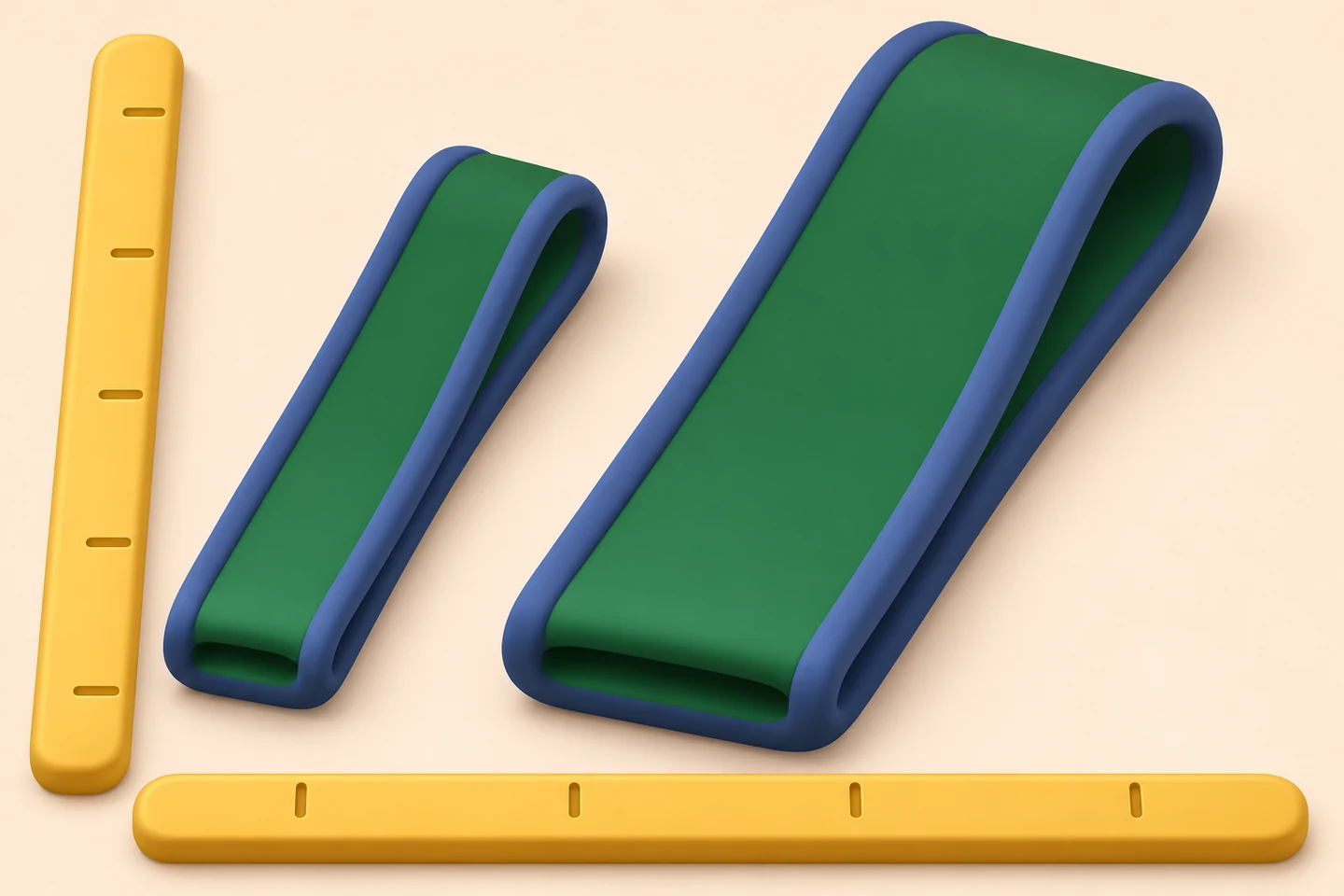
Ask for the measurement points on the same drawing. Mark whether the medal and connector are included when you measure the hanging assembly.
Check how the chosen band sits in the medal’s top slot or hardware. A ribbon may gather if the opening gives it too little space.
| Dimension | How To Describe It |
|---|---|
| Band width | Finished width across the fabric, before any agreed gathering. |
| Finished loop | Show both points on the loop or the assembly where the length is measured. |
| Cut length | Record this separately if your supplier needs it for the ribbon before assembly. |
| Medal position | Indicate whether the overall drop includes the connector and medal. |
If the ribbon needs to be folded near the attachment, ask how that changes the visible width. Request a mounted sample to check the result.
For example, an organiser can compare a longer and a shorter finished loop on the same medal. Record the measured points before comparing photos.
Choose How The Ribbon Attaches To The Medal
Ask the supplier to show the exact joint between the fabric and metal. A slot, a separate ring, or a hook changes the assembled look.
A ribbon fed through a slot meets the medal directly. Check how the band folds at the slot and which side of the medal faces out.
A separate connector can leave a gap between the fabric and medal. Check the gap on the sample and confirm the direction the medal hangs.
- Show the path from fabric to attachment and medal body.
- Record the selected connector or slot along with its visible finish.
- Confirm the front-facing orientation on an assembled sample.
- Mark whether the order includes ribbon attachment.
Ask which parts arrive attached and which parts arrive loose. Include any finishing or assembly your team would have to do before presenting the awards.
If the medal can be removed, try that step with a sample. Ask the supplier to show what should open and what stays attached.
Review the proposed fitting with the final medal shape. An illustration can help the discussion, but confirm the actual opening and fit in a physical sample.
Set Artwork Direction Before Proofing
Show the section of ribbon people will see first. A repeating logo may look upright when flat but rotate at the front of a loop.
Mark the front and reverse on your artwork proof. Confirm whether your brief requires print on one side or on both sides.
Check where the artwork meets a fold or seam. Ask the supplier to show if a join could interrupt the logo or wording.
| Artwork Check | View That Helps |
|---|---|
| Reading direction | The front-facing sections of the complete ribbon loop. |
| Repeat spacing | An unrolled drawing showing multiple repeats together. |
| Join or fold | An assembled sample showing the overlap and the nearby artwork. |
| Reverse visibility | A reverse view showing where colour or print changes. |
If you need a single event name to face the front, point to its intended location. A repeat pattern may need a different layout.
Request a proof with the artwork in wearing position. Compare that view with the flat drawing so your designer can approve both.
Bring the original logo file and any brand colour reference together. See the OEM artwork guide for how to identify your approved files.
Compare Ribbon Colour And Fabric On A Sample
Ask which fabric and surface the supplier proposes. A colour may read differently on a woven band than on a printed proof.
Compare the proposed band against your physical colour reference when possible. Use the same lighting and keep the two pieces side by side.
If ribbon colour identifies the recipient group, lay the whole set together. Make sure two similar shades remain distinguishable in the presentation area.
Check the finished edges and the way the band folds. State where a visible seam is acceptable and where a join would interrupt the design.
Look at the selected band next to the actual metal tone. A separate ribbon swatch helps with colour, while the assembly shows the overall effect.
Ask for another sample if the band on your first example uses temporary materials. Record which fabric, print, and colour are still open.
Review The Assembled Medal Before Approval
Hang the sample from its ribbon and let it settle naturally. Check whether the medal faces forward without a persistent twist.
Look closely where the fabric meets the metal. Record any pinching, awkward folding, or edge contact that affects the way the ribbon lies.
Check the joint and the seam with the complete assembly in view. Do not assume a loose band and a separate medal will fit together.

Try handing it over or folding it as your event team will. Check that the completed piece sits in its intended presentation box if applicable.
Document whether you reviewed appearance only or also handling. Agree separately on any performance checks your order requires.
Keep the sample reference with your comments. The production and quality guide explains how to record an approval and follow-up evidence.
List Ribbon Versions And Spares Separately
Make one order row for each medal and ribbon combination. Do not leave the pairing to a colour note at the bottom of your order.
For example, use navy for a fictional open division and green for a team division. List the assembled quantity for each pairing.
If you need spare ribbons, give them their own line. Specify whether the spares arrive loose, already attached, or held as replacement assemblies.
| Example Order Line | Supplied As | What To Confirm |
|---|---|---|
| Open division | Finished medal on navy ribbon | Assembly count matches the award schedule. |
| Team division | Finished medal on green ribbon | Version identifier appears on the agreed label. |
| Spare ribbons | Separate loose bands | The loose count and attachment scope are listed separately. |
Ask whether the packed groups match the way staff will distribute awards. Request clear identifiers for any versions that look similar.
Reconcile the counts with the event list before you approve the quote. One finished award usually contains one ribbon, but loose spares change the count.
Ask the supplier to repeat the division, ribbon, medal, and assembly references when confirming the order. Use those same references at receiving.
Send A Ribbon Brief That Your Team Can Approve
Send the medal shape, ribbon artwork, finished dimensions, and joint detail as one group. Mark each file with its version.
Give the supplier a named list of approval views. Ask for the artwork flat, the ribbon loop in position, and the assembled medal front.
State who approves artwork and who checks presentation. Ask them to review the same identified sample before releasing their part of the order.
Record changes by component and describe the evidence you need. An artwork change may need a proof while a different joint needs an assembly check.
- Attach the approved medal view and ribbon artwork with version references.
- Show finished width, length method, and attachment points.
- List assembly counts by pairing and identify all loose spares.
- Record the sample and approval evidence for any change.
Keep the approved record and sample available after delivery. When you reorder, ask the supplier to flag any change that affects the final award.
Give your receiving team an example of each intended version. They can compare the first unit and its label with the order schedule before distributing awards.
Frequently Asked Questions
Can One Ribbon Design Be Used Across Different Medal Shapes?
Ask the supplier to check each attachment opening. The same band artwork may need a different join or connection for another body.
What If The Medal Arrives Without A Ribbon?
Check the quote and packing list first. If assembly is separate, ask which parts you need and request an example of how they fit.
Does A Proof Show How A Ribbon Feels?
A proof can show layout and direction. Handle a representative material sample when fabric feel, flexibility, or edge finish matters.
How Do You Review A Ribbon For A Short Presentation Window?
Ask the event team to try the handoff with an assembled sample. Use their feedback to agree on folding, packing, and access.
Should You Specify The Ribbon Before The Medal Is Designed?
Describe the intended use early. Confirm the fabric dimensions and joint together after the medal shape and attachment area are clear.
Final Thoughts
Start with your award layout and presentation needs. Explore our custom medals or send your ribbon brief to discuss the complete assembly.