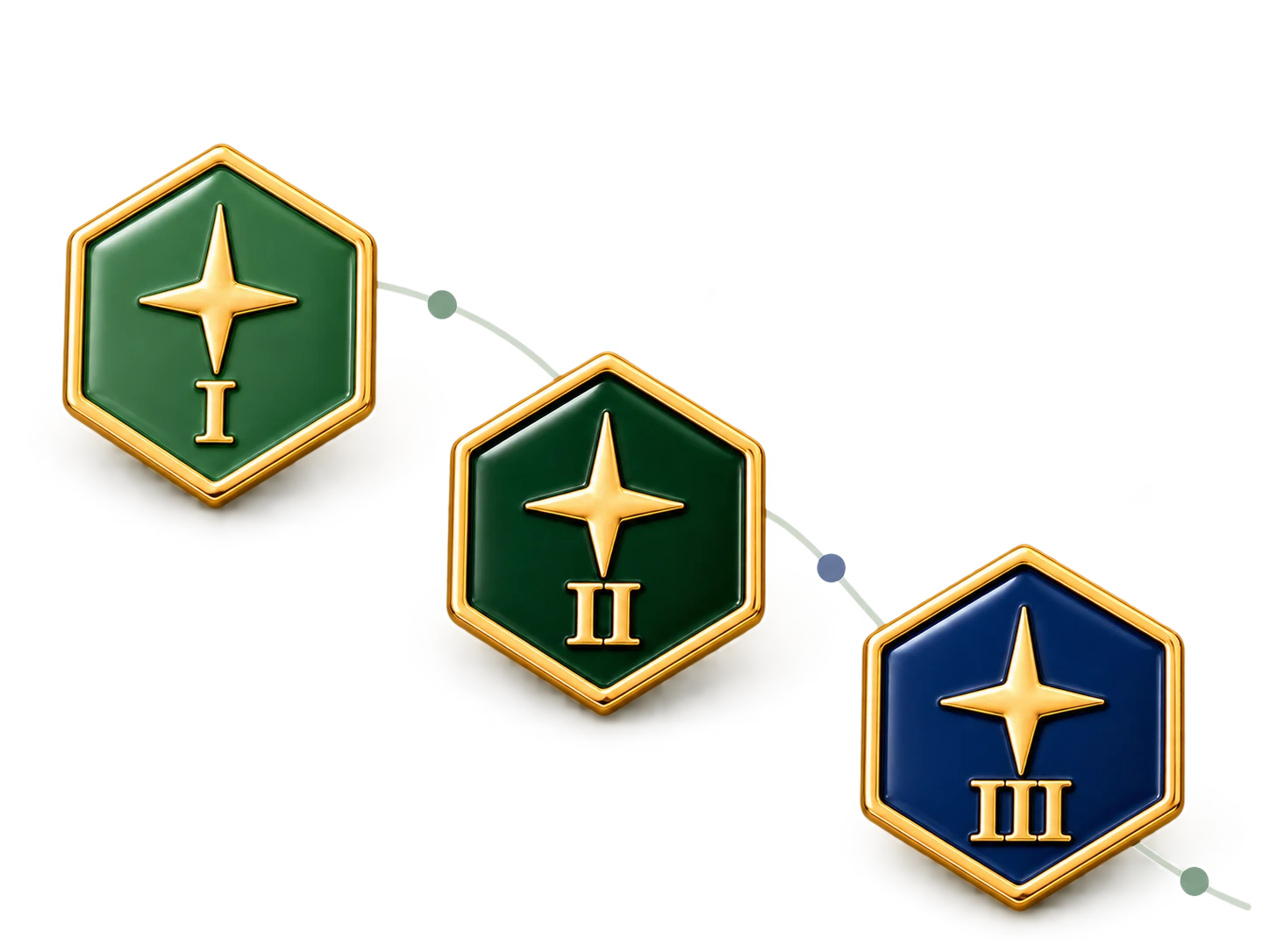
Custom enamel pins
for employee
recognition.
One identity. A recognition programme.
Plan a recognition seriesIllustrative custom concepts — not stock products. Reference IDs identify discussion examples.
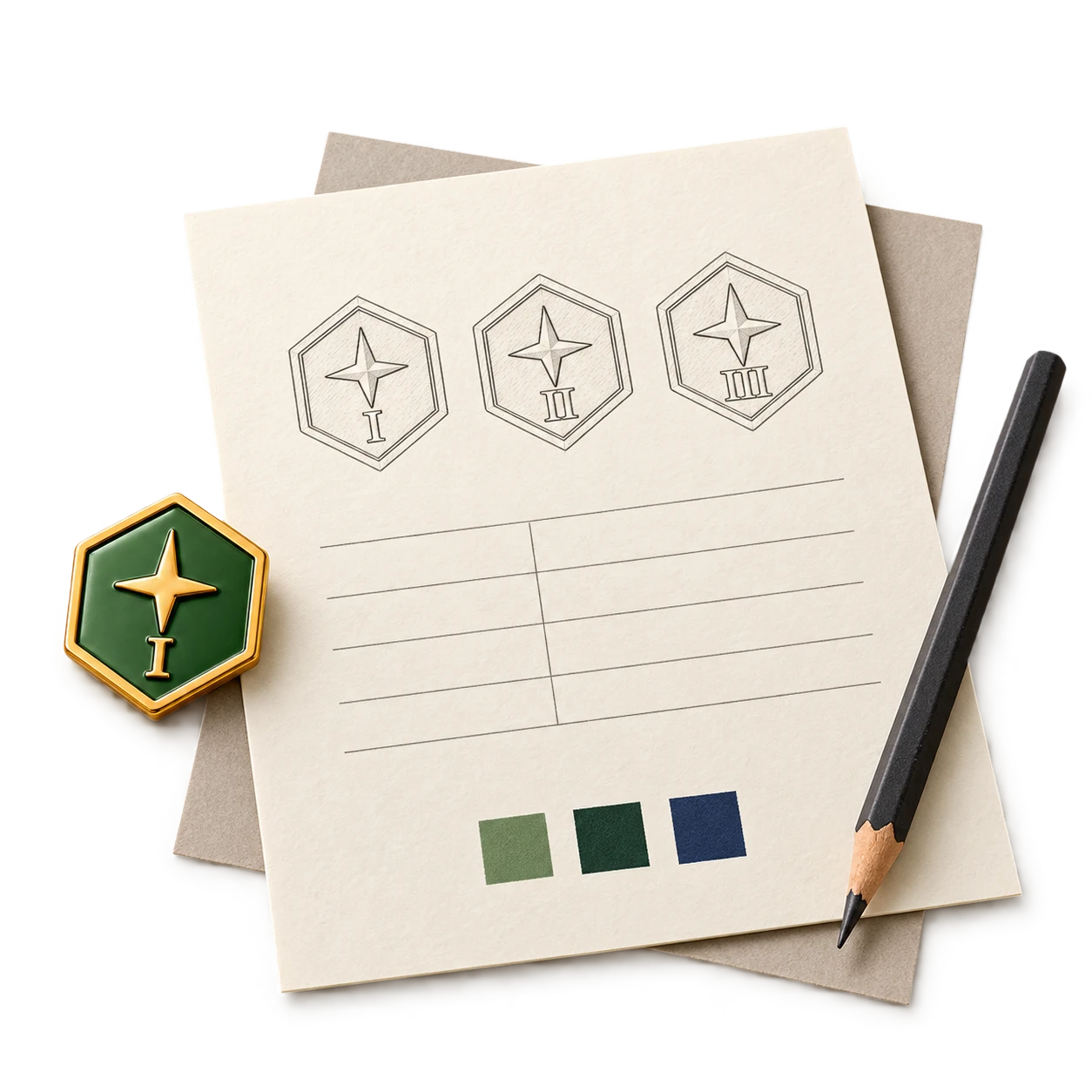
Separate the shared
from the changing.
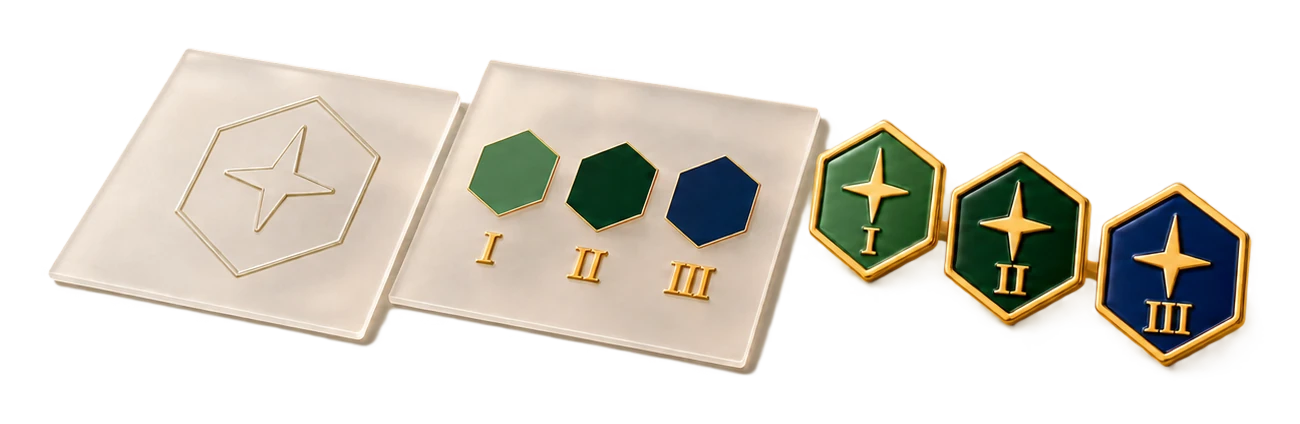
Changing level
Record exactly which wording, colour or shape changes for each version.
Shared appearance does not automatically mean shared tooling.
See the complete programme concept.
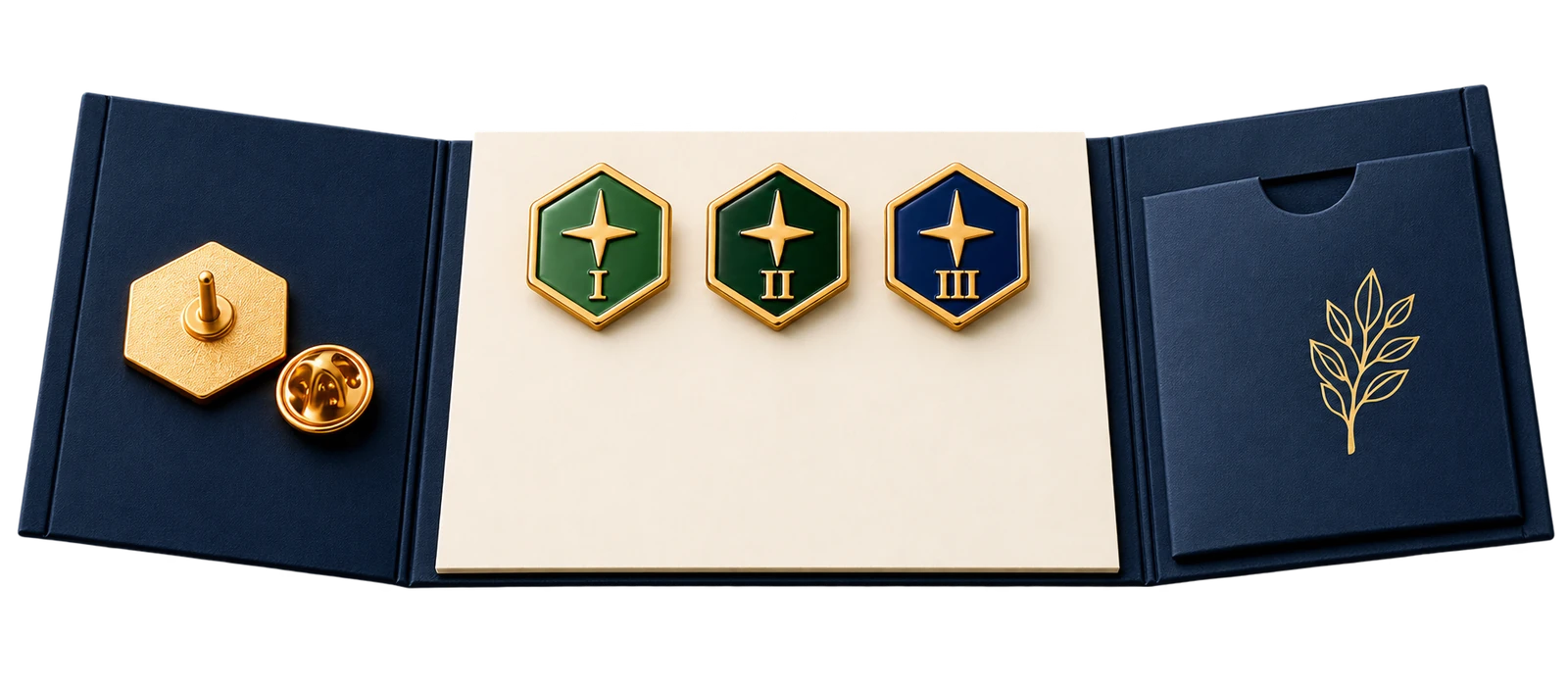
A series, defined together.
Define levels, quantities, fittings and presentation for each version.
Illustrative custom concept — not a stock product or customer case study.
Design changes
have production
consequences.
Text, colour and outline changes can affect artwork, tooling and sample needs. Review the actual differences before agreeing the manufacturing scope.

Text
Change a level label while keeping the intended emblem.
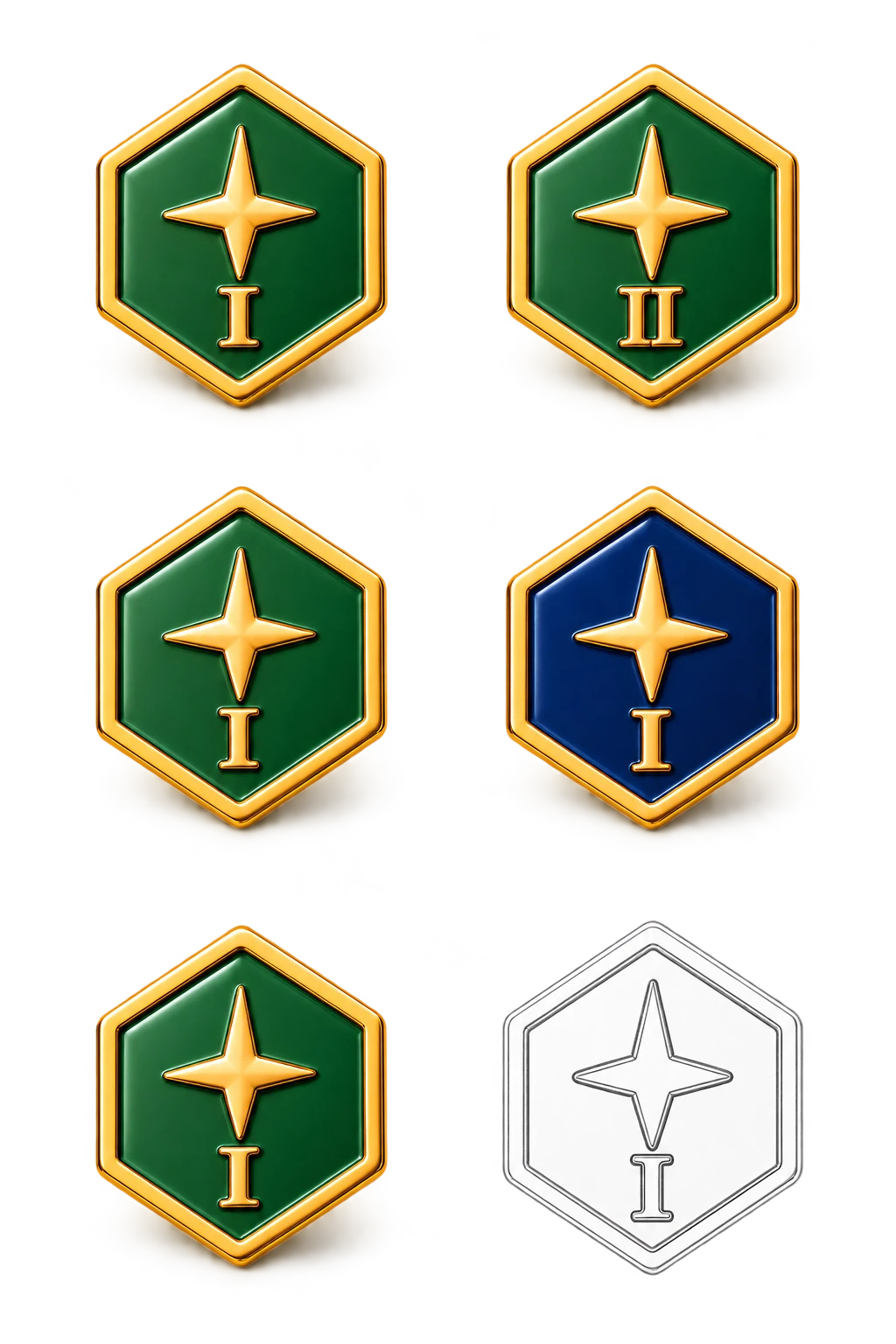
Colour
Review each colour arrangement against its version reference.
Outline
Review a changed contour and the space it leaves for the mark.
Account for every version.
List quantities by design version, with the quantity unit and distribution group.
Level I
- Pieces per version
- To define for this design
- Batch or distribution
- Identify the destination group

Level II
- Pieces per version
- To define for this design
- Batch or distribution
- Identify the destination group

Level III
- Pieces per version
- To define for this design
- Batch or distribution
- Identify the destination group
If supplied as sets, also list the pieces in each set and the number of complete sets. Keep separately labelled packs linked to the correct version.
Include versions in my briefPresentation
belongs to the
programme.
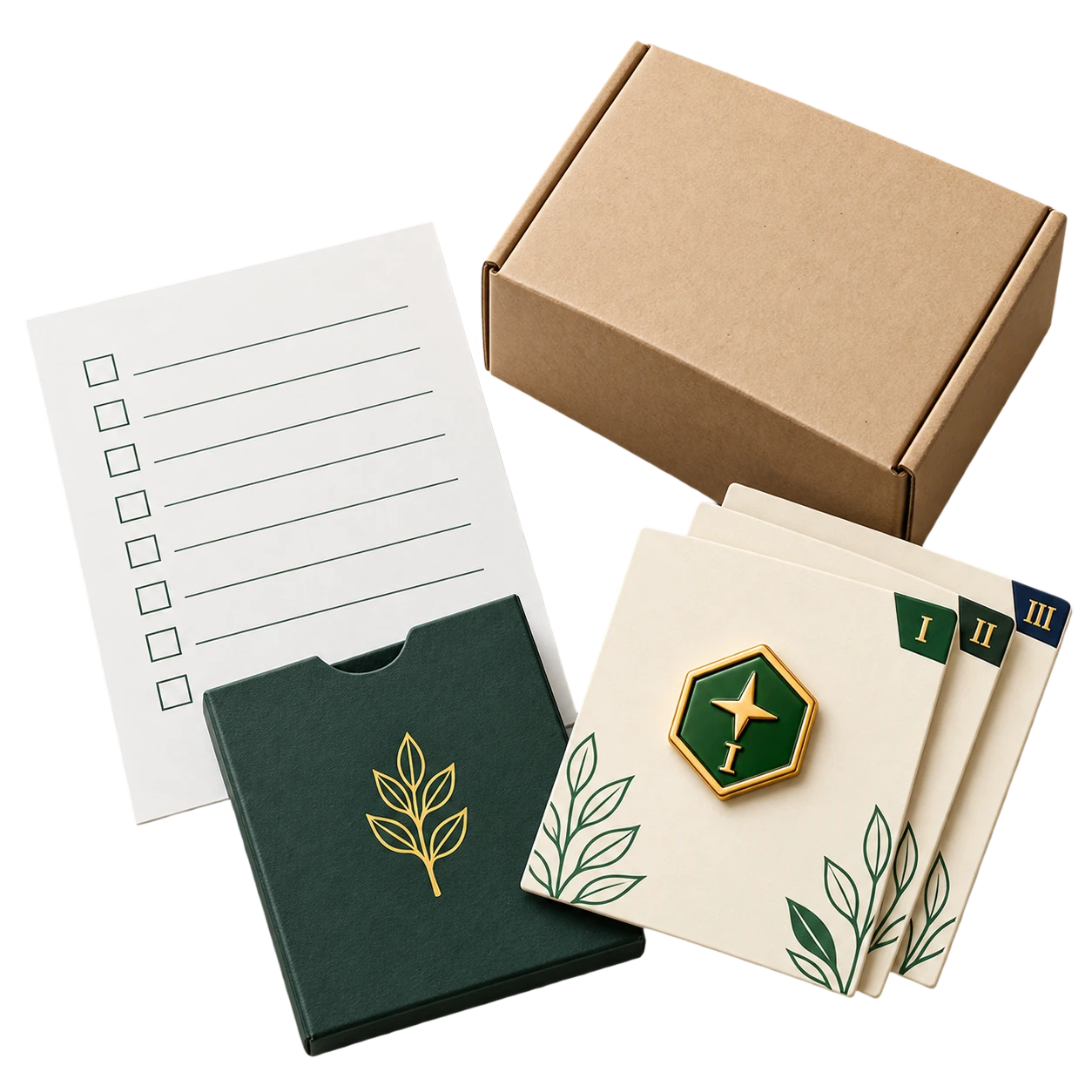
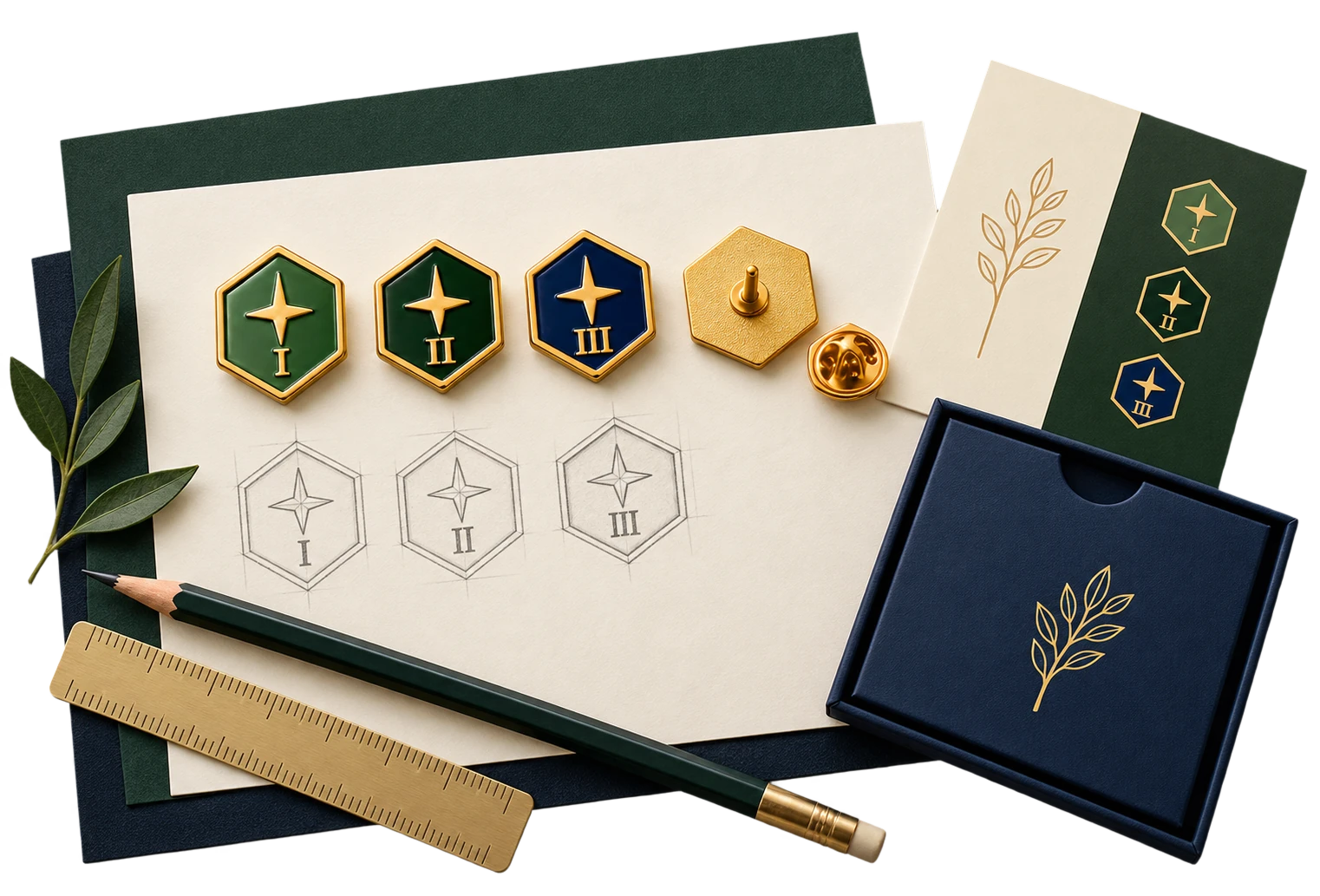
Keep the pin, card wording and supplied contents linked to each version.
Specify the presentation and quantity for each level, then discuss transit protection separately.
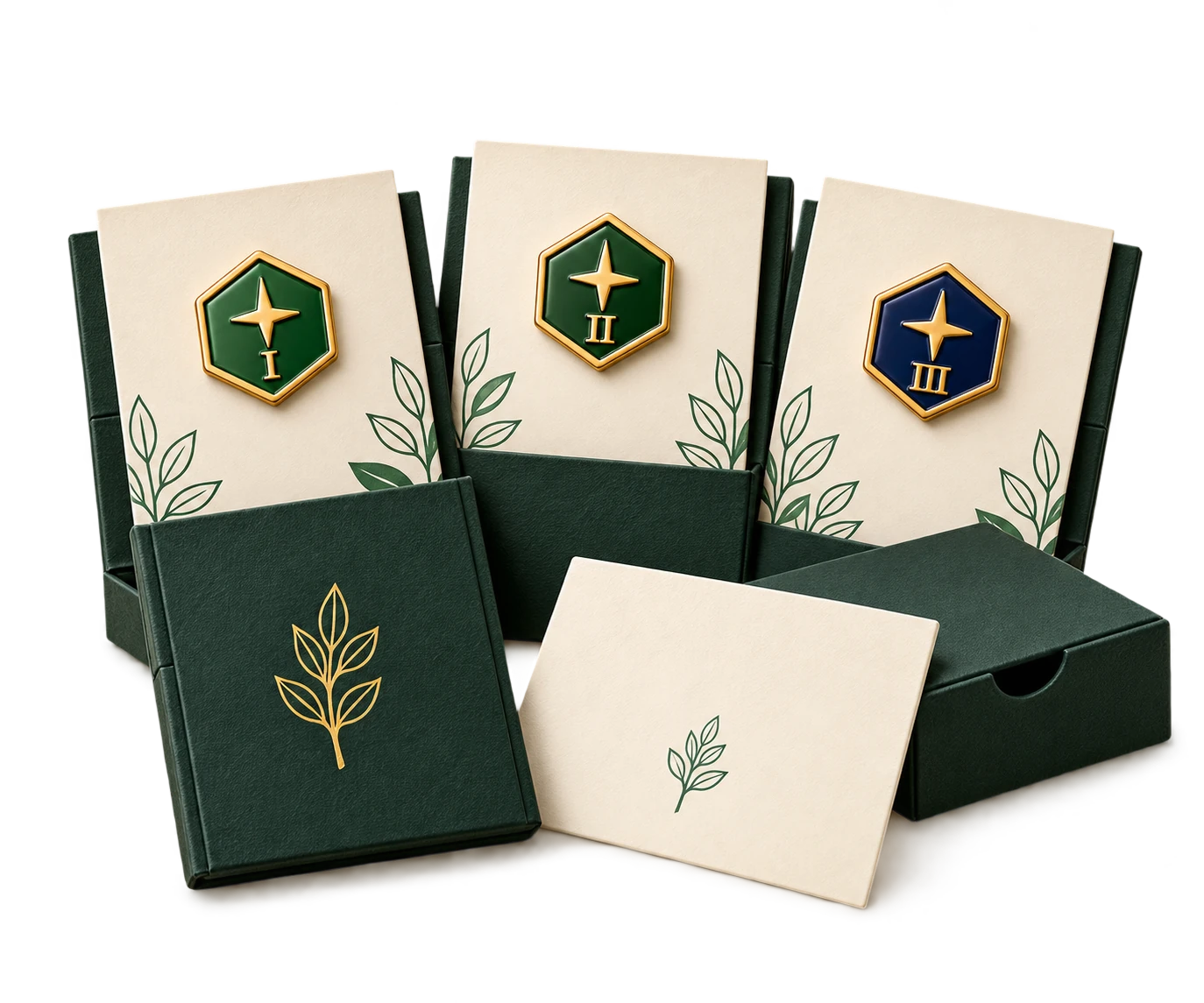
- Version identity
- Keep each product and its card together.
- Card wording
- Provide the text and artwork for each version.
- Supplied contents
- Define pin, fitting, card and pack scope.
Illustrative presentation; pictured packs are not standard inclusions.
Own factory / Hangzhou, China
One factory.
Connected production stages.
Tooling, metal forming, colouring, polishing, plating, assembly, inspection and packing are completed in our own factory in Hangzhou, China.
The brief identifies the shared design and the requirements for each version.
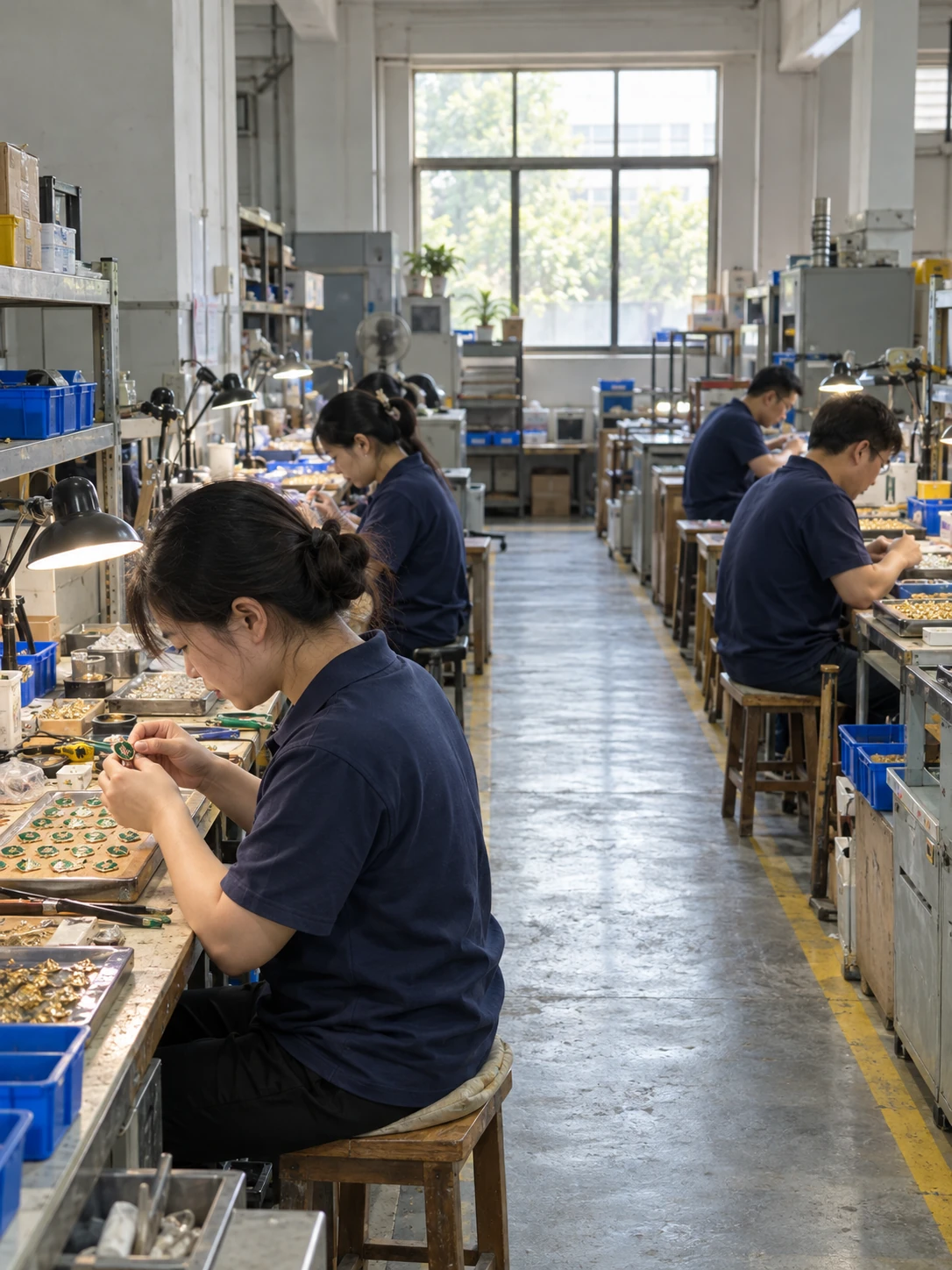
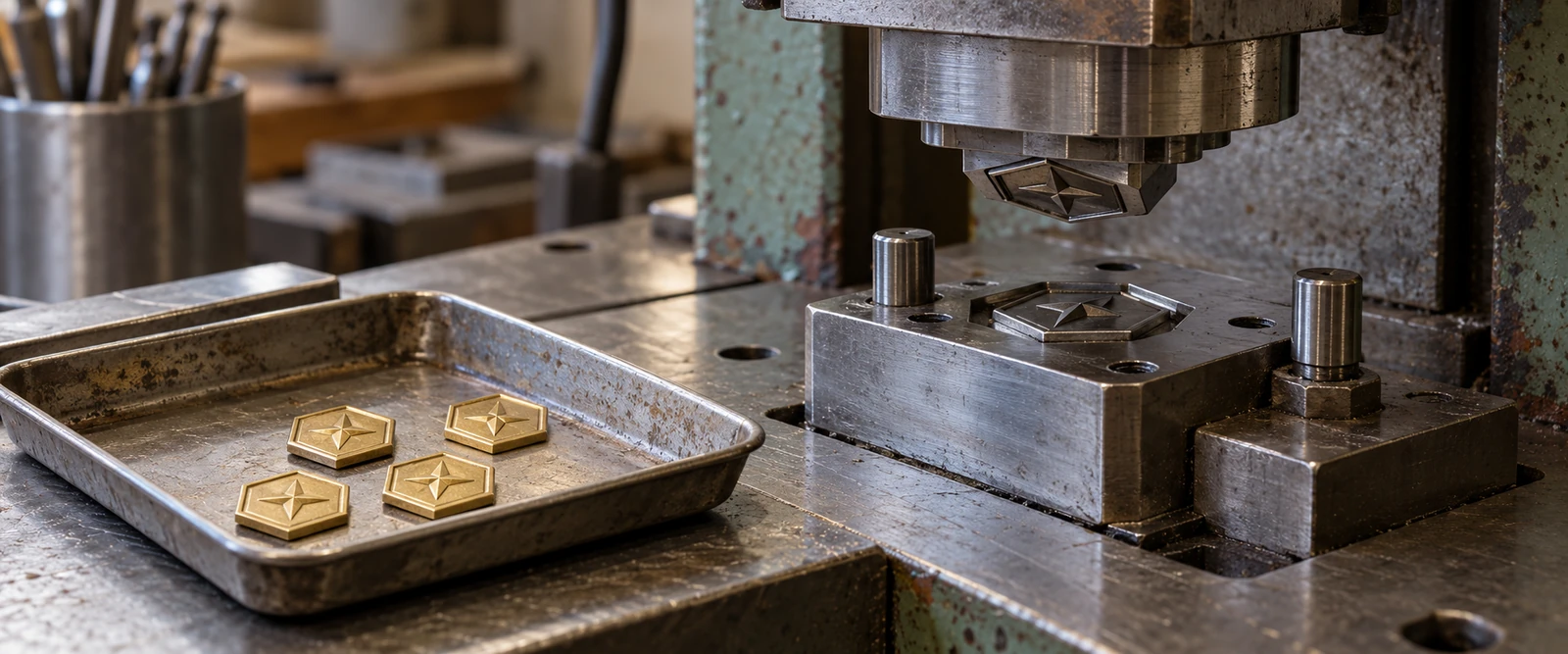

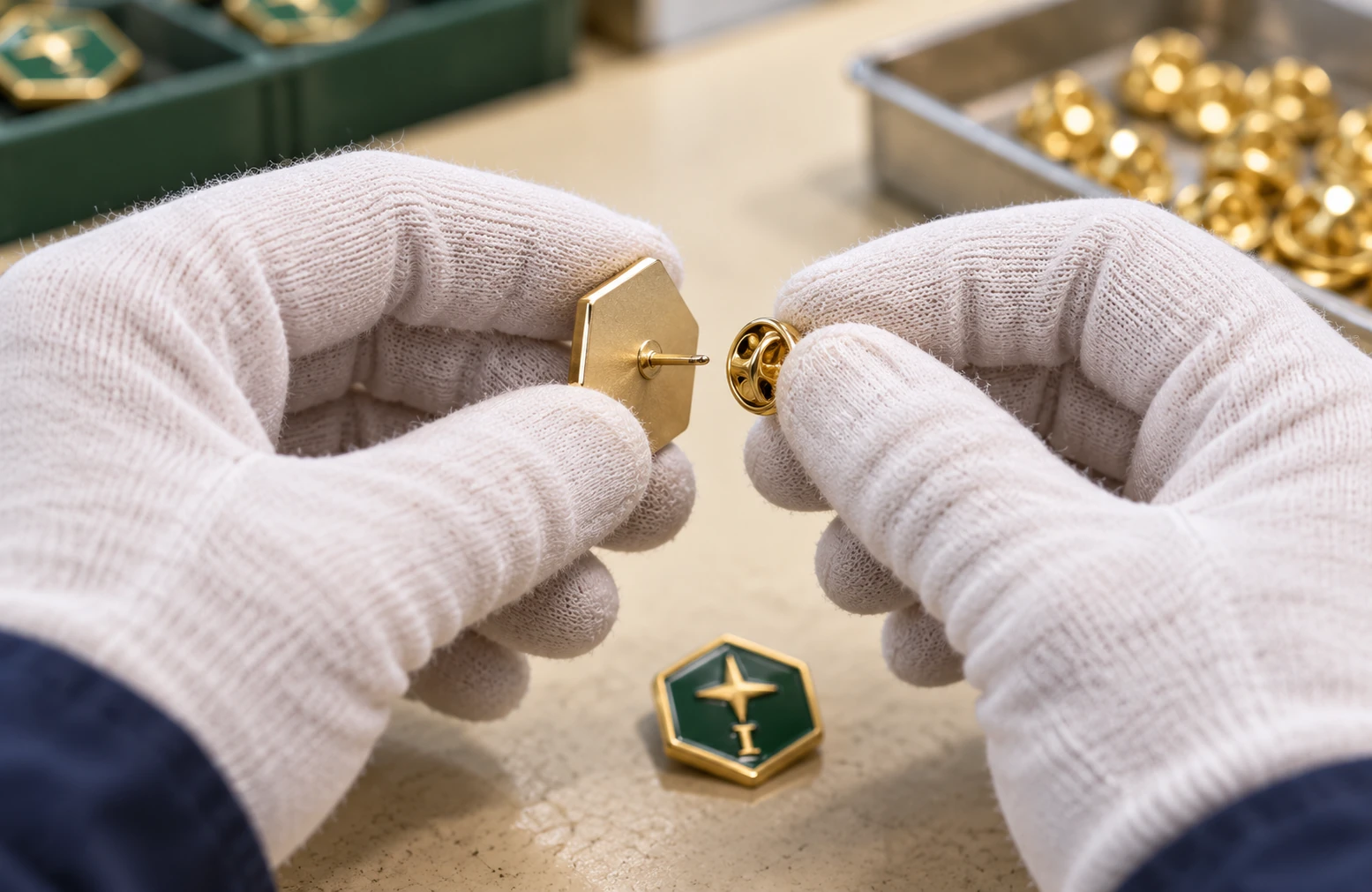


AI-generated illustration — actual factory photographs to follow.
Explore our manufacturing scopeFollow version
identity through
manufacture.
Keep each design reference linked to its manufacturing stages in our own factory in Hangzhou, China.
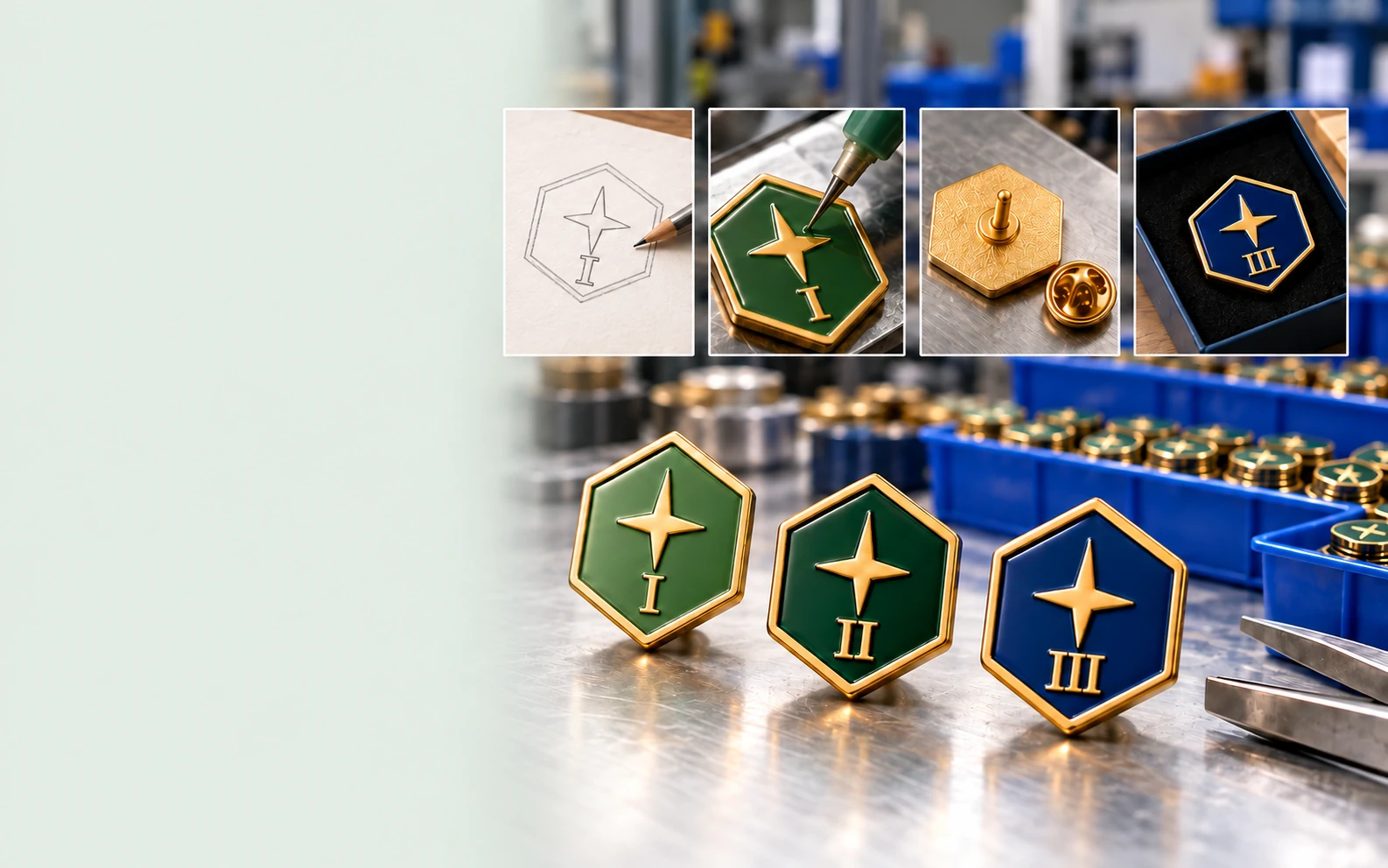
Tooling & forming
Define the body and artwork for the actual versions.
Colouring
Keep the chosen colour route linked to the version.
Polishing & plating
Review the agreed surface and exposed metal finish.
Assembly, inspection & packing
Check version identity, fittings and supplied contents.
AI-generated illustration — actual factory photographs to follow.
The finishing order depends on the agreed enamel process and metal finish.
Plan backwards
from the required arrival.
Share target arrival, destination, versions and quantities before a schedule is agreed.
- 5
Arrival
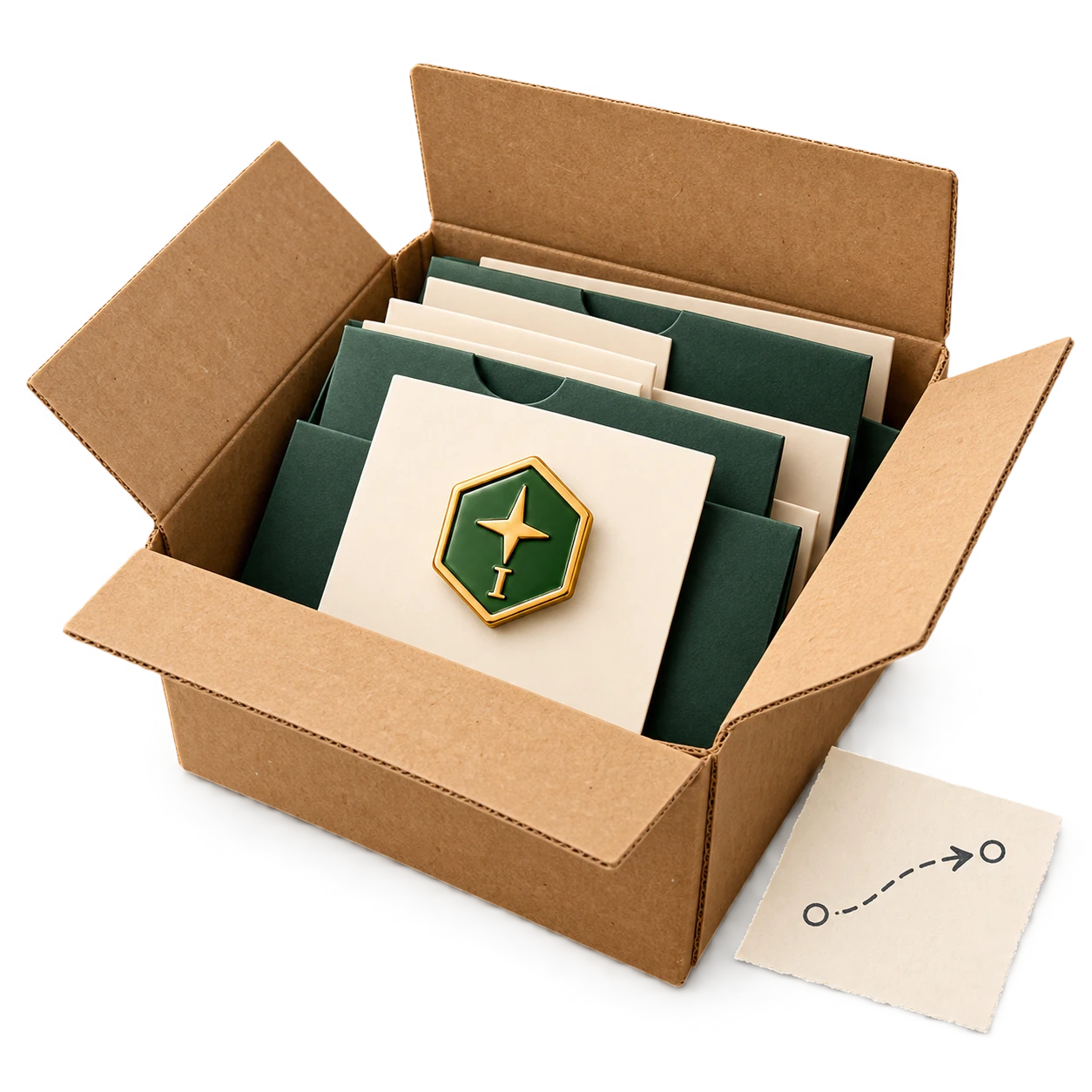
Share required arrival timing, destination and distribution groups.
- 4
Dispatch arrangements
Define packing, labelling and destination details.
- 3
Production agreement
Agree the specification and complete supplied scope.
- 2
Sample review
Record which versions and changes have been reviewed.
- 1
Specification
Define the artwork, levels, quantities and presentation.
A ceremony date is an input to planning, not a fixed production commitment or an expedited-delivery promise.
Review the family,
then each pin.
Check the common identity across the series and record differences for each version.
Illustrative sample review; sample arrangements are agreed for the project.
Recognition programme questions.
Practical answers for planning custom recognition pin series.
1How should we describe our employee recognition programme?
Explain what the programme recognises and list the levels or milestones that need different pins. Identify the common emblem, wording and colours, then state what changes between versions. Include intended recipients, quantities per version and presentation requirements. An existing programme guide is useful, but the pin specification still needs its own review.
2Can all recognition levels use the same outline?
They may share an outline and a common visual identity. Changes to lettering, raised details or other construction features can still affect tooling and sample requirements. Show the differences explicitly rather than describing every level as the same pin. The factory can then review the actual versions instead of assuming a common outline means identical manufacturing needs.
3Should we distinguish levels by wording, colour or shape?
Choose according to the programme's identification needs, then review how the changes work at the intended size. Wording, colour and outline changes have different artwork and manufacturing implications. Keep the shared identity clear while making the intended distinctions readable. The examples illustrate a discussion approach; they do not prescribe a particular recognition system.
4How do we list quantities for a recognition series?
Provide a separate quantity for each level and design version. If multiple pins are supplied as sets, state the set contents and number of sets in addition to pieces per version. Identify any distribution groups or differently labelled packs. A single overall quantity can conceal an imbalance between levels or an additional packaging requirement.
5Do all versions need to be checked during sample review?
The sample arrangement should be defined for the project, with a clear record of which versions and changes are being reviewed. Compare the common identity across the series and check each represented variation against its artwork. Do not assume approval of one version automatically resolves every changed detail. Record the reference and outstanding questions before production is agreed.
6Can each recognition level have its own presentation card?
Yes, version-specific presentation can be included in the brief. Supply the wording and artwork for each card, and link it to the correct pin version. Review position, fitting and pack contents together. Keep presentation requirements separate from transit protection and include quantities for every version of the packaging.
7Can we add another level or repeat a previous version later?
A later request can start from the previous approved reference, but the current artwork, construction, finish and packing requirements should be checked again. Identify what remains the same and what changes. Availability, sample arrangements and production scope need review for the new request; the page does not promise indefinite tooling retention or an unchanged price.
8How should we plan for a ceremony or distribution date?
Share the ceremony or distribution date, required arrival timing, destination and quantities per version. Also identify artwork status, sample review and presentation requirements. These inputs allow the project stages to be discussed before a schedule is agreed. A desired event date is not itself a production commitment or a promise of expedited delivery.
- 01


- 02
- 03

Send the programme outline.
Share the programme, versions and questions to resolve. We will discuss the next steps.