Custom company logo
enamel pins.
From company artwork to a wearable mark.
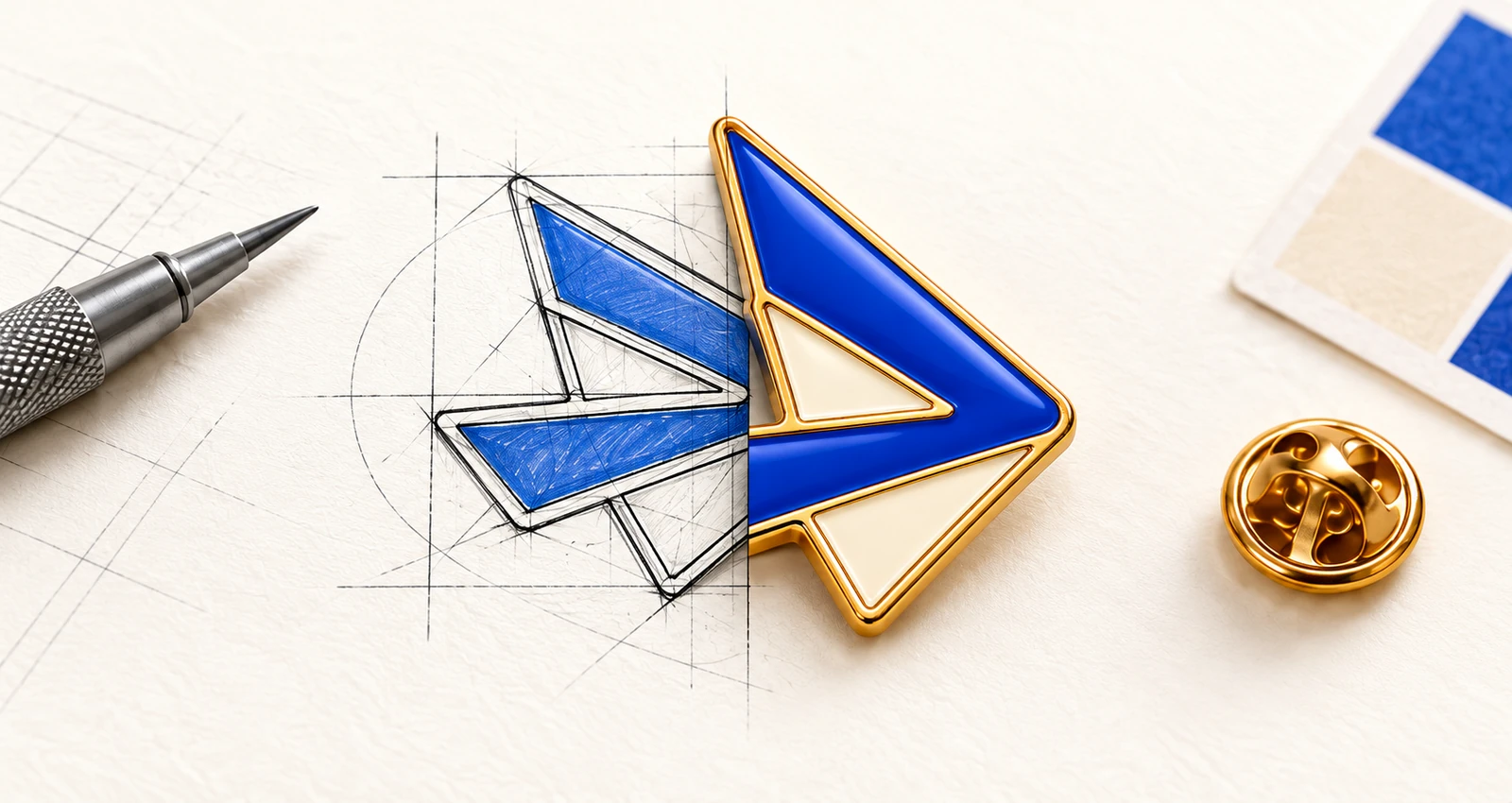
Illustrative custom concept — not a stock product or customer case study.
What must stay recognisable?
Identify the elements essential to recognition and the details to review at the intended size.
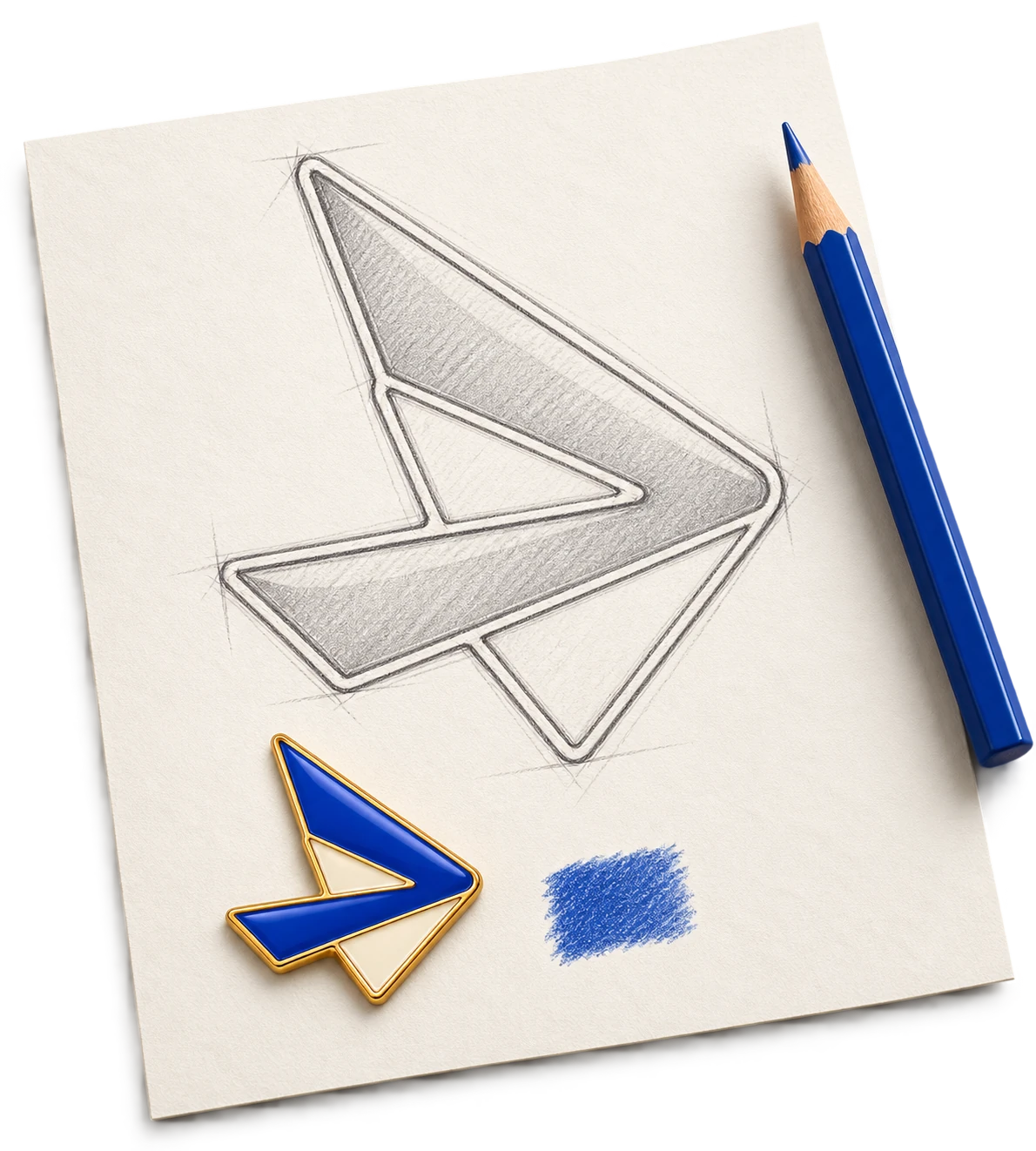

Essential to retain
Key shape and proportions, required wording, core colours and identifying symbols.
Open to review
Small details, line thickness and colour treatments that may need adjustment for the agreed size.
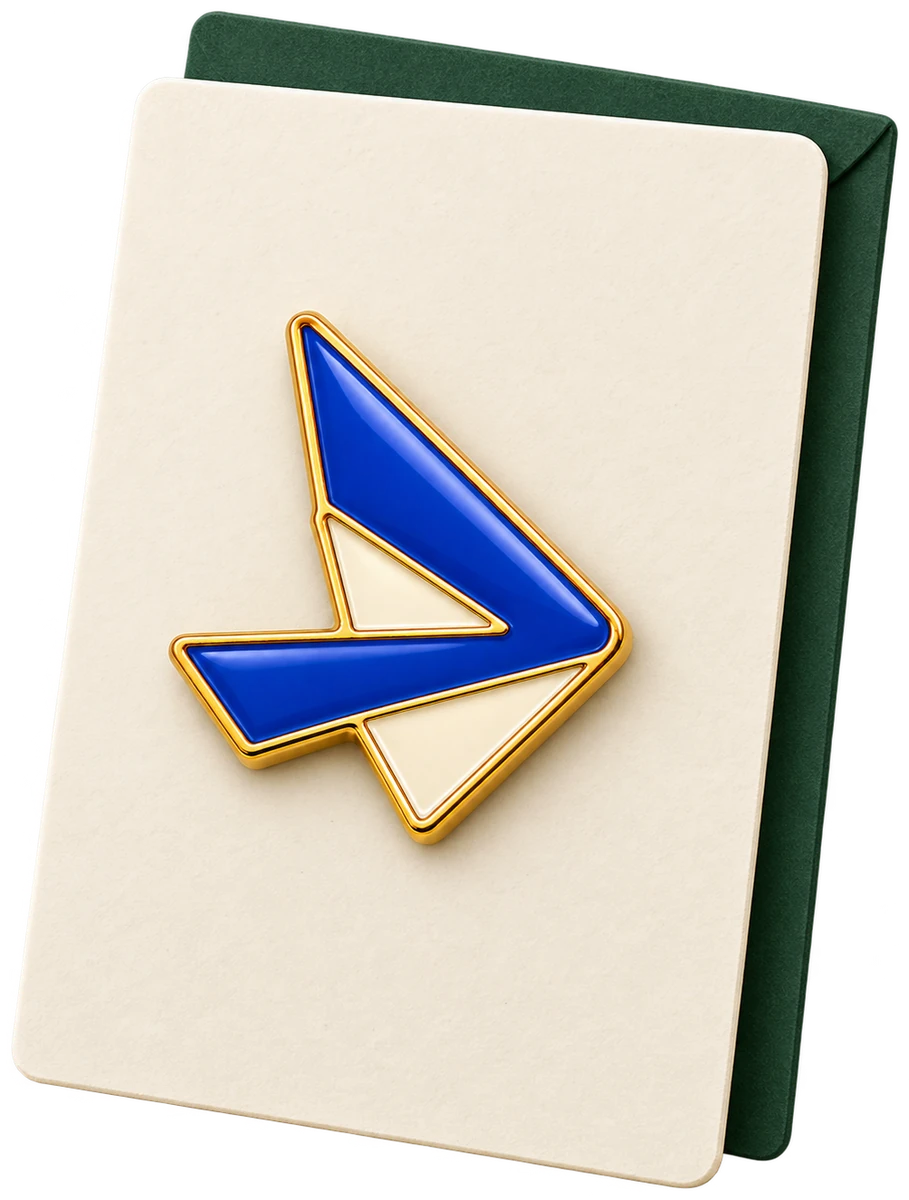
A complete concept, viewed from every side.
Review the front, reverse, wearing orientation and supplied presentation.
Front view
The illustrative blue and gold enamel face.
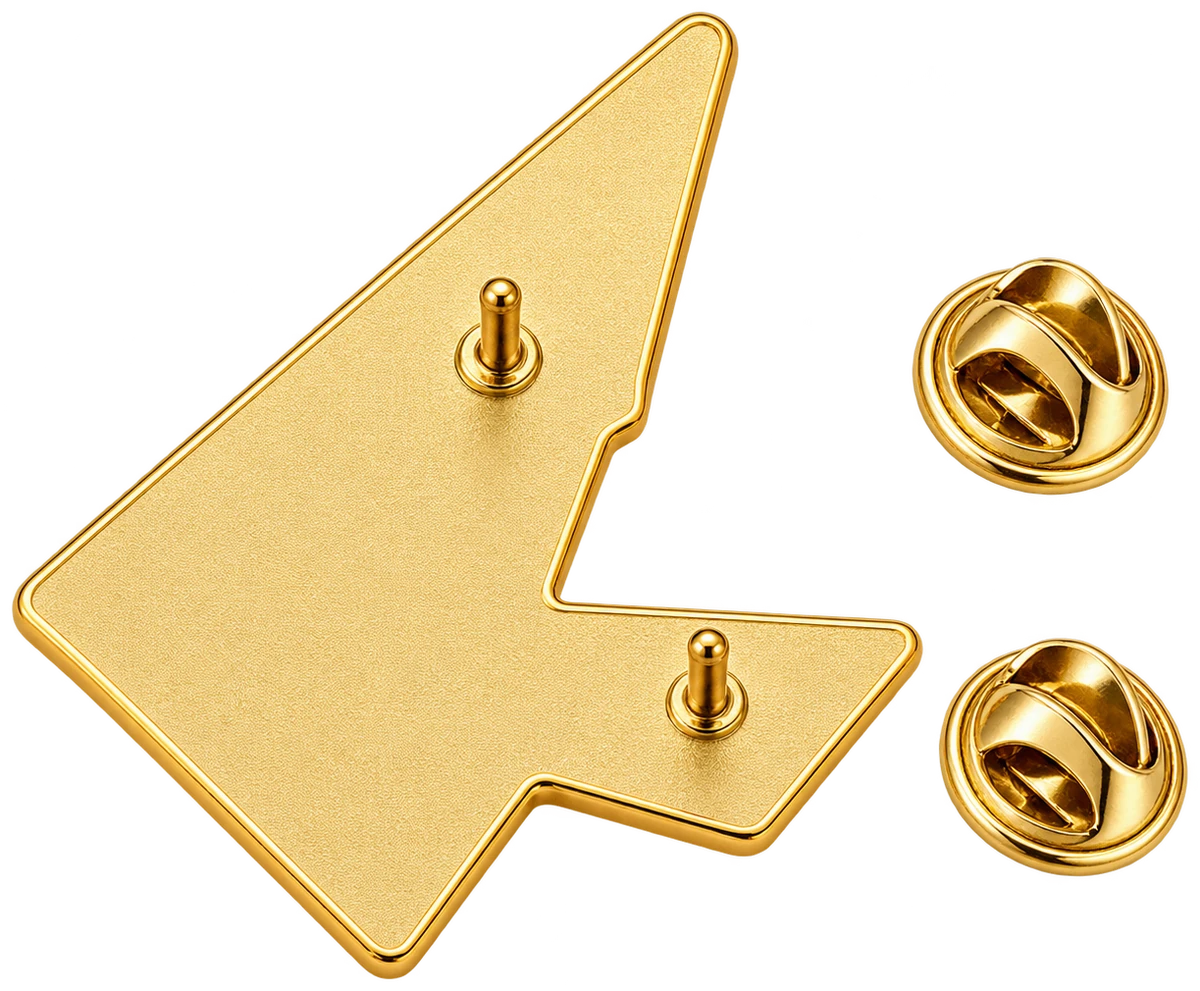
Reverse view
Post placement and fittings to define for your mark.

Wearing orientation
Study the direction in which the mark will be worn.
Presentation
Define the backing card and supplied contents.
Company identity.
An original concept for corporate lapel pins, built around artwork, orientation and supplied scope.
P01 is a discussion reference, not a stock number or a prescribed specification.
View wearing decisions Explore materialsKeep colour, metal
and lettering in balance.
Review fine letters and colour divisions at the intended size.
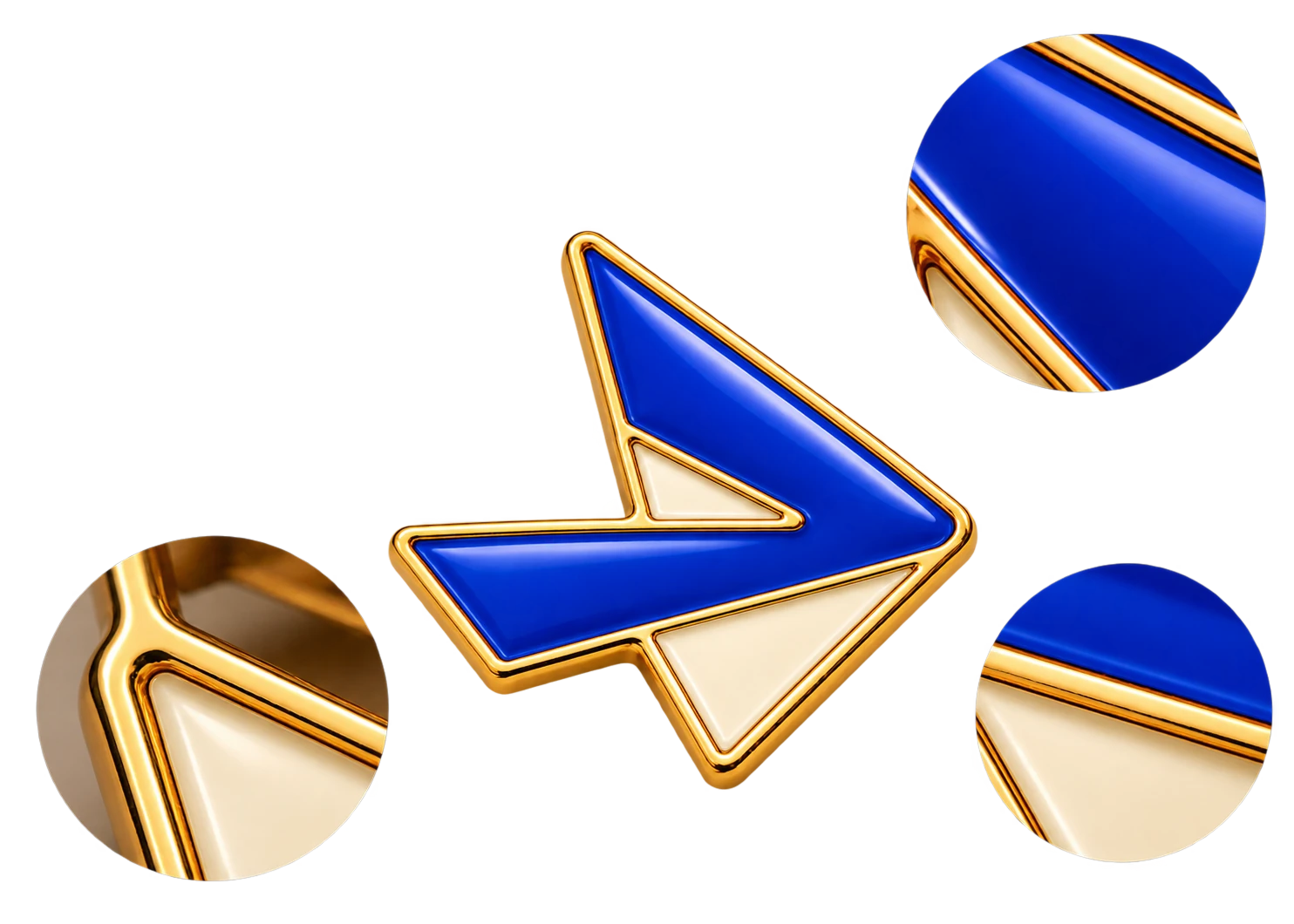
- Colour areas
- Review distinct enamel fields. Gradients may require a different artwork treatment.
- Metal finish
- Agree exposed metal appearance with the chosen surface.
- Fine details
- Check lettering, gaps and divisions at the intended size.
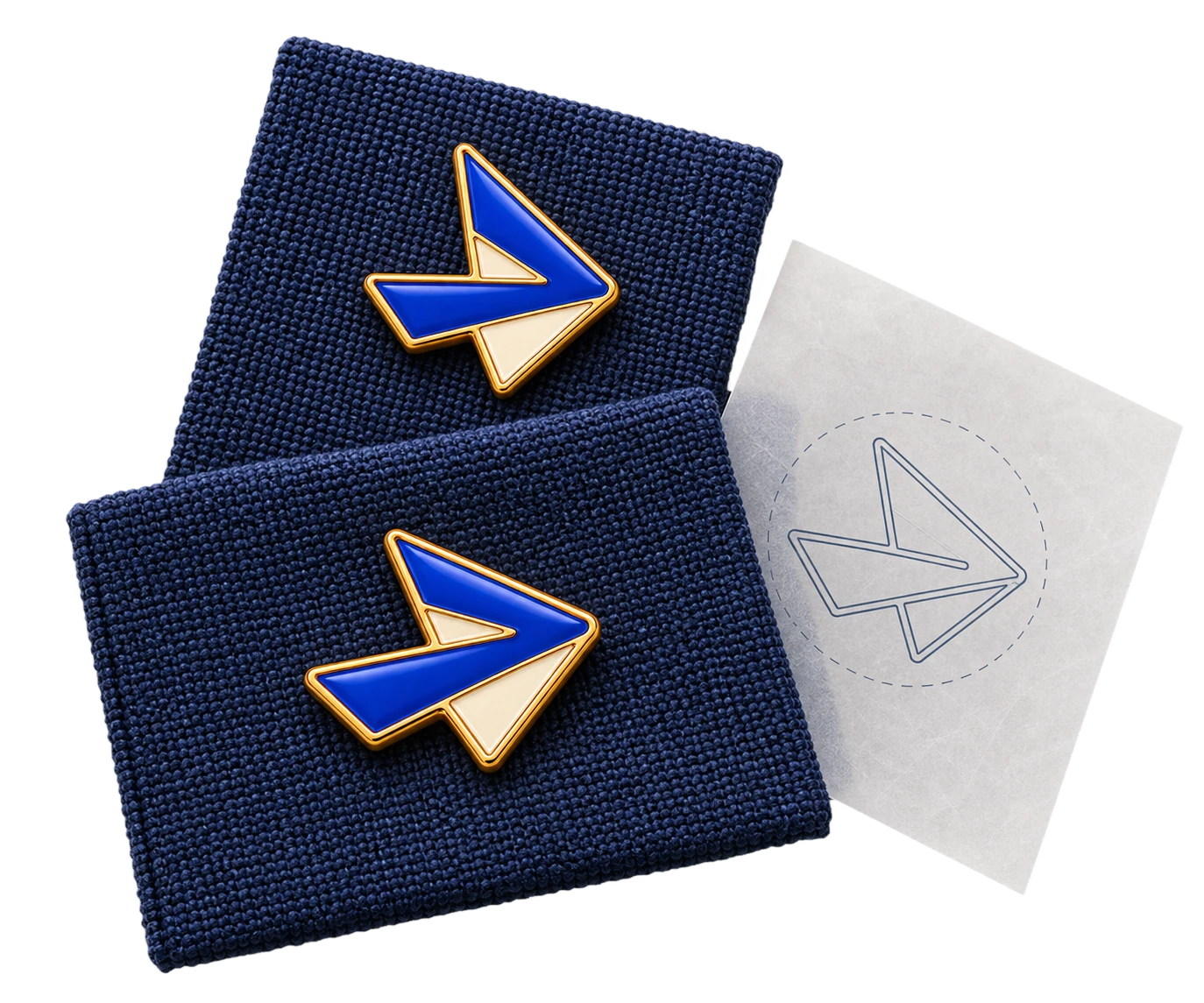
Decide how
the mark will sit.
Consider intended use, wearing direction and fitting scope together.
Intended use
Describe the garment, material or display surface where the pin will be attached.
Wearing direction
Review the front and reverse together; an angled mark still needs an agreed orientation.
Fitting scope
Define fitting and assembly requirements. The pictured arrangement is illustrative.
Define the presentation.
State the supplied contents and quantity for this design. Review pin position, card artwork and transit protection as separate decisions.
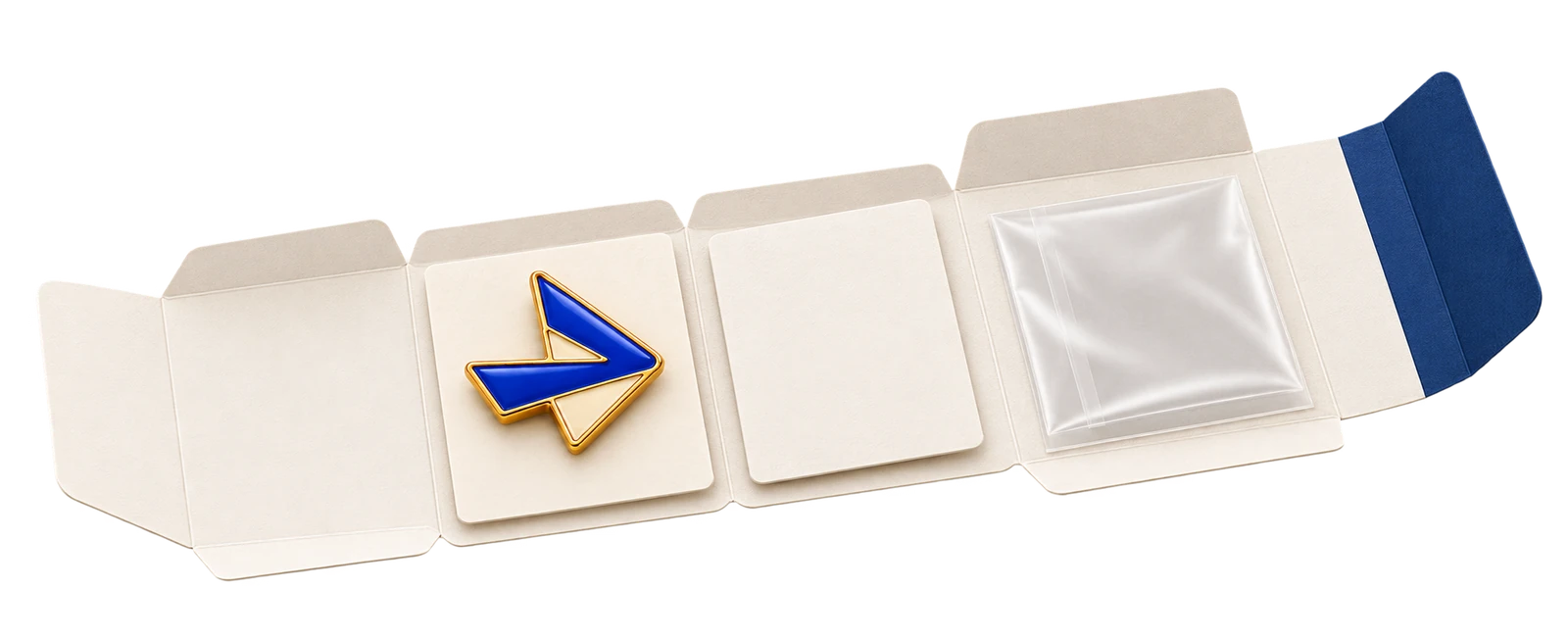
Pin body
Artwork, shape and surface
Fitting
Type and assembly scope
Backing card
Artwork and product position
Transit protection
Protection for the agreed dispatch
Presentation shown is illustrative; no pictured packaging is a standard inclusion.
Our factory / Hangzhou, China
The factory behind
your company mark.
Our own factory brings tooling, metal forming, colouring, polishing, plating, assembly, inspection and packing together in Hangzhou, China.

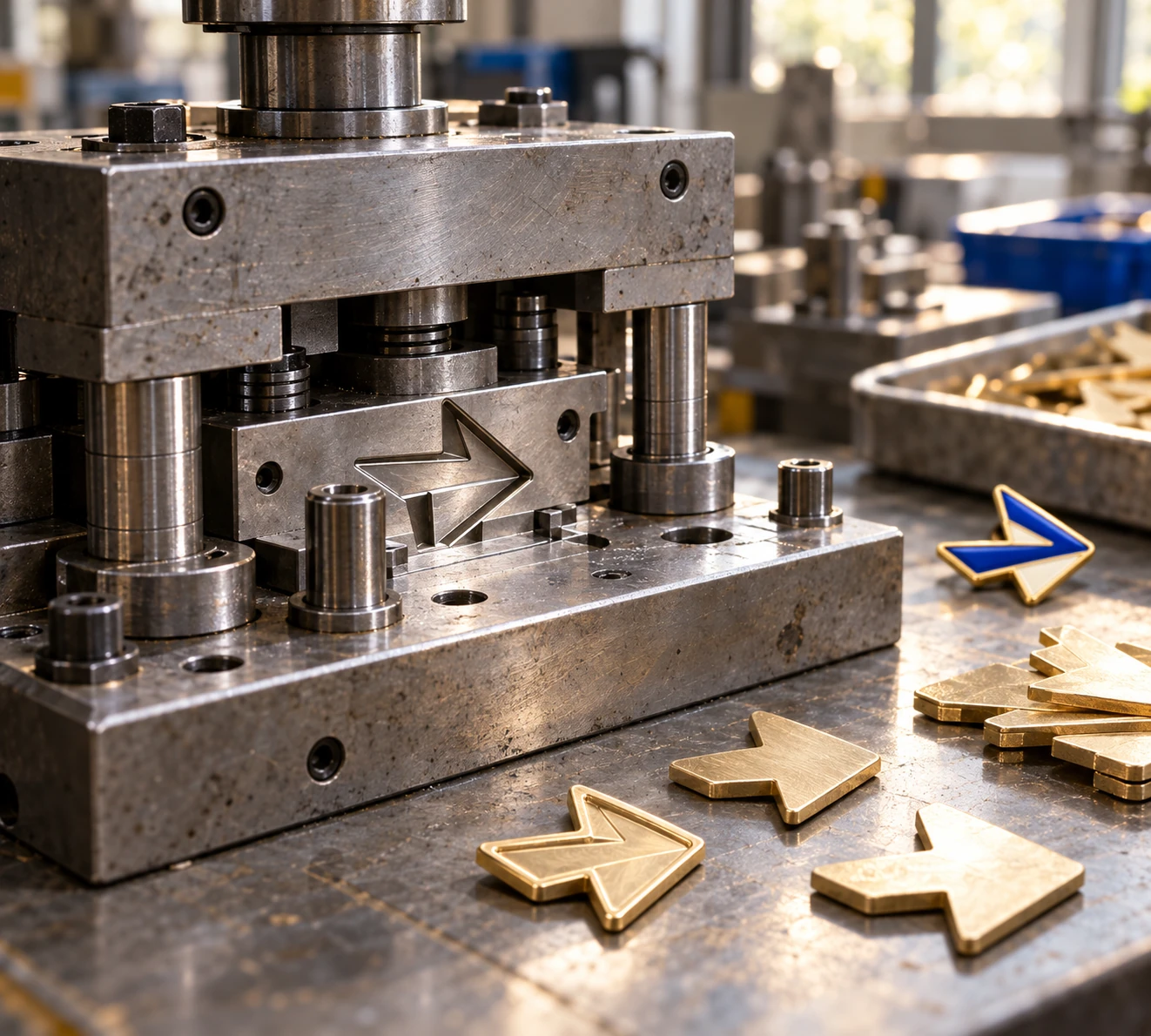

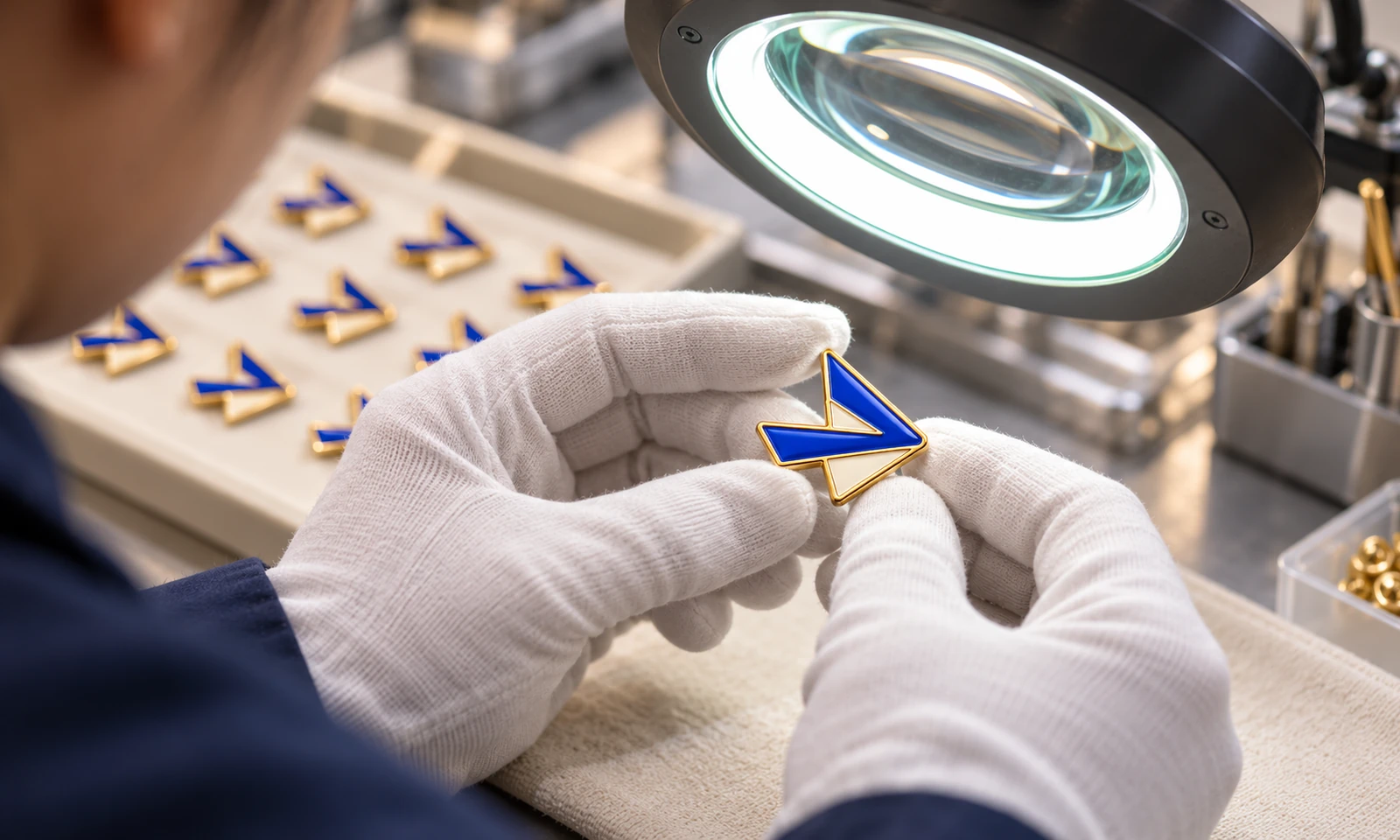
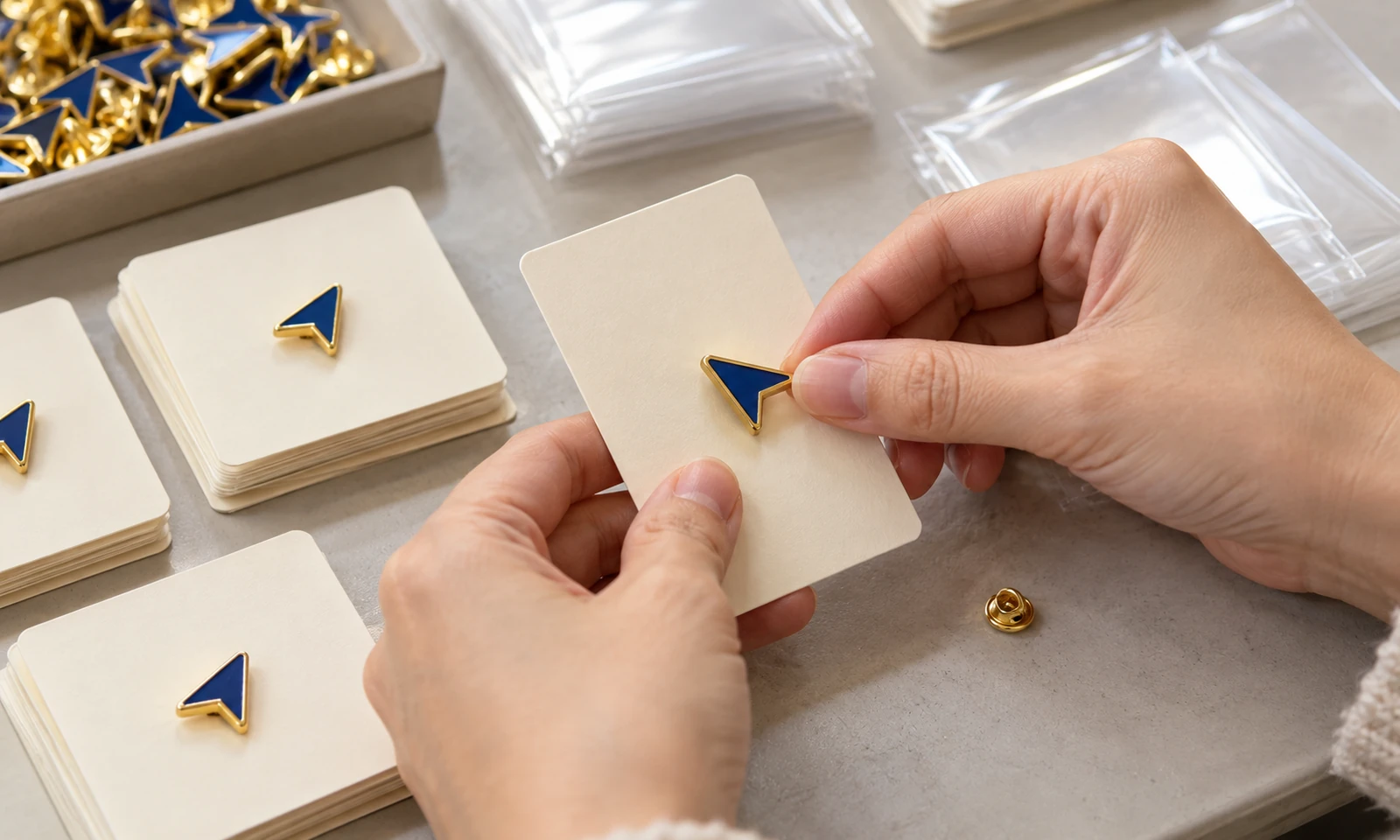
The agreed artwork and supplied scope guide what is reviewed at each stage.
Explore our manufacturing scopeAI-generated illustration — actual factory photographs to follow.
Where the design is checked
in manufacture.
Tooling, metal forming, colouring, polishing, plating, assembly, inspection and packing are completed in our own factory in Hangzhou, China.
Tooling & metal forming
Review the agreed artwork and construction.
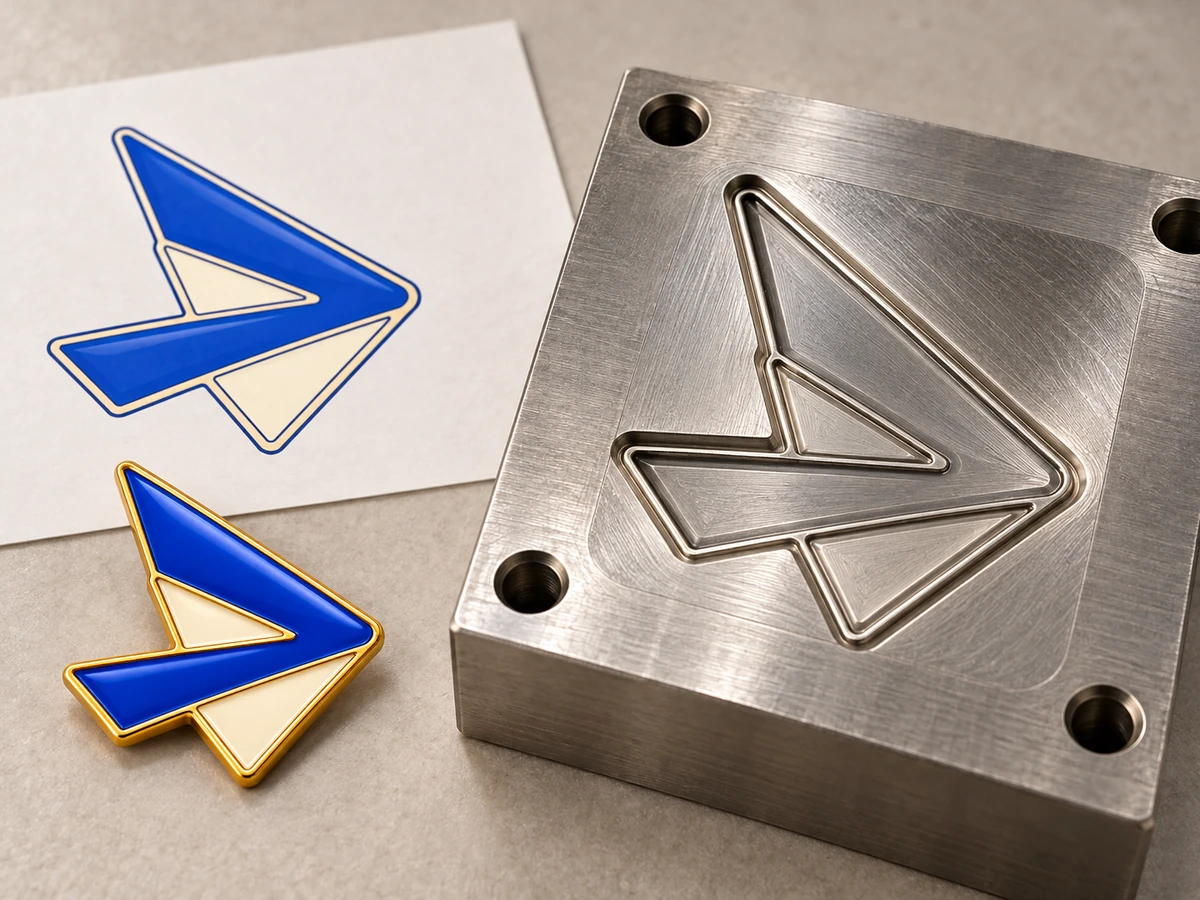
Colouring, polishing & plating
Follow the route agreed for the selected enamel and metal finish.
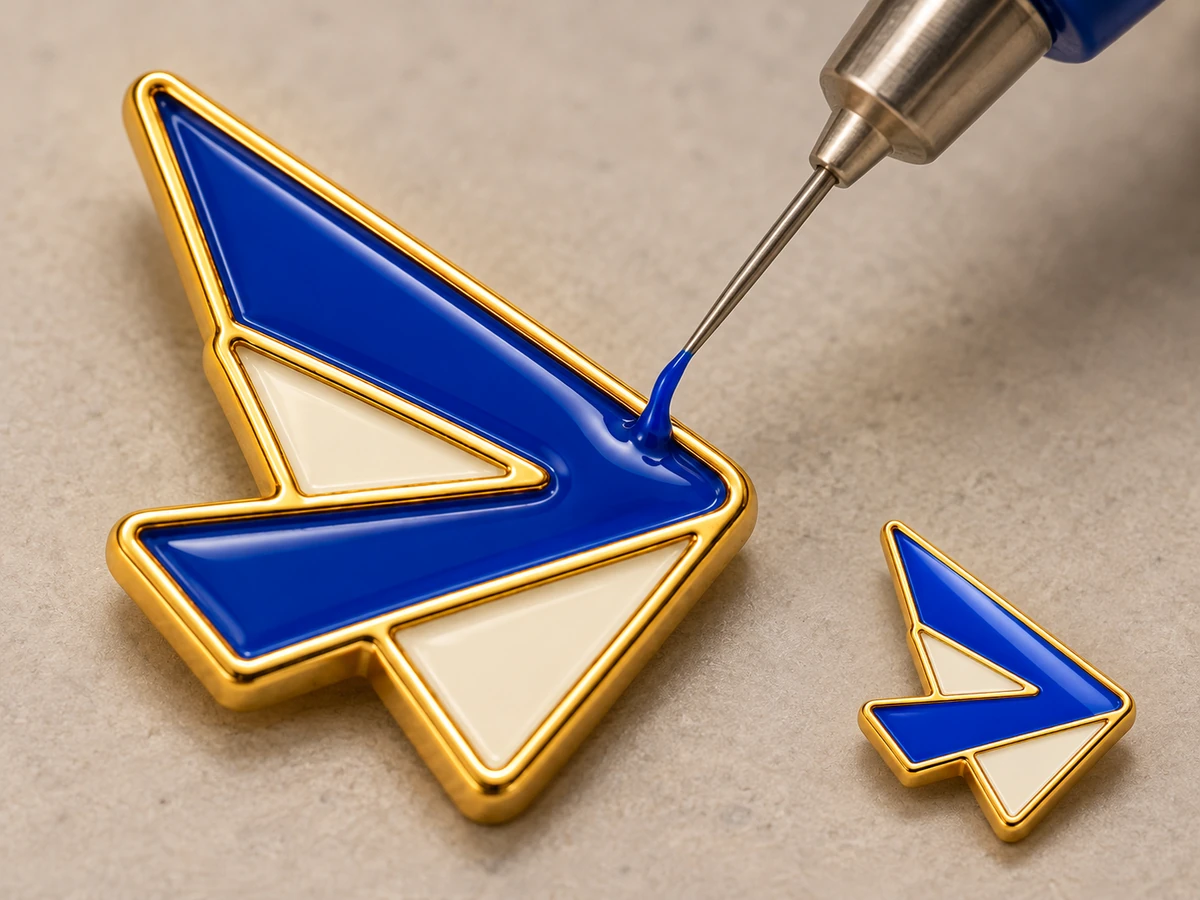
Assembly, inspection & packing
Review the reverse, fittings and packed contents.
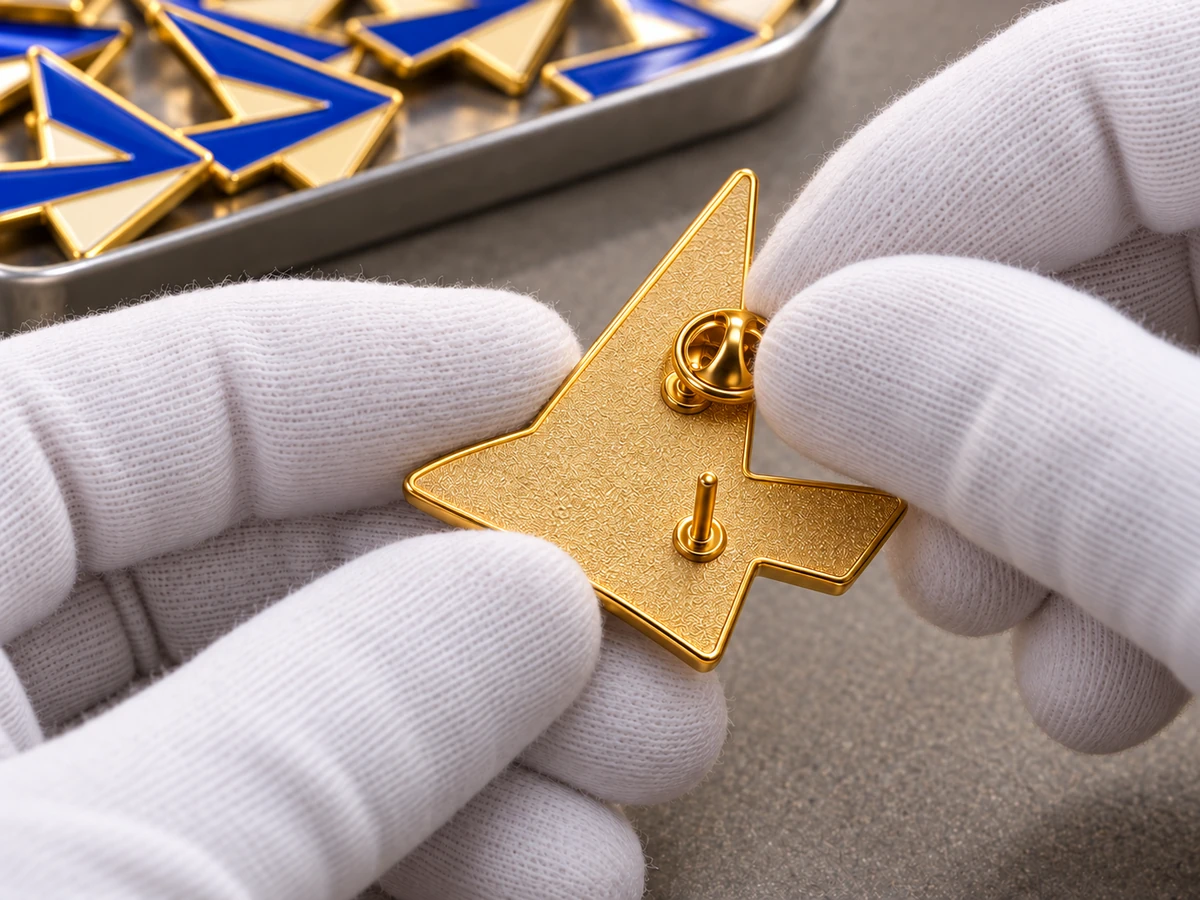
AI-generated illustration — actual factory photographs to follow.
Your artwork approval record.
Begin with your artwork, an original idea or a design to adapt. Agree specifications, sample arrangements and supplied scope before production scheduling.
Received artwork
Identify the current logo, colour references and required details.
Production artwork
Review outline, colour fields, intended size and construction.

Sample comments
Compare the sample with the agreed design and record changes.
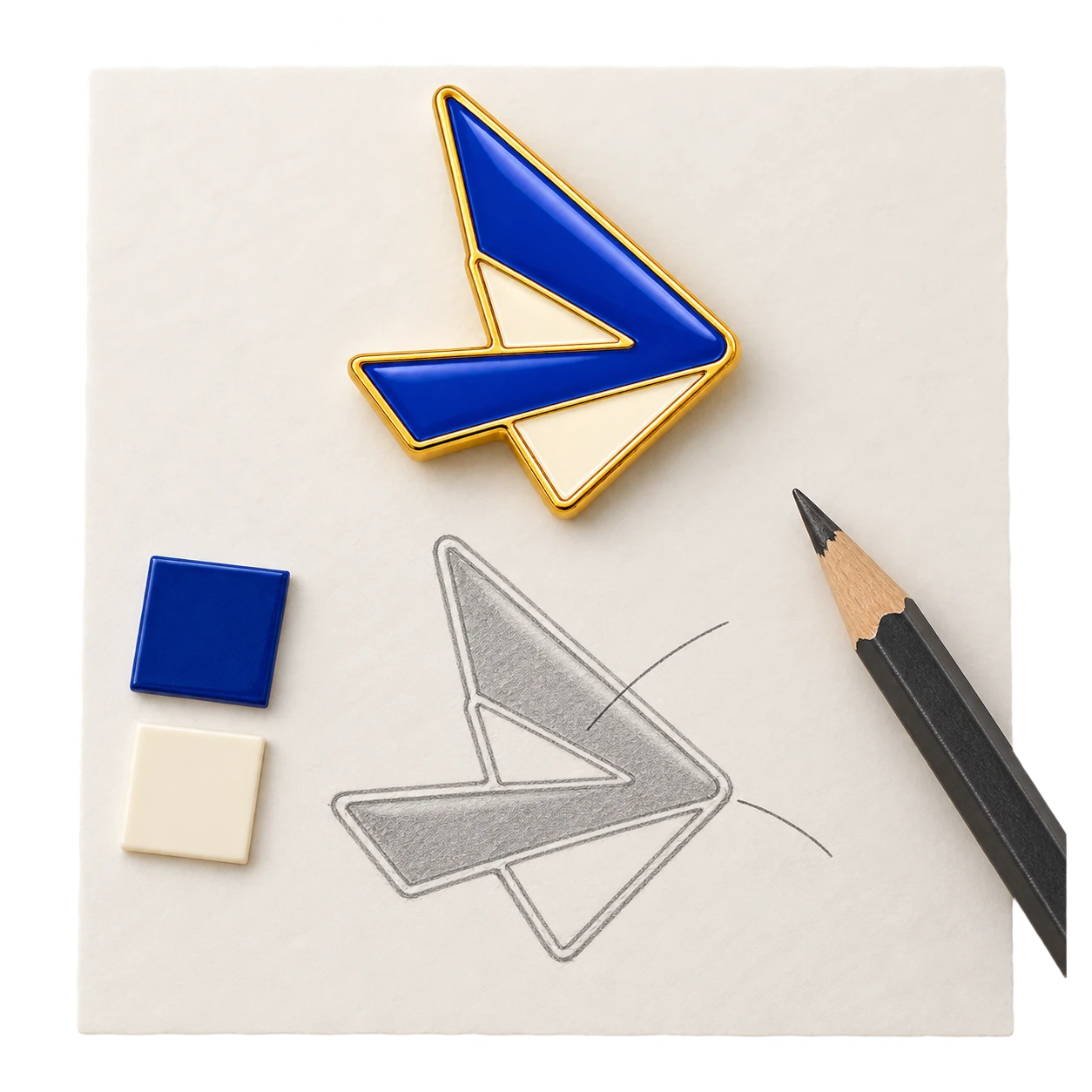
Agreed reference
Keep the approved version with its fitting and presentation scope.
The agreed reference informs production and packing arrangements; destination and target arrival are discussed before dispatch planning.
Compare the sample with
the approved mark.
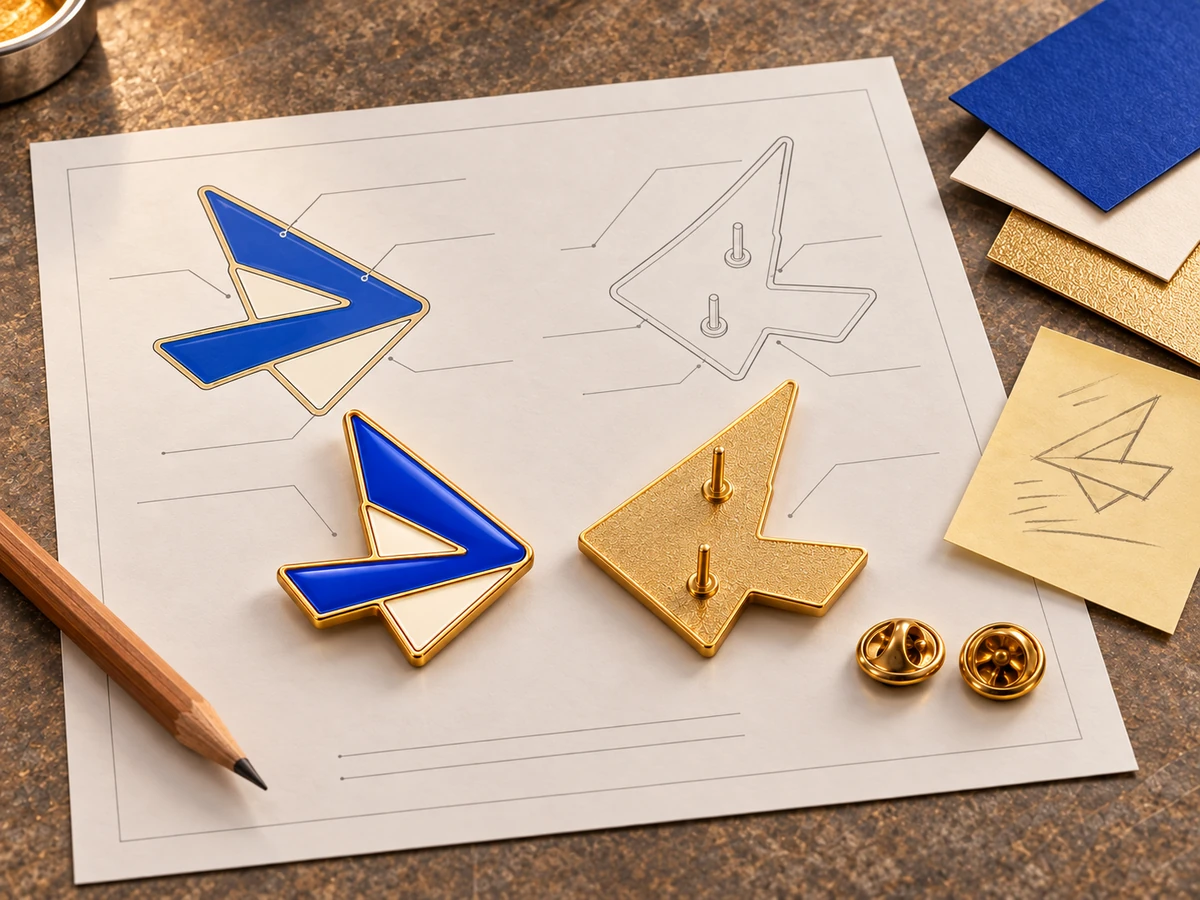
Revision notes
Outline & lettering
Compare shape, gaps and required wording with the approved artwork.
Colour & surface
Check colour divisions, exposed metal and the intended enamel surface.
Reverse & presentation
Check orientation, fitting and the complete supplied card or pack.
Record the design version and specific change, not just “approved”.
Illustrative sample review. A drawing or image is not a physical production approval.
Company logo pin questions.
Answers about artwork, wearing and delivery for a custom company project.
Artwork preparation
1What artwork should we send for a company logo pin?
Send the clearest available logo artwork and identify the current approved version. Include colour references, required lettering and any brand rules that affect the symbol. State the intended use and size direction so the design can be reviewed as a wearable object. If the source is incomplete, identify that before artwork approval rather than treating a screen image as a production specification.
2Can our logo be used without changing its details?
That depends on the artwork and proposed finished size. Fine letters, narrow gaps and small colour areas may need adjustment to remain clear in a metal-and-enamel design. Identify which elements are essential to recognition. Proposed changes should be reviewed against the approved company artwork before the pin design is confirmed.
3How do we decide between a shaped pin and a badge with a surrounding border?
Consider how the logo reads as an outline and how much room the lettering or symbol needs. A shaped outline may emphasise the mark itself; a surrounding field may provide space for supporting details. Both need review for the intended size, orientation and reverse. The concept on this page illustrates one approach, not a rule for all company logos.
4Can a gradient or photographic logo become an enamel pin?
A gradual tonal image is different from separated enamel colour fields. Review the essential shapes and colours first, then discuss whether simplification or another artwork treatment is required. Do not assume the original gradient will transfer unchanged. The chosen treatment and its appearance need approval before a production specification is agreed.
Wearing
5How should we specify wearing direction and back fittings?
Describe where and how the pin will be worn, the intended orientation and any relevant attachment material. Review the front and reverse together so fitting positions support the design rather than being chosen in isolation. State whether fittings and assembly are included in the supplied scope. The pictured arrangement is illustrative and must be reviewed for your mark.
6What should we check on a logo pin sample?
Compare it with the approved artwork version, especially the outline, lettering, colour divisions and intended surface. Check orientation, reverse positions and the fitting as well as the visible face. If a card or other presentation is supplied, review the assembled presentation too. Record comments against the design version so revisions remain traceable.
Delivery
7Can company logo pins include a backing card or presentation pack?
Yes, presentation can form part of the project scope. Provide the card artwork or presentation requirements and specify the contents. Review the pin position, card layout and fitting together, then identify transit protection separately. A card shown in the concept is not a standard inclusion; its design and quantity must be stated in the brief.
8What information is needed for a quotation or repeat project?
Provide the artwork version, intended use, size direction, quantity, fitting and packing scope, destination and target arrival timing. For a repeat project, also identify the previously approved reference and any changes rather than assuming the old configuration applies. The current specifications, sample arrangements and production scope need to be agreed for the new request.

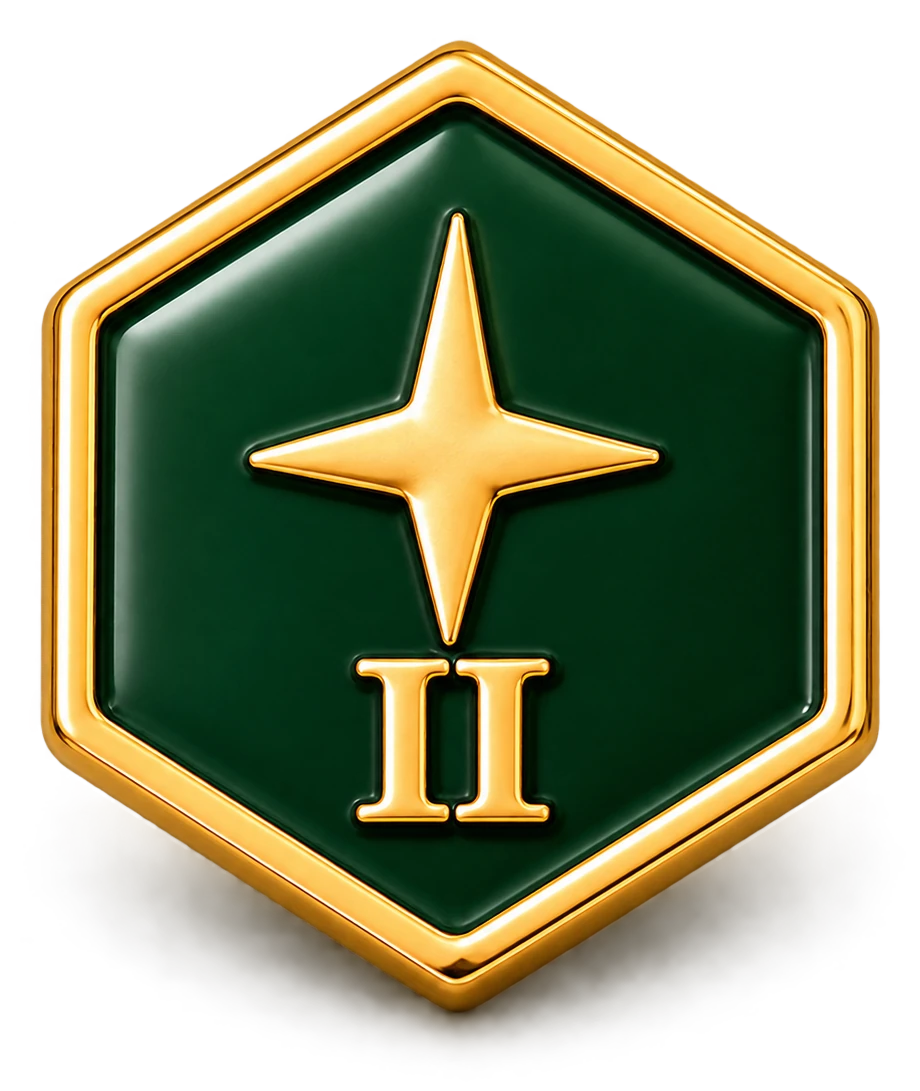


Employee recognition series
Extend one identity across recognition levels.
View product details

Organisation crest
Combine an emblem, border and organisation name.
View concept brief

Business event pin
Plan an event version and its distribution.
View concept briefPrepare a logo pin brief.
Share the artwork reference and the decisions you already know. Mark anything still to define.
Or email [email protected]