ODM development · Original concepts & adaptations
Develop custom pins for your business.
Start with the purpose your product needs to serve. Original development and design adaptation bring different inputs, but both need clear priorities, practical product decisions and an agreed manufacturing brief.
Outline your development brief
Two starting points for development.
Original development
Begin with the business purpose, audience, brand direction and a product idea. Explore how the message can become a shape, colour arrangement and pin structure.
Design adaptation
Begin with an available reference. Distinguish the identity features to retain from the outline, colour, connection or presentation you want to change.
For brands, businesses and organisations developing enamel pins, we connect the design direction with the structure, finish, fitting and supplied form. Keychains, medals and charms can also be discussed. All plant-pin concepts here are illustrative.
If your artwork is already defined and you need it prepared for supply, the OEM guide may be the more useful starting point. Both routes still require product and manufacturing decisions.
Have defined artwork? Explore OEMTurn the business purpose into a brief.
A productive brief gives the design discussion priorities. Share the intended use and audience, the message to express and the constraints that your team needs to preserve.
Must retain
Identify essential identity elements, wording, brand restrictions or product requirements. Explain why they matter to the business use.
Open to explore
Describe areas where shape, colour arrangement, product form or presentation can be developed. Separate preference from a necessary constraint.
To confirm
List product quantities, target timing, market, budget direction and supplied form where known. Mark estimates and unresolved decisions clearly.
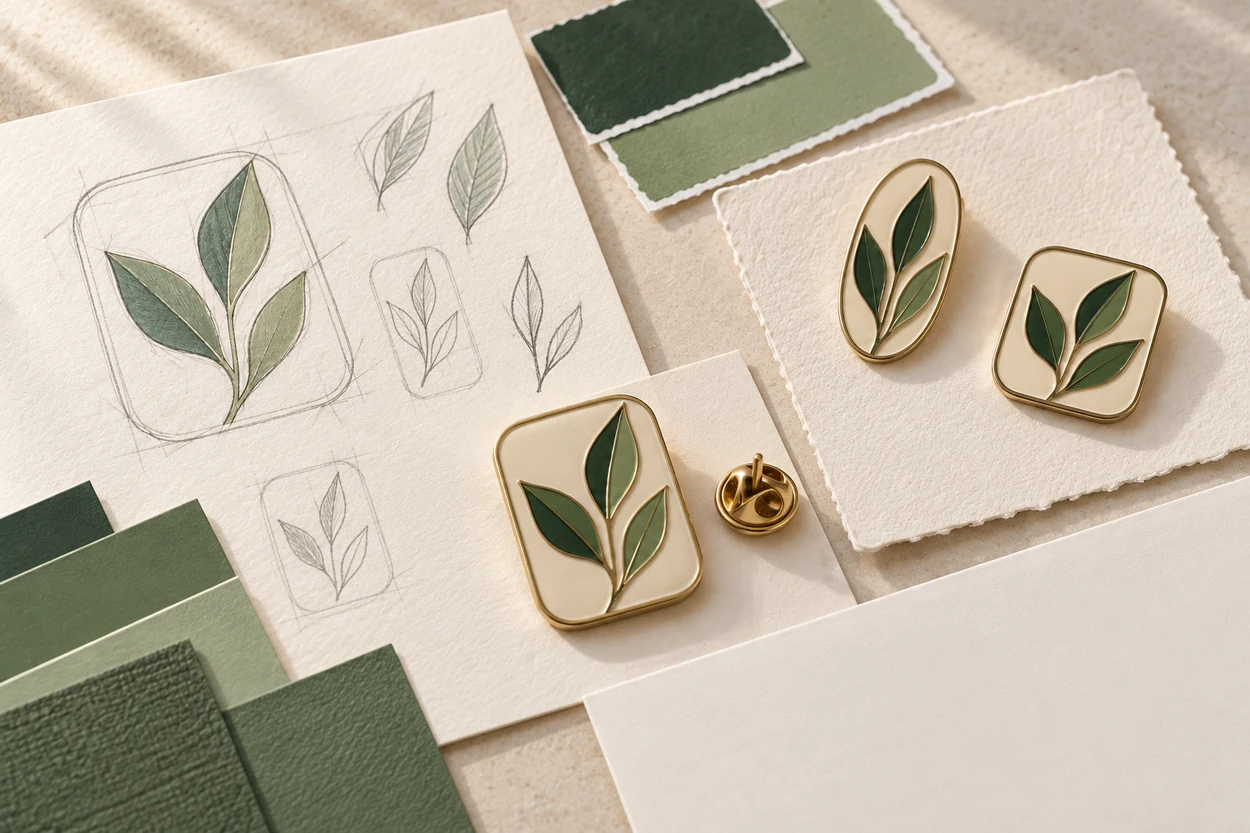
Relevant sketches and references are useful when their purpose and permitted use are clear. No finished artwork is needed simply to begin the development discussion.
Explore an original direction.
Translate the business brief into product questions before selecting an appearance. What should the pin communicate, which shape supports it and what needs to remain legible?
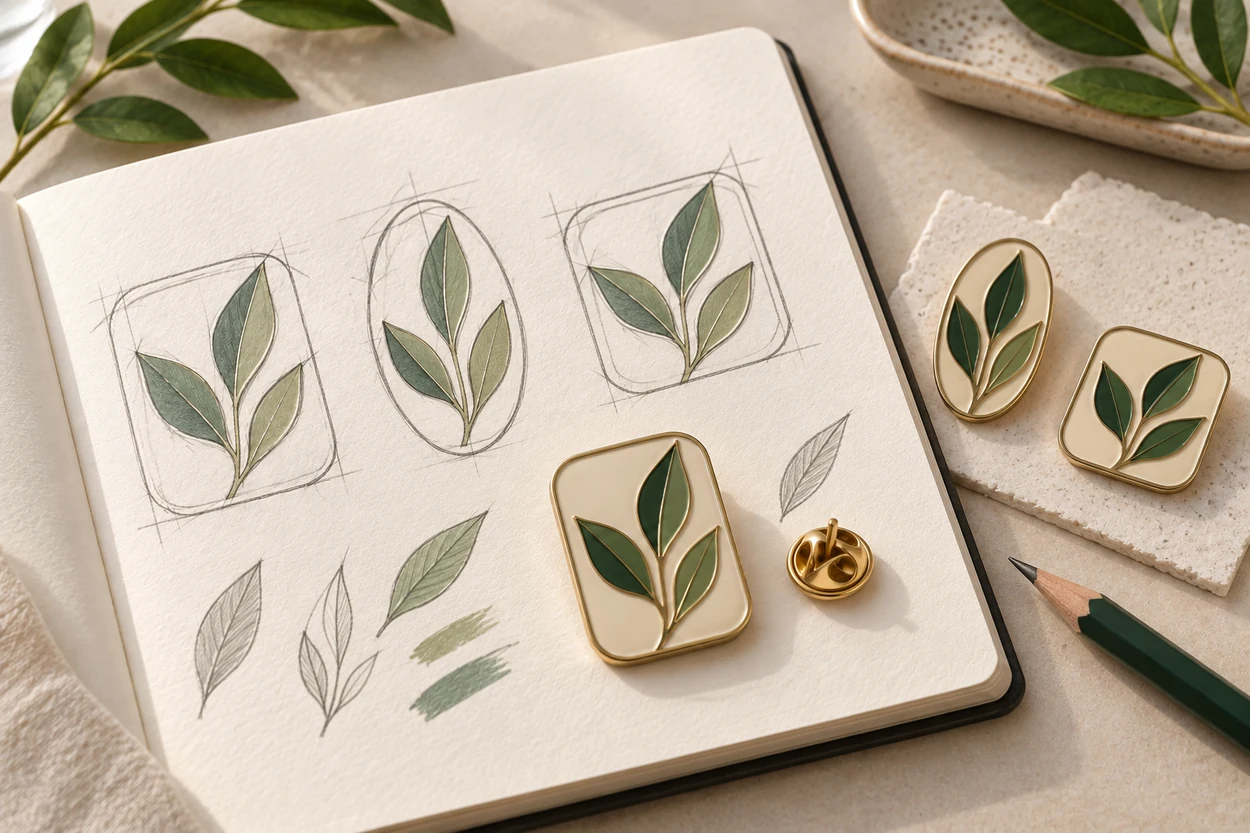
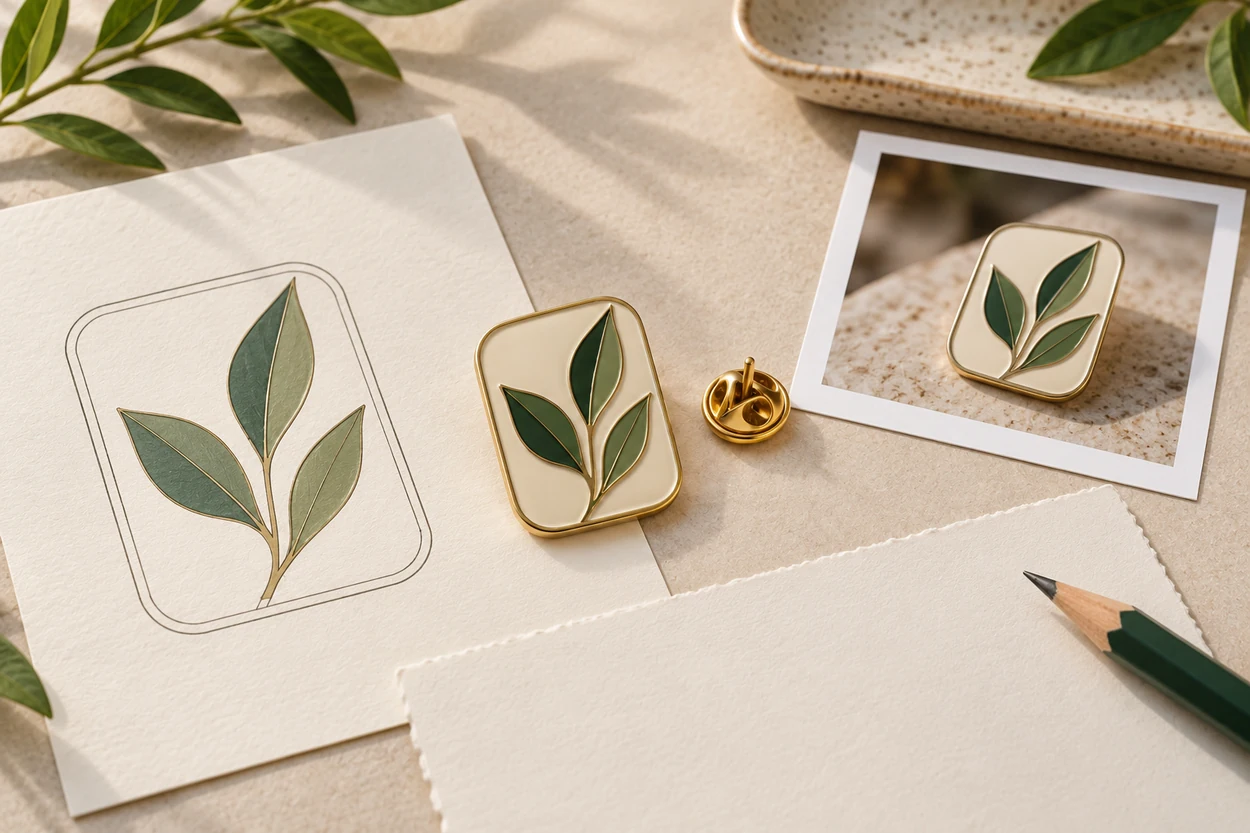
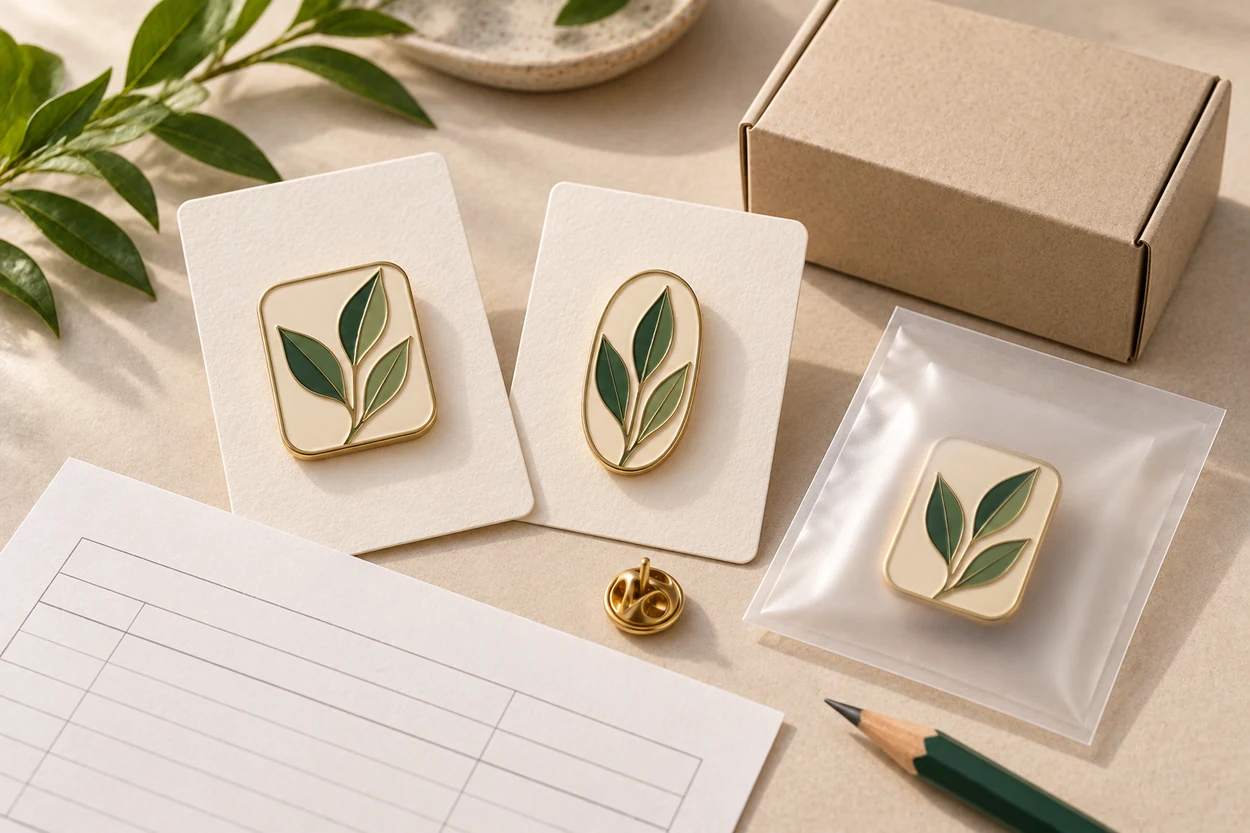
The plant study illustrates how a shared message can be explored through different outlines, colour areas and compositions. Compare the directions against the brief rather than choosing an image without a reason. Identify what the selected direction does well and which questions remain.
Concept selection is a step towards product definition. It does not automatically approve construction, a physical sample or manufacture. Proposal scope, design work, sampling and costs are discussed for the project; no fixed number of concepts is promised.
Adapt a direction with clear boundaries.
Start by identifying the reference, its source and the material available for the project. A reference is not treated as permission to copy another party’s design.

Retain
Name the recognisable features that should continue, such as a silhouette, symbol or visual relationship.
Change
Describe the requested adjustment to colour, outline, structure, fitting or presentation. Explain the intended business outcome.
Check
Review the complete result, including the reverse and supplied form. Confirm source material, deliverables and any requested rights for the project.
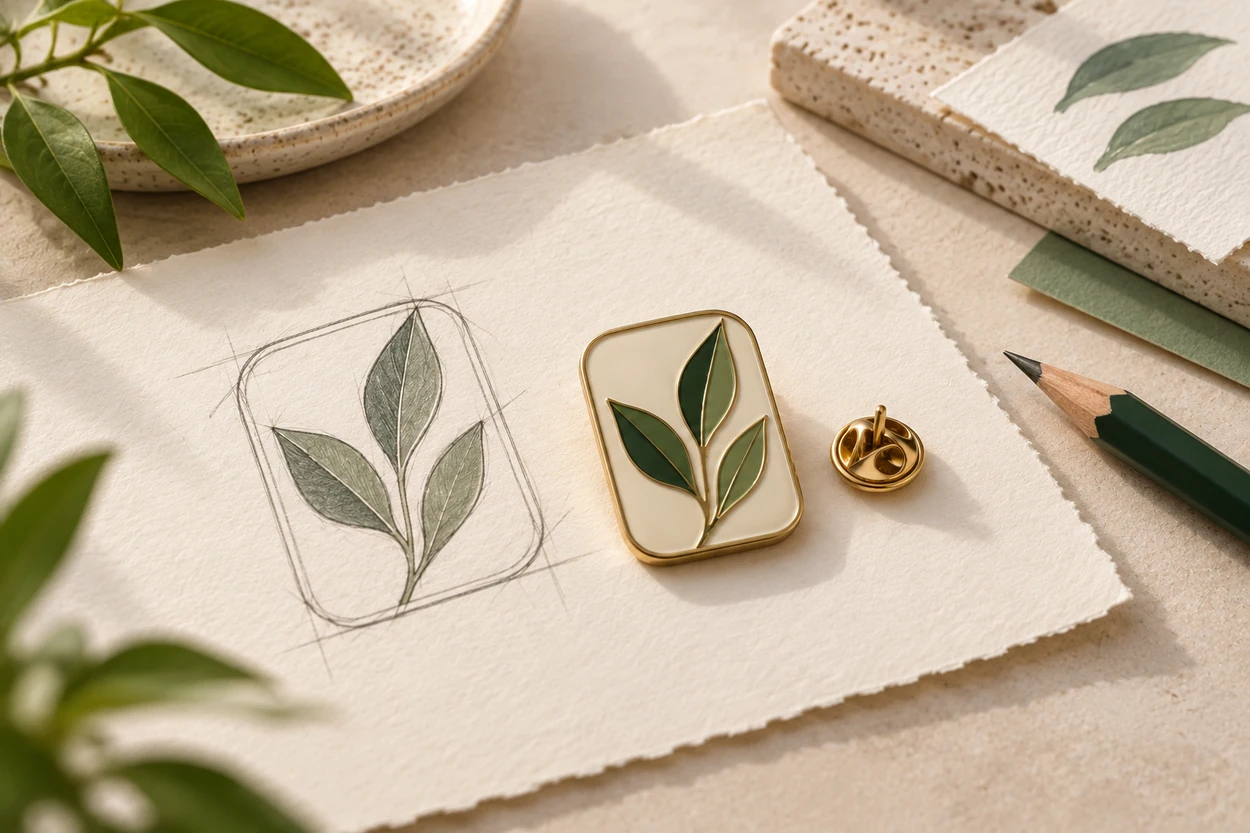
The colour variations are an illustrative study of retained and changed features. They are not available stock designs or a promise of unrestricted use.
A shared language. A definition for each pin.
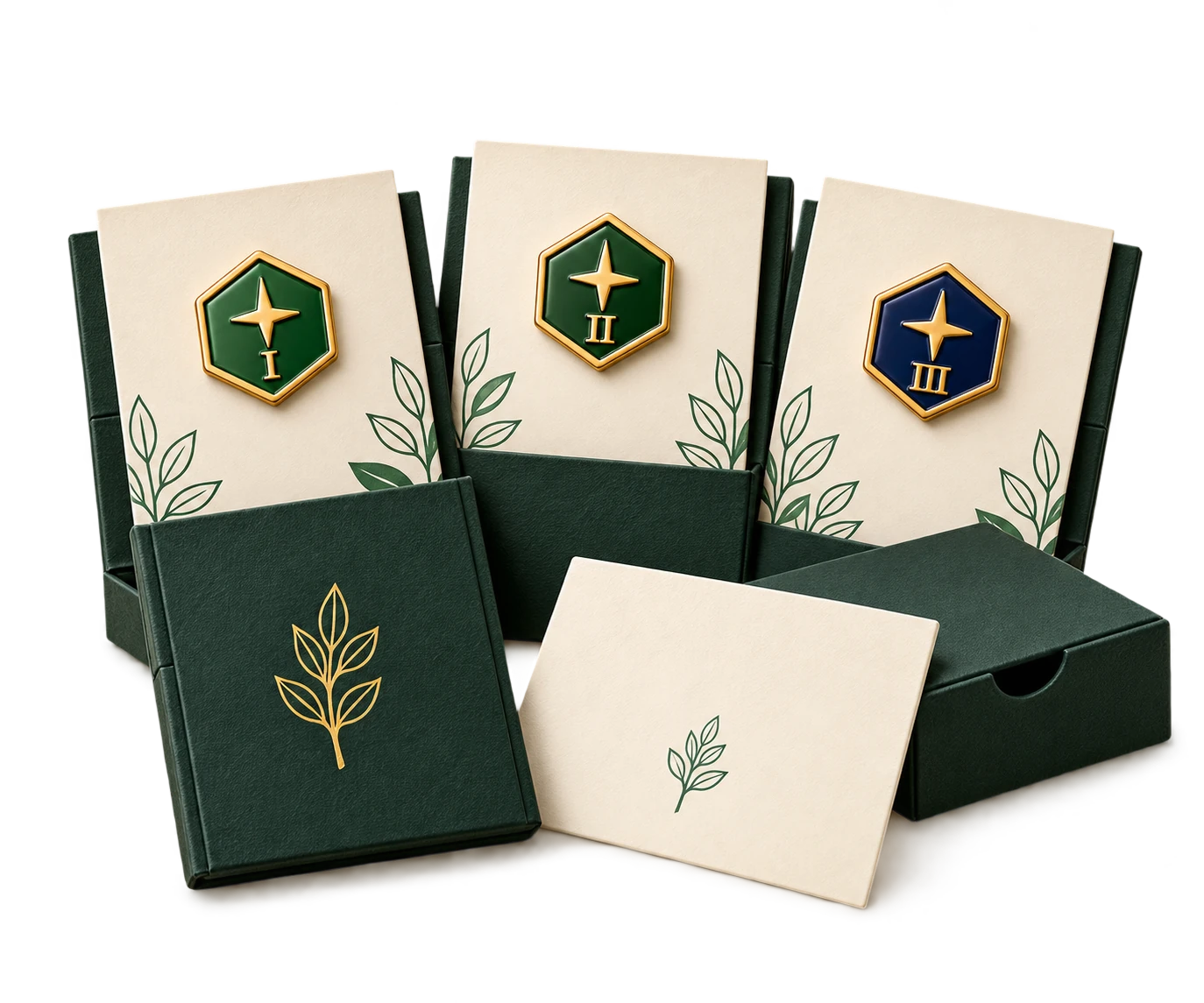
A coordinated series can connect different business uses without making every item interchangeable. The visual relationship and the product requirements need separate attention.
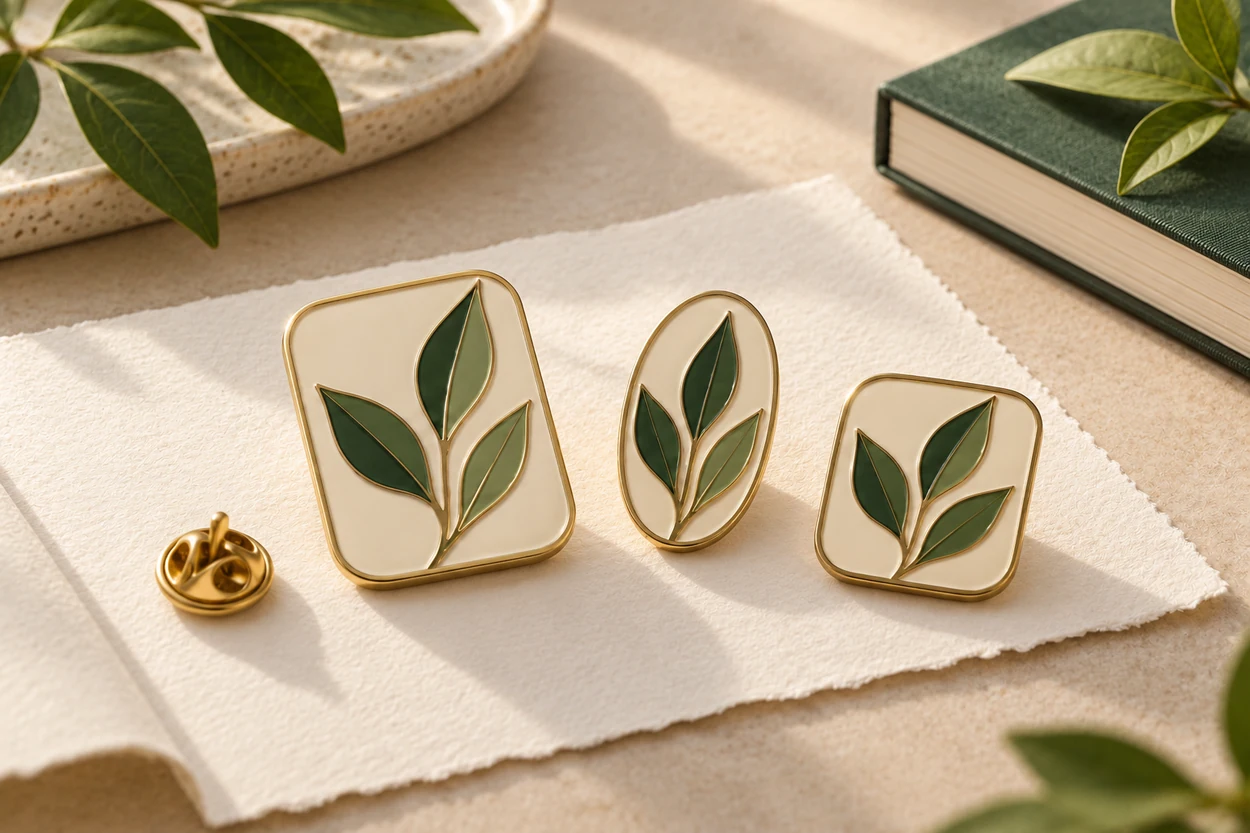
Shared across the series
Identify the colours, symbols, message or presentation principle that should connect the designs.
Defined for each item
Record the outline, size direction, detail, reverse, fitting and quantity for every proposed pin or version.
Agreed as supplied
Explain whether products arrive individually, as components or in a complete set. Confirm the composition, counting units and presentation.
Other accessory formats may share the theme, but keychain connections, medal suspension and charm hanging points need their own decisions. A shared front graphic is not a complete cross-format specification.

Bring manufacturing into the concept.
Appearance and manufacture should be discussed together. Intended size, colour areas, metal divisions and connections can influence one another.
Consider which details need to remain recognisable and which part of the outline carries the design. Discuss the recessed or more level enamel effect, visible metal and the reverse with the same care as the front. A fixing position is part of the product, not an afterthought.
Where a question arises, return to the brief and its priorities. Discuss the available options without assuming that every requested detail or connection can be realised unchanged. The production and quality guide explains the conditions and review references in more depth.
Review manufacturing conditionsGive feedback on the right reference.
A concept, an artwork and a physical sample answer different questions. Naming the reference helps your team give useful feedback at the right stage.
Concept
Does the direction communicate the purpose and identity? Identify essential changes, optional exploration and the reason for the preference.
Artwork
Are the outline, colour arrangement and recorded product requirements clear? Name the version and the feature concerned.
Sample
What should be discussed about the physical surface, reverse, connection and supplied presentation? Compare the relevant agreed reference.
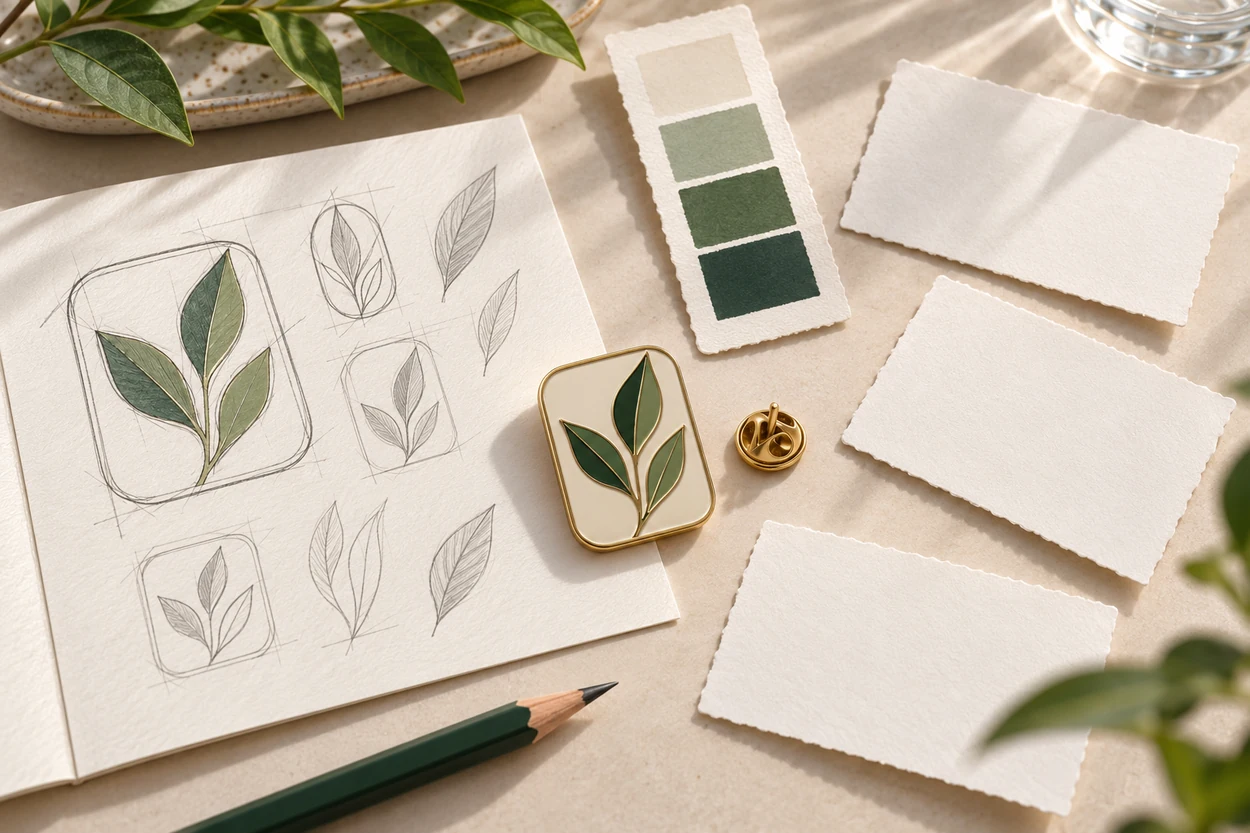
State what should change and what should remain. Prioritise comments and identify conflicting requests so that the next discussion has a clear basis.
Agree what development will deliver.
A clear scope names the work and the required outcome. Do not assume that every file, revision or right is included automatically.
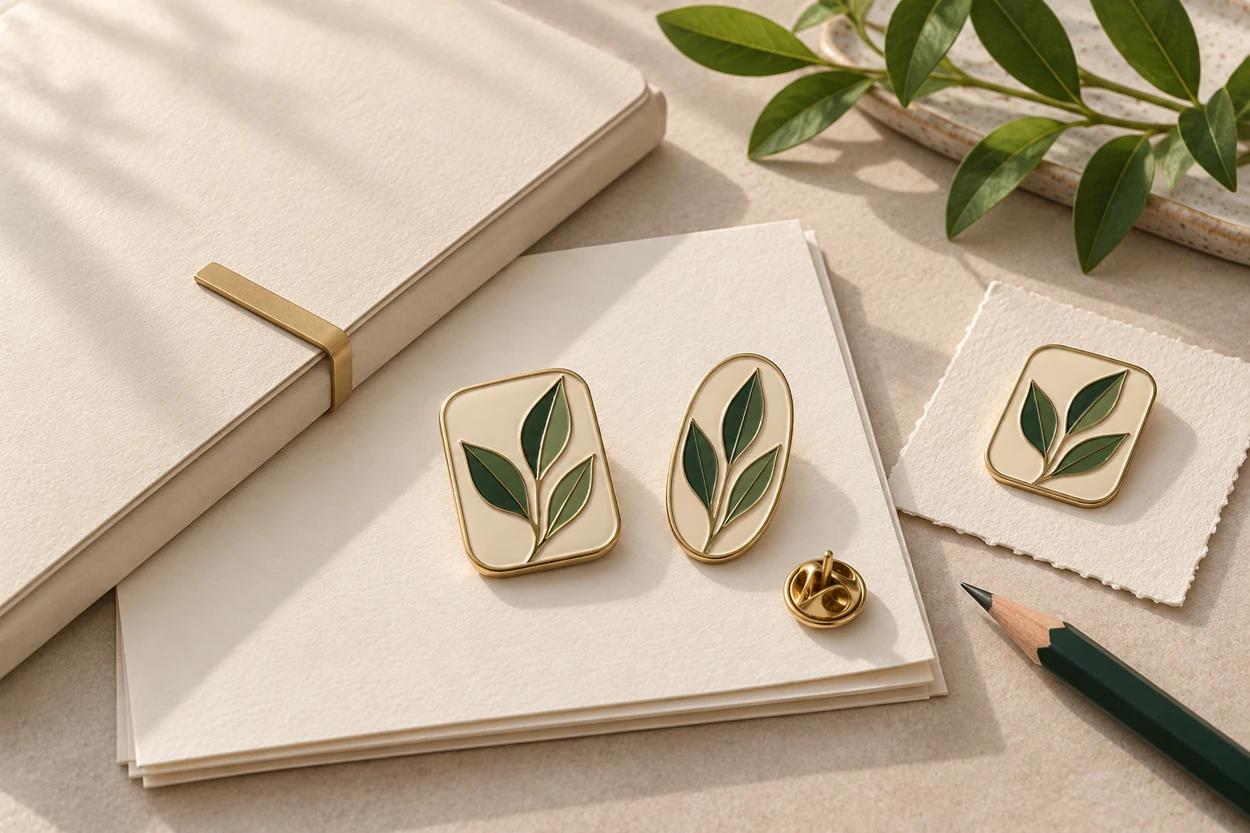
Requested
Tell us which artwork, file formats, sample references, product specifications and supplied products your team requires.
Discussed
Review the source material, development work, sampling, revision scope, costs and timing needed for the project.
Agreed
Confirm the deliverables and commercial arrangements. Any required ownership, design-use or exclusive-use terms need a written project agreement.
The archive illustration is a discussion aid, not a contract or an assertion of automatic rights transfer. No free design, unlimited changes or fixed proposal count is stated here.
Six decisions between the teams.
The brief becomes more specific through the project. Keep the selected direction, current reference and remaining questions visible at each decision.
Frame the purpose

Your input
Share the use, audience, brand material and original idea or available reference.
Agree together
Identify the development starting point, essential requirements and areas open to exploration.
Select a direction

Your input
Give prioritised feedback on the original or adapted design direction.
Agree together
Record the features to retain, the chosen direction and questions that still need work.
Define the product
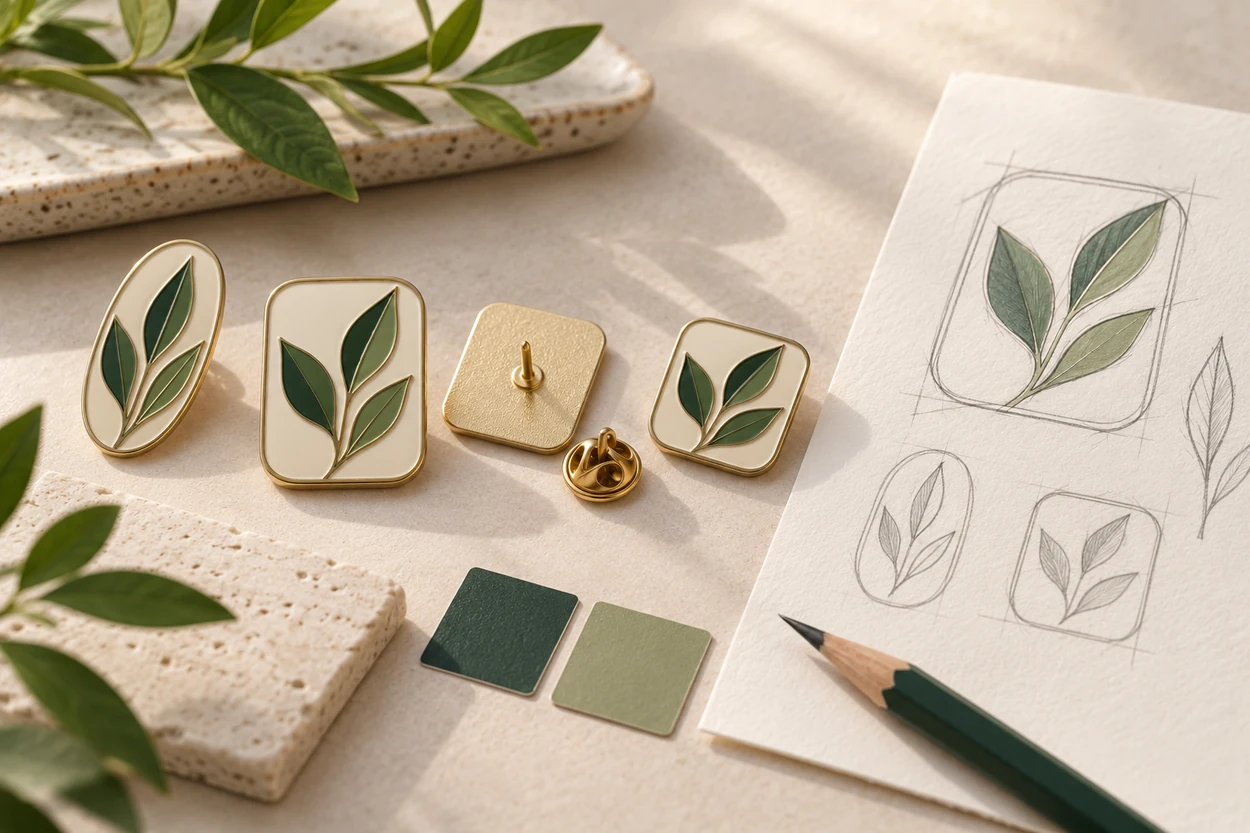
Your input
Discuss the structure, size direction, surface, reverse, fittings and relationship between items.
Agree together
Resolve manufacturing questions and define the scope of each proposed product.
Review the references
Your input
Identify the artwork version or sample and give specific, location-based comments.
Agree together
Discuss changes, further review and sampling arrangements within the agreed scope.
Agree manufacturing arrangements

Your input
Bring the selected reference, quantity, timing and review requirements together.
Agree together
Confirm the actual production and supplied arrangement before proceeding.
Review supplied form & dispatch
Your input
Share the product, presentation, packing and receiving requirements.
Agree together
Clarify the review questions and confirm the project’s packing and dispatch information.
These are project decisions, not a fixed timetable. Concept selection does not replace product, sample or manufacturing confirmation.
Carry the design into physical manufacture.
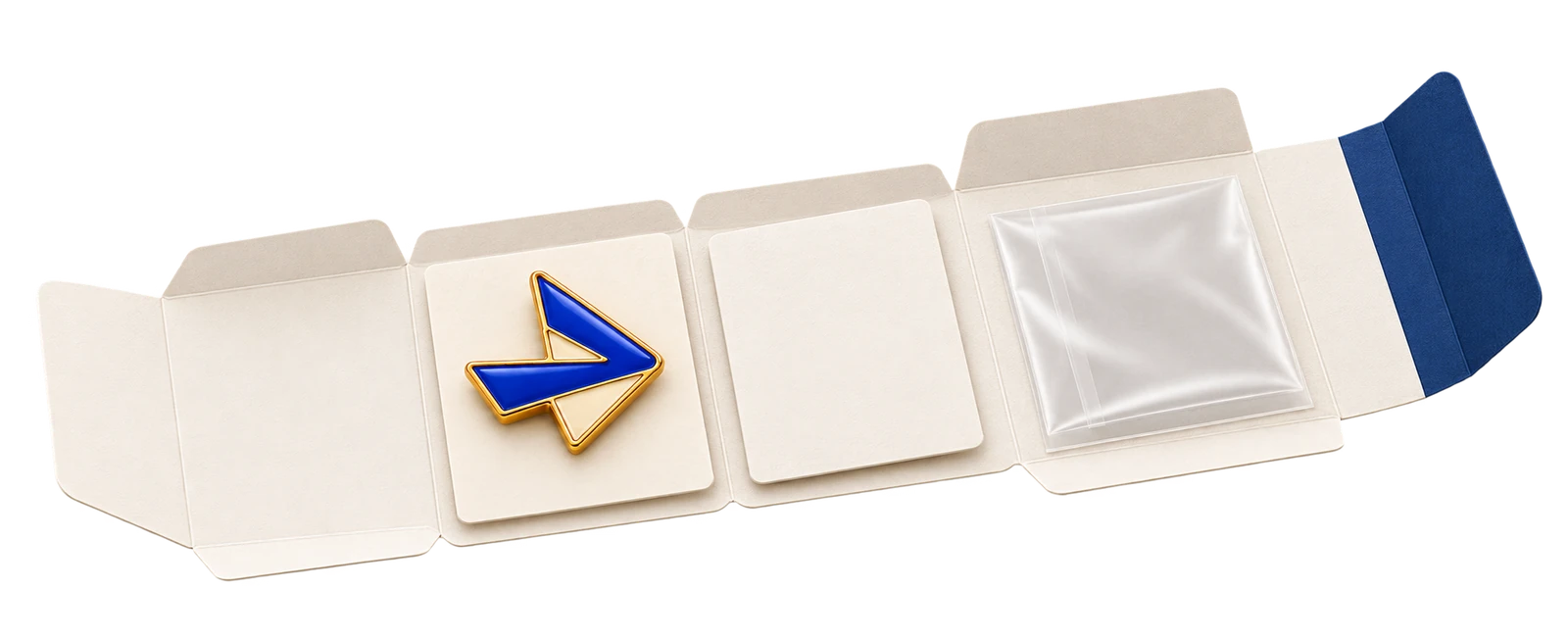
The geometric pin below is an independent manufacturing illustration. It shows how decisions continue into physical work, not a real production case for the plant-pin concept.
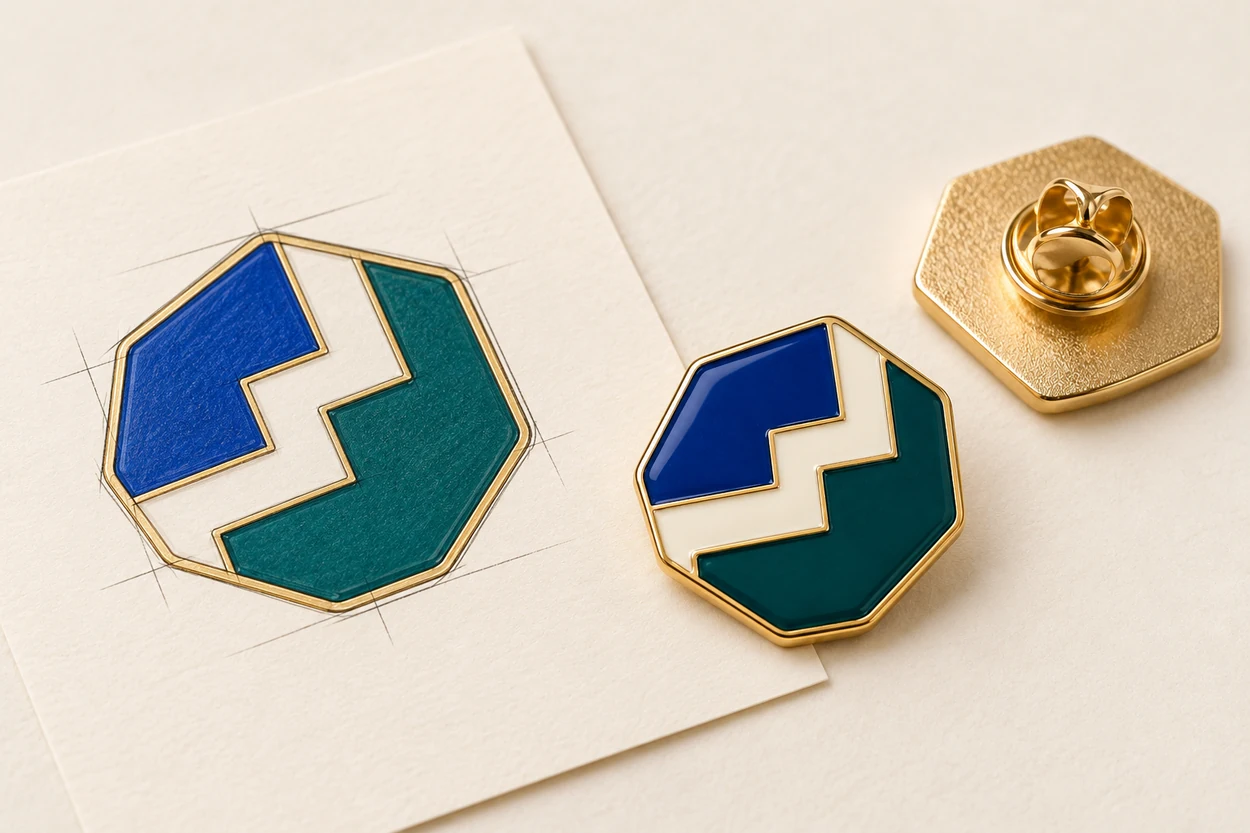
Manufacturing reference
The selected design becomes a reference with size, structure, finish and fittings.
Carry forward the product definition and the questions that must be resolved.

Tooling & metal body
Tooling and metal forming establish the outline, relief and connection points.
Carry forward the selected shape and structural decisions.
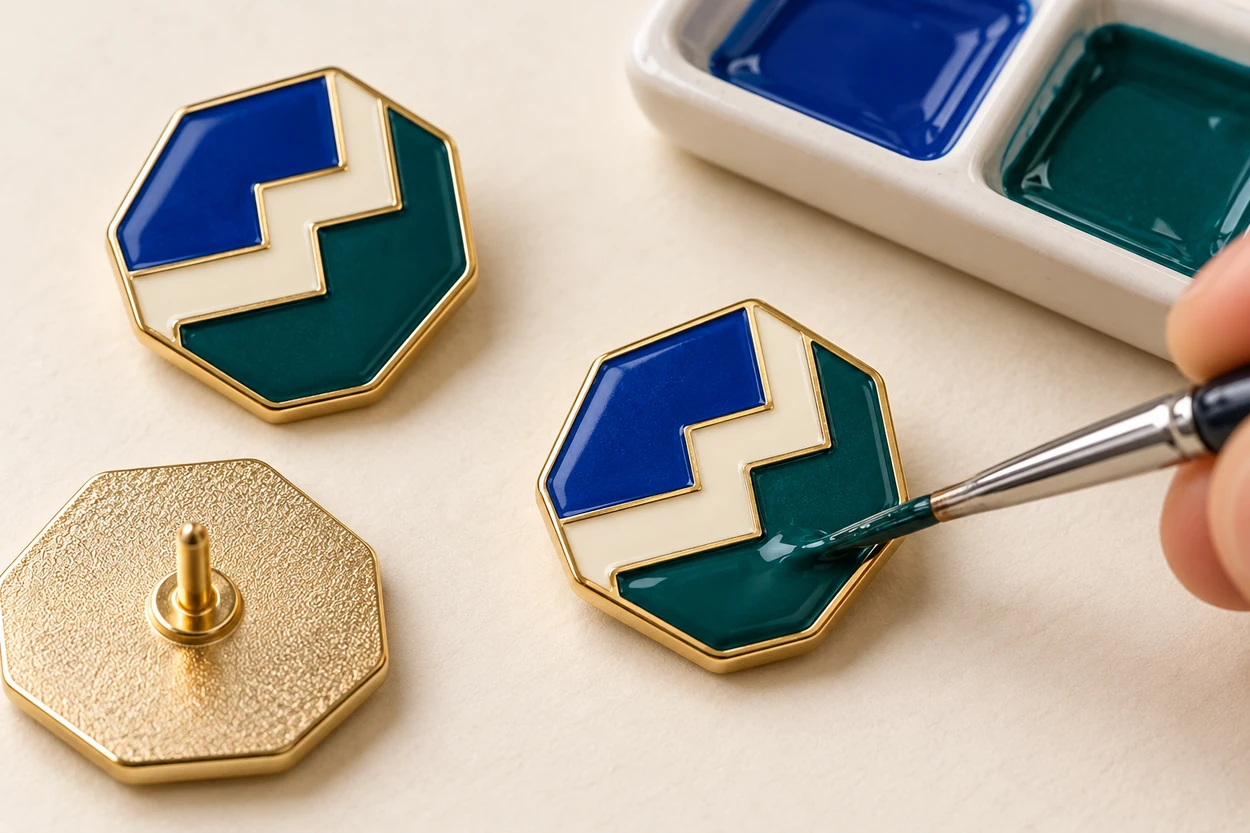
Colour & surface
Enamel, polishing and plating work are arranged for the chosen product and finish.
Carry forward the intended colour areas and surface appearance; do not assume a universal order.
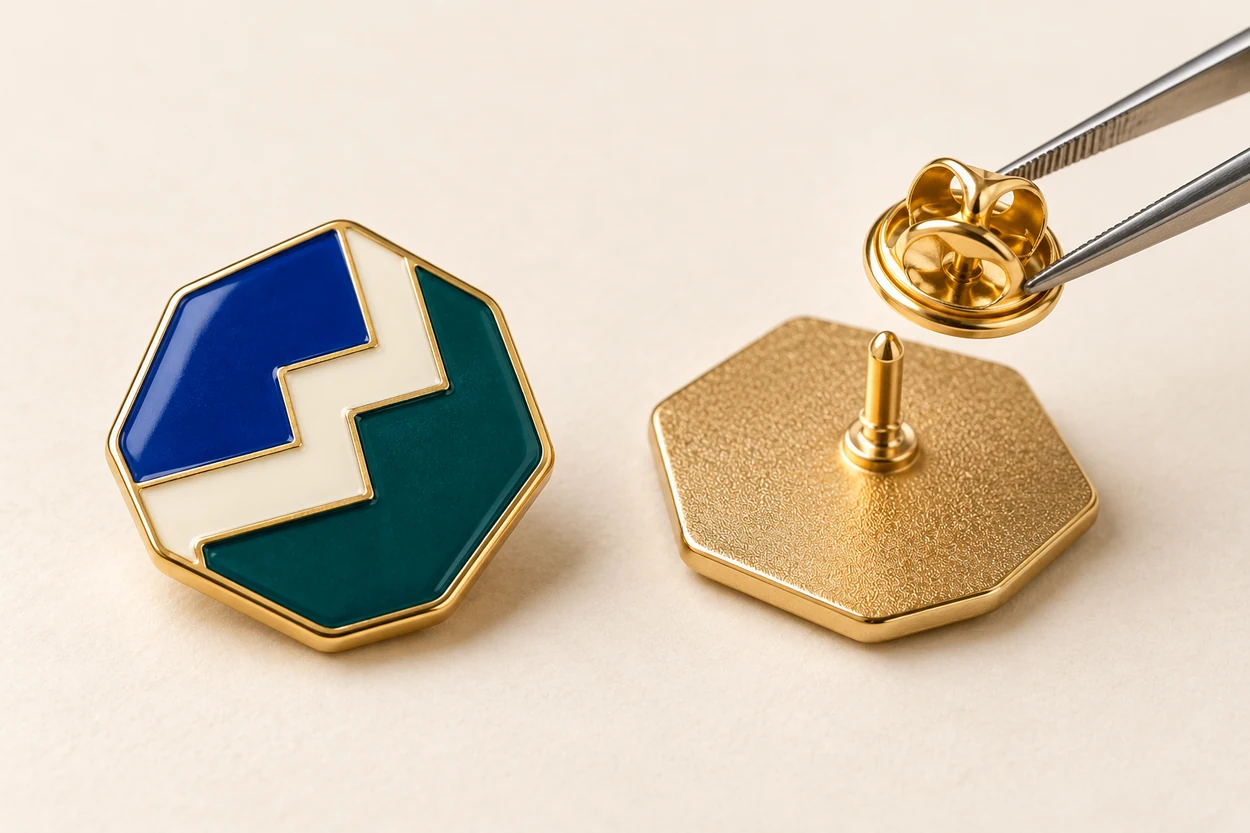
Fittings & assembly
The body and specified fixing or connection become the agreed supplied form.
Carry forward the reverse, attachment and component or assembly scope.
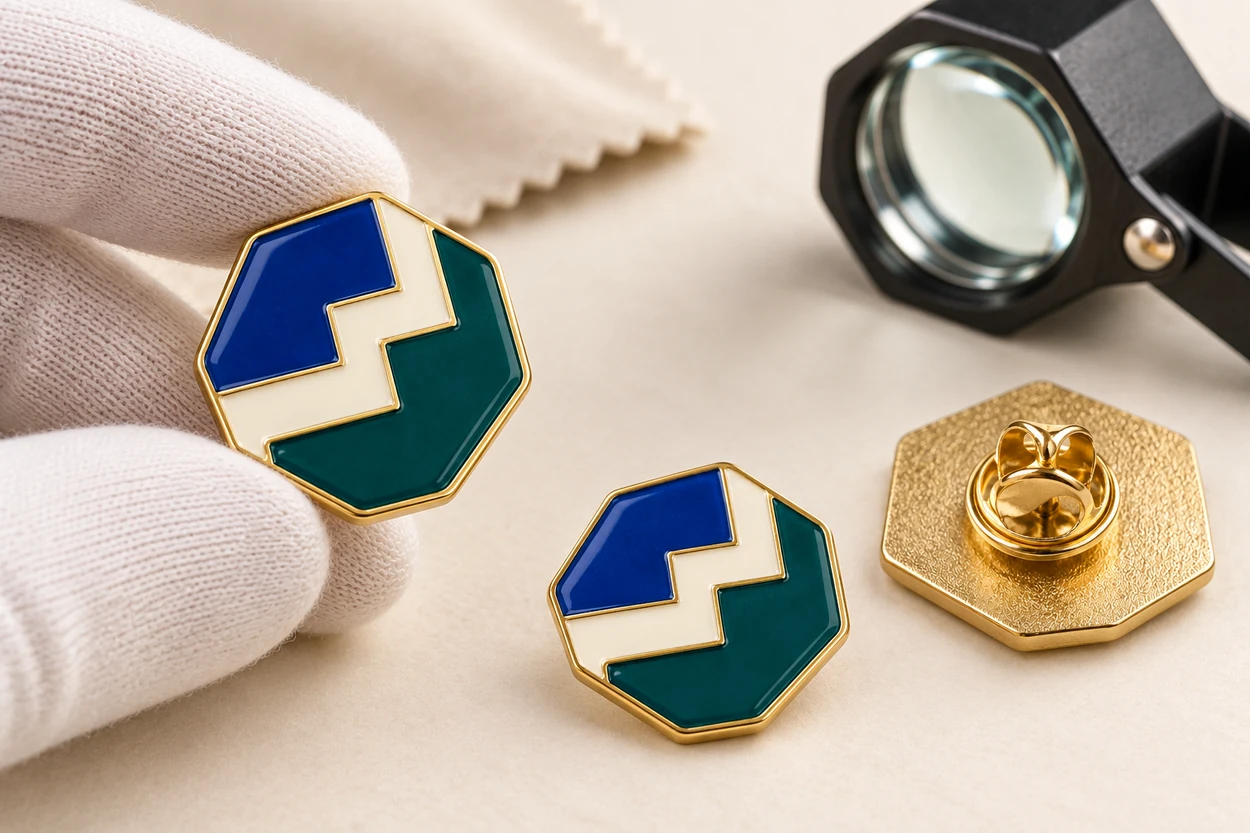
Project review
The relevant product features are discussed against the agreed reference.
Carry forward the design version and specific review questions.

Packing preparation
Protection, presentation and packing follow the agreed products and quantity units.
Carry forward the versions, pieces or sets and required delivery information.
The actual route is defined for the design and finish. It is distinct from the cooperation decisions above.
Development supported by our own factory.
Green Frog Supply is operated by HANGZHOU FORTHRIGHT TRADE CO., LTD in Hangzhou, China. Product development is discussed with the complete manufacturing scope in view.
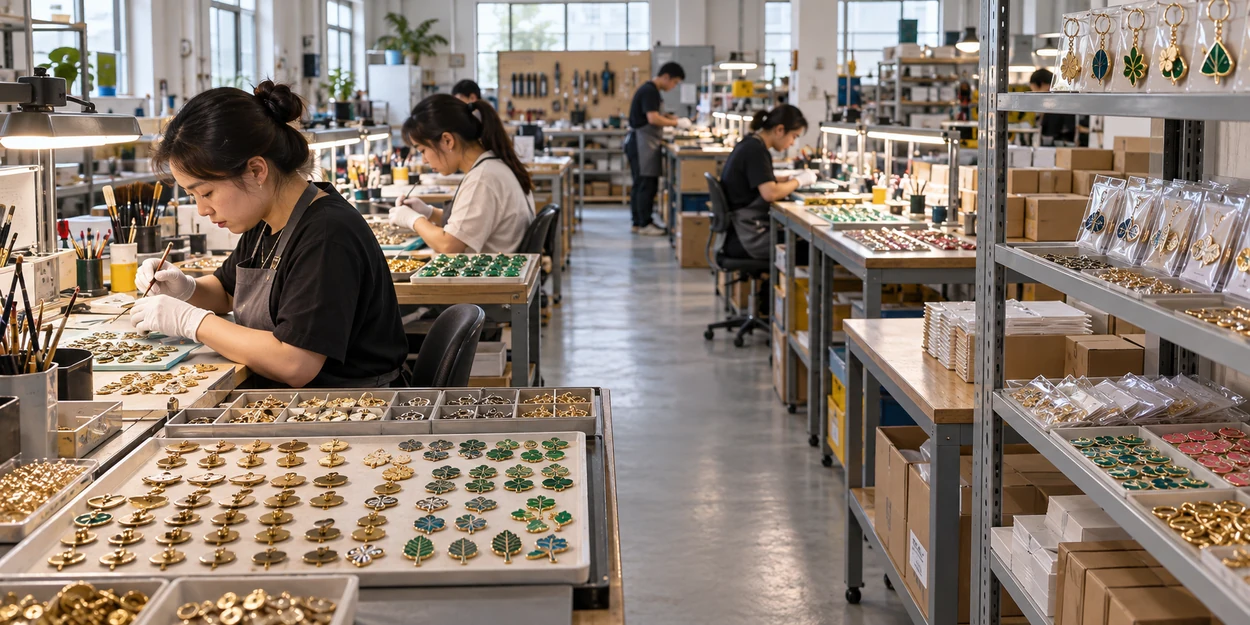
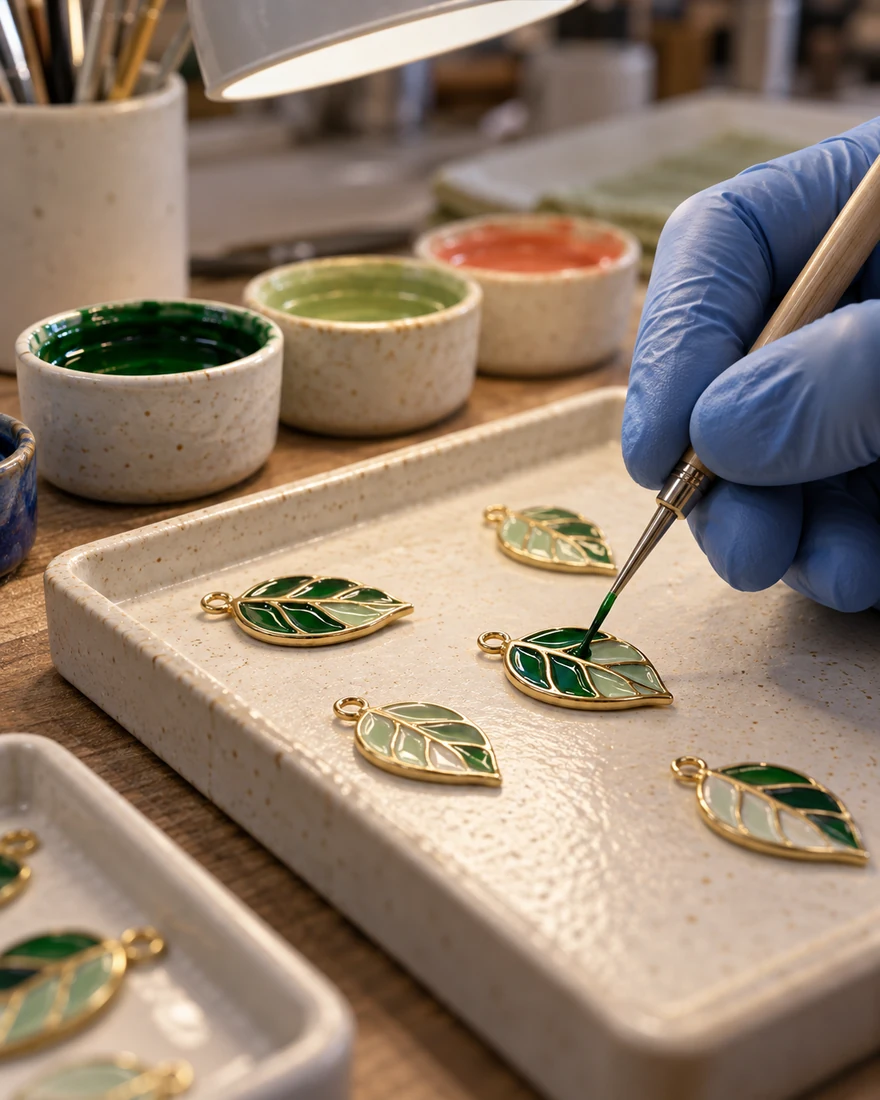
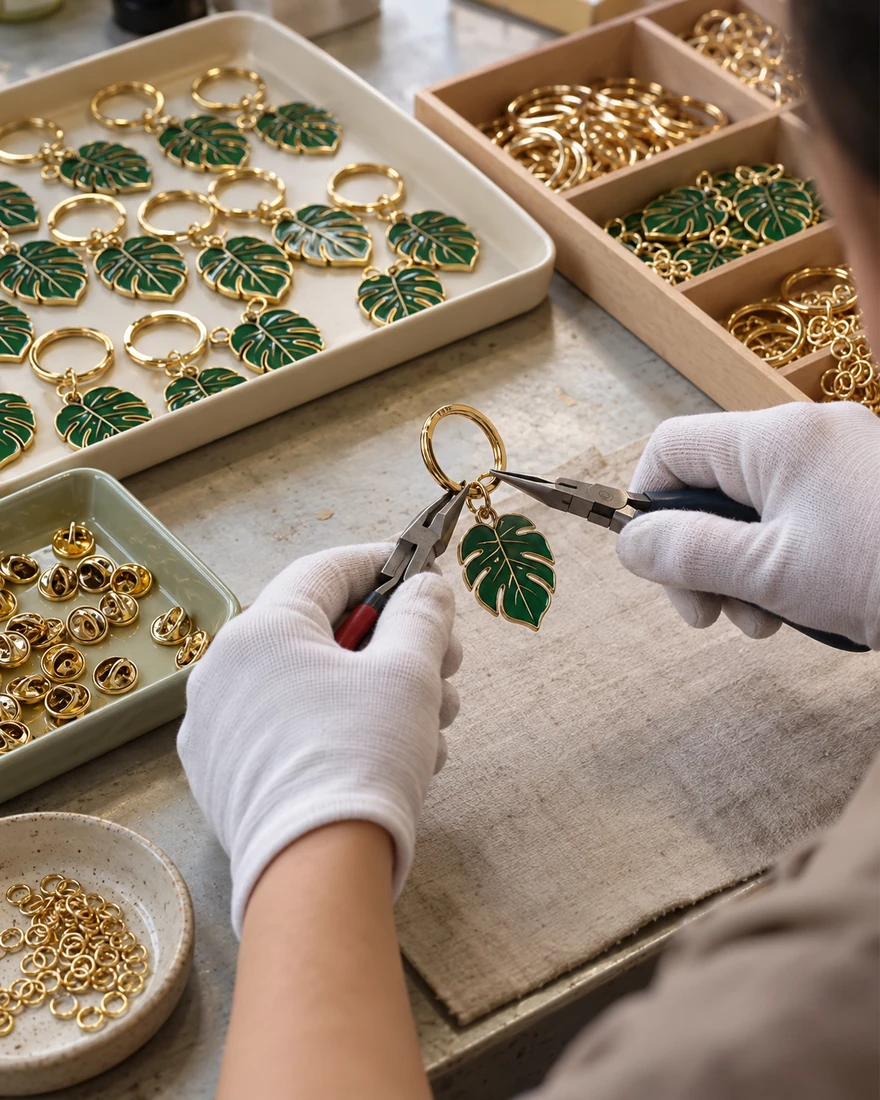
Tooling, metal forming, enamel colouring, polishing, electroplating, assembly, inspection and packing are within our in-house scope. The colouring and assembly views illustrate how different design decisions relate to different factory work areas.
Review requirements should refer to the agreed design, product or sample and the supplied arrangement. Project-specific factory and quality information can be discussed, and in-person or video factory reviews are available by appointment. The actual agenda and materials are confirmed individually.
Questions about development.
Choose a starting point, make feedback clear and agree the scope before work is treated as confirmed.

Briefs, references and the first development discussion.
02 / Feedback & definitionConcepts, product decisions and sample references.
03 / Scope & manufactureDeliverables, requirements and the next agreement.
01What is the difference between original ODM development and adaptation?
Original development starts with your business purpose, brand direction and product idea, then explores how these can become a product. Adaptation starts with an available reference and identifies what should remain and what should change. Both routes require discussion of construction, finish, fittings and supplied form. The starting material and agreed development scope determine the work to be considered.
02Can our team start without finished artwork?
Yes. Explain the intended use, audience, product type and the message or identity the product should express. Share relevant brand material and any references you are entitled to use. Identify essential features and areas open to exploration. These inputs support a development discussion; the deliverables, design work, sampling and manufacturing arrangements still need to be agreed for the project.
03How should we provide a reference for an adapted design?
Identify the reference and explain its source and permitted use. List the features you want to retain, then describe the requested changes to outline, colour, structure, attachment or presentation. We need to discuss the available material and design boundaries before work is agreed. A reference image is not treated as permission to reproduce another party's design or branding.
04Can a development project include a coordinated product series?
Yes. Explain the relationship between the products and which visual features should connect them. Each pin, keychain, medal or charm still needs its own structural, fitting, quantity and packing decisions. A shared theme does not make the specifications interchangeable. List each proposed item and its intended use so that the development and manufacturing scope can be discussed clearly.
05When should manufacturing constraints be considered?
They belong in the development discussion, before appearance is treated as settled. Intended size, detail, metal divisions, colour areas, enamel surface and connection points can affect one another. Reviewing these decisions together helps identify questions that need to be resolved. A selected concept is a direction for further definition, rather than an automatic instruction to begin manufacture.
06How can our team make design feedback more useful?
Name the concept, artwork version or sample being reviewed. Explain the feature concerned, why it matters to the brief and what you want to change or retain. Separate essential corrections from optional exploration and identify any conflicting requests. This gives the discussion a clear reference without assuming that every comment belongs to the same stage or has the same priority.
07What design files and other deliverables are included?
The deliverables must be discussed for the individual project. Tell us what your team requires, such as artwork, particular file formats, sample references or manufacturing specifications. Development work, sampling, revisions, costs and the supplied product arrangement also need a clear scope. Do not assume that all source files, unlimited changes or every requested deliverable are included by default.
08Are ownership or exclusive-use rights included automatically?
No automatic ownership or exclusivity arrangement is stated on this page. Share your requirements for design use, source material, deliverables and any exclusive-use expectations at the outset. The applicable rights and commercial terms need to be agreed in writing for the project. Concept illustrations on this website demonstrate discussion topics and do not establish a separate rights agreement.
09What happens after a design direction has been selected?
The direction needs to become a defined product reference, including size, structure, finish, fittings, versions and supplied form. Artwork and sample questions are reviewed within the agreed scope before manufacturing arrangements are confirmed. Our own factory covers tooling through packing. Product and packing review requirements remain part of the discussion; concept selection alone does not complete those decisions.
10How are development costs and timing assessed?
Share the brief, existing material, expected product range, estimated quantities and target timing. Original exploration, adaptation, specification work, sampling and manufacturing can involve different scopes. Required deliverables and unresolved decisions also affect the assessment. Costs, revision scope and schedule are confirmed for the project; this page does not promise free design, a fixed number of concepts or one development timetable.
Product decisions in context.
Explore published custom concepts through a development question. These examples do not claim to be actual ODM customer projects.

Tell us the purpose before the detail.
Share the intended use, the identity to express and the material you have. Distinguish the features to retain from the decisions your team is open to exploring.

A useful starting brief
Purpose & audience
Essential identity
Material available
Areas open to development
Products & supplied form